MotoGP in 2027: 20 Liters of Fuel and an 850cc Engine
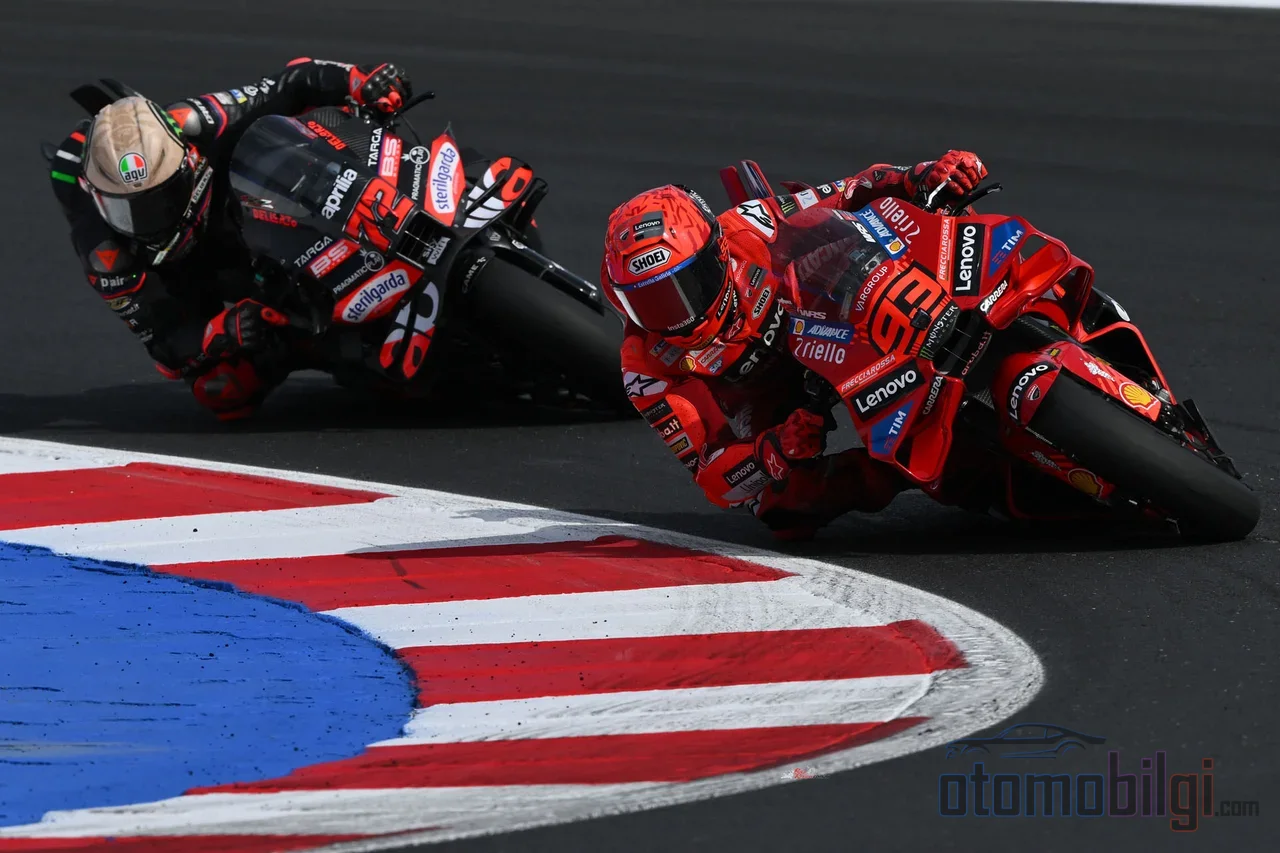
Suppose you have in your hands the fastest 1000cc prototype motorcycle in the world: A monster capable of exceeding 360 km/h, with every gram engineered like space technology. Now tell it this: You cannot carry more than 22 liters of fuel. Yes, with a tank half the size of a car's, you will complete a full Grand Prix distance. Sounds impossible, doesn't it? This is exactly the rule that turns MotoGP into a real game of chess. So how does the 22-liter fuel limit affect the race? In short: riders try to burn laps in half-power mode while also having to slipstream behind the bike ahead, and fuel is saved for the final lap. But the details of this balance-of-politics are far more cunning than you think.
What Does the MotoGP Fuel Rule Say?
The rule is clear and merciless: in a full Grand Prix race, a MotoGP motorcycle cannot carry more than 22 liters of fuel; in the Sprint race, the limit is 12 liters. If you ask what happens to those who break the rule, if even a single extra drop is detected in the tank, things get messy. That is why teams manage fuel gram by gram.
The scope of the rule is broad, too. From 2018 onwards, the 22-liter limit covers not just the tank but the entire fuel delivery system; in other words, cheat routes like storing extra fuel inside engine components are also closed off. Since cold fuel packs more energy into the same volume, cooling the fuel below 15 degrees below the ambient temperature before the race is also banned. Yes, this is a category where even the fuel temperature is regulated. Also, today's MotoGP fuels contain at least 40 percent non-fossil-origin components; the 2024 Qatar GP went down in history as the first race in the series completed with non-fossil fuels.
Why Did the Tank Shrink? The Road From 32 Liters to 22 Liters
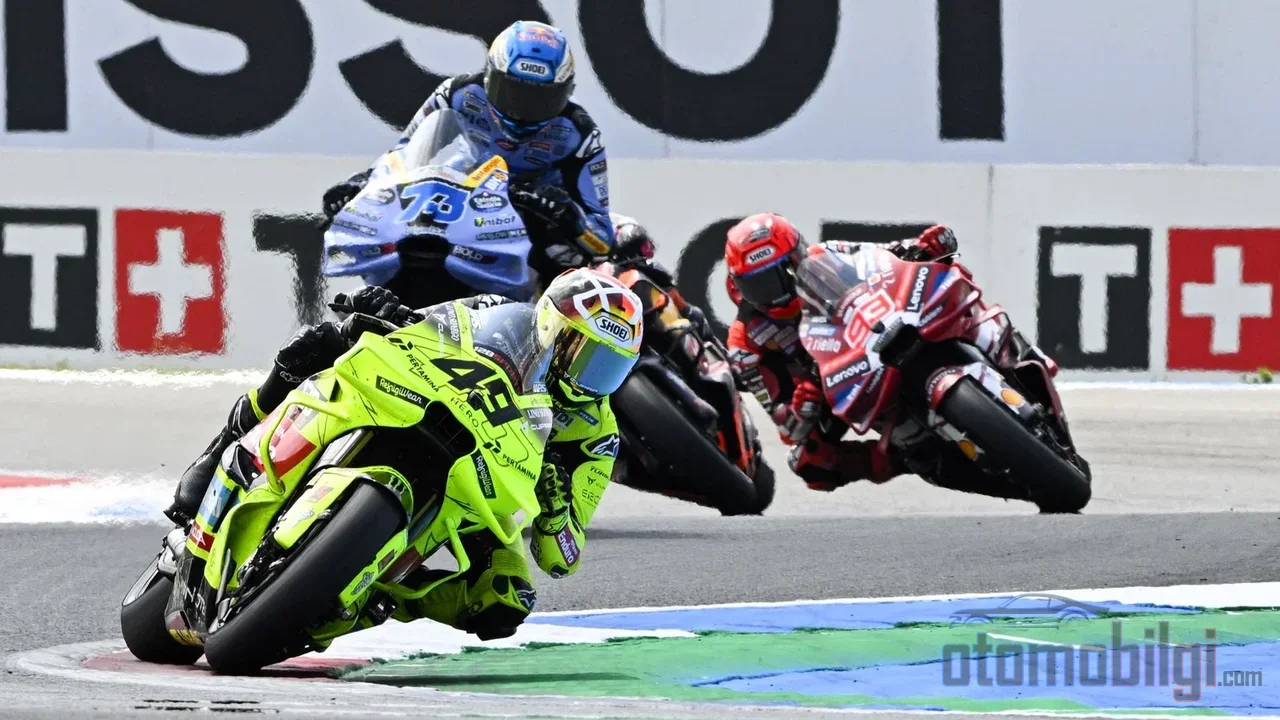
This limit did not appear out of nowhere today. In the late days of the 500cc two-stroke era, tanks were around 32 liters. Then a gradual squeeze began: 26 liters in 2004, 24 liters in 2005, 22 liters in 2006. In 2016, at the Grand Prix Commission meeting in Madrid, with the transition to the single ECU era, the different fuel allowances of the factory and Open classes were merged into a single number, and 22 liters became the standard. At that time, factory teams raced with 20 liters, while the Open class had 24 liters; 22 liters was the compromise right in the middle of the two. Honda wanted a lower limit while the other manufacturers wanted more fuel, and the rev limit proposal was never accepted.
So why this insistence? The initial justification for the restriction was a nod to the green movement; but over time it evolved into the shape the manufacturers wanted. Because a tight fuel budget forces engineers to develop lean-burn engines, meaning engines with a lean mixture that produce a lot of power with little fuel. And that means technology flowing directly into the showroom. A modern 1000cc four-cylinder prototype consumes roughly 18-20 liters per 100 kilometers; so a single tank finances a machine far thirstier than an ordinary car.
Highlights
- The tank limit is 22 liters in the full Grand Prix and 12 liters in the Sprint.
- Between 2004 and 2006, the limit was gradually lowered from 26 liters to 22 liters.
- Cutting fuel when closing the throttle saves 10 cc per lap; that's a quarter liter over a 25-lap race.
- In 2027 the limit will drop to 20 liters and engines will come down to 850cc.
- In the late 500cc era, tanks held around 32 liters.
Engine Modes and Electronic Maps: The Invisible Hand on the Handlebars
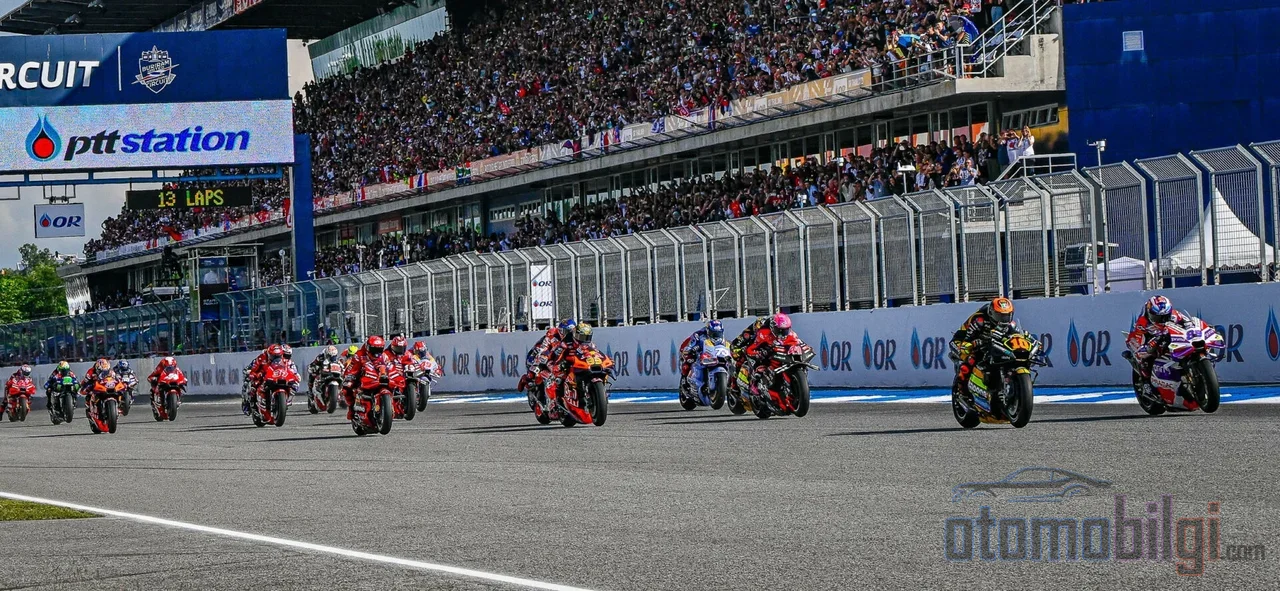
Riders have options on their handlebars that work just like the power-saving mode on your phone. These are called engine maps, and each one adjusts ignition and fuel delivery differently: mode one is full power, mode three is the most economical intermediate setting. Fabio Quartararo explained that he had to spend most of the race at San Marino in the most economical third mode, showing just how frustrating this balance can be.
The Eco Tour: Saving Fuel on the Way to the Grid
One of the teams' favorite tricks is to use the most economical map when riding from the pits to the grid. Maverick Viñales explained that they used this method at 12 of the 16 tracks in the 2025 season: saving a few centiliters on the way to the grid and returning to full power in the race. In an incident Aleix Espargaro experienced, the eco map wasn't properly switched off, and he couldn't escape trouble. So while maps can be lifesavers, the wrong map can also end a race.
Hunting Milliliters: Fuel Cut When Closing the Throttle
One of the most interesting fuel-saving tricks is cutting off the engine's fuel flow completely while slowing down. Riders leave the engine completely starved for a moment when closing the throttle, and with this method 10 cc of fuel is saved per lap. Over a 25-lap race that adds up to a quarter liter; that's an amount that could decide several grid positions. But it's not free: when fuel is cut, engine braking increases, which changes the motorcycle's behavior when entering corners. As MotoGP technology director Corrado Cecchinelli also pointed out, the engine needs some fuel for stable engine braking; a very lean mixture leads to irregular combustion and a different braking character in every corner. The rider feels it instantly, and sometimes pays dearly.
Slipstream and the Safety Car: The Economy of the Wind
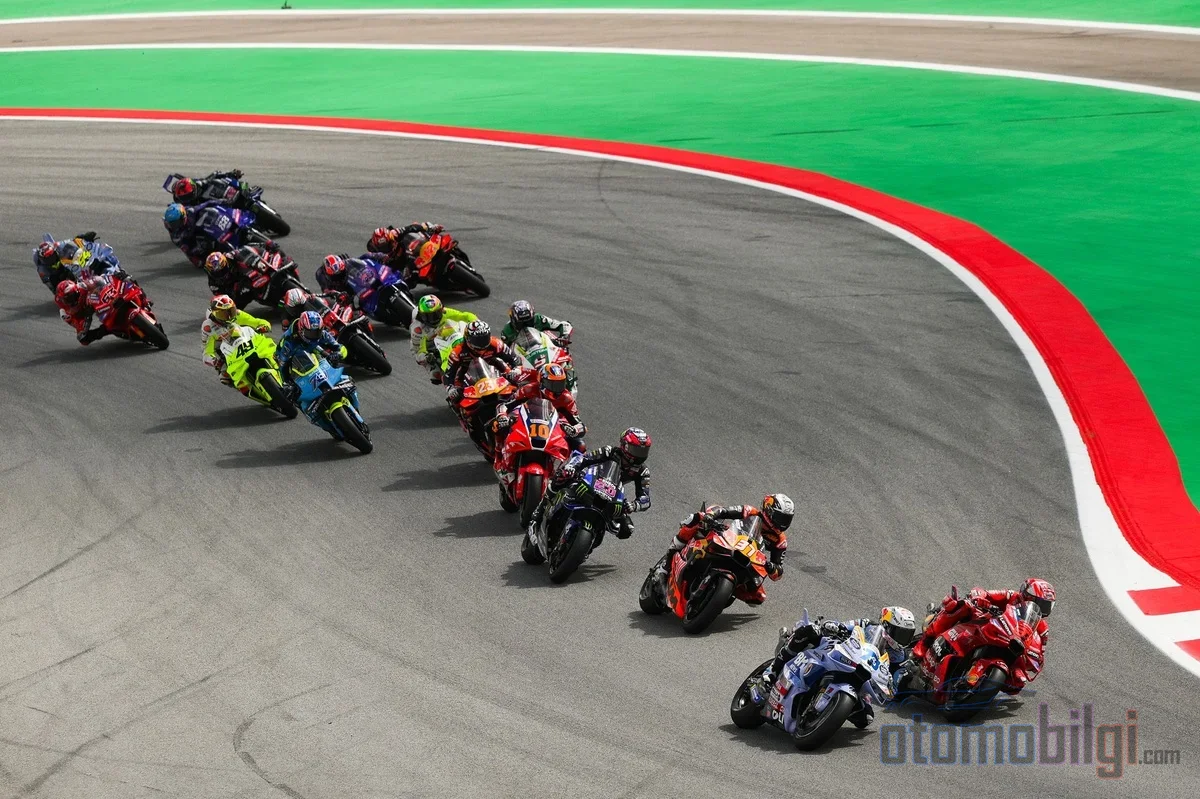
Fuel economy is also managed off the track. Since air resistance directly affects consumption, riders gain speed without burning fuel by slipping into the slipstream of the motorcycle ahead early in the race, saving both position and fuel for the final laps. Staying in the group works like a reserve tank. There are those who think the opposite, though: in recent years, the front tire overheating in the slipstream has become a separate problem, because the following motorcycle doesn't get clean airflow. When the safety car is present, the saving calculations change too: with the field bunched up and the pace slowing, teams immediately review their maps. Of course, in the single-ECU era, adaptive strategies don't exist anyway; traction control, anti-wheelie and launch control are not banned, but they all operate within tight limits in the standard electronic unit, and riders have to change the maps by hand as the tires heat up.
How Do Teams Do the Per-Lap Fuel Calculation?
This is how the work goes on the engineering desk: track length, number of laps and weather conditions during the race are factored in, and the available liters are planned out. Whatever anyone says, this is a math problem, and its solution is different for every track. On laps like Sachsenring, where the tire is consumed rapidly, map management becomes even more critical; teams may have to keep the power at the start of the race at a very low level. In short, every race begins with the engineers dividing the liter by the lap.
There have also been moments in history where fuel decided the outcome. The story of the legendary Gianfranco Bonera is a lesson in itself: Bonera rode the entire race out front, in a battle, and ran out of fuel on the final lap; the victory went to his former teammate at MV Agusta. That is why today's teams don't take risks: within 22 liters, a budget is set for every lap, and even the rider's desire for throttle out of a corner is written into that budget.
| Race format | Fuel limit (2026) | In 2027 |
|---|---|---|
| Full Grand Prix | 22 liters | 20 liters |
| Sprint | 12 liters | 11 liters |
Is 22 Liters Dangerous? What Are the Critics Saying?
Here is the critical side of the matter: the constantly shrinking fuel budget is pushing engineers toward engines running at the limit. According to the famous moto journalist Mat Oxley, the 20-liter regulation and hard rear tires were among the causes of the increase in corner-entry highsides. Also, the 22-liter decision was born as the product of a negotiation between the organization wanting to bring the race closer to television and entertainment, and the manufacturers wanting a technology race. The concession system, which in 2016 granted advantages such as 24 liters to struggling manufacturers, was also in place for a while: manufacturers reaching three points had to lower the tank from 24 to 22 liters.
The Tank Shrinks Even Further in 2027
Since we are on the subject of limits, let's look to the future as well. In 2027, MotoGP goes through a serious transformation: engine displacement drops from 1000cc to 850cc, engine allocation drops from 7 to 6, and the tank limit is pulled down from 22 liters to 20 liters; the Sprint limit falls to 11 liters, and fuels are required to be 100% non-fossil in origin. In other words, engineers have to deliver the same fast show with a smaller engine, less fuel, and a more environmentally friendly fuel. Aprilia engineers expect more overtaking in races due to the reduced effect of aerodynamics. The consumption-balance politics moves to a completely new stage this time.
Conclusion: What Kind of Racing Does 22 Liters Produce?
The summary of the summary is this: the 22-liter limit takes MotoGP out of being a full-power race and turns it into a resource management game. Riders burn laps in fuel-saving engine modes in the first part of the race, bank liters with the slipstream, leave the engine free when closing the throttle, and save both tires and fuel for the final laps. That is why the real limiting factor in a MotoGP race is sometimes not the power of the engine, but the last few centilitres at the bottom of the tank.
Sources
- How Much Fuel Does a MotoGP Bike Use in a Race?
- What are the MotoGP Rules? A complete overview
- Welcome to the future of MotoGP: new bikes in 2027
- What fuel do MotoGP bikes use?
- MotoGP shakes up the rules
- MotoGP Rule Update: Fuel Limit Raised To 22 Liters For 2016
- New MotoGP regulations for 2018
- Concessions continue in MotoGP 2016
- MotoGP eco laps: Map or manual, we want maximum power
- When a full tank isn't enough