2013 Qatar Ruling: How Did the MotoGP Test Ban Come About?
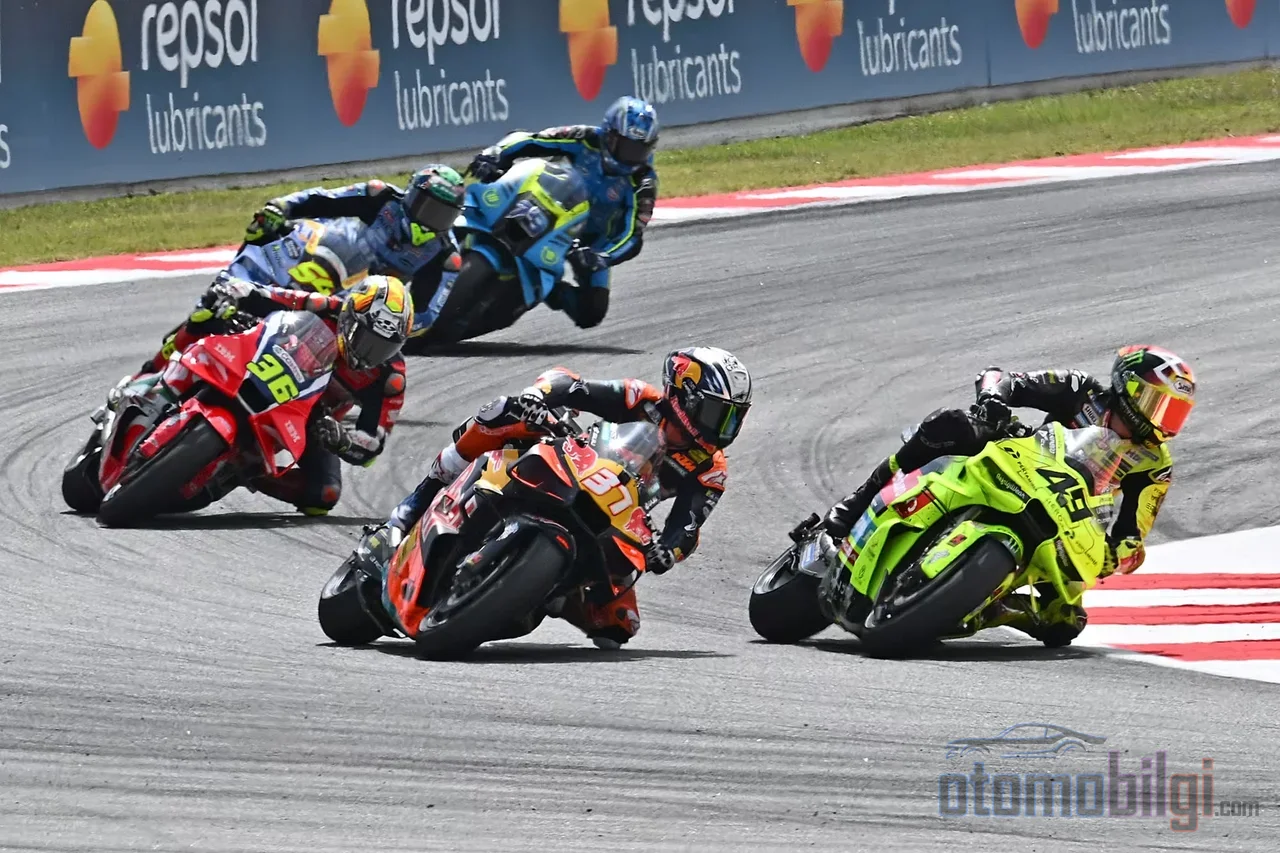
Stop for a minute and think about this: The teams running the fastest prototype motorcycles in the world cannot take to the track just because they want to improve their machines. There is no shortage of money, nor a lack of engineers. The rule says it clearly: forbidden. Doesn't that sound crazy? Yet behind MotoGP's private testing ban lies a years-long cost battle, a search for balance between manufacturers, and some very serious logic like "the richest one shouldn't grab everything." So how was this ban born, who won, who lost? Let's dig in together.
When and Why Was the Private Testing Ban Born?
The story actually goes back and forth like a pendulum. After the 2009 global financial crisis, private testing was banned for the first time in MotoGP. The aim was simple: to protect the teams' pockets. Then, before the 2011 season, this ban was lifted. Why? Because 1000cc machines were coming in 2012 and everyone wanted to do intensive testing; Ducati also needed its contracted riders like Nicky Hayden and then Valentino Rossi to lap the track to develop the Desmosedici.
But the idle period didn't last long. In 2013, the Grand Prix Commission (GPC), which convened in Qatar, once again banned private tests involving contracted riders in MotoGP. So today's situation is a direct legacy of that decision. And here's the interesting part: the decisions are made by this commission, which brings together FIM, IRTA and MSMA, and includes Carmelo Ezpeleta, the head of Dorna. So the ban is not one person's monopoly decision; it is the product of a compromise where all stakeholders of the sport sat at the table.
How Does the Official Testing Calendar Work?
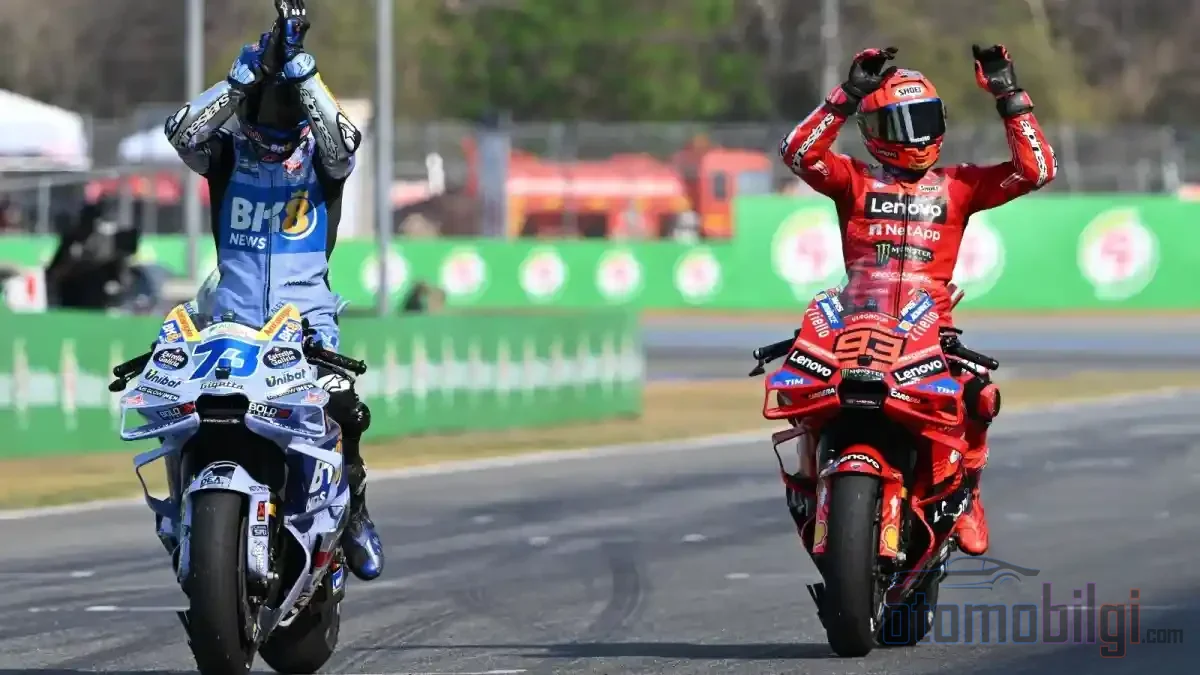
So do the teams never see the track? They do, but only on the designated calendar. From 2014 onwards, the rule in the MotoGP class is quite clear:
- Between the final event of the season and November 30, one 3-day official test is held in Europe.
- Between February 1 and the first race of the season, there are three 3-day official tests.
- On the Monday after certain European races designated by Dorna and IRTA, a maximum of three 1-day tests can be conducted.
- Between December 1 and January 31, testing is completely banned; the winter hibernation is a real winter hibernation.
There is one more detail: within 14 days after a MotoGP event, testing is not allowed at the same circuit, official tests excepted. So there is no escape hatch called "working separately" at the race circuit. Test riders, on the other hand, live in a separate world: with a test tire allocation, they can conduct development tests at any time, on any track. Now let's look at the 2026 calendar, because things have been moving quite a bit.
How Did Testing Take Shape in 2026?
In 2026, the season opened with the Shakedown at Sepang on January 29-31. The rule is different in this test: only test riders and new riders can be on the track. The main line-ups take the stage at the official Sepang Test on February 3-5. In addition, four test dates were added mid-season this year and the calendar ended in Buriram. Here is the difference between the Shakedown and the official test: one a two-day private test, the other a full dress rehearsal with everyone on track.
Highlights
- The private test ban first came after the 2009 crisis, was lifted in 2011, and came back into force in Qatar in 2013.
- The winter test ban covers December 1 - January 31.
- From 2014 onwards, the Moto3 engine pack is delivered to Dorna at a fixed price of 68,000 euro and distributed randomly.
- From 2023 onwards, Moto2/Moto3 private testing was reduced from 7 days to 4 days.
- MotoGP is removing wildcard entries from the 2027 season onwards.
Cost Balancing: Not Just a Test Ban
The test ban is really just the visible tip of a much bigger iceberg. MotoGP management spent years trying to squeeze costs from every angle, and sometimes these efforts produced very entertaining (and thought-provoking) results. The Moto3 example is a lesson in itself.
The Engine Price and "Service Contract" Game in Moto3
In Moto3, the engine price was initially capped at 12,000 euro, and homologated tuning parts were tied to a price control list. Great on paper, right? But manufacturers found the door wide open: with low six-figure "service contracts", meaning hundreds of thousands of euros, they effectively collected the same amount of money. This figure came close to the cost of the top-tier Aprilia RSA lease at the end of the 125cc two-stroke era. Tighten the rules, and finding loopholes seems to be the oldest sport in the Motorcycle Grand Prix world.
In 2014 the solution became more radical: engines would be delivered to Dorna and distributed randomly among the teams, teams would own 6 engines at the end of the season, and the pack would have a fixed price of 68,000 euro. Don't just brush it off as an engine lottery; this system also effectively ended the "good engine bad engine" divide. Additionally, in Moto3 the rev limit was lowered from 14,000 to 13,500 RPM from 2015 onwards, and from 2023 the rolling chassis price cap became 87,000 euro, excluding VAT and freight. There is also a 2,000 euro update kit for teams running the 2022 machine.
The Concession System: Test Rights for Those Left Behind
So is an "equal ban for everyone" fair? Of course not; and MotoGP already realized this long ago. The current concession system introduced in 2024 is precisely the answer to this question: the manufacturer with poor results drops in rank and, in return, gains more parts and testing time. Manufacturers on the success list, on the other hand, are restricted. Rank A-C manufacturers can use only test riders at three tracks in private tests and are granted 7-8 engine allowances per season. At Rank D, the engine specification freeze is not applied.
Living proof that the system works comes from mid-2026: Ducati dropped to Rank B for the first time, with 657 points and a rate of 84.56% in the mid-season calculation. Honda, meanwhile, is at Rank C. So even a dominant manufacturer can slip down the rankings and face restrictions; this system is not something you set once and forget, but a balancing mechanism that keeps breathing constantly.
The logic behind concession points is also clear: 1st place brings 3 points, 2nd place 2, 3rd place 1 point, and Moto2 teams using a chassis manufacturer that has not reached 6 concession points get 7 days of private testing as a "Concession Team". On the Moto2 and Moto3 side, as of 2023 the private test days were reduced from 7 days to 4; the tightening trend continues in the smaller classes too.
The End of Wildcards and the 850cc Era of 2027
Now let's come to the freshest part of the story. For those asking what a wildcard is: it is an entry that takes place on the grid outside the full-season roster, via a one-race invitation, and in the modern era it is usually the team's test rider who races in this role. In other words, for test riders it means the chance to gather real data in a race environment. But according to the GPC's decision, MotoGP is removing wildcard entries entirely from the 2027 season onward. The 2026 wildcards cannot use the 2027-spec 850cc machine either.
This has a chain effect: manufacturers will rely on private tests instead of the race track to try new parts, and this could slow down the pace of development. On the other hand, engine development was also banned for cost control during the transition to 2027's 850cc engines; that ban ended on November 17, and KTM became the first team to test the 2027 850cc engine at Jerez. We could call it the moment the first button of the new era was pressed.
Historically speaking, this freezing tradition is not new: the first cost measure after the Coronavirus was the freezing of engine and aerodynamic development. And the rules are taken seriously too: Yamaha lost points in the constructor and team championships for violating the engine homologation rules at Jerez. What happens to whoever crosses the line is on the table, so we understand.
But Does This Ban Actually Work?
Here is the key question, and an honest answer is needed: exactly no, at least in terms of cost. Analysts who have closely followed MotoGP rules for many years see the cost-reducing effect of the private test ban as negligible. Testing was already limited even if it was free on paper; the spending the ban eliminated is not the biggest bulge under the blanket.
The party that is really harmed is completely different: new manufacturers. The Suzuki example has become classic; a new manufacturer entering the championship would have been limited to official tests only, with its contracted riders. In other words, while the established giants arrived with data accumulated over years, the newcomer would take to the field with both less data and less track time. The ban works as a restriction for a newly established manufacturer and as indirect protection for a long-standing one. The very existence of the concession system is the effort to balance this picture.
The opposing view is also noteworthy: if MotoGP is a technology development laboratory, the test ban stands in the way of progress. The answer to this concerns the identity of the sport: MotoGP is a show business; although research and development is a justification for participation for the factories, it is not the sport's primary business. This debate looks set to flare up even more once wildcards are removed in 2027.
Short and Clear Answer: Why Does This Ban Exist?
The summary of the summary is this: The private testing ban in MotoGP exists to prevent unlimited testing spending from blowing up budgets and the richest manufacturer dominating even purely through track time. Since 2013, private testing by contracted riders has been banned; everyone is bound to the shared official calendar and test riders. In winter, two months are completely closed, and at race tracks there is a 14-day protection zone. The randomly distributed 68,000-euro engine packages in Moto3, the private testing quotas reduced to 4 days in Moto2/Moto3, and wildcards being completely abolished in 2027 are all different facets of the same logic.
So the ban is not really the answer to a single problem; it is the intersection of the triangle of cost control, balance between manufacturers, and the sustainability of the show. The rule does come at a price, though: newcomers struggle, development slows down, and the system constantly has to be overhauled. But if we love a MotoGP where five or six manufacturers can compete on the grid and this level needs to be protected, these balancing moves, including gradually opening the track gates, look set to continue in some form. What do you think: would unlimited testing or this straitjacket produce a fairer championship?
Sources
- Private MotoGP Testing Banned, Moto3 Engine Costs Curtailed
- GPC announce new Test restrictions in Moto2 and Moto3
- Confirmed: full 2026 testing calendar
- KTM becomes first MotoGP team to test 2027 850cc engine at Jerez
- MotoGP ends wildcard entries from 2027
- New concession system: FAQs
- Concessions: MotoGP half-time whistle reshuffles the pecking order
- What do the MotoGP rules include regarding the winter break?
- What is the difference between MotoGP Shakedown tests and official tests?
- MotoGP Testing Explained For 2026