A Two-Speed Life on the MotoGP Grid: The 2027 Engine Rules
Share This Page
Just imagine: for years there have been monsters approaching 360 km/h, 250-horsepower prototypes and smart devices that carry the rider almost like a passenger... Then one day everyone starts over from the same place. That's exactly what we're experiencing in MotoGP, because the championship is rapidly heading toward one of the biggest technical changes in its history. In 2027 the engine capacity will drop, the wings will shrink, and the tire supplier will change. So how will all this affect the bikes, which manufacturer will come out on top, and will the races really be more entertaining? Let's take a look together, because I can't recall another category with this many changes explained in a single season.
What do the 2027 MotoGP engine rules change?
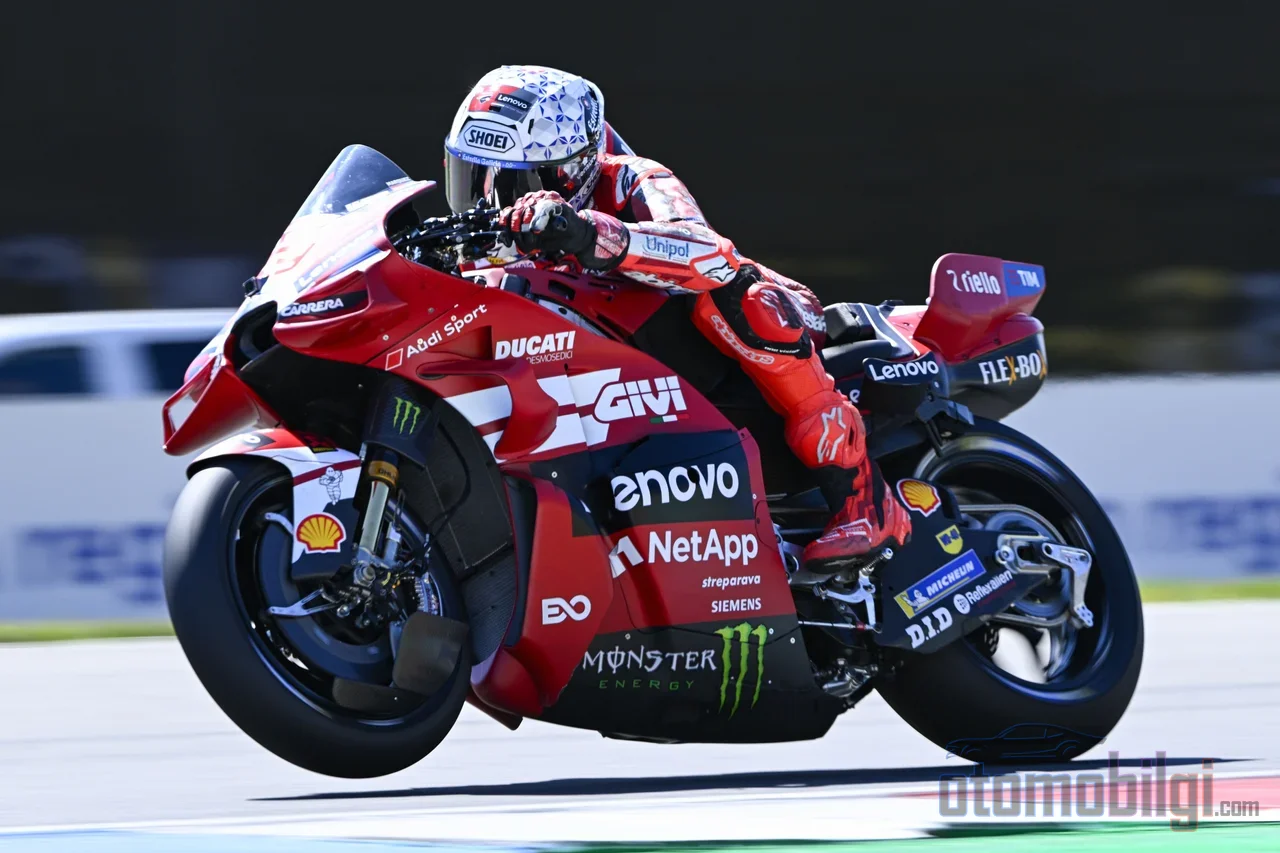
First, let's paint the big picture. In 2027, the premier class's engine capacity is dropping from 1000cc to 850cc. There is also a new ceiling for cylinder bore: it is coming down to a maximum of 75 mm from 81 mm. Calculating engine capacity is actually simple: multiply the cylinder bore by the stroke length, then by the number of cylinders. So when the bore limit drops, this is exactly where engineers have been forced to redesign.
On the power side, the picture is clear: today's 1000cc prototypes produce around 250 hp, and the top speed record is 366.1 km/h. With the switch to 850cc, power will naturally decrease and top speeds will fall a little behind as well. But that is precisely the goal: more competitive racing instead of faster bikes.
Highlights
- Engine capacity drops from 1000cc to 850cc, and maximum cylinder bore drops from 81 mm to 75 mm.
- The number of engines per rider drops from 7 to 6, and the fuel tank drops from 22 liters to 20 liters.
- Ride-height and holeshot devices are completely banned.
- The tire supplier switches from Michelin to Pirelli, with the contract valid until 2031.
- 100% of the fuel will be sustainable: biofuel or e-fuel.
There are big changes beyond the engine as well. The number of engines riders can use throughout the season drops from 7 to 6, meaning each engine has to be more durable. The fuel tank drops from 22 liters to 20 liters, and there is an 11-liter limit for Sprint races. Ride-height and holeshot devices, which lift the front of the bike during acceleration and manage the launch angle on the straights, are completely banned. To put it in perspective: it's no longer about the engine itself or the software's buttons.
Aerodynamics and tires: the game's landscape changes too
The most talked-about part of the new rules is, of course, the aerodynamics. The upper width of the front fairing is shortened by 50 mm, and the nose will be moved back by 50 mm. Aerodynamic parts behind the rider will be subject to homologation, and only one update per season will be allowed. In other words, the luxury of showing up with a new wing at every race throughout the season is gone. 15-time world champion Giacomo Agostini openly supports these changes; in his view, the technology has grown far too much, wings belong on airplanes, and the rider needs to become decisive again. In the past everything was in the wrist, but now a button is pressed and the bike lowers itself.
There is also a historic transition on the tire side: From Michelin to Pirelli. The contract is valid until 2031. That alone means a major adjustment process, because chassis, aero and tires are an interlocked trio. When you change one, the other two need to be rebalanced as well. On top of that, a 100% sustainable fuel requirement is being added; biofuel or e-fuel obtained through direct CO₂ capture will be used, and this will be audited with the C14 test. So it is not just for show - it is a rule that is genuinely measured.
Class structure: What is the difference between MotoGP, Moto2 and Moto3?
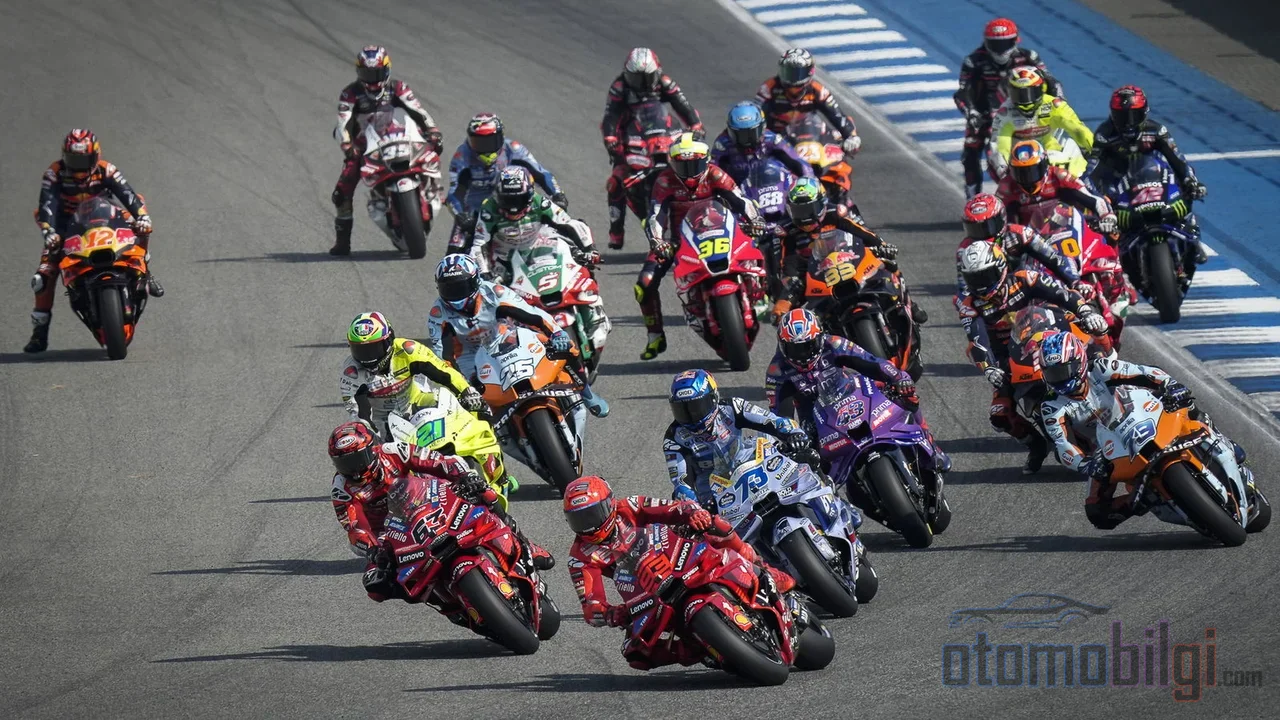
It is hard to understand 2027 without fully grasping the championship. The category works like a ladder and consists of four classes: MotoGP, Moto2, Moto3 and MotoE. MotoGP, at the top of the ladder, races with 1000cc prototype engines; both the chassis and the engine are fully prototype. In Moto2 the chassis is prototype but the engines are production: 765cc three-cylinder Triumph units are used, producing 138 hp, and the minimum weight is 217 kg for the bike plus rider combined. Even so, they can accelerate beyond 300 km/h. Moto3, meanwhile, is the bottom rung of the ladder: 250cc single cylinder, around 60 hp, minimum 152 kg and speeds approaching 245 km/h.
The history of this structure is also interesting. In 2010, Moto2 replaced the 250cc class; and in 2012, Moto3 replaced the 125cc class. The history of the premier class goes back even further: From 1949 to 2001 the engine capacity was 500cc, first with four-stroke and then two-stroke engines. In 2002 the switch was made to 990cc four-strokes, and the 2003 Czech GP was the last race for two-stroke engines. While the last 500cc engines produced around 190 hp, the 2002 prototypes jumped to ~230 hp. For safety reasons, the 800cc era took place between 2007 and 2011, and 1000cc has been used since 2012; and starting from 2016, a standard ECU became mandatory. As you can see, dropping to 850cc is not the first time in history - an engine of this size had already been experienced before.
| Class | Engine | Power | Minimum weight |
|---|---|---|---|
| MotoGP (current) | 1000cc four-cylinder prototype | ~250 hp | - |
| Moto2 | 765cc three-cylinder Triumph (production) | 138 hp | 217 kg (bike+rider) |
| Moto3 | 250cc single-cylinder prototype | ~60 hp | 152 kg |
The new weekend format and other rule changes
In 2027, not only the bikes are changing, but the race weekend itself is changing too. Under the new arrangement, Sprint qualifying will take place on Friday, while FP3 and GP qualifying will be held on Saturday. On Sunday, the classic Moto3-Moto2-MotoGP races will be run. The most critical detail is this: Separate starting positions will be set for the Sprint and the GP. So a rider who sets a good lap in Saturday qualifying may not start from the front for Sunday. Also, practice time drops from 2 hours 25 minutes to 1 hour 35 minutes, meaning every minute becomes more valuable for the teams.
There are also important updates beyond the technical side. GPS data will be opened to all teams at the end of each session - this is a serious equalizer for smaller teams with limited data. The concession system will continue, but all manufacturers will start at Rank B and wildcards will be banned. It is also being said that the minimum weight will drop from 157 kg to 153 kg; although this detail does not yet seem to be finalized, it is a logical direction given the smaller engines.
What the riders are saying: Agostini's expectation, Mir's concern
There are those who benefit from the rules and those who are disadvantaged by them. Agostini's reasoning is as much technical as it is emotional: when power decreases, riders will be able to hold the throttle open from start to finish without the headache of tire management. According to him, Brembo has also reached its limits on the braking side; something has to slow down. Reduced aerodynamics can also lessen the physical strain on the rider - this can make a big difference especially for the neck and muscles, just imagine the final laps of long races.
On the other hand, some figures like Joan Mir think the new rules will make life even harder for the riders. The reason is predictable: fewer wings and fewer electronic aids mean; therefore, keeping the bike under control leaves more work to the wrists. It is also being discussed that some riders could be seriously challenged under the 2027 rules. In other words, some see the same rule package as a toy and others as a curse - the beauty of the matter lies exactly here.
Where the teams stand: tests and the 2027 grid
2026 is the final year of the current technical regulations, and since engine development has been frozen, the teams have directed their resources toward 2027. Ducati, KTM, Honda and Yamaha have already taken their 2027 bikes out on track. Ducati tested its 850cc prototype at Misano with test rider Michele Pirro, and it is said that Ducati stood out at the Mugello test and an early advantage is expected for the brand. Yamaha's situation is perhaps even more striking: according to what Augusto Fernandez has shared, the 850cc prototype is so different from the current V4 that it looks like a different brand. This has brought Yamaha's switch to the V4 architecture because of the new rules into the spotlight, and the brand is said to be ahead in prototype development.
The grid has also been almost completely reshaped: Francesco Bagnaia is moving to Aprilia, Jorge Martin to Yamaha, Pedro Acosta to Ducati, and Fabio Quartararo to Honda. On the young side, David Alonso and 2026 Superbike champion Nicolo Bulega are starting in MotoGP. So it is not only the engines that are changing; the rider lottery has been redistributed from scratch. The criticism that the rules were changed after Ducati's victory is also circulating on social media, but the fact that all manufacturers will start from zero softens it a bit.
Will the 850cc MotoGP bikes really be slower?
Here's the question everyone is asking and the honest answer: it's hard to be certain. Power will drop and absolute top speeds will be left behind, that's for sure. But lap time isn't determined by power alone. It's being discussed that progress in aerodynamics and tires could close the gap, meaning lap times could equalize. Remember: there was also the 800cc era of 2007-2011, and the championship was still breathtaking. Besides, the goal isn't to break absolute speed records anyway; it's about watching races where the rider's wrist strength becomes decisive again and the throttle is pinned from start to finish without tire troubles. I think this trade-off is worth it - what do you say? I'm curious to hear your opinion in the comments, because the time remaining until 2027 is shrinking fast.
Sources
- Welcome to the future of MotoGP™: new bikes in 2027
- What are the MotoGP™ Rules? – A complete overview
- What is MotoGP™ Engine Displacement?
- What is the Difference Between MotoGP™, Moto2™ and Moto3™?
- 2027 MotoGP World Championship
- MotoGP™ 2027 rider line-up: the grid is set!
- Giacomo Agostini backs 2027 MotoGP rules
- Mir: 2027 MotoGP rules will make life even harder for riders
- MotoGP 2027 rules: The biggest challenges facing the teams
- 'Insane' Ducati tipped for early advantage in MotoGP 2027
- Yamaha's 2027 850cc MotoGP bike is "like swapping brands"
- Why some MotoGP riders could "suffer a lot" under 2027 rules
- Grand Prix motorcycle racing - Wikipedia
- MotoGP - Ducati ran its 2027 prototype at Misano