What Was the Wildcard System in MotoGP and Why Was It Banned?
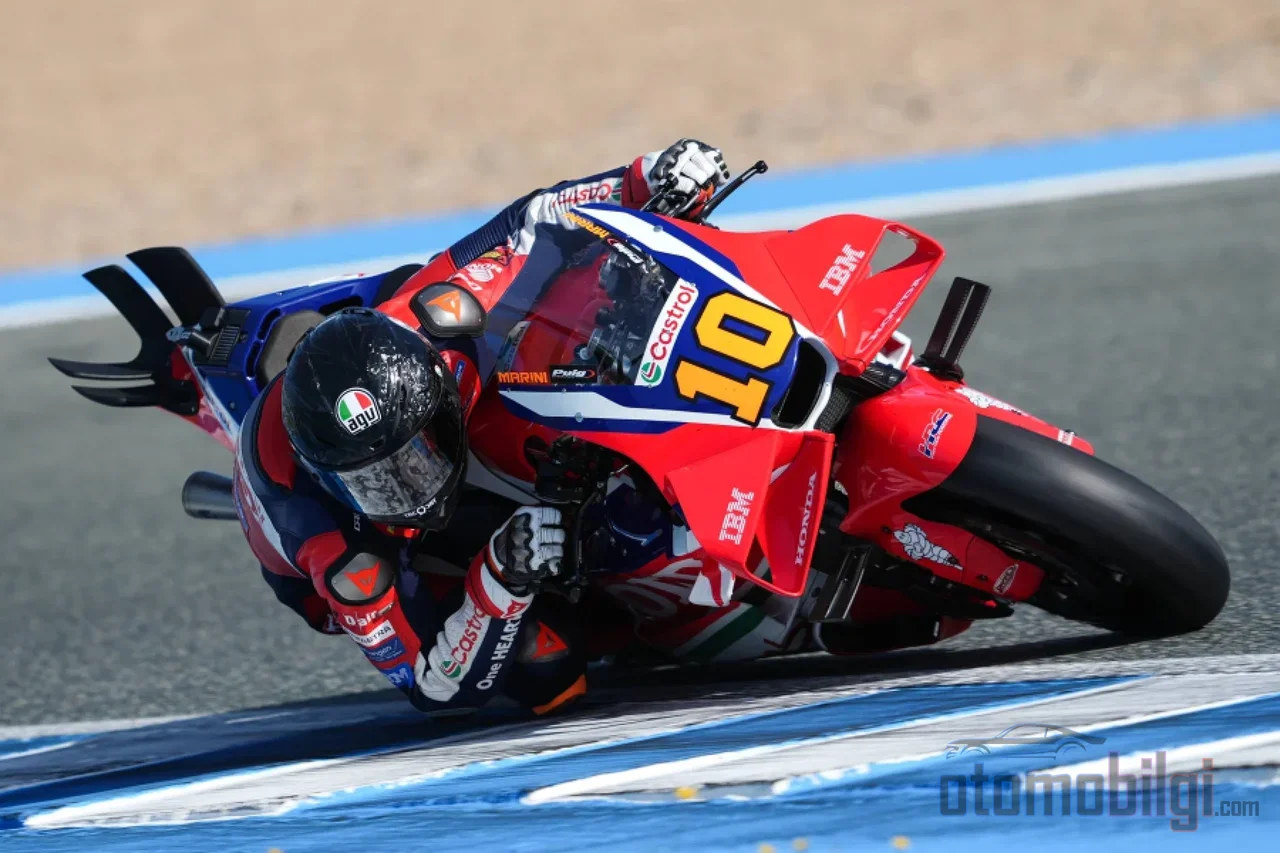
You're looking at the grid list on a race weekend; familiar names, familiar teams... Then suddenly a rider appears on the timing screens that you don't normally see. It's as if someone who never attended class all season earned the right to take the final exam. In the MotoGP world, these names are called wildcard riders. What's more, some of them don't just add color to the race - they can even change the championship calculations. So how does the wildcard system work, can these riders score points, and why do manufacturers want to use this right? Even more importantly, with the decision taken in April 2026, what is the rationale behind banning this system in the MotoGP class from the 2027 season onwards? Come, let's take a look together at this little-known side of racing.
What Is a Wildcard, and Where Do Its Roots Go?
Wildcard means "joker" in English. In motorcycle racing, it refers to granting a rider who doesn't compete full-time throughout the season the right to participate in a specific Grand Prix. This rider is most often the manufacturer's test rider. However, in the past, local racers or other names the manufacturer wanted to evaluate specially could also join the grid with this right.
The roots of the wildcard tradition go back to the earliest days of Grand Prix motorcycle racing. Especially in the past, teams would give the opportunity to local riders who knew the region and the track well at races they hosted. The home advantage could allow these names to achieve surprising results against strong rivals. Today, the system's function has changed considerably. Now, a significant portion of the riders who use the wildcard right are experienced test riders working in manufacturers' motorcycle development programs. In other words, the people who normally try new parts in the garage and work with engineers put on their racing leathers and join the grid on certain race weekends.
Highlights
- A wildcard rider's points count toward the individual riders' and manufacturers' championships, but not toward the teams' championship.
- Under the concessions system restructured in 2024, manufacturers in the lowest two ranks had 6 wildcards per season.
- The Grand Prix Commission announced that the wildcard practice in the MotoGP class will be banned from the 2027 season onwards, with the announcement made in April 2026.
- The ban does not cover the Moto2 and Moto3 classes. The wildcard practice continues in these categories.
- Dani Pedrosa signed one of the most remarkable wildcard performances of the modern era with his 4th place at the 2023 San Marino GP.
Can a Wildcard Rider Score Points?
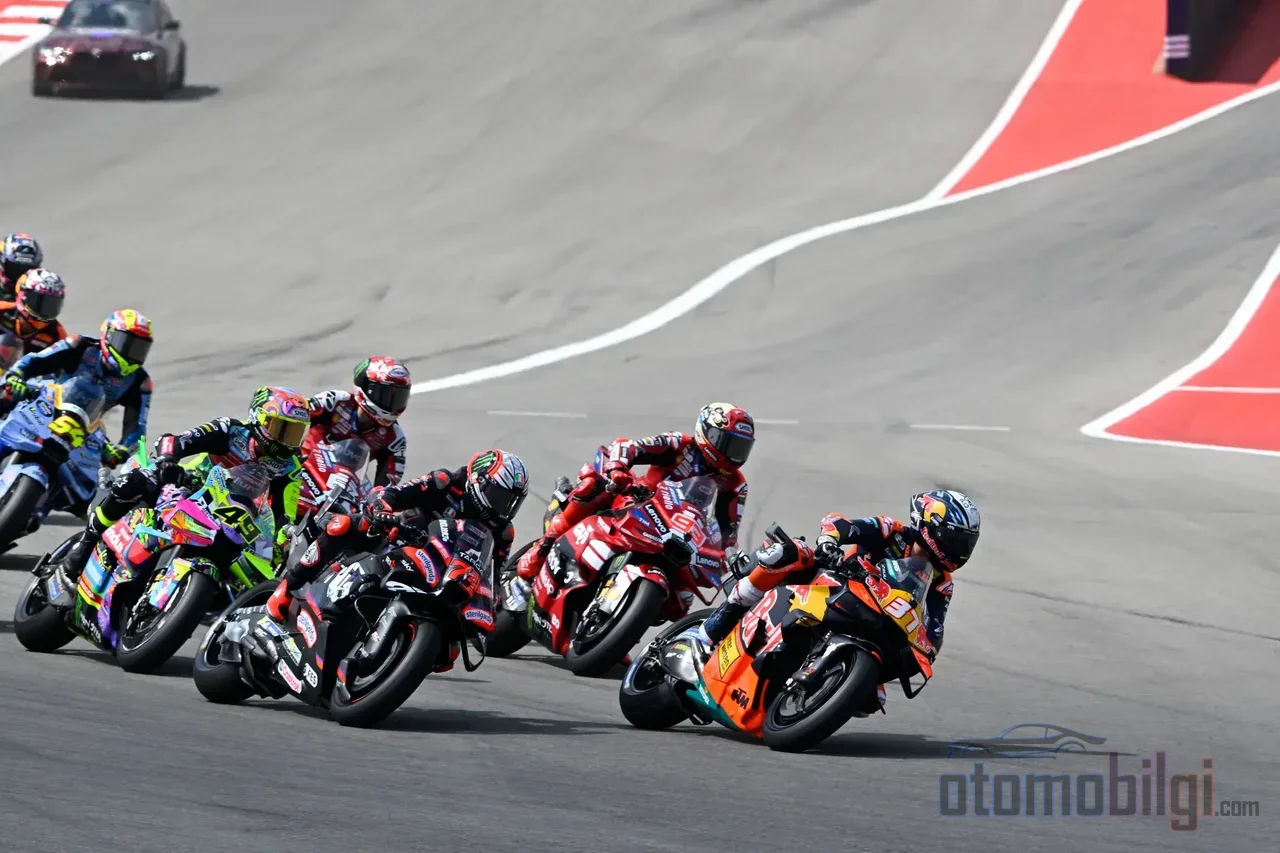
Yes! When wildcard riders finish the race in a points-scoring position, they can earn championship points just like regular riders. However, there is an important distinction regarding which standings these points are applied to.
- Riders' championship: The points earned by a wildcard rider are written to their own individual championship tally. So having participated in only one or a few races of the season does not prevent them from scoring points.
- Manufacturers' championship: The wildcard rider's points can also contribute to their manufacturer's tally. In this standings, since the result of the best-ranked motorcycle of the relevant manufacturer is taken into account at each race, if the wildcard rider achieves a better result than the manufacturer's other riders, they can earn points for the manufacturer.
- Teams' championship: The wildcard rider's points are not counted here. The main reason for this is that teams competing throughout the season with their full-time riders could gain an unfair advantage in the team standings by collecting points with an extra motorcycle.
One of the notable examples of this occurred at the 2023 San Marino GP. Dani Pedrosa, racing as a wildcard on behalf of KTM, finished the race in fourth place and, as KTM's best-ranked rider, earned significant points for the manufacturer in the constructors' championship. Therefore, the wildcard was not merely a symbolic practice offering a young or experienced rider a chance to race. The result achieved by the right rider on the right weekend could directly affect championship calculations.
The Concessions System: Who Could Use How Many Wildcards?
The Logic of the Four Tiers
With the 2024 season, MotoGP restructured the concessions system in order to improve the balance of competition among manufacturers. The fundamental goal of this system was to facilitate the development work of manufacturers lagging behind in the championship and especially to help other brands catch up with Ducati's clear performance advantage.
Under this system, manufacturers are divided into four tiers - A, B, C and D - according to the ratio of the points they earned in the previous season's manufacturers' championship to the points of the best manufacturer. As a manufacturer's performance declined, more flexibility was provided in areas such as testing, engine development and wildcards.
| Tier | Previous season points ratio | 2024 example | Wildcard entitlement |
|---|---|---|---|
| A | At least 85% of the best manufacturer's points | Ducati | None at all |
| B | Below 85%, above 60% | Left vacant | 3 per season |
| C | Below 60%, above 35% | Aprilia, KTM | 6 per season |
| D | Below 35% | Honda, Yamaha | 6 per season |
The difference in the number of wildcards showed that the concessions system was not merely an advantage that remained on paper. For example, while Ducati in Tier A could not enter its test rider in a race with a normal wildcard entry, Honda and Yamaha in lower tiers could take advantage of this opportunity six times throughout the season.
However, there were other restrictions on its use as well. A manufacturer could not use its wildcard entitlement at two consecutive Grand Prix weekends. This was aimed at preventing the wildcard practice from turning into a new testing program at every race. Moreover, the concession system was a broader development package that regulated not only the number of wildcards but also test days and the conditions under which test riders could work.
Why Were These Rights Not Being Used?
In theory, a manufacturer holding six wildcard rights may seem like a significant advantage. However, in practice, using all of these rights was quite costly and operationally risky.
First of all, each wildcard entry required the preparation of an additional motorcycle, a technical team, spare parts, logistics organization, and race weekend operations. A test rider's participation in a race meant far more comprehensive preparation than normal testing work. What is more, there was no guarantee that a competitive result would be achieved in return for these expenditures.
The second important issue was that test riders also served as backup riders. Manufacturers had to keep an experienced name ready who could fill in if one of their full-time riders was injured. A test rider getting injured in a wildcard race could disrupt both the development program and the potential need for a backup rider. Especially in the season's packed race calendar, this risk could not be ignored.
Finally, not every test rider wanted to race. For some experienced names, the physical strain of race pace, the risk of crashing, and the intense travel schedule reduced the appeal of the wildcard opportunity. Yamaha entering Cal Crutchlow in only the Japan GP in the 2023 season was one of the examples showing that manufacturers did not always use their rights to the fullest.
The Real Function of the Wildcard: Testing in Real Race Conditions
The official testing calendar in MotoGP is quite limited. Manufacturers can benefit from a certain number of official test days to develop their motorcycles throughout the season. The concession system also differentiates this calendar according to manufacturers' performance levels. However, every extra minute spent on the track is of great importance, especially in areas such as aerodynamics, electronics, engine characteristics, and tire management.
For this reason, the wildcard system was a valuable development tool for manufacturers. A test rider can try new parts just as on a normal test day, but this time real rivals, race pace, and all the variables brought by the Grand Prix weekend are in front of them. Factors such as tire wear, track temperature, fuel load, traffic, and battling with other motorcycles cannot be evaluated with the same realism in laboratory or closed testing work.
For example, a new aerodynamic part enabling a fast lap on its own does not mean the same advantage will be maintained throughout the race. Similarly, a change made to the electronic systems can produce unexpected results at different tire wear levels or in heavy traffic. A wildcard rider's participation gave the manufacturer the opportunity to collect this kind of data directly in a competitive environment.
Moreover, since wildcard riders were often test drivers who developed the motorcycle, they had a significant advantage in evaluating the data collected together with the engineers. The rider's feedback could be combined with telemetry data, and decisions could be made on whether new parts would be used in subsequent races. In this respect, the wildcard was an important bridge between manufacturers' development programs and the race calendar.
What Is the Difference Between a Wildcard and a Substitute Rider?
These two concepts are frequently confused with each other. Yet there is an important difference between them, both sportingly and technically.
A wildcard means a rider who does not normally compete in the championship full-time joining the grid with an additional motorcycle. In other words, an additional name is added to the team's or manufacturer's existing race roster.
A substitute rider, on the other hand, takes the place of a full-time rider who is injured, falls ill, or is unable to race for another reason. In this case, no extra motorcycle is added to the grid; the rider of the existing motorcycle is changed. Teams making the necessary effort to find a suitable substitute for riders unable to race is also part of the sporting regulations.
This distinction is particularly important in terms of test riders. Because a manufacturer's test rider can either race with an additional motorcycle by using the wildcard right or can also step in for an injured factory rider. In the second case, since this participation is not considered a wildcard, it does not count against the wildcard quota.
For example, Troy Bayliss's dominant victory with Ducati at the 2006 Valencia GP is often told among wildcard stories. However, Bayliss did not enter that race as a wildcard but as a substitute rider, replacing the injured Sete Gibernau. Therefore, when we see a test rider on the grid, knowing under which status they are racing is important in order to correctly assess the sporting meaning of the weekend.
Unforgettable Wildcard Performances from History
The majority of wildcard riders stay away from the front rows while competing against full-time competitors. For this reason, even finishing within the top 15 and scoring points can be considered a successful result. However, MotoGP history has also witnessed performances that far exceeded this expectation.
Steve Manship, who raced in the rain at the Silverstone circuit at the 1978 British GP, put in a remarkable performance as a wildcard entry. He managed to reach the podium in a race where great names of the era such as Kenny Roberts and Barry Sheene were competing. This result is remembered as one of the examples from earlier eras showing that wildcard riders did not race merely to fill up the grid.
In the modern era, Dani Pedrosa is one of the first names that come to mind when wildcard performances are mentioned. The Spanish rider, who serves as KTM's test pilot, took tenth place at the 2021 Styrian GP, returning to race pace after a long break. In the 2023 season, he finished seventh at the Spanish GP and fourth at the San Marino GP. His performance at San Marino in particular showed how small the gap with full-time riders can be. Aleix Espargaró's surprise at Pedrosa's pace was also talked about in the paddock for a long time.
Akira Ryo's 2002 Suzuka performance, Michele Pirro's numerous wildcard appearances on behalf of Ducati, and wildcard race entries by names like Mika Kallio and Takaaki Nakagami are also among the important examples of this tradition. However, when evaluating such results, it is necessary to distinguish between wildcard and substitute rider status. As with Bayliss's 2006 Valencia victory, some unforgettable performances were technically not wildcards, but substitute rider entries.
The 2023 season was also a good example of how the system is used by manufacturers. Aprilia, KTM, Ducati, Honda and Yamaha carried out wildcard entries in different numbers. Dani Pedrosa's twice finishing in the top 10 and Cal Crutchlow, racing on behalf of Yamaha, finishing the Japan GP in 13th place were among the standout results of that season.
2027 Wildcard Ban: Why Is It Being Removed?
An important era in MotoGP history is coming to an end. The rule-making body, which includes representatives of the Grand Prix Commission, FIM, Dorna, IRTA and MSMA, announced with its decision in April 2026 that wildcard entries in the MotoGP class will be completely banned from the 2027 season onward. Moreover, this decision will be applied regardless of the manufacturer's concession tier. In other words, from 2027 onward, even a manufacturer that previously had six wildcard rights will not be able to enter its test pilot into a Grand Prix race with an extra motorcycle.
There is not a single reason behind this decision. There are interconnected goals such as creating a fairer competitive environment, simplifying race organization, and ensuring that manufacturers carry out their development activities within a more controlled framework. However, the most important effect of the ban will be the elimination of test pilots' ability to use race weekends as an additional development platform.
The Aim Is to Prevent Test Pilots from Participating in Races
The most important function of the wildcard system today was that manufacturers could enter their test pilots on the track with an extra motorcycle outside the normal race lineup. Especially for manufacturers with concession advantages like Honda and Yamaha, this right was one of the important ways of continuing motorcycle development work in real race conditions.
However, it was thought that this practice raised some questions in terms of competition. While full-time riders competed throughout the season with the same race calendar, sporting pressure and championship goals, test pilots could participate in certain races solely for development purposes. This gave manufacturers the opportunity to collect data with an additional rider and motorcycle beyond their regular lineups.
Moreover, the participation of test pilots in races could also affect the difference between manufacturers' development programs. A manufacturer with more testing and development flexibility could gain a data collection advantage over its rivals by testing new parts directly in race conditions with a wildcard rider. Although the concession system was originally designed to help lagging manufacturers, the wildcard practice turning this advantage into a continuous in-race development mechanism was one of the issues that led to the system's re-evaluation.
The fundamental change brought by the ban is this: Manufacturers will no longer be able to enter test pilots onto the Grand Prix grid with an extra motorcycle solely for development purposes. Testing activities will be carried out within the framework of the official test calendar and other permitted development methods. Thus, race weekends will focus more on the sporting competition of full-time race lineups.
Competitive Balance and Race Management
Another rationale for the wildcard ban is the simplification of race and grid management. Extra motorcycles, extra technical crews, and riders with different statuses increase the elements the organization has to manage. With the end of wildcard entries, manufacturers' entries outside their normal race lineups will disappear, and the sporting framework of race weekends will become more standardized.
In terms of competitive balance, the aim is for the performance delivered by full-time riders throughout the season to become more central. A manufacturer's test rider could influence the outcomes of both the riders' and manufacturers' championships by participating in just a few races. While this happened within the rules, it was a debatable practice from the perspective of riders and teams competing throughout the entire season.
However, it should be emphasized that the wildcard ban does not eliminate all development activities. Manufacturers will continue to work with test riders, develop new parts, and try out their motorcycles on permitted test days. The door that has been closed is preventing test riders from carrying this work into regular Grand Prix races through additional entries.
Connection to the 2027 Technical Regulations
The wildcard ban coincides with the major technical transformation MotoGP will undergo in the 2027 season. In 2027, engine capacity will be reduced from 1000 cc to 850 cc, aerodynamic regulations will be tightened, and ride-height adjustment devices will be banned. These changes mean a comprehensive transformation requiring manufacturers to redevelop their motorcycles from the ground up.
One of the additional decisions taken by the Grand Prix Commission was to ban wildcard motorcycles in the 2026 season from using 850 cc engines with 2027 technical specifications. The aim was therefore to prevent next-generation motorcycles from being used early in wildcard races held under the current technical regulations.
This restriction is particularly important in terms of keeping the transition period under control. There is a set calendar for manufacturers to develop motorcycles that comply with the new technical regulations. Introducing the new engines and other technical solutions into the races of the current season could have complicated both the implementation of the development calendar and the technical rules.
Is the Ban Received Positively by Everyone?
Certainly not. There are different assessments regarding the removal of the wildcard practice. Those who support the ban argue that the battle of full-time racers will come further to the fore, that development advantages between manufacturers will be brought under control, and that race organization will be simplified.
Those who approach the decision critically believe wildcards are part of MotoGP's traditional character. The participation of experienced test riders such as Dani Pedrosa in races gave fans the opportunity to once again watch names they would not normally see on the grid. In addition, wildcards were an important tool that allowed test riders to evaluate the motorcycles they developed in a real race environment.
Another point of debate was that the wildcard system was no longer being used as intensively as before. Due to a limited testing calendar and increasing operational costs, manufacturers did not always use the rights they had. Therefore, according to some assessments, while the practice had already lost its significance, removing it entirely means eliminating a useful tool from MotoGP's development processes.
In the end, both sides have strong arguments. On one side there is sporting fairness and a simpler organization, on the other side there is technical development and the traditional structure of the races. However, the decision that was made is clear: From the 2027 season onward, the wildcard era will end in the MotoGP class.
Will the Wildcard System Continue in Moto2 and Moto3?
Yes. The ban, which will come into force in 2027, covers only the top MotoGP class. The wildcard practice will continue in the Moto2 and Moto3 categories. For this reason, it will still be possible for young talents, local riders, or special race entries to enter the grid in these categories.
This distinction is important because in Moto2 and Moto3, the wildcard system is not merely a mechanism serving the manufacturers' motorcycle development work. At the same time, it offers riders competing in different championships the opportunity to showcase themselves at the world championship level. The fact that the ban in MotoGP is not being extended to these categories shows that the sporting functions of the practice in different classes are being evaluated separately.
In summary: How Did the Wildcard System Work in MotoGP?
A wildcard was a practice that gave a rider who was not competing full-time, usually the manufacturer's test rider, the right to race with an extra motorcycle at a specific Grand Prix. These riders could earn points in the race; the points were counted toward the riders' and manufacturers' championships but were not taken into account in the teams' championship. The licensing system, which was restructured in 2024, determined the number of season wildcards based on manufacturers' performance.
The primary purpose of the system was to offer manufacturers the opportunity to develop motorcycles in real race conditions. Test riders could try new parts, electronic systems, and settings in a competitive environment and share the data they obtained with engineers. However, as a result of the debates this practice created regarding competitive balance, sporting fairness, and race management, the Grand Prix Commission decided in April 2026 to ban wildcard entries in the MotoGP class starting from the 2027 season.
The 2026 season will be the last season in which we can watch wildcard riders in MotoGP's premier class. This system, which once opened the door to the world stage for local racers and later became part of test riders' development work, is becoming history in the royal class. So look a little more carefully at every wildcard rider you see on the 2026 grid. Because names like Dani Pedrosa have one final season left to spring a surprise once again.