Marc Márquez's Journey from 125cc to Ducati
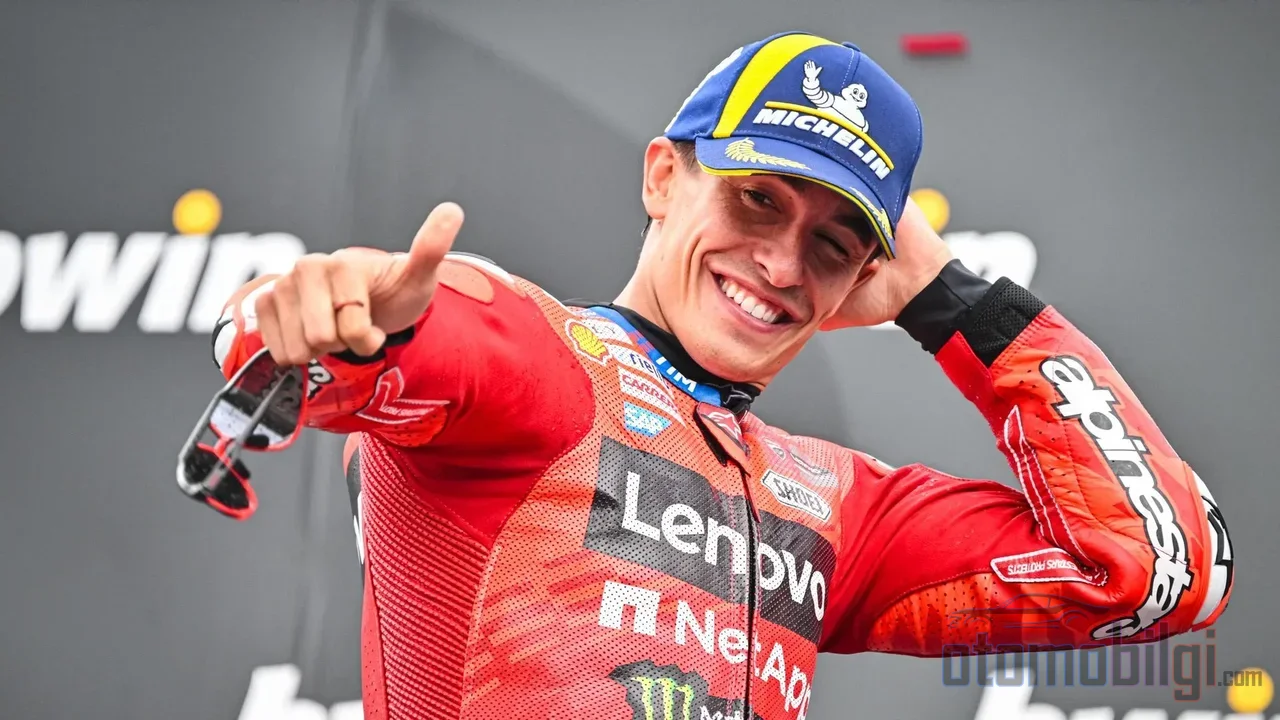
Estoril 2010, rain, a red flag and a restart. A 17-year-old kid crashes on the sighting lap, fails to make it back to the pit lane and has to start from the very back of the grid. Then he goes on to win that race. Yes, you read that right: he started from the very back and won. That kid's name is Marc Márquez, and the character we met that day was the recipe for all nine of his world championships over the next 15 years: living on the edge, but never giving up. So how did each of these championships come about? On which motorcycle, against which rival, with which turning point? Let's break it down season by season.
Márquez's story begins on February 17, 1993, in Cervera, in the Catalonia region of Spain. Today he is the number 93 rider of the Ducati Lenovo Team; his MotoGP career includes 223 race starts, 80 wins, 133 podiums and 78 pole positions. But these numbers feel cold. The real story is that each of the nine championships has its own drama.
Highlights
- A total of 9 world championships: 1 x 125cc (2010), 1 x Moto2 (2012), 7 x MotoGP (2013, 2014, 2016, 2017, 2018, 2019, 2025)
- At 20 years and 266 days, the youngest premier class champion in history and the first rookie champion of the MotoGP era
- 10 consecutive wins in 2014: still an unbroken MotoGP record
- The 7th MotoGP championship in 2025, with 545 points, after four major arm surgeries and six years of drought
2010: First Championship in 125cc and the Miracle of Estoril
In 2010, Márquez raced for the Red Bull Ajo team on a Derbi motorcycle. The first victory of the season came on June 6, 2010, at Mugello; he then became the youngest rider to take four consecutive wins with Silverstone, Assen and Barcelona. With the Sachsenring victory, he won five races in a row - the first person to do so in 125cc was Valentino Rossi in 1997. So at just 17 years old, he was already being mentioned in the same sentence as Rossi.
Toward the end of the season, he took four more consecutive wins at Motegi, Malaysia, Australia and Estoril, and went into the final race with a 17-point advantage over Nicolás Terol. After that legendary victory at Estoril, he finished fourth in Valencia and clinched the championship: at 17 years and 263 days, he was the second youngest world champion in history, after Loris Capirossi. Closing the season with 10 wins was the record for the most wins in a single 125cc season by a Spanish rider. His rivals were Terol and Pol Espargaró; remember the name Pol Espargaró, we will meet him again later.
2012: The Moto2 Championship and the 33rd Win in a Row
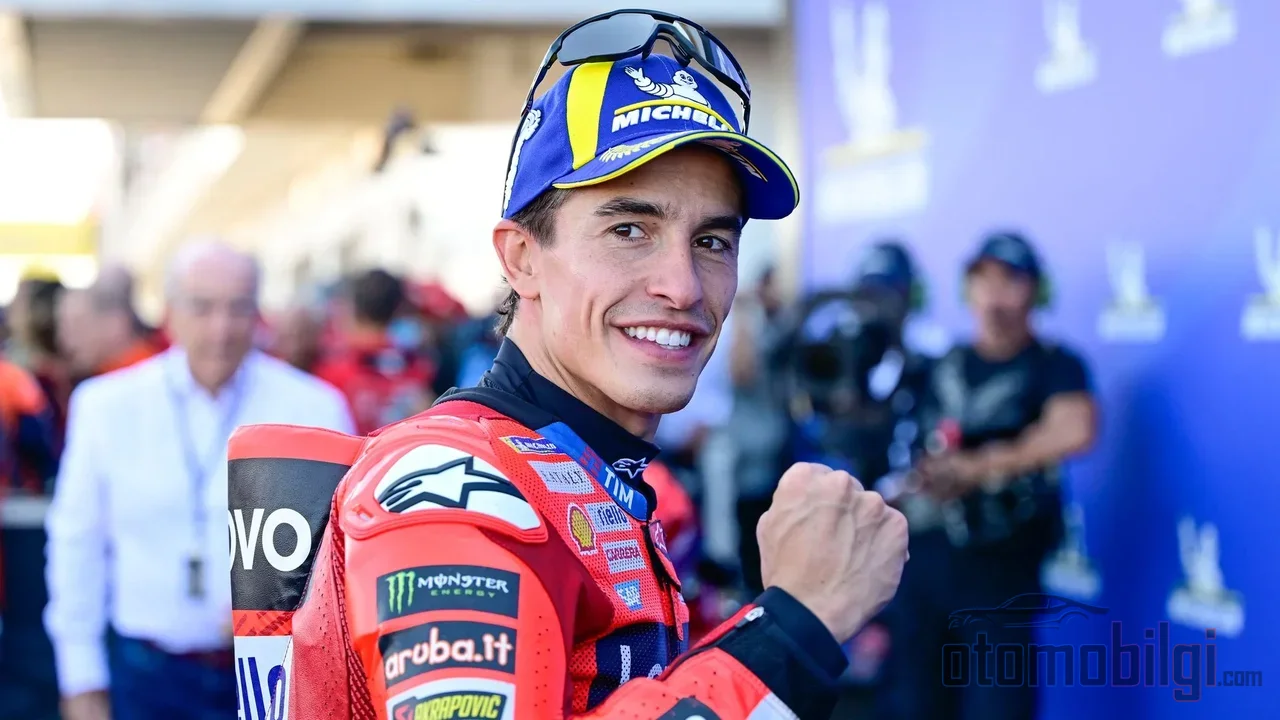
His first year in the intermediate class was tough. In 2011, with Monlau Competición, he took his first Moto2 win at Le Mans but closed the championship race 82 points behind Stefan Bradl. Moreover, after a crash in Malaysia, he suffered double vision (diplopia), was forced to withdraw from Valencia, and Bradl became champion. That eye problem will face him once again later in his career.
In 2012, everything changed with the Suter motorcycle: the championship with 328 points, 9 wins. He took six pole positions in the first eight races; He dominated the season with the chain of Qatar, Estoril, Assen, Germany and Indianapolis-Brno-Misano. He secured the throne with a second place in Australia. But his true signature performance came in Valencia: Starting from 33rd, he won the race. He passed a full 20 motorcycles in the first lap. In Moto2, 16 wins in 32 races in total - meaning he won every other race he entered.
2013: At 20, As a Rookie, Making History
When Casey Stoner retired, Repsol Honda dropped the bombshell on July 12, 2012: rookie Márquez was to be Dani Pedrosa's teammate. In his first race with the RC213V, he made the podium in Qatar, dueling with Rossi in the final lap. In his second race at Circuit of the Americas, pole position and victory: At 20 years and 63 days, he broke Freddie Spencer's 30-year-old record as the youngest premier class race winner.
History Repeating Itself at Laguna Seca
The visual classroom of the season was Laguna Seca. At the Corkscrew corner, he repeated the maneuver Rossi used to pass Stoner in 2008, this time over Rossi himself. He took four consecutive wins with Sachsenring, Laguna Seca, Indianapolis and Brno - again, for the first time since Rossi's 2008. But at Phillip Island he was disqualified due to a misunderstanding of Honda's mandatory pit stop directive, and his advantage dropped from 43 points to 18. The tension lasted until Valencia; there, he claimed the championship by finishing third. The first rookie to win a championship in the MotoGP era, the first rookie champion since Kenny Roberts in 1978, and at 20 years and 266 days, the youngest premier class champion in history. The Laureus World Breakthrough of the Year award was also added to his trophy shelf. He left Jorge Lorenzo and Dani Pedrosa behind.
2014: What Does Winning the First 10 Races Mean?
When you start a season by winning the first 10 races in a row (from Qatar to Indianapolis), you become the holder of the consecutive wins record - and that record still stands. He was only the third rider in premier class history to sign off on this feat; the previous ones were Mick Doohan and Giacomo Agostini. Think about how exclusive a club that is.
He won 13 of the season's 18 races; that surpassed Doohan's 1997 record. With his 13th pole position at Sepang, he also equaled Casey Stoner's season pole position record. Although he had a collision with Rossi at Misano mid-season and a crash in the rain at Aragon, it turned into a shake-up: By finishing second at Motegi, he claimed his second MotoGP championship with three races to spare. His rivals were once again the usual names: Rossi, Lorenzo, Pedrosa.
2016-2019: A Four-Championship Chain
The next four seasons were the era of Márquez's systematic dominance. In 2016, at 23, he equaled the all-time Grand Prix pole position record. In 2018 at Motegi, he claimed the seventh championship of his career. 2019 was a particularly dominant season: He finished it with 12 wins. 7. 7th and 8th It was also during this period that he took the title of the youngest driver to win GP championships.
What was the secret of those years? With a simple analogy: everyone was solving the same problem with limited tire life and limited grip, while Márquez found the limit a little further out on every track, in every condition. The Honda RC213V was sometimes not the fastest motorcycle, but he built his advantage on risk management, on never losing the races he had won.
2020-2022: Hell and the Comeback
At the 2020 season opener in Jerez he crashed and broke the humerus bone of his right arm. An early comeback attempt damaged the arm further; after three surgeries he missed the entire season. In 2021 the shadow of the injury lingered, and he even considered retirement. But that same year a double victory came at Aragon, and he returned to the top after 1043 days. In 2022 he underwent a fourth, successful surgery at the Mayo Clinic. Meanwhile, the double vision problem in his left eye had been an old enemy since his 2011 Sepang practice crash - meaning his body paid the price of his courage for years.
With the RC213V no longer competitive, he terminated his contract with Honda in 2023 and moved to satellite team Gresini Ducati for 2024. He soon proved how right that decision was: finishing the season third on a year-old GP23 machine, and at Aragon, with pole position, a sprint win, a race win and the fastest lap, he experienced the first perfect weekend of his Ducati era. At the end of the season he signed a two-year factory Ducati contract. The stars of that year were Jorge Martin, Francesco Bagnaia and Márquez - all three on Ducati.
2025: The Seventh MotoGP Throne and the Brothers' Club
2025 with the factory Ducati was a year of celebration: 11 wins, 545 points, and a seventh MotoGP championship clinched in Japan. Coming exactly six years after his last championship and four major arm surgeries, this drought of victory was the longest of his career. One race after securing the championship, he suffered a new injury and missed the rest of the season - additional surgeries were needed in 2025 and 2026. So the throne was in his hand on one side, and on the operating table on the other.
The sweetest detail of the season: second place went to his brother Álex Márquez. They became the first brothers in Grand Prix history to finish a championship first and second in any class. Such a thing had never happened before.
On the Same Scale as Agostini and Rossi
So does Márquez's eight championships (the eight in the title is the count used before 2025, which lost its validity for a while; the current total is nine) make him the greatest of all time? This is exactly where the issue thickens.
Let's look at the numbers: Giacomo Agostini has 8 premier class championships, and 7 of Rossi's 9 world championships are in the premier class. Márquez's 7 MotoGP crowns equal Rossi's premier class count and are one behind Agostini. In the 2026 season he could have equaled Agostini with an eighth premier class championship, but he continued the season with injury interruptions. The wins side is more complicated: Agostini won 122 Grands Prix between 1965 and 1977; it seems very difficult for Márquez to reach him. Rossi's premier class record is 89 wins. In the statements where Agostini declares himself the greatest, he also praises Márquez but does not agree with those who call him the GOAT - the real answer will come from the track.
There is also a critical perspective: Winning seven championships in eight years at Honda and then switching to the most dominant machine of the era when the motorcycle was no longer competitive is a view frequently voiced in reader discussions. The decision is yours - but winning in every condition for eight years is still eight years of winning.
In short: The Common Definition of the Nine Titles
Let us give a brief and clear answer: Marc Márquez won his nine world championships as follows: in 2010 with Derbi in 125cc, in 2012 with Suter in Moto2, six times between 2013 and 2019, and then in 2025 with Ducati in MotoGP. He combines in a single career the distinctions of being the youngest premier class champion, the holder of the longest consecutive win streak, and the only rider to return to the top after four major surgeries. In 2026 he is still at Ducati Lenovo, and after his comeback from the Le Mans injury he once again took over the championship lead. So the final chapter of this story has not yet been written - and number 93 still holds the pen.
Sources
- Marc Márquez
- Marc Marquez - MotoGP Riders
- MotoGP's GOAT: Márquez's remarkable comeback yields title No. 7 - ESPN
- Marc Marquez: The MotoGP champion who came back from hell - Motorsport.com
- 10 feats that make Marc Márquez a World Champion - Box Repsol
- Marc Márquez - 2010 125cc World Champion
- Agostini's and Rossi's MotoGP records - Motorsport Magazine
- Marc Marquez Wins Second Straight MotoGP Riders Title - Honda Global Newsroom
- The most impressive MotoGP records of all time - Red Bull
- 2024 MotoGP World Championship