How to Win a Championship in MotoGP? Points System and Tactics
Share This Page
In MotoGP, the championship goes not to the rider who wins the most races, but to the one who loses the fewest points: the top 15 riders score in Sunday's race, the top 9 score in Saturday's Sprint, and at the end of the season the rider with the highest total is declared world champion. Sounds simple, right? But it is precisely this simplicity that gives rise to the biggest strategy battles in the paddock. Winning or finishing? Risk or patience? Let's work through all the math together!
Highlights
- The top 15 riders in the race score points; the leader is 25 points is awarded.
- In the Sprint, the top 9 riders score points, and these points count toward the championship.
- A rider can collect a maximum of 37 points from a single Grand Prix.
- In MotoGP there is no fastest lap bonus - unlike F1.
- 2020 champion Joan Mir lifted the trophy with a single win: consistency's triumph!
How does the MotoGP points system work?
The basic table is this: the top 15 positions in the full race run on Sunday score points. The leader gets 25, second 20, third 16; then come 13, 11, 10, 9, 8, 7, 6, 5, 4, 3, 2 and 1 points. So the biggest jump is between first and second place: 5 points. After fifth place, every position means a difference of just 1 point. That's why for riders, the "battle for the podium" and the "battle to stay in the top 15" are completely different worlds.
The nice thing about the system is this: only the winners don't score points. Every top-15 result counts. A title contender grits their teeth for that single point even when their best result of the day is 15th place. Think about it: in a regular exam, even the last-place finisher collects a point - and at the end of the season, those points can become the trophy.
| Position | Race Points | Sprint Points |
|---|---|---|
| 1. | 25 | 12 |
| 2. | 20 | 9 |
| 3. | 16 | 7 |
| 4. | 13 | 6 |
| 5. | 11 | 5 |
| 6. | 10 | 4 |
| 7. | 9 | 3 |
| 8. | 8 | 2 |
| 9. | 7 | 1 |
| 10th-15th | From 6 down to 1 | No points |
This main table has actually barely changed since 1993. It received its first major update in 2023 with the introduction of Sprint races. Another historical detail: unlike F1, MotoGP has no bonus point for the fastest lap. Setting the fastest lap on track makes you famous but doesn't add a single point to your tally. F1, meanwhile, awarded a fastest lap bonus to top-10 finishers between 2019 and 2024, then removed the rule in 2025. MotoGP never enters this debate; points come solely from finishing position.
How have Sprint races changed the championship math?
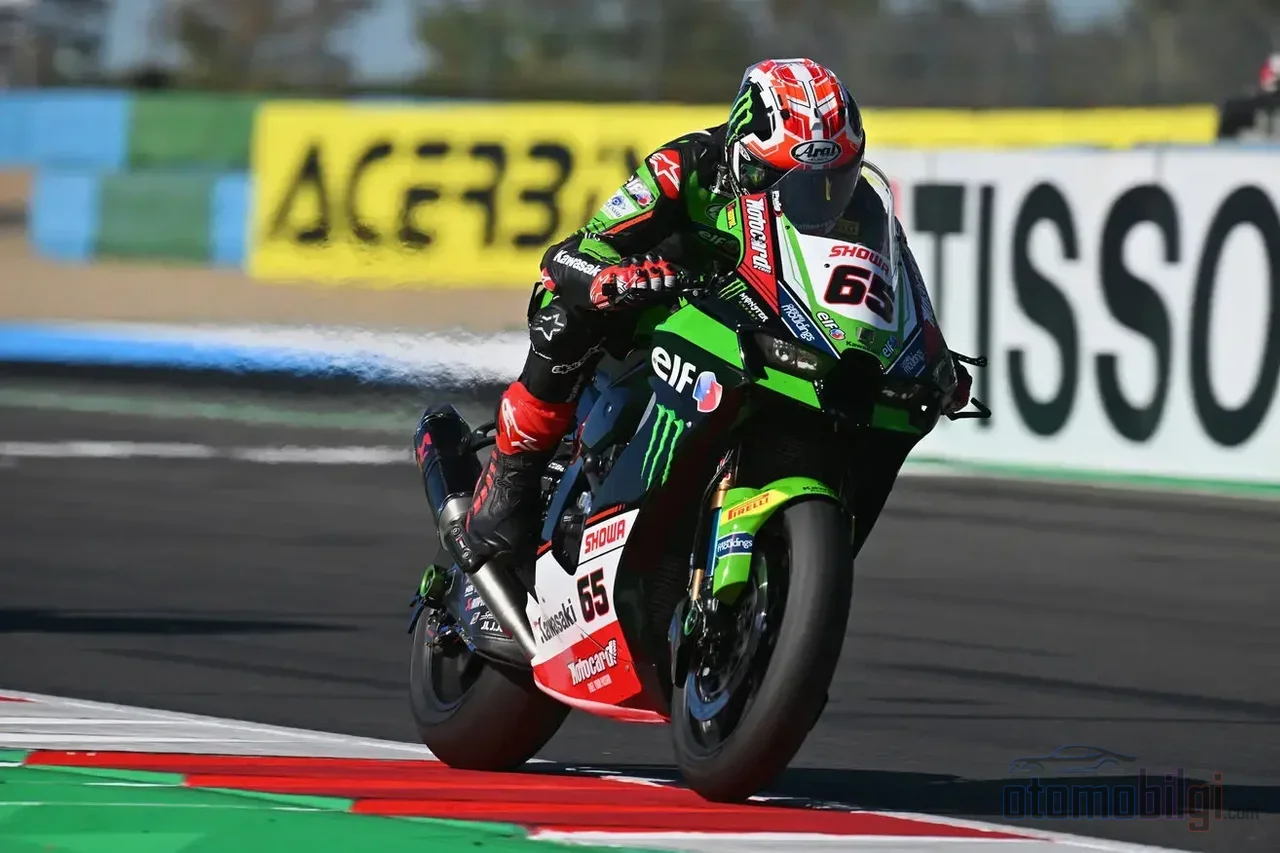
Since 2023, short Sprint races have been run on Saturdays, with the top 9 riders scoring points: 12, 9, 7, 6, 5, 4, 3, 2, 1. And here's the critical point: these points count fully toward the championship. So a rider can collect a maximum of 37 points from a single weekend - 12 from the Sprint, 25 from the race. On a team basis, the ceiling for a single race weekend is 45 points.
This seriously sped up the season. Saturday used to be like a "warm-up day"; now every Saturday is a mini championship exam. Staying out of trouble for Sunday matters, but if you skip the Sprint, your rival pockets 12 points. That's why one debate in the paddock never ends: some readers and commentators argue the Sprint should count as a separate full-points race weekend; others think Sprint points disrupt the championship balance. I ask you: does a half-length second match determine who truly deserves the championship?
Next up are the qualifying sessions. They are critical not just for pole position but also for tire strategy: according to the official statement, the tire compound chosen in qualifying directly affects the fastest lap a rider can set. The rider starting up front avoids the crash chaos in the first corners - and let me remind you, from 2027 Sprint qualifying is also coming with a "two grids, two shows" format. The weekend format is about to change completely!
Consistency or victory? Riders' risk management
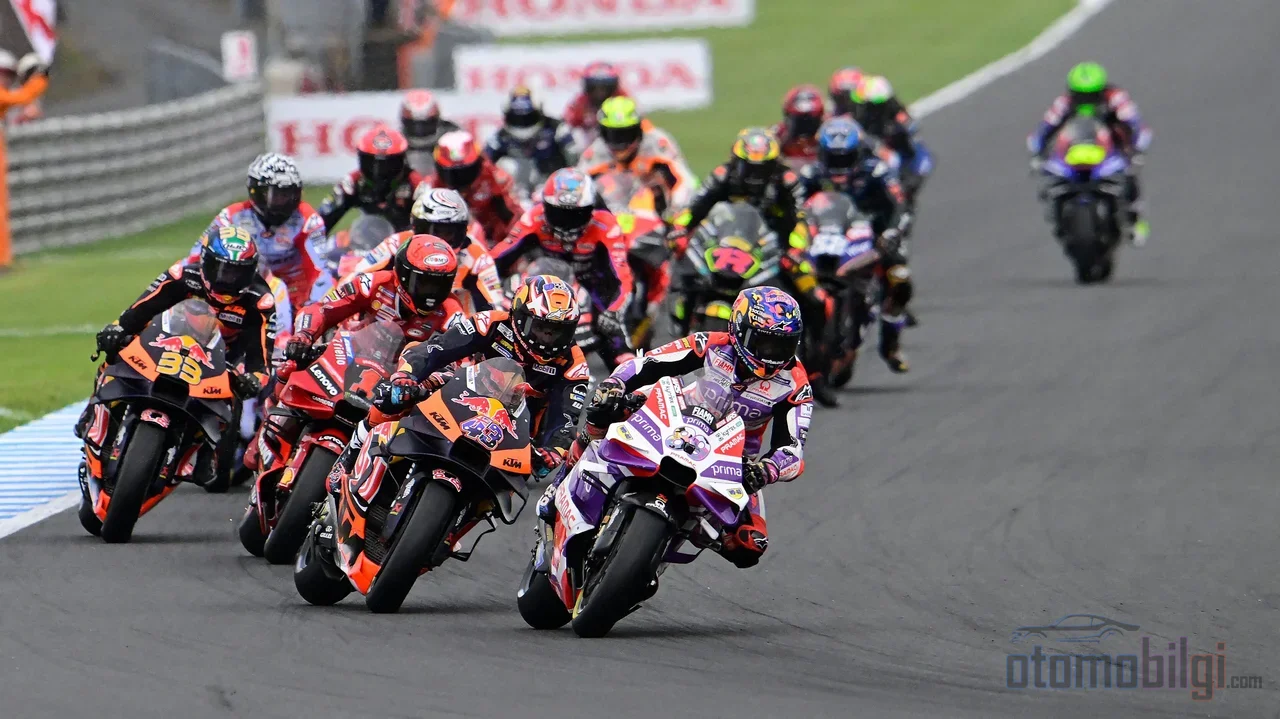
Here is MotoGP's hottest debate. Now think about it: trying to win every weekend in a 22-race season means going 100% through every corner. But pushing harder means tire wear, mistakes, and crash risk. The system rewards both styles: victory (25 points) and consistency (every top-15 result). Riders' strategy is built on balancing these two.
That's why races sometimes turn into chaos. Francesco Bagnaia, a world champion, once explained why races have become so chaotic by describing the effect of being in a winning position on some riders - everyone is so hungry to win that all the calculations fly out the window in an instant. If it were you, which would you choose: trying to win every race and sometimes scoring zero, or collecting third places and topping the table at the end of the season?
Add to that the variables that shape strategy: the rider's form, injuries, riding style, weather conditions, which circuits suit the manufacturers' motorcycles, and yes, a bit of luck. Even a crash you get caught in due to a rival's mistake can change the championship math. That's why riders who panic after a bad weekend usually lose; the system's long-term reward always goes to the consistent.
History is full of championships won by consistency
This theory is not empty talk; history has examples, and each one is full of lessons:
- 2006 - Nicky Hayden: He won only 1 race all season! But he became champion thanks to a third place in the final race at Valencia and Rossi finishing 13th after a crash. The gap was just 5 points.
- 2013 - Marc Márquez: In his rookie year, he finished 3rd at Valencia; although his rival Lorenzo won the race, the title went to Márquez by a 4-point margin.
- 2015 - Jorge Lorenzo: With his Valencia win in the final race, he overtook his teammate Rossi - who started from the back of the grid and finished 4th after the events in Sepang - at the very last moment.
- 2020 - Joan Mir: He became champion with a single win and 6 podiums. It's the textbook example of the system rewarding consistency.
- 2022–2024: Bagnaia came back from 91 points behind Quartararo to win the title in Valencia in 2022; in 2023 he won back-to-back with victory in the final race (after Martin crashed). Martin, for his part, took his revenge in the final race at Barcelona-Catalunya in 2024.
Do you see the common thread? The championship is usually not the reward for the brightest single performance, but for the most consistent one. And for the points-tie enthusiasts: under the current system, a points tie for the championship has never happened in MotoGP history. If it had, the count of best results (number of wins, number of second places), and then the highest finish in the final race, would have been the deciding factor.
The 2026 season: championship math live on air
The season we are watching right now applies this lesson exactly. The 2026 season started at the end of February with the Thailand GP, and the calendar features 22 races, 5 continents, and 21 countries. The theoretical maximum season total is exactly 814. By mid-season the standings became incredibly tight: before the 17th round in Indonesia, the gap was just 2 points, between Martin and Marc Márquez. At Mandalika, Márquez won the Sprint while Martin finished 4th, and the lead changed hands. With more than 400 points still to be distributed in the remaining races, everyone on the grid is still mathematically in the fight. Who do you think will hold on? Every weekend is like a 37-point minefield!
A background note: it is not just the championship that is moving - the rules are too. From 2027 onward, engine capacity drops from 1000cc to 850cc, aerodynamic bodywork will be heavily restricted, and holeshot and ride-height devices will be banned. In other words, today's riders will have to prove their risk management all over again on completely different machines tomorrow.
And there is the legends side of the story: Marc Márquez reached his 7th MotoGP title in September 2025, matching Rossi; the most decorated rider in motorcycle history is Giacomo Agostini with 15 titles. Márquez said that breaking Rossi's title record is no longer his goal in mid-2026 - interesting, isn't it? It was said that in 2025 he shifted to a more cautious championship strategy; not as someone avoiding risk, but as someone placing risk at the right moment. This fits our topic perfectly: even the names at the top decide when to open the throttle and when to brake based on the points table.
Why does knowing the points system make watching the race more enjoyable?
No longer will the only thing you check on screen be whether the leader is leading. While watching a rider in 12th place, you will not say "what's the point"; that rider may well be chasing 5 crucial points in the championship calculation. When the final races arrive, you will be able to say "2 points behind is enough" instead of "he must win now". And next Saturday's Sprint, you will watch with as much excitement as Sunday's race - because now you know: there are 12 points there, and those 12 points could mean a trophy at the end of the season. MotoGP is not just a speed race; it is also a massive accounting exam lasting 22 weeks. Do you think math or courage will win this year?
Sources
- What is the MotoGP™ Points System? – all you need to know
- MotoGP™ World Standings | 2026
- MotoGP points system explained - this is how it works
- MotoGP Rules
- How Does MotoGP™ Qualifying Affect the Race?
- 7 rule changes you need to know for the 2025 F1 season
- F1 fastest-lap point to be dropped from 2025 season
- Marc Marquez wins seventh MotoGP title to equal Rossi
- 93 vs 46: the stats over seven MotoGP titles
- Back in the fight? Marquez's 2026 title chances
- Inside MotoGP's tightest title fight yet
- MotoGP 2026 mid-season report
- MotoGP 2026 Season Race Calendar
- Marc Marquez says breaking Rossi's title record no longer goal
- Why MotoGP races have become so chaotic