Freddie Spencer's Double Championship Season
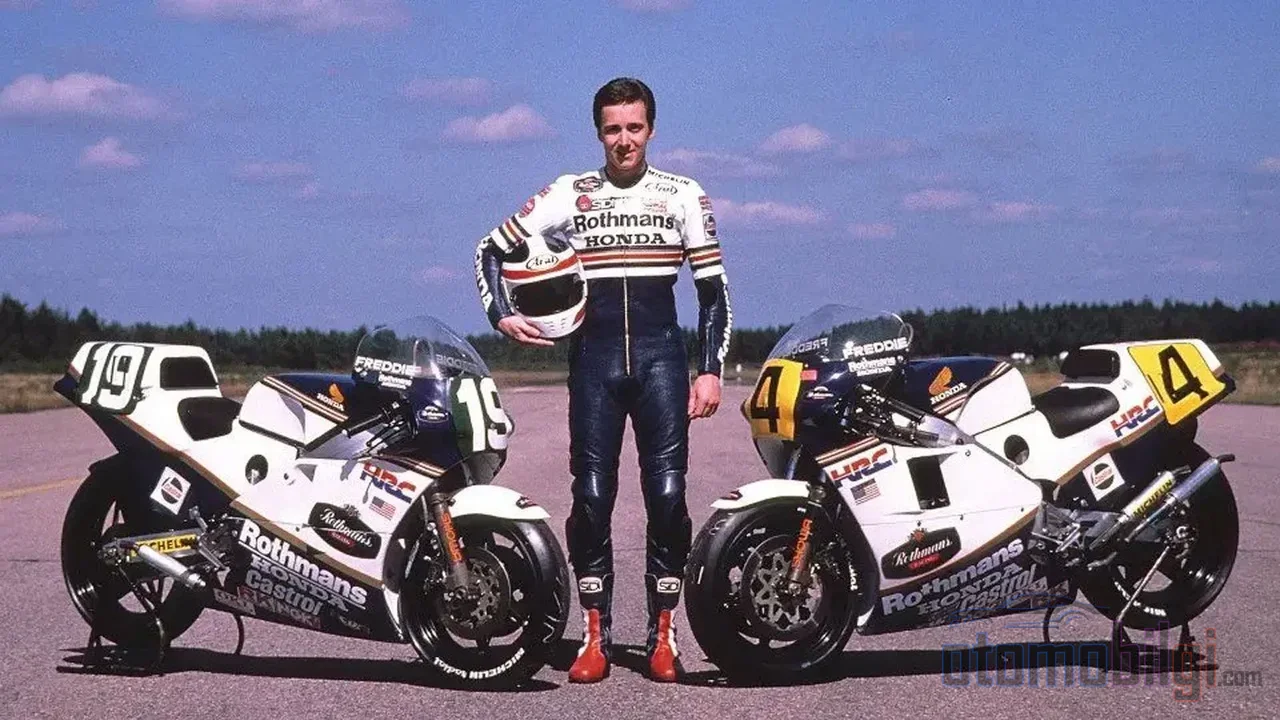
Suppose you have two exams in the same weekend. One is math, one is literature; two completely different worlds, two different mental exercises. Now let's translate this to motorcycle racing: In 1985, Freddie Spencer took the two toughest exams in Grand Prix history in the same year and finished both of them in first place. He is the only rider to win both the 500cc and 250cc world championships in the same season. More than thirty years have passed, technology has soared, riders have become legends; this record still stands. So how could a rider reach the summit of two worlds in the same year?
Who Is Fast Freddie, and How Did He Get to 1985?
Frederick Burdette Spencer was born on December 20, 1961, in Shreveport, Louisiana, USA. His nickname was "Fast Freddie" and he hadn't earned it for nothing. Spencer, who stepped onto the Grand Prix circuits in 1980, quickly became the star of the Honda factory team. In 1983, at just 21 years old, he won his first 500cc world championship and took the title of the youngest-ever 500cc champion at the time from Mike Hailwood. That age record could only be broken in 2013 by Marc Márquez; while his victory at age 20 in Spa still makes him the youngest premier class race winner.
But the 1984 season didn't go so brightly. Honda had developed a thoroughly redesigned V4-engined NSR500: the fuel tank had been moved under the engine, and the expansion chambers were placed under the fake tank. It was a revolutionary motorcycle, but teething problems and crashes left Spencer unable to defend his championship; he finished the season 4th. . Still, he signaled his potential by taking 3 wins with the new NSR500 and 2 with the old three-cylinder NS500. The stage was set for 1985.
Highlights
- Spencer is the only rider to win both the 500cc and 250cc world championships in 1985.
- He took a full 7 wins across both classes; he finished the 250cc with 127 points and the 500cc with 141 points.
- The machines: Honda NSR250 in 250cc, Honda NSR500 in 500cc.
- The 500cc championship was sealed at the Swedish GP on August 11, 1985.
- No rider has been able to repeat this double to date.
The Season Exploded at Daytona: Three Victories in a Single Year
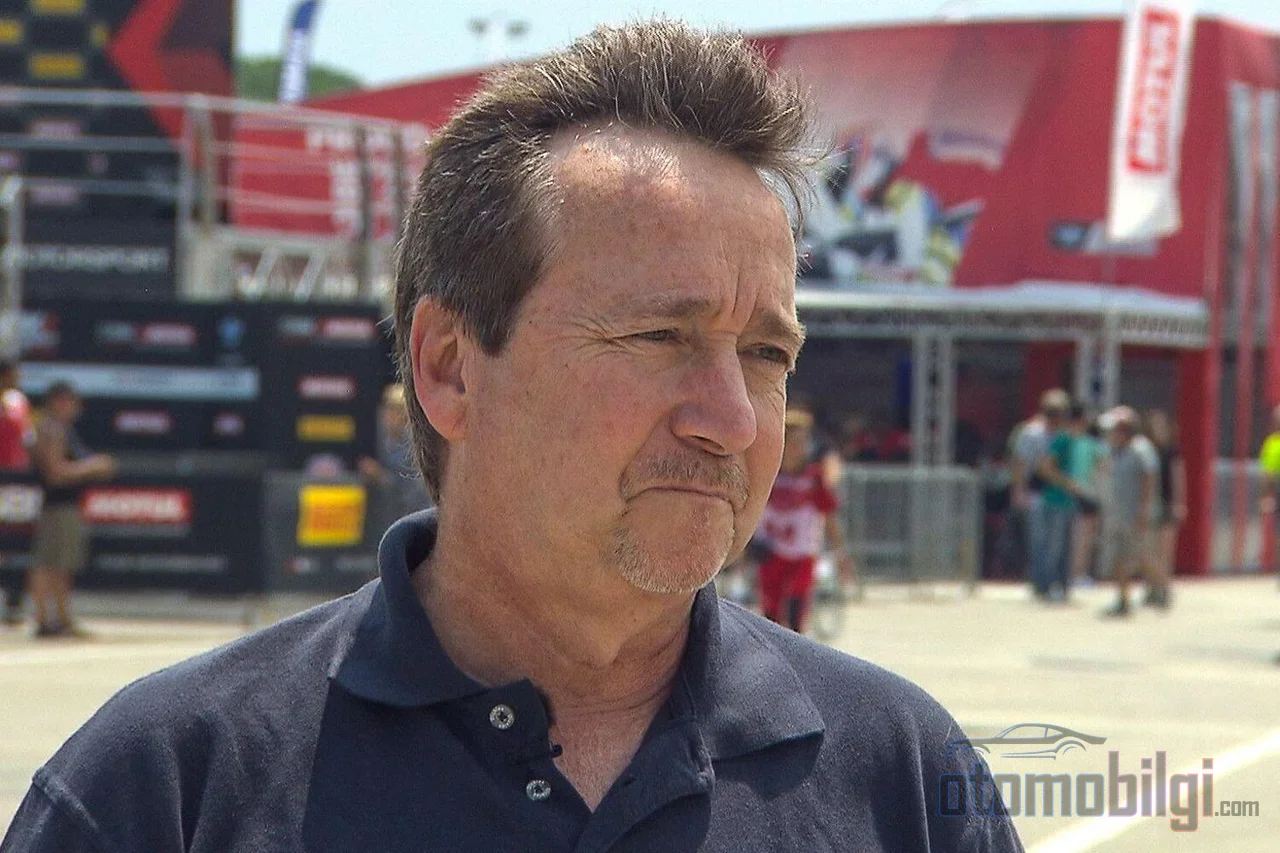
1985 announced itself even before the European season began. In March, Spencer came to Daytona and won practically everything: Formula 1, Superbike and the 250cc class alike. Thus he went down in history as the only rider to win Daytona's three main events in a single year. On the Superbike side, he took the first Daytona 200 victory of the Superbike era that same season with the Honda VF750F Interceptor. Then he packed his bags and flew to Europe; the real marathon was only just beginning.
The 500cc Championship: How Was It Won, Race by Race?
First Half: From Jarama to Mugello
The season's first round was passed with a 2nd place at Kyalami in South Africa. Then came the first 500cc win of the season at Spain's Jarama circuit; by a margin of more than 13 seconds ahead of Eddie Lawson. When Christian Sarron took the first 500cc victory of his career in wet conditions at Hockenheim, Spencer finished 2nd. but took over the championship lead. The real breakthrough came in Italy, at Mugello: he won the 500cc race, and by also winning the 250cc race the same day, he became the first rider to win two classes on the same day in 12 years. Two victories on two different motorcycles in a single day; imagine it - a lightweight machine in the morning, a half-heavy monster in the afternoon.
Difficult Moments: Yugoslavia and Assen
Did everything go smoothly throughout the season? Absolutely not. In Austria, after a red flag, under the aggregate system - a race decided on combined times - he won by just 0.03 seconds. In Yugoslavia he hit a hay bale; he crossed the finish line second but collapsed in physical pain immediately after the line. At the Dutch TT, on a wet track, he was knocked down by Sarron, whom he couldn't even see entering his field of vision, and the season's only retirement came in that race. Still, Spencer knew how to recover: At Spa-Francorchamps he won both the 500cc and 250cc, extending his lead to 10 points, and with another win at Le Mans the gap reached 17 points.
Crowning Days: Silverstone and Anderstorp
On Silverstone's wet day, he first secured the 250cc world championship, then immediately won the 500cc race as well. The true finale came on August 11, 1985, at Anderstorp in Sweden: Spencer, winning the race ahead of Lawson, claimed his second 500cc world championship. Guess what happened? It was the last Grand Prix victory of his career. He did not participate in the season finale at Misano due to a thumb injury; Lawson won there, but the titles already belonged to Spencer.
| Class | Motorcycle | Wins | Points | Ranking |
|---|---|---|---|---|
| 250cc | Honda NSR250 | 7 | 127 | 1. |
| 500cc | Honda NSR500 | 7 | 141 | 1. |
The 250cc Side: A 3-Point Battle with Mang
The 250cc championship was much tighter than you might think. Spencer raced in Rothmans Honda-HRC colors with the new twin-cylinder NSR250, and won the championship against his teammate Anton Mang by an incredible margin of just 3 points. Another interesting detail: that season at the Dutch TT, Randy Mamola went down in history as the first rider to race on live camera. So 1985 was a year not only for Spencer but also for the emergence of television technology.
Behind this effort was Erv Kanemoto as chief mechanic; all three of Spencer's world championships were won with Kanemoto at Honda. The harmony of the rider-mechanic duo was decisive in the technical logistics of managing two classes at once.
The Price of the Double Burden: Injuries and a Rapid Fade
Here is the bittersweet side of the story. After 1985, Spencer never won another Grand Prix race. Some believe the hand and wrist injuries stemmed from the physical toll of two championships in a single season; how certain that is is debatable, but the chronology is striking. He retired from Grand Prix in early 1988, making brief comeback attempts in 1989 and 1993. In the 1990s he returned to AMA Superbike, winning 3 races; At the end of 1995, he took over a factory Ducati ride in the Superbike World Championship. Afterwards, he ran his own riding school in Las Vegas, moved to London, worked as a TV commentator, and in 2019 was appointed head of the FIM MotoGP Stewards Panel. So life went on; but that 1985 brilliance on the track was never recaptured.
Why Has This Record Still Not Been Broken?
The short answer is this: because he was never even given the chance to try again. From 1986 onward, riders were allowed to compete in only a single class; the reasoning was that a rider racing in two classes would gain track knowledge advantages in the premier class. In other words, Spencer's double remained behind a door that the rules had closed from the very start. Another reason put forward is the gulf between the 250cc and 500cc machines: going back and forth between a lightweight, agile twin-cylinder bike and the 500cc monster required being almost two different riders, both physically and technically.
Let's also clarify the statistical picture: Spencer is the fifth and last rider to win the 500cc title and a lower class in the same year; however, due to the class changes, he is the only name to win both the 500cc and 250cc titles in a single year. His career closed with 72 starts, 27 wins, 39 podiums, 33 pole positions, 24 fastest laps, and 610.5 points. The official MotoGP website clearly emphasizes that this double crown has never been repeated.
In short: Why Does 1985 Still Stand Alone?
Freddie Spencer's 1985 is the unrepeatable year of motorcycle racing history. The same rider, the same season, two different classes, two different motorcycles, and two world championships. On top of that, he squeezed all three parts of Daytona into the same year. No one has broken the record to this day because the rules changed, the machines drifted even further apart, and the physical toll was real. That is why Fast Freddie's 1985 is legendary: he did what seemed impossible, and then they closed the door behind him.
Sources
- Freddie Spencer - MotoGP Riders
- Freddie Spencer - Wikipedia
- Video: Spencer's stunning title double in 1985 - Autosport
- Freddie Spencer: two titles in the same 1985 season - Bike.lv
- Freddie Spencer - Motorsports Hall of Fame of America
- Flashback Friday: Fast Freddie Forty Years Ago - MotoAmerica
- Freddie Spencer, 1985: The Year the Impossible Became Routine - Superbikeplanet