The Anatomy of Wayne Rainey's Three 500cc Championships
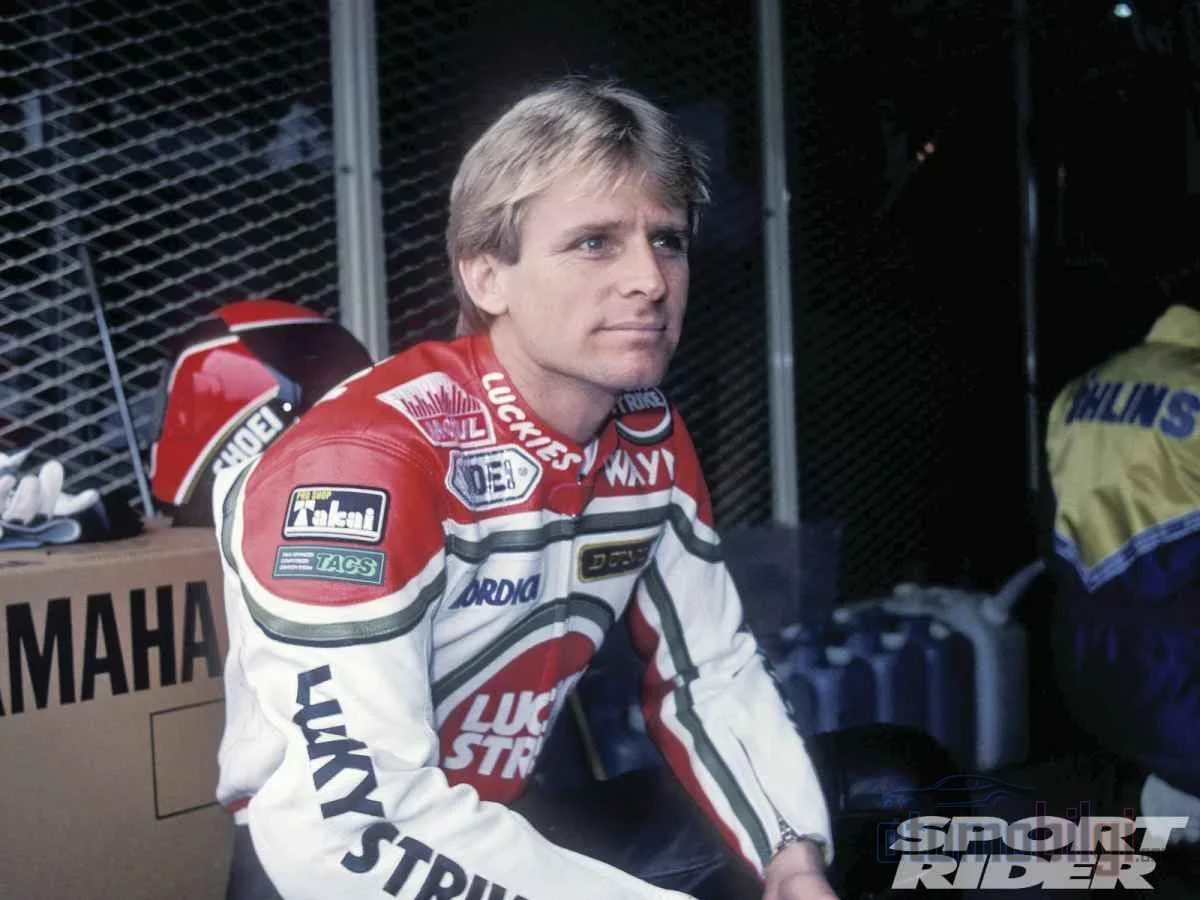
September 5, 1993, Misano. Round 12 of the season, you lead the championship, you're out front in the race, and with only 5 points between you and your rival on the road to a fourth world title. Then, on the seventh lap, at the exit of the first corner, everything changes in less than a second. That is the cruelest side of the Wayne Rainey story: that legendary 1990-1992 period, which crowned the man's career with three consecutive titles, is remembered by most people, in the end, through that single corner. Yet Rainey's domination with Yamaha is itself a lesson in its own right.
So how did Rainey win those three championships? Are you ready? Because this story features a team founded by Kenny Roberts, a rivalry with Kevin Schwantz spanning years, Mick Doohan's injury, and an engine that planted the seeds of today's Yamaha technology.
The Roberts Yamaha Trio: How Was the Story Built?
Let's go back a bit first. Rainey, born on October 1, 1960, is a Californian who started racing in 1977 on dirt tracks, that is, dirt racing. In 1983, he won the AMA Superbike championship with Kawasaki; and that after a tense battle against names like Kenny Roberts and Freddie Spencer. Later, through Roberts' introduction, he raced full-time in the 250cc World Grand Prix from 1984 onward, returned to AMA Superbike with Honda in 1987, and won that series for a second time.
The real turning point came in 1988. In place of the rider who left Lucky Strike-Yamaha, Roberts chose a young duo: Rainey and Kevin Magee. Thus Rainey joined the factory-backed Yamaha 500cc team. In his first season, he finished 3rd, taking one win (his first GP victory was the British GP at Donington), one pole position and six podiums. In 1989, with 3 wins and 4 pole positions, he finished the championship in 2nd place. So the championship was close; the only thing missing was dominating over a full season.
The interesting detail here is this: Being on Roberts' team was no guarantee. Rainey knew that this was serious business, and that if he couldn't keep the YZR500 on pace, Roberts might look for another rider. This invisible pressure within the team played a role that cannot be underestimated in shaping Rainey's disciplined racing philosophy.
Highlights
- Rainey won three consecutive 500cc world championships in 1990, 1991 and 1992, all with Yamaha.
- His career includes 24 GP wins, all 95 races on Yamaha engines.
- The 1992 YZR500 raced with power raised from 155 PS to 160 PS and an engine with irregular firing intervals.
- The Misano crash on September 1993 ended the career of the 32-year-old champion.
1990: The First Championship, an Almost Flawless Season
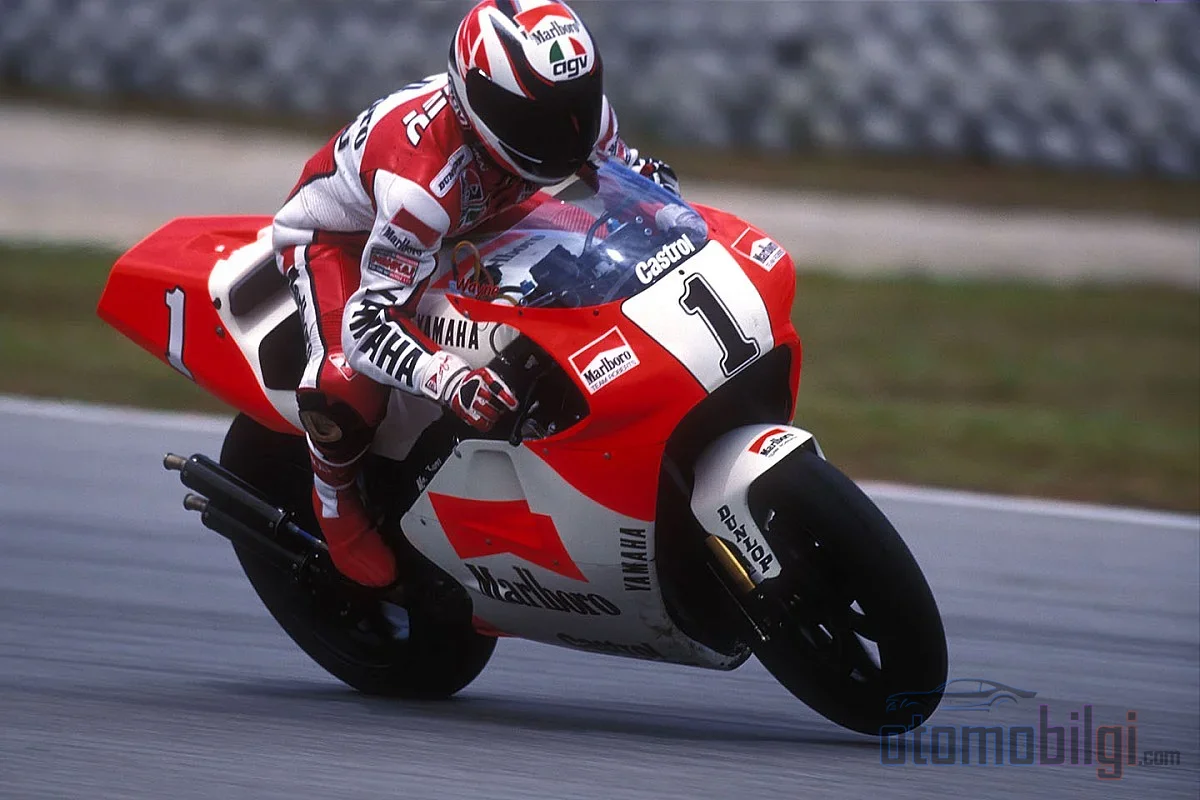
1990 was Rainey's third full season in 500cc, and he went through it like a masterclass. He opened by starting from pole position in Japan and winning the race; in the USA, he won by a full 6-second gap over second place. In the stretch from Spain to Switzerland, Belgium and Sweden, he collected 4 wins, 5 seconds and 1 third. Just imagine: There was one man on almost every podium of the 15-race season, and that man wore the same calm face every time.
The championship was decided at round 13 in Czechoslovakia. Rainey led with 220 points, while Schwantz chasing him had 173. Schwantz crashed on the third lap while chasing the duel between Rainey and Wayne Gardner and was out of the race. The championship became Rainey's with two races to go.
The end-of-season table speaks for itself: Rainey champion with 255 points, Schwantz second with 188, young Mick Doohan third with 179. On the manufacturers' side, Yamaha took its sixth manufacturer championship with 272 points; moreover, that same year the championship in 250cc also came to Yamaha (with John Kocinski). That is why, in Yamaha's own archive, this triple is recorded as an achievement matching Roberts' own three consecutive championships: same team, same brand, two different legends.
YZR500: The Weapon of the 500cc Era
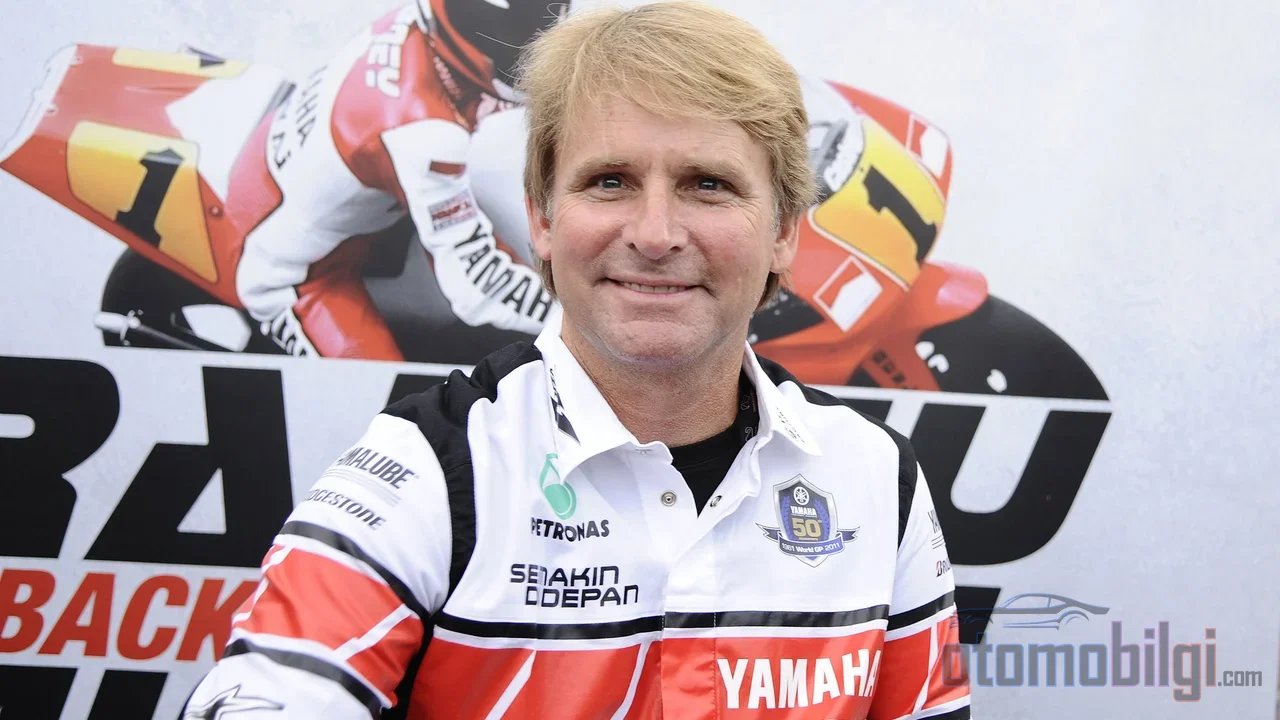
Could we talk about Rainey's triple without mentioning the engine? Of course not. Let's put the two championship engines side by side:
| Feature | 1990 YZR500 (0WC1) | 1992 YZR500 (0WE0) |
|---|---|---|
| Engine type | Liquid-cooled 2-stroke V4 | Liquid-cooled 2-stroke V4 |
| Displacement | 499 cc | 499 cc |
| Intake system | Crankcase reed intake | Crankcase reed intake |
| Transmission | 6 speeds | 6 speeds |
| Maximum power | Over 114.0 kW (155 PS) | Over 117.7 kW (160 PS) |
A two-stroke V4, 500cc and 155-160 horsepower; these engines were creatures unthinkable under today's motorcycle safety understanding. But what was truly interesting about the 1992 engine was not the power increase: from round 9 of the season in Hungary onwards, the engine was developed to use irregular firing intervals. This experiment laid the foundations of what Yamaha today calls the crossplane engine. In other words, Rainey's last championship engine was actually pointing the way to the Yamaha of twenty years later.
1991: Second Championship and the Established Pattern
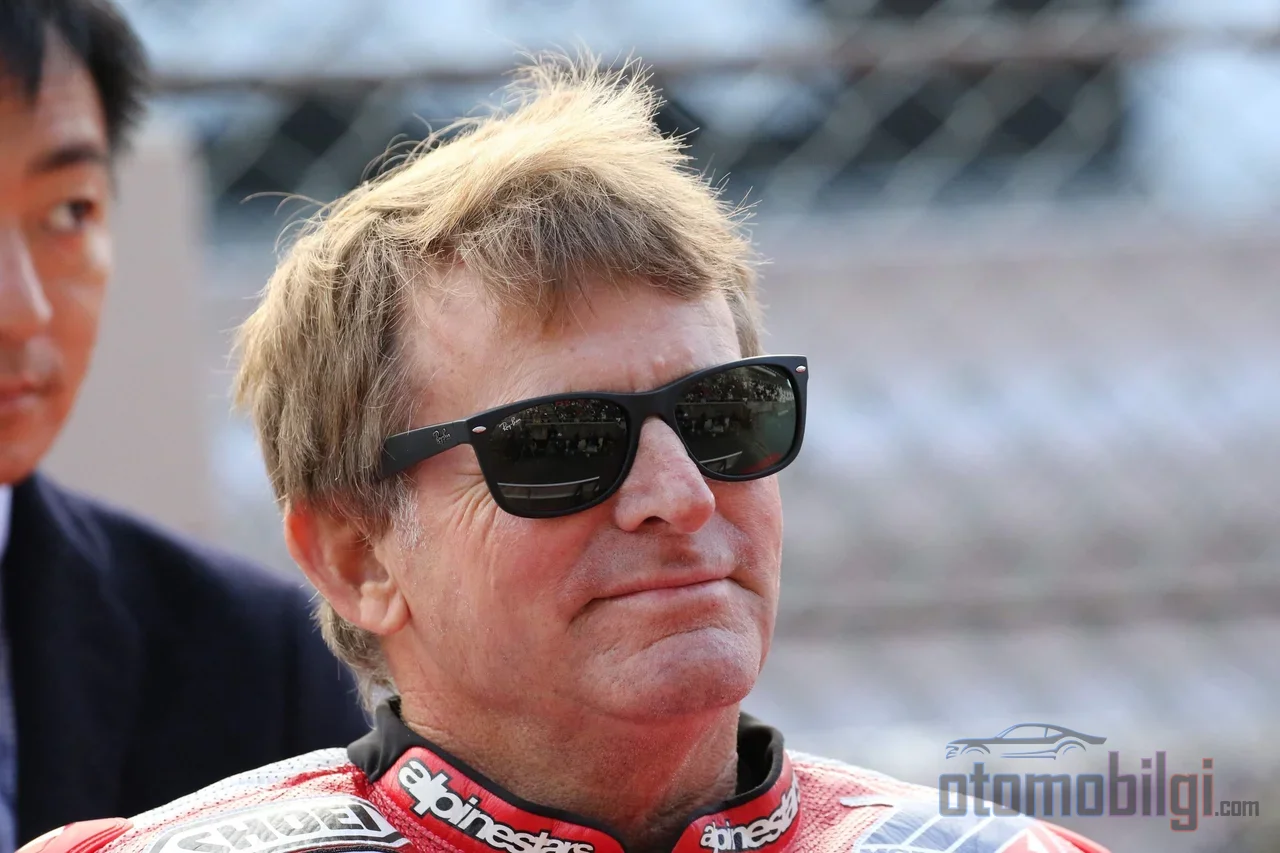
It would not be wrong to say that in 1991 Rainey made the job a bit more automatic: champion with 6 pole positions, 6 wins, 4 seconds and 3 thirds. What the statistics say is this: the man was not just winning, he was finishing every race and stepping onto the podium almost every time. That was the craftsmanship side of it too.
The duels with Schwantz in those years cast Rainey's racing style into a mold. Get ahead first, then stay ahead until the finish. This pattern settled in firmly after the Schwantz battles; Rainey calculated risk, not his rival.
1992: Injury, 2 Points and the Kyalami Finale
The third championship was the most dramatic of the three. Doohan started the season strong: he won 4 races in a row and built a big points advantage. But he was injured at round 8 and missed 4 races. Rainey collected points steadily in this gap, overtaking Schwantz to take second place. By the final race at Kyalami, Doohan's gap to Rainey was just 2 points. In other words, a mini one-race final: whoever finished ahead of the other would be champion.
The result: Rainey 3rd, Doohan 6th. happened. The name that grabbed and carried off the championship in 1992, with 3 wins, 4 seconds and 1 third place and without a single pole position, was Rainey. Did a championship without a pole position seem strange to you? I think it shouldn't: The 1992 Rainey was exactly that - not speed, but results management. Schwantz rising again that year and pushing Rainey to his limit was an added bonus.
The Schwantz Rivalry: Heat and Respect
The Rainey-Schwantz rivalry dates back to the 1987 AMA Superbike season; that year, after Schwantz's penalty, Rainey claimed the number one plate. This contest, which lasted from 1987 to 1993, is remembered as one of the most intense rider rivalries in 500cc history. Their styles were also different: Rainey was fluid and calculating; Schwantz, meanwhile, practically infuriated Rainey with his wins at Assen and Hockenheim.
Rainey himself later recounted that he tried to influence his rival in ways that would demoralize him in testing, but that Schwantz kept getting stronger. He was even the one who said he thought Schwantz wasn't appreciated enough for the 1993 championship, and that his rival did a tremendous job that year. This honesty between champions shows just how real the rivalry was.
Misano 1993: A Career Ends, A Sport Changes
September 5, 1993, the Santamonica circuit at Misano Adriatico, the Italian GP. Rainey was both the championship leader and the race leader. On the seventh lap, losing control of the motorcycle while exiting the first corner in third gear, he suffered a high-side crash at approximately 120 mph. His sixth thoracic vertebra shattered, his lung was punctured, and he was paralyzed from the middle of his chest down. Sources do not confirm the cause of the crash as a mechanical failure; it is reported that the motorcycle threw him off and control was lost.
Although he survived, he was 32 years old, the age of forced retirement, and Rainey closed that season in 2nd place with 4 wins and 1 pole position; finished the season in that position; the champion was Schwantz. In fact, Rainey was not the only victim of the crash: this event led to a comprehensive re-evaluation of Grand Prix circuit safety. We owe part of the much safer racing we watch today to this crash.
So How Exactly Did Rainey Win These Three Championships?
The short and clear answer is this: Rainey turned the discipline of consistently scoring points, learned in Kenny Roberts' Yamaha team, into three consecutive 500cc world championships by finishing on the podium in almost all of the 15 races in 1990; with 6 wins and 6 pole positions in 1991; In 1992, after Doohan's injury, he held onto a 2-point lead at Kyalami and turned it into three consecutive 500cc world championships. Rainey, who had a total of 24 GP wins in his career, raced all 95 of his races with Yamaha.
After His Career: The Return to the Paddock
The story did not end with the crash. In 1994, Rainey returned to the paddock in a wheelchair and founded Marlboro Yamaha Team Rainey. He played a role in the success of names such as Norifumi Abe, Tetsuya Harada and Kenny Roberts Jr. played a role in the success of names such as; He left management in 1998. For a long time, he remained Yamaha's last rider to win a 500cc/MotoGP championship.
The most poignant moment came in 2022: At the Goodwood Festival of Speed, he rode the 1992 YZR500 again for the first time in 26 years. Yamaha had made special modifications that moved the rear brake and gear controls to the handlebar. The three-time champion got back on the same machine after all those years; in my opinion, that image sums up the trilogy perfectly.
Sources
- Wayne Rainey - Yamaha WGP 50th Race Archive Rider Profile
- Challenges Carving Our Name into Racing History - Yamaha WGP 60th History
- 1990 YZR500 (0WC1) - Yamaha Communication Plaza
- 1992 YZR500 (0WE0) - Yamaha Communication Plaza
- Wayne Rainey - MotoGP Riders
- Rainey Paralyzed After Crash in Italy - LA Times
- 1990 - GP 500 ccm (Wayne Rainey) - moto.cz
- Rainey: Schwantz doesn't get enough credit for '93 title - Motorsport.com
- MotoGP greats - Wayne Rainey - crash.net