Why Don't We See Female Riders in MotoGP?
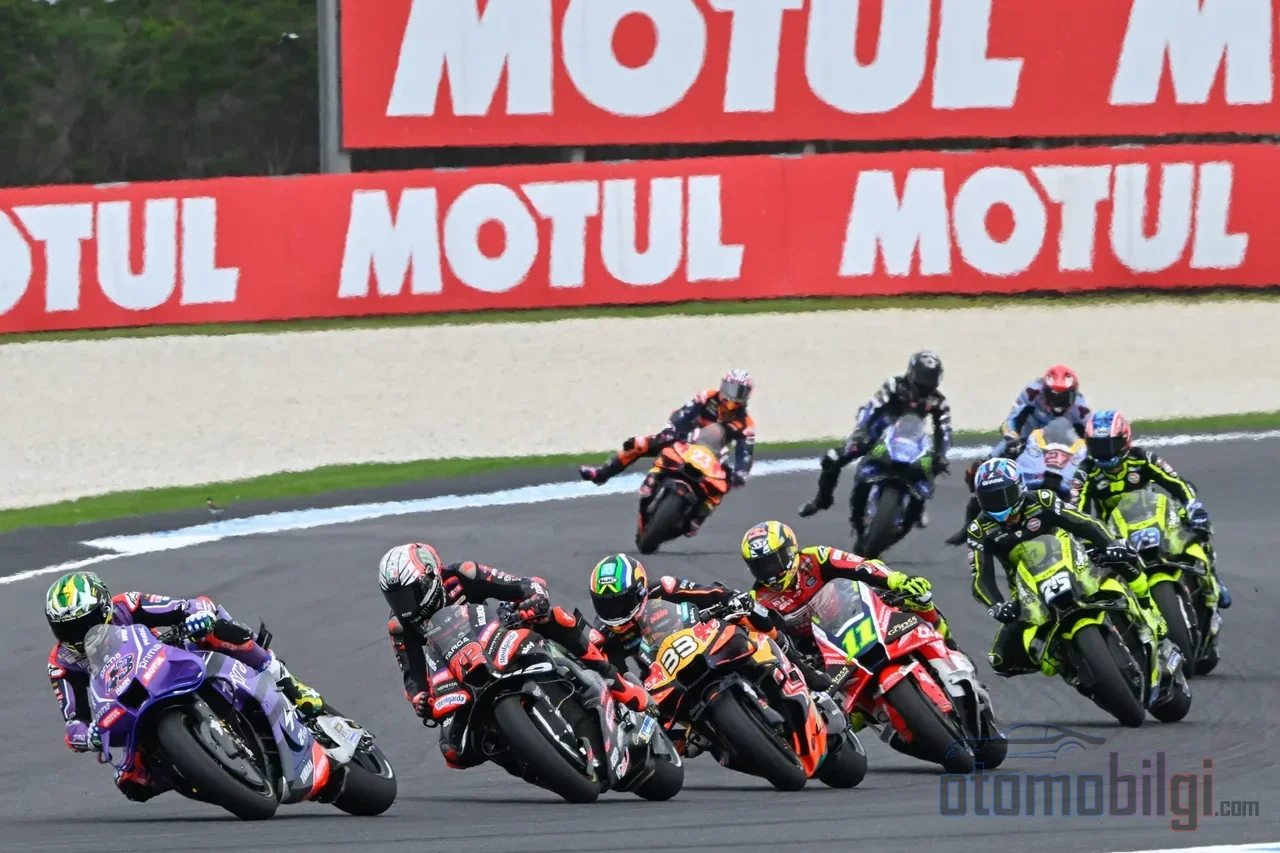
When you sit down in front of the screen on a Saturday evening and open the MotoGP race, the names of the 22 riders never really change, do they? They are all men. A similar picture exists on the Formula 1 side, but motorcycle racing is a bit more interesting, because in Moto3 and Moto2 women riders actually raced, scored points, and even became world champion. So if there are names in the lower categories, why does an entirely empty seat remain at the top? Is it a rule that blocks the way, physics, or is the ladder itself broken? Let's take a look step by step.
Can women race in MotoGP, or is there a rule standing in the way?
First, let's settle the most basic question: There is not a single line in the MotoGP regulations that bans women riders. When teams choose riders, they look at their lap times in qualifying, their development and their budgets; gender does not even enter the list. So the door is open to everyone in theory.
But here is the interesting part: In MotoGP's premier class - on today's 1000cc machines, and even back in the era we used to call 500cc - no woman rider ever managed to race a full season. By contrast, in Moto2, Moto3 and the old 125cc, women riders were both present and collected points. So there is no situation of "women cannot enter this sport"; they have entered, and some even left their mark on history. The problem is not at the door, but on the road leading to it. To map out that road, we first go down to the lowest rungs of the ladder.
The names on the way to the top: Women riders' Grand Prix journey
The first orange name on the ladder comes from Finland. Taru Rinne came up through karting - she became the 85cc Finnish Karting Champion in 1979 and battled in the same era as Mika Häkkinen, who would later become Formula 1 champion. She stepped into the Grands Prix in 1988 and collected 25 points from 22 starts between 1987 and 1990; she was the first woman to score points in motorcycle Grand Prix racing. Her career was ended by a heavy crash at Paul Ricard.
She was followed by Tomoko Igata from Japan: Between 1991 and 1995 she was the second woman to race full-time in 125cc, and in 2016 she was named an FIM Legend, officially inscribing herself into the history of motorcycle sport. Katja Poensgen from Germany became the first woman to qualify for a Grand Prix race in 250cc, she started riding motorcycles at the age of four, had a brief Moto2 period, and today is a member of the FIM Hall of Fame. There are names further back as well: There is a list stretching from Beryl Swain, who raced in 1962, to Elena Rosell, who competed in Moto2.
But among these names, one overshadows the others: Ana Carrasco. The Spanish rider started in Moto3 in 2013, at the age of 16; she took points-scoring results with a 15th in Malaysia and an 8th in Valencia. In 2015 she was forced to leave Moto3 due to sponsor problems - and that is the very heart of our topic, we will come back to it shortly. In 2017 she moved to WorldSSP300 and in 2018, at the season finale at Magny-Cours, she clinched the championship against Mika Pérez by a margin of just 1 point. That trophy, won on a Kawasaki Ninja 400, was the first world championship a woman had won in motorcycle road racing.
Another important name is María Herrera: The first woman to win a race in the FIM CEV Repsol. He raced a full season in Moto3 in 2015, finishing 11th in Australia. ; afterwards he turned to WorldSSP300 and MotoE. His 2022 Moto3 wildcard appearance at Aragon with the all-female Angeluss MTA team was one of the strongest images of recent years. In short, it is not that there were no women in this sport in the lower classes; quite the opposite, the stories have accumulated.
Highlights
- There is no ban on female riders in the MotoGP rules; teams look at rankings, not gender.
- No woman has ever raced a full season in the premier class; female riders have scored points in Moto3, Moto2 and 125cc.
- Ana Carrasco became the first woman to win a world championship in motorcycle road racing when she took the 2018 WorldSSP300 title.
- Since 2024 there has been a world series exclusively for women: WorldWCR.
- Around 80% of the MotoGP audience is male; the rate of women entering the sport is the real bottleneck keeping it from the top.
How the rider ladder works: From karting to Moto3, from Moto2 to the top
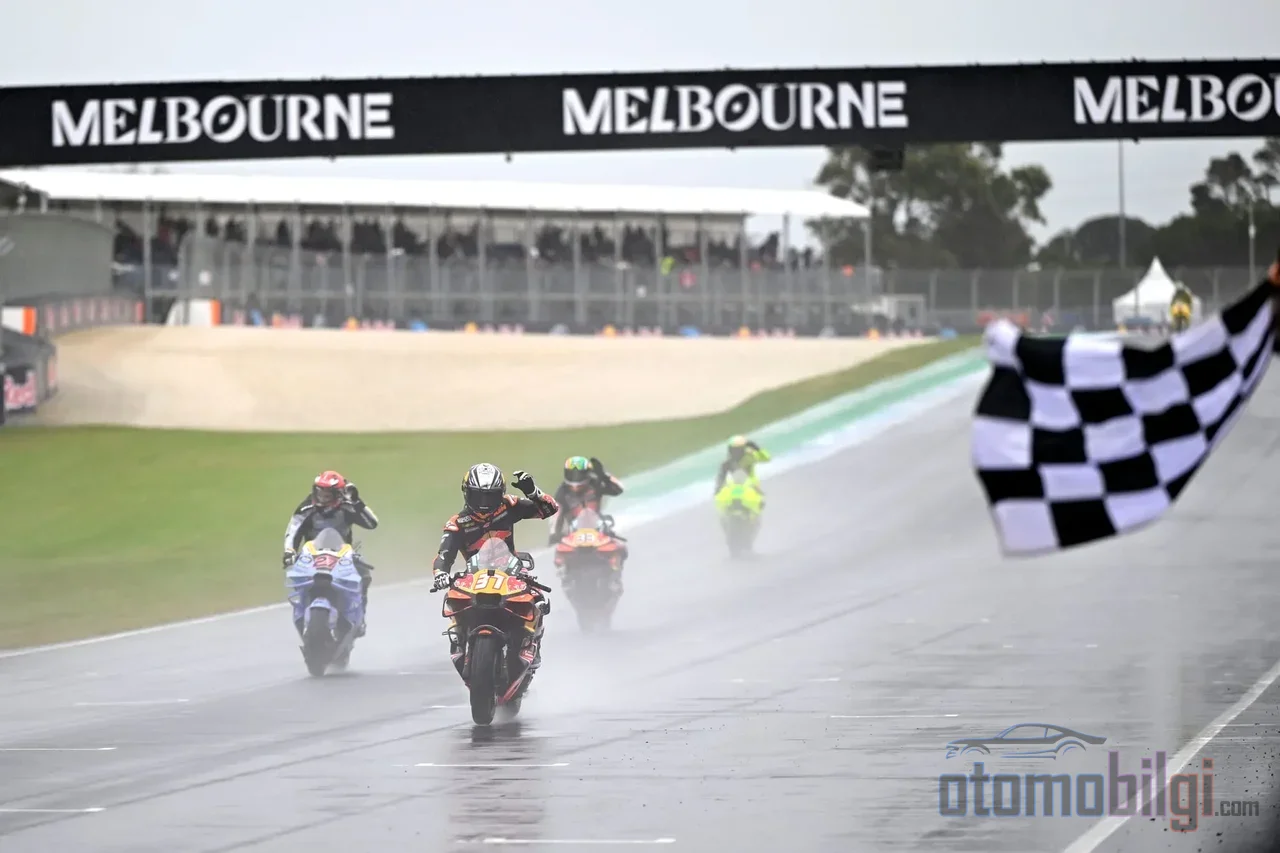
No rider who reaches MotoGP wakes up one morning and jumps straight onto a 1000cc prototype. Think of the system like a game ladder: the lower class, Moto3, is where young riders take their first step into the Grand Prix world on light and agile motorcycles. From there you move up to Moto2, and from there to the top, namely MotoGP. The final rungs in the FIM's official "Road to MotoGP" program are series such as the Red Bull MotoGP Rookies Cup and the FIM Moto3 Junior World Championship.
Why so systematic? Because MotoGP motorcycles are prototypes; that is, they are not modified versions of a road motorcycle sold in a store, but machines built solely for racing. Riding them requires not only speed but also the habit of reading the machine at its limits, and this habit is instilled in the lower classes at a young age. Carrasco starting with CEV 125 in 2011, and Rinne coming from karting, are both part of the same template: everyone climbed from the very bottom of the ladder.
The cunning part is this: Jack Miller jumped directly from Moto3 to MotoGP in 2015, and even that sparked debate. In other words, skipping the ladder is a subject of criticism even for male riders. Where the ladder narrows, the number of those reaching the top naturally decreases. So why is the number of women so low on the bottom rungs of the ladder? That is the real question.
Is the physical threshold really decisive?
The sentence most often repeated on this subject is: "MotoGP motorcycles are physically very demanding, women cannot endure it." Let's dissect this a bit. MotoGP riders perform on average around 175 braking actions and more than 370 corner lean-ins in a race. The standout attributes in a rider are core strength - critical for balance, position control and steering the motorcycle - and upper body strength. One high-level study has also documented that the grip strength of MotoGP riders is significantly higher than that of riders in the other categories.
So the physical load is real, and dismissing it is absurd. But note this: these data are the profile of "top-tier MotoGP riders," not of women's potential. Here is where the chain of logic breaks down: To race in MotoGP, you first need years in the lower categories, and there are very few women there. Sterilization is not a physical ceiling; it is low representation in the feeder series. When choosing a footballer, is the chance of a star emerging higher from a thousand players in an amateur league, or from ten? The answer is obvious.
Moreover, there has never been a separate series for women equivalent to the men's series, as a counterpart to MotoGP. Selection has always been based on talent; but if the pool that feeds talent is not wide, talented names do not appear in the pool either. The fact that roughly 80% of the MotoGP audience is male also feeds this cycle: few examples, little interest; little interest, few starts; few starts, few summits. In recent years, however, concrete steps have been taken to break the cycle.
WorldWCR and supporting programs: Is the ground shifting?
Two major actors, Dorna and FIM, filled the gap of a women-only world series. The FIM Women's Circuit Racing World Championship, or WorldWCR, whose first season was run in 2024, is the first championship-level series made up entirely of female riders in circuit racing. Its structure is also clever: on identical motorcycles, 22 fixed riders aged 18-50 compete, plus two wild cards per race. This way, the conversation is about riding skill rather than technical differences, and a stage opens up for names rising from the lower categories. The series calendar is alive too; the 2026 season got underway at Portimao at the end of March.
It is not just rider seats - the number of women inside the garage and management is growing as well. Nadia Padovani Gresini became the first female team principal to win a race in MotoGP; there are strategy analysts at Aprilia, executives at Dorna, and names who have built careers at VR46 and Yamaha. Another inspiring example is Kayla Yaakov from the USA: she races in MotoAmerica Supersport, was the first woman to reach the podium in the Daytona 200, and got a test opportunity with Marc Márquez's MotoGP team. The doors of racing may not swing wide open one after another, but they are cracking ajar, I believe.
There is good news from Turkiye as well. The R25 Women's Cup with Yamaha Motor Turkiye as the main sponsor is opening the door for female riders to take their first step into track racing; Sahra Su Onkaya won the Group A championship. The Turkiye Motor Sports Federation also offers newcomers a doctor-approved temporary license - meaning the list of barriers is shorter than one might think for someone who dreams of it but does not know where to start. From racing suits to motorcycles, the stories of Turkish female riders who have made their mark in Europe, such as Sena Savaser and Seda Kacan, show that this ladder works in our country too.
Under what conditions will the first female MotoGP rider emerge?
Now, let's get to the clear answer we promised. Women are not racing in MotoGP because they are blocked by the rules, but by the anatomy of the ladder: No woman has completed a full season in the premier class, but the barrier is not a rule - it is the low number of women in the lower categories and the low rate of women entering the sport. The physical load may indeed be the name of a real threshold; but this threshold only becomes meaningful for those working on the long and narrow road leading to MotoGP. The first female MotoGP rider will emerge as a name who regularly scores points in Moto3 or Moto2, proves herself with a full season rather than wildcards, and convinces the teams' technical staff.
Are these conditions coming together? Partially. WorldWCR is growing the stage, programs like the R25 Women's Cup from Turkiye are expanding the pool, and the female fan base is getting younger - of the women who started following the sport in the past year, 56% are aged 16-34, showing a younger profile than male fans. In other words, the audience of the future is taking shape differently from today. The ladder will not widen overnight, but with every new season one rung gets a little thicker. I bet that one of the girls reading this article will be that very name on the Moto3 grid in the next fifteen years. What do you think - which name will come out of which market?
Sources
- MotoGP™ Riders | Maria Herrera
- What is the Difference Between MotoGP™, Moto2™ and Moto3™
- How Do MotoGP™ Riders Train?
- Meet the new Road to MotoGP - FIM
- Introducing the FIM Women's Motorcycling World Championship - FIM
- Women's Circuit Racing World Championship 2026: riders & calendar
- Ana Carrasco wins world title - BBC Sport
- The first female motorcycle world champion - TRT Spor
- Why Are There No Female MotoGP Riders? - Flow Racers
- R25 Women's Cup Qualifiers - TMF