Rain, a Critical Moment in MotoGP: How Does the Flag-to-Flag Rule Work?
Share This Page
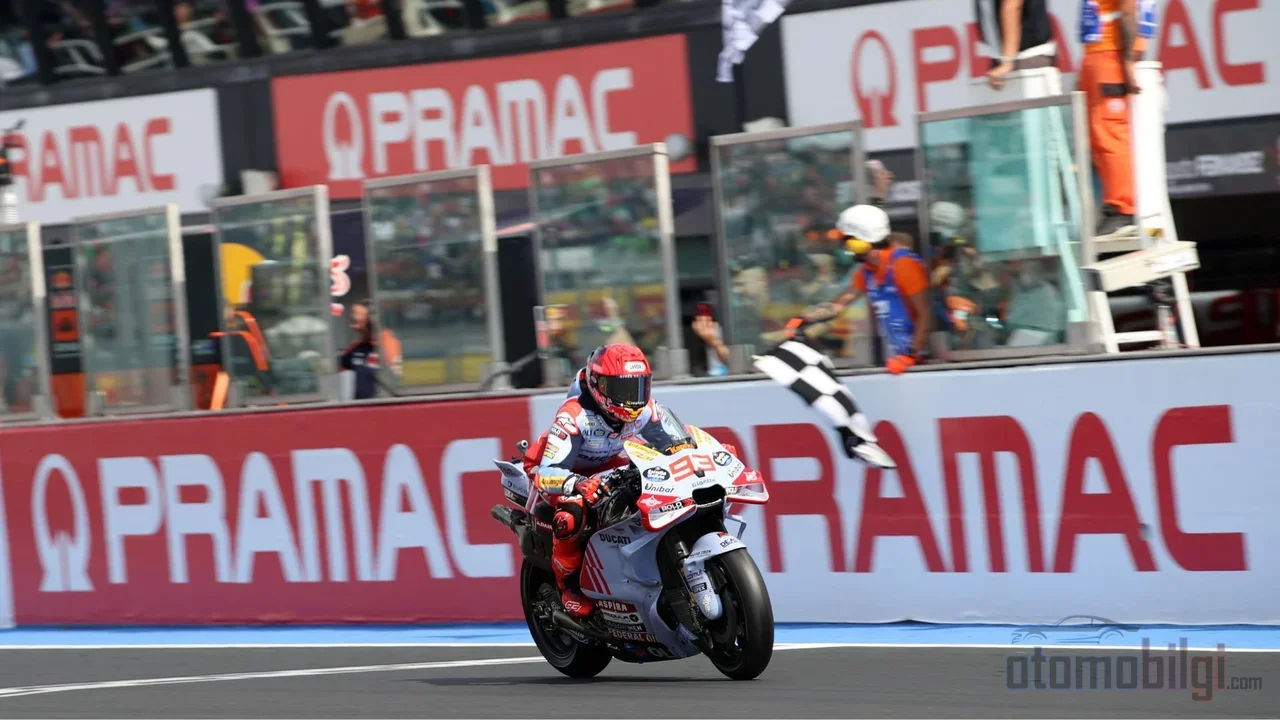
When it starts raining, a MotoGP race is usually not stopped; instead, the race switches to flag-to-flag rules: riders dive into the pits and jump onto their second, pre-prepared motorcycles, and the race that started under the green flag continues all the way to the checkered flag. In short, rain in the middle of the track does not end the race; it turns it into a game of strategy. So how exactly does this system work, and who decides what and when?
Highlights
- Flag-to-flag rule In effect since 2005 and applies only to the MotoGP class
- Unlimited bike changes once the flag is waved unlimited; the final call belongs to the rider in the pit lane
- Pit speed limit 60 km/h; if exceeded, the standard penalty is a 2x Long Lap Penalty
- First flag-to-flag race: 2006 Australian GP, won by Marco Melandri
- There is no flag-to-flag in Moto2 and Moto3, because there is no second motorcycle in those classes
How Exactly Does the Flag-to-Flag Rule Work?
Even the name itself is a beautiful summary in its own right: the race starts with the green flag and ends with the checkered flag, and no matter how many flags are waved in between, it remains the same race. That is why the rule is called flag-to-flag. If a race that started dry begins to see rain, or conversely, a race that started wet begins to dry out, riders are allowed to dive into the pits during the race and switch to their second motorcycle.
The rule falls under the FIM's Road Racing World Championship Grand Prix Regulations and has been in effect since 2005. Before that, things were far more frustrating: when it rained, the race was stopped with a red flag, everyone lined up back on the grid, and the race was restarted from scratch. It was boring for spectators, costly for teams, and a true test of patience for the riders. Flag-to-flag was a godsend for this chaos.
Now let me give you the detail that keeps things interesting: the riders do not make the call, nor do the team bosses. Only Race Direction can make the decision. When raindrops or a wet surface are spotted on a section of the track, a white flag is waved at that flag marshal post, and the white flag means the race has now switched to flag-to-flag rules. Even if the rain stops after the white flag is waved, the race continues under flag-to-flag rules; and the number of bike changes is unlimited.
There is also a subtle but important detail: at any point before the race even starts, before the sighting lap, the track can be declared "wet". In that case, bike changes become free without any flag being waved. So the rules are not as rigid as you might think; they can flex depending on the weather.
Bike Swap: What Does the Rider Do in the Pit?
MotoGP riders' only superpower in the championship is not this, but on flag-to-flag days it is their most precious privilege: every rider has two motorcycles. One waits ready in the pits on slicks, the other on rain tires. When the white flag is waved, the rider enters the pits, dismounts, jumps onto the second bike waiting ready, and continues the race. The motorcycle's tires are not changed; the rider switches to the machine that already has the right tires fitted. Think about it: waiting around an empty bike changing tires in a place where every second is worth its weight in gold would be suicide, wouldn't it?
In the early years there were restrictions on the number of changes and tire types, but the rule in effect today is incredibly simple: slick-to-slick, rain-to-rain, and rain-to-slick switches are all free. The rule makers have also realized that complicated tables do no one any good.
So who owns the timing? Entirely the rider's own decision. The team can provide information via the pit board and panel, but the person who presses the "come in now" button is the very one gripping the throttle. That, in fact, explains what makes flag-to-flag races so exciting: the fastest person on the track also becomes the biggest gambler.
There is, of course, a penalty side too. The pit speed limit is 60 km/h, and exceeding it during a race brings the standard penalty of a 2x Long Lap Penalty. In other words, rushing comes with its own punishment. The FIM MotoGP Stewards can also hand down heavier penalties when necessary.
Why Does It Exist Only in MotoGP?
The flag-to-flag procedure applies only to the premier class, because only MotoGP riders have two motorcycles. Moto2 and Moto3 riders race on a single bike; for them, talking about a bike change makes about as much sense as telling someone without a second car in their garage to "take the service vehicle." In these classes, if the weather turns bad, a procedure called "Quick Restart" comes into play.
Fortunately, the debate doesn't end at the table; whether flag-to-flag should be brought to Moto2 as well has long been discussed among fans. The cost and logistical burden that two motorcycles bring stand as a serious obstacle for the support classes.
Tire Choice: The Heart of the Gamble Beats Here
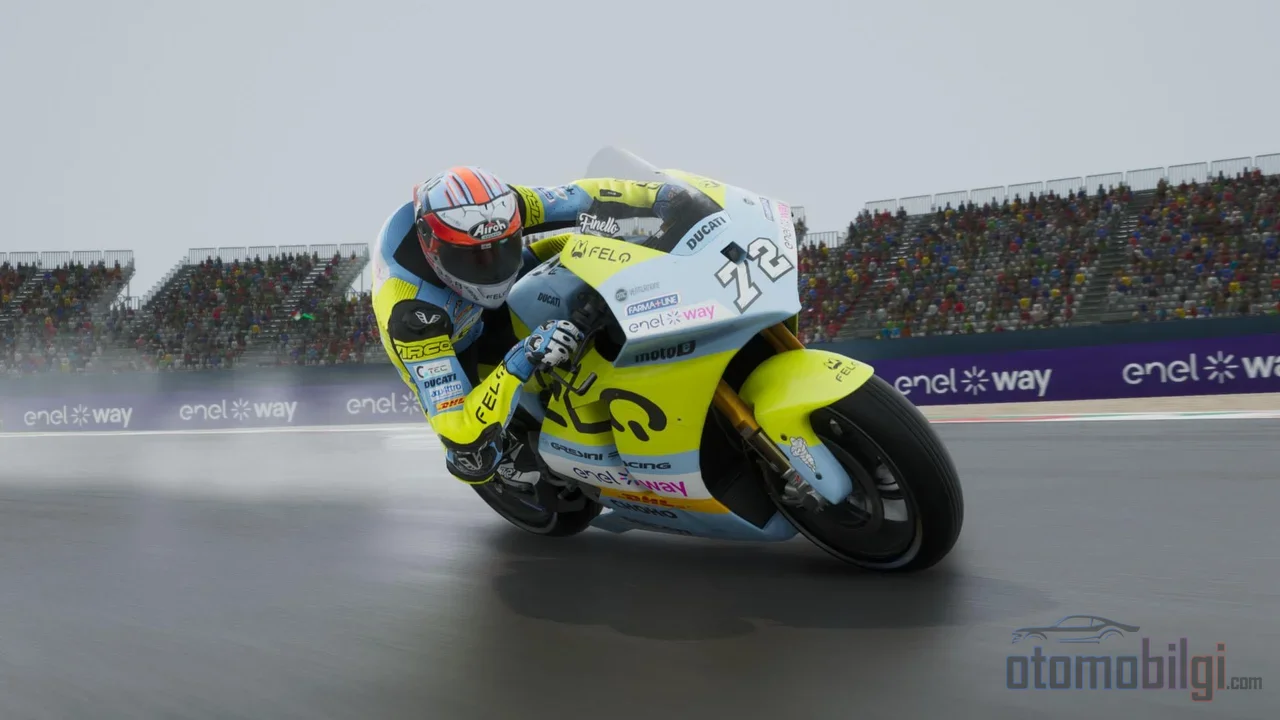
The heart of flag-to-flag strategy beats in the tire. Slick tires are designed entirely for dry conditions and have no grooves; with no channel to drain water, they slide away on a wet surface. On a fully wet track, grooved rain tires are used. The real trouble begins in this condition: when the track is neither wet nor dry, that is, in the "transition from wet to drying" phase. This is where riders are forced to gamble between the rain tire and the slick in this gray zone.
Alongside tire choice, there is also the braking factor to add. Like race tires, carbon brake discs need high surface temperature; a cold carbon disc almost forgets what braking means. Brembo's carbon discs also reduce weight and lessen the gyroscopic effect. So a rider switching bikes in the rain has to rely not only on new tires but also on brakes that need to warm up again. The wrong tire choice alone can lose the race; there are many riders who prefer not to take that sentence lightly.
Front tire pressure is also a critical detail: the front tire is vital for braking support and corner-edge grip. If the pressure drops, the tire overheats and its behavior deteriorates. According to the 2026 rules, a minimum of 1.8 bar is mandatory for the front tire; while the previous limit was 1.88 bar, this value was lowered. It may sound like a small difference, but at this level, it is a world where even the pressure of a tea glass can change the race.
When Does the Red Flag Come Into Play?
A natural question comes to mind: "If it's raining, why doesn't everyone stop?" The answer is clear: unless the weather conditions are extreme enough to require stopping the race for safety, the race continues flag-to-flag. The red flag is an entirely different tool: it means the race or practice session is stopped, usually for safety reasons. Riders slow down and return to the pits, and pit exit is closed.
An example from history: at the 2020 Austrian GP, the red flag and red lights were used after the Zarco-Morbidelli crash. In other words, the system knows how to distinguish between the flexibility designed for rain and a genuine safety crisis.
Races That Made Their Mark on Flag-to-Flag
The history of this rule is full of races that could be watched on their own like an autumn classic. A selection of the most memorable ones:
- 2006 Australian GP, Phillip Island: The first flag-to-flag race in history. Marco Melandri was the one who read the conditions best, and he celebrated by taking the final corner one-handed at around 200 km/h. Coolness level: legendary.
- 2013 Australian GP, Phillip Island: An exceptional situation beyond the weather. Since it was calculated that the tires would not last the race distance on the newly resurfaced track, a mandatory bike change was enforced on lap 9 or 10. Marc Marquez was disqualified for making a late change; Jorge Lorenzo won. Marquez still became champion that year and went down in history as the youngest champion of the premier class.
- 2014 Aragon: Lorenzo switched to rain tires and won; Marquez and Pedrosa, who stayed on slicks, crashed. The difference between the wrong choice and the right one: podium versus gravel.
- 2021 Austrian GP: Brad Binder won by staying out on slicks despite heavy rain in the final three laps. Moreover, he was the only KTM in the leading group. Bagnaia overtook six riders on the final lap to finish second.
- Misano 2015: Lorenzo, Marquez and Rossi switched from slicks to rain tires at the same time; when the track dried, Lorenzo and Marquez switched back to slicks, and Lorenzo crashed. Rossi stayed out and gained a championship advantage. Sometimes the best move is to make no move at all.
- Misano 2024: Martin switched to rain tires early, and when the rain stopped he had to make a second pitstop and finished 15th. Marquez won; Martin, however, reached the championship in Valencia at the end of the year.
- 2026 Jerez: Rain in the Sprint once again staged that familiar scene known as flag-to-flag chaos.
Let's also make an early-era connection: the 1982 Finnish GP (Imatra) comes from a period remembered for races run entirely in the rain. From those days to today, rain has always been this sport's toughest rival.
Non-Weather Mandatory Change: The Unforgettable Lesson of 2013
2013 Phillip Island was a lesson in how flag-to-flag can exceptionally be applied in non-weather situations as well. The decision was made for tire safety, not for meteorology. In the period that followed, at Le Mans, new bike change rules were applied that resulted in more than ten riders starting from pit lane on wet bikes, and the consequences of these rules were debated at length. The riders were not idle either: they demanded pit rule changes for flag-to-flag bike swap races. The pit stop had also been made mandatory in dry conditions twice in history; in other words, the rulebook is more flexible than we think.
How Does It Differ from Formula 1 and WorldSBK?
Let me now explain the rule's clearest distinguishing feature: In Formula 1 and WorldSBK, the tires of the same car or motorcycle are changed. In MotoGP, however, you change not the tire but the motorcycle itself. In other words, while the F1 pit crew changes the tires, in MotoGP there is another bike waiting ready in your place; you simply jump on it and go.
| Series | Rain strategy | Vehicle/tires |
|---|---|---|
| MotoGP | Flag-to-flag, unlimited bike swap | Switching to the second motorcycle |
| WorldSBK | A pit stop is made to change tires; at least 90 seconds from pit entry to exit | Same motorcycle, tire change |
| Formula 1 | Tire change with a pit stop | Same car, tire change |
In WorldSBK, when it rains or the track dries after a wet start, riders enter the pits to change tires, and each rider is required to spend at least 90 seconds from pit entry to exit. In MotoGP there is no such minimum; apart from the speed limit and technical regulations, the clock is not waiting for you.
The Undisputed Side: Should the Rule Stay?
We cannot say that flag-to-flag is a beloved rule. So much so that there are even publications arguing that flag-to-flag should be abolished under the headline "Rossi was right." The essence of the criticism is this: forcing riders to gamble for seconds on a wet track is questionable from a safety perspective.
The defense side's arguments are quite practical: the format ensures races start on time, finish within the planned duration, and don't disrupt broadcast schedules. It has replaced the red flag procedure since 2005, and it was used in favor of dramatic bargaining. My favorite part of this game is still this: no simulation can model that fear you feel in your stomach the moment you enter the pits. If it were you, on which lap would you come in?
Its traces aren't only on the track, but in the digital world too: the MotoGP 23 video game simulated the real-world flag-to-flag rules and dynamic weather for the first time. In the game, the rule requires a race distance of 6 laps or more and a "variable" weather setting; the Nintendo Switch version doesn't have pit access. So it's also possible to try the flag-to-flag stress from your couch.
The Bottom Line: Rain Is MotoGP's Best Scriptwriter
The flag-to-flag rule transformed an outcome imposed unilaterally by the weather in MotoGP into a contest of human decisions. Who will enter when, which tire will they trust, how much risk will they take before the brakes warm up? None of these questions have answers, and that's exactly why a rainy MotoGP race leaves memories that are many times more lasting than a dry one. Next time the sky darkens, don't leave your screen; the real race may just be beginning.
Sources
- How Do MotoGP™ Riders Switch Bikes During a Race?
- How Does the Flag System Work in MotoGP™?
- MotoGP 23: How flag-to-flag rules work
- "Flag to Flag" races, discover all their secrets
- Rossi's right - MotoGP needs to scrap flag to flag races now
- MotoGP riders want pit rule tweaks for flag-to-flag bike swap races
- Lessons from MotoGP's new bike-change rules at Le Mans
- What happens when the red flag is waved during a MotoGP race?
- MotoGP rules and regulations
- Behind the scenes of a WorldSBK pitstop
- 2026 Tire Pressure Rules in MotoGP