How Do Karting Academies Select Young Drivers?
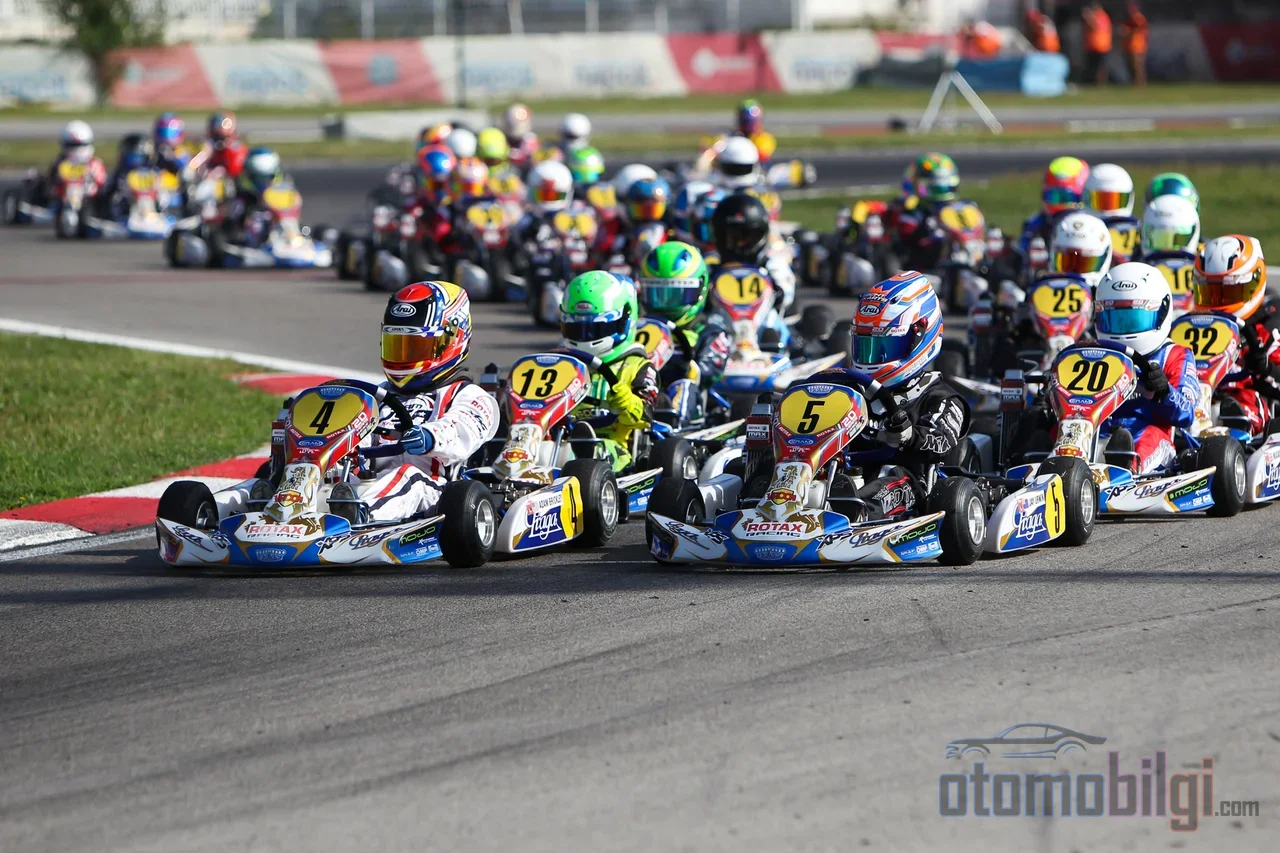
What exactly takes a 12-year-old child who gets behind the wheel of a kart and, a few years later, puts them on the radar of Formula teams? Is it just speed? And if there are two pilots with the same speed, which one gets picked? The academy programs at the top tiers of karting have been answering this question for years with their own methods, and the interesting part is that everyone's answer is different. Some federations run two-stage selections to find the single child who will represent their country, while others distribute engines by lottery and observe under completely equal conditions. Let's take a look behind the curtain of this selection world.
FIA Karting Academy Trophy: Pilot Discovery Country by Country
Here is how the FIA Karting Academy Trophy, the official talent series of international karting, works: each national federation selects a single pilot to represent its country. So you don't go directly to the FIA; first you knock on your own country's door. The first round of the 2026 season was held at the Genk circuit in Belgium, with 52 pilots on the grid; each of them is a name who has passed their own federation's selections.
The selection process varies from federation to federation, but the rigor is common. Motorsport UK in England ran a two-stage selection process in 2023; Karting Australia in Australia similarly screens applications rigorously and announces a single name. Applications for the USA seat are open to pilots aged 14-17 - meaning this series sits exactly on that bridge between karting's junior and senior worlds.
Another face of the series is dedicated to female pilots: The FIA's Women in Motor Sport commission supports two female pilots in the Academy Trophy each season. So the selection mechanism is not just an elimination looking for speed; it is also designed with representation in mind.
Champions of the Future: What Happens If Engines Are Distributed by Lottery?
Karting's biggest controversy is well known: money. Whose kart has been prepared faster, whose engine landed in the lucky batch? The Champions of the Future Academy Program (COTFA for short) is an "Arrive and Drive" series founded to solve this problem at its root. A common chassis and engine are used, and cost control is the fundamental principle. It has three categories: Mini 60, OK-N Junior and OK-N Senior.
The real cleverness lies in the engine distribution: engines are returned to production at the end of each race day and redistributed by lottery the next day. In a way, everyone plays the same kind of gamble every day - but thanks to this, observers can evaluate pilots based on driving differences, not equipment differences. Parolin/TM Kart equipment is used in the Mini class, and Kart Republic/IAME equipment in Junior and Senior.
For pilots registered for the season, almost everything is included, from the race suit to the kart, from the tent area to tires and fuel. The mechanic and tools are the pilot's responsibility - so you also learn to build a technical team. The weekend format also fits the academy structure: Thursday equipment handover, Friday free practice, followed by practice, qualifying, two heats and the final. The races are broadcast live, and the program is even embedded with courses on race medicine and media professionalism.
Highlights
- The first round of the 2026 FIA Karting Academy Trophy was run at Genk with 52 drivers.
- In COTFA, engines are handed back at the end of each day and redistributed by lottery.
- Selection for the Richard Mille Young Talent Academy is 100% free.
- McLaren has signed up 11-year-old Harry Williams, bringing the youngest driver in its history onto its roster.
- TOSFED Next Talent held qualifying events in 10 regions, targeting around 2,400 children.
What Are Drivers Expected to Do in the Selection Trials?
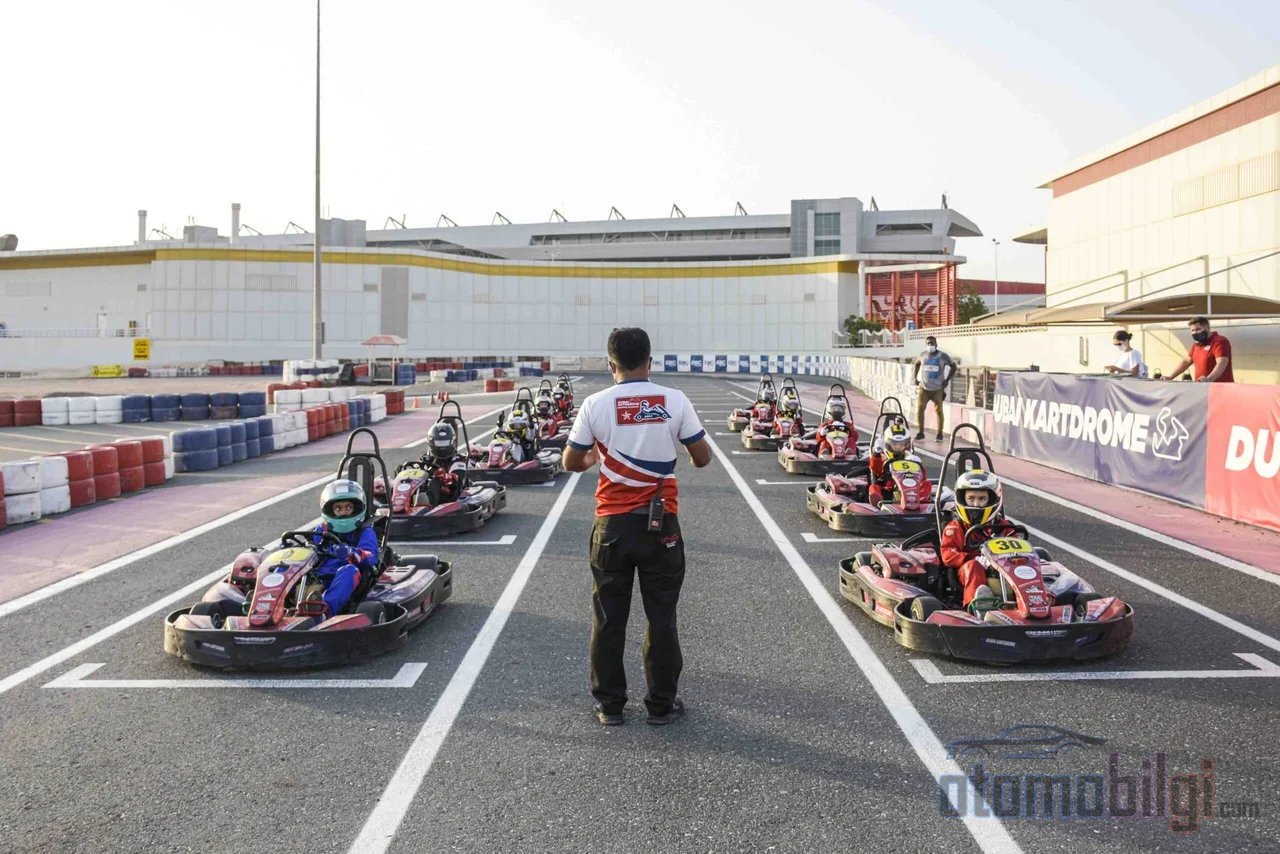
So what are the observers at the paddock table actually looking for? One of the clearest examples of this is the 2023 junior selection at Franciacorta of the Girls on Track – Rising Stars program, aimed at female drivers. Over three days, the drivers ran training sessions, qualifying laps, super pole and race simulations. In other words, a single fast lap is not enough: repeatability of performance, the ability to set a qualifying lap under pressure, and race situation management are all tested at the same time.
Life off the track is not empty either. The program included mental and physical workshops, a seminar on online abuse, and a Pirelli tire management workshop. The jury included the talent scouting manager of Iron Dames and representatives of the Ferrari Driver Academy. The four finalists were invited to the FIA-FDA Karting Scouting Camp in Maranello; the winner earned the right to run an international karting season with FDA support. The eight pilots in the senior category, meanwhile, were tested in Formula 4 cars - a rehearsal for the transition from karting to single-seaters.
Combining this picture with the expanded Rookie Test program that F1 Academy has announced for 2026 clarifies the framework of the selection criteria: the program starts with three days of physical, cognitive and performance tests at Loughborough University, and participation is open to drivers showing promising results in senior karting. So the formula being sought is roughly this: track performance + physical endurance + mental maturity + simulator ability + comfort in front of the media. A five-legged exam with no single deadline.
Scholarship, Lottery, or Scouting? Comparison of Selection Models
Each program has a different philosophy, and this difference feeds one of karting's most debated topics: fairness. Some programs try to eliminate costs, some take luck out of the equation, and others opt for direct on-the-ground observation.
| Program | Selection Model | Key Detail |
|---|---|---|
| FIA Karting Academy Trophy | Two-stage national selection by federations | One driver per country, a 52-strong international grid |
| COTFA | Lottery system + fixed budget | Engines are distributed by daily lottery |
| Girls on Track – Rising Stars | Scouting camp and direct jury evaluation | The winner gets an FDA-supported international season |
| Richard Mille Young Talent Academy | Free selection process | Open to girls born after 2009 and boys born after 2010 |
| F4 CEZ Academy | Four-column evaluation | The first column is simulator training |
COTFA's partnership with the F1 Academy also amplifies the meaning the model carries: standouts in the series' senior category are given an F1 Academy test, a Discover Your Drive representative selects three drivers in each class, and those selected receive a 30% discount on the entry fee. The equal equipment concept also indirectly opens the door to the higher tiers.
From karting to F1: How Is the Path After the Academy Drawn?
Now let's return to the big picture. The minimum age in F1 is 18 and most drivers start motorsport at around age 6 - meaning the road to the top category is a marathon of more than 10 years. A large portion of the current Formula 3 grid got into a kart at age 4-5. The roadmap is also clear: karting, then Formula 4 - the first step of the FIA's global roadmap for those aged 15 and over - then F3, F2 and F1. On the karting side, from age 15 onward drivers can move up to senior classes - categories such as two-stroke TaG and Rotax.
The role of the academies in this chain is to be both a filter and an accelerator. COTFA drivers follow a proven career path in the upper tiers - in the OK and OKJ classes, in FIA Karting series, and in Formula 4. The manufacturer academies go even further: Mercedes' 2026 junior roster has nine drivers, and karting graduates such as Rashid Al Dhaheri, Ethan Jeff-Hall and Andy Consani are racing all the way up to the Formula Regional European Championship. The most striking example of early investment came from McLaren: 11-year-old Harry Williams became the youngest driver in the brand's history by being taken into its driver development program. So the selection decision at the very bottom rung of the system sometimes determines the roster of a decade later.
Talent Hunting in Turkiye: TOSFED and the New Generation of Names
So how does this system work in Turkiye? The Next Talent Project run by TOSFED with FIA support is a fine example of bringing the logic of international academies to a local scale: In the project, open to young people aged 12-16 free of charge, qualifiers were held in 10 separate regions, with the goal of reaching about 2,400 children. The final was run at Tuzla Karting Park, and 20 participants managed to make it to this final. In addition, with the addition of a micro category in which drivers aged 6-9 can race, the number of starts on the grids increased - meaning the widest mouth of the funnel has also been opened.
The field is a bit wider. At an event in Bursa, about 60 children aged 7-17 from all corners of Turkiye raced; the final round of the MOTUL-supported Turkiye Karting Championship was run at the end of October at the TOSFED Korfez Circuit. At club level, structures such as T1 Racing Academy also provide karting training. For those who were delayed until after 18, TOSFED's "How Can I Become a Racer?" program opens a separate door with conditions covering the 18-28 age range.
And the results have already begun to arrive: Zayn Sofuoglu became champion in the Micro Max category in England's long-standing Super One Karting Championship. Yigit Arslan, the 13-year-old who finished third in the mini category of the Turkiye Championship, is quite clear about his goal: He wants to become an F1 driver at the age of 20. The academy selection processes are already the institutional form of this dream - the system is trying to open an elimination door for every child with a dream.
How Are Young Drivers Selected for the Academies? The Short Answer
Let's return to the question at the beginning of the article. Karting academies select young drivers not with a single method, but with three main models: federations' multi-stage national eliminations, series that force equality with draws and fixed budgets, and scouting camps that observe talent directly on the track. The common set of criteria in all of them is the same - track performance, consistency under pressure, physical and mental competence, simulator skill, and the ability to face the media. So the selected child is not only the fastest; but the fastest, the most level-headed, and the most open to all-round development.
The debate is of course ongoing: Some say that reaching F1 is largely shaped by cost, while COTFA's draw model and Richard Mille's free selection are concrete evidence of the effort to widen the door. Some say "15 is too late," while the F3 front sends the message that age is not a barrier, and in Turkiye separate programs are opening for children who have not tried karting until age 18. The truth is: talent alone is not enough, but it is no longer sought alone either. The system is searching with the right criteria and fairer methods each passing year - and the name that could be on the grid of the next round may be behind the very lines you are reading now.
Sources
- Event - 2026 Karting Genk - Academy Junior - Entry List
- FIA Women in Motor Sport Commission supports next generation female karting talent
- Champions of the Future Academy Program
- FIA Girls on Track – Rising Stars: Four Junior Finalists Chosen
- Applications open to represent Motorsport UK in FIA Karting Academy Trophy
- Applications open for FIA Academy Trophy Junior and Senior
- F1 Academy strengthens talent pipeline with rookie test
- The Richard Mille Young Talent Academy
- F4 CEZ Academy is a new opportunity for young talents
- Careers in F1 | How to get into Formula 1
- FIA Global Pathway
- The Path From Kart Racing to F1
- Why age is no barrier on the Road to F1
- Kart Classes Explained | Rookie Racing
- FIA Karting Licences (PDF)
- TOSFED Next Talent Project Is Starting
- How Can I Become a Racer? (TOSFED)
- A Karting Academy Leap from TOSFED
- Mercedes AMG F1 2026 Junior Driver Line-up
- Harry Williams, McLaren's Youngest Driver