How Does the Transition from Karting to Formula 4 Happen?
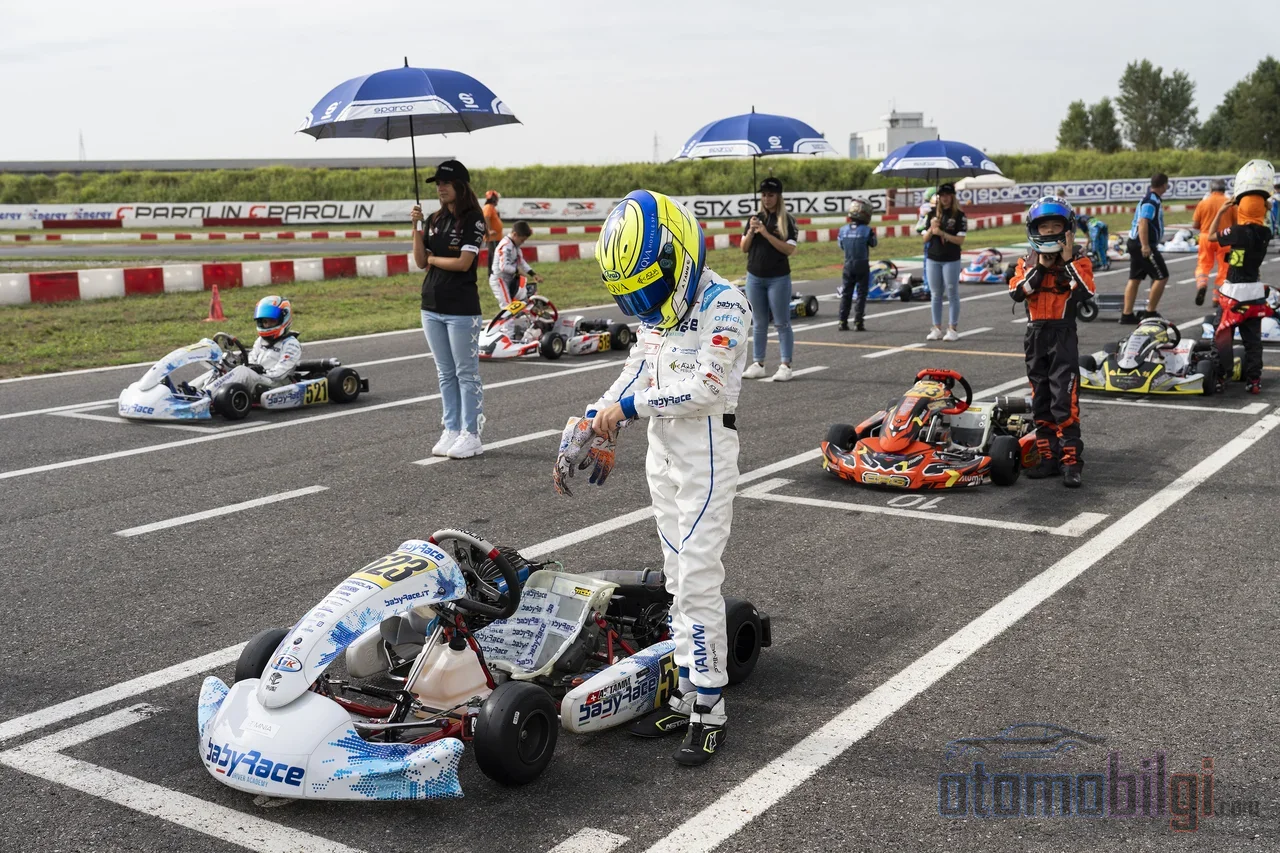
For a pilot fresh out of OK Junior or Rotax, the biggest question is this: what's the next step, and how do you take it? On the karting track you spent years building tire management, racing lines, and the reflexes to overtake rivals; but a Formula 4 seat, a few steps higher on paper, is in reality a completely different world. Here you're no longer sitting in a kart, but in a 570-kilogram, winged, geared racing car. So how exactly does this transition work, at what age, with how many liras, and with which skills? On this page we break it all down, one by one.
Where Does F4 Stand in the FIA's Global Roadmap?
When the FIA created the Formula 4 category in 2014, its goal was clear: to turn the path from karting to Formula 1 into a single, understandable ladder. The rungs of this ladder work as follows: first F4, then Formula Regional, then FIA F3, F2, and at the very top, F1. Formula Regional was added to the roadmap in 2018; FIA F3 started in 2019.
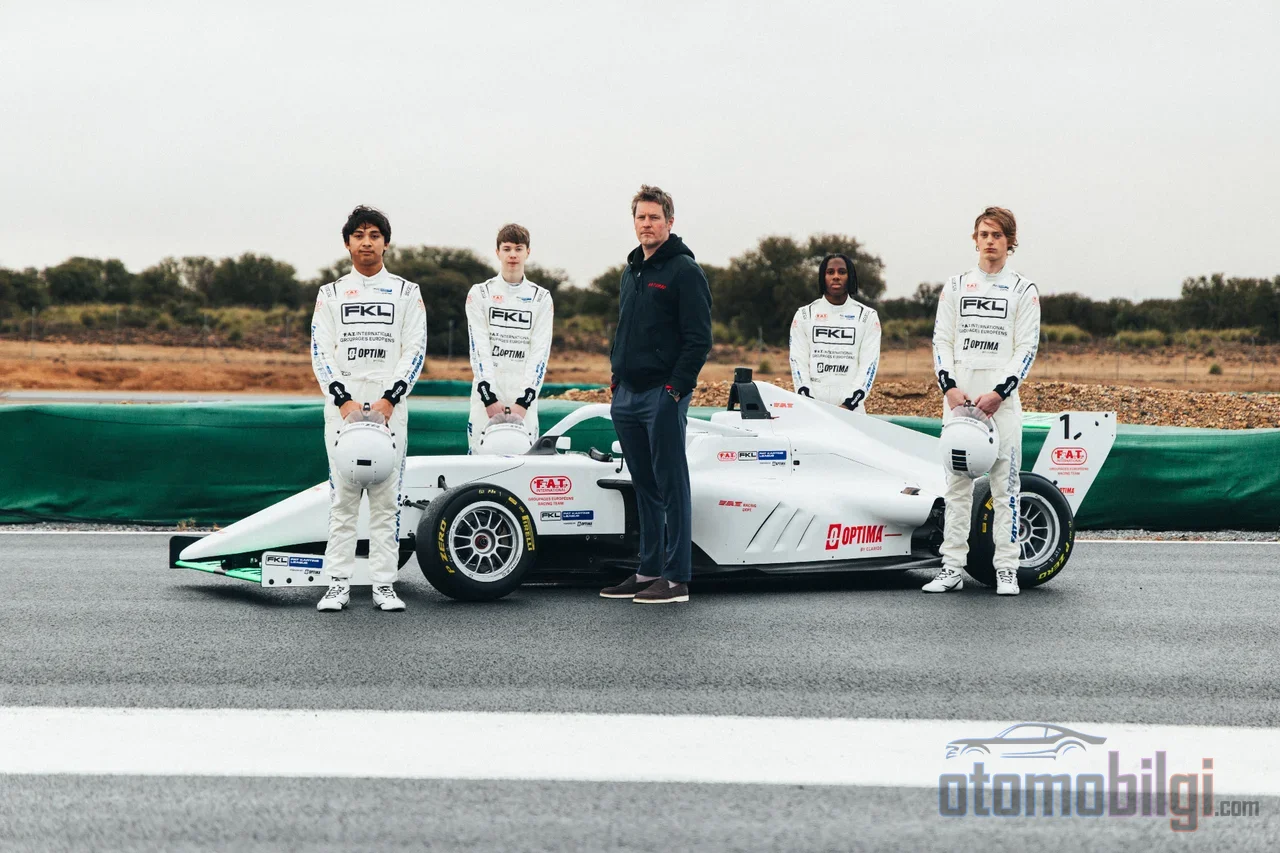
F4 is the first rung of this structure and is open to drivers aged 15 and over. It is run in national championship format; but it doesn't have to be limited to a single country. There's one critical detail: every F4 championship uses chassis and engines built to the same specification. So a driver moving from Italian F4 to Spain or to the Central European series doesn't have to adjust to a completely different car. This is an incredible convenience for young drivers.
So how big is the technical gap between karting and F4? The numbers speak:
| Class | Engine | Typical Power | Minimum Weight | Chassis |
|---|---|---|---|---|
| F4 | 1.4-2.0 L | 180-185 hp | 570 kg | Tatuus F4-T421 / Mygale M21-F4 |
| Formula Regional | 1.8 / 2.0 L | 270-300 hp | 650-665 kg | Tatuus F3 T-326 / Ligier JS F3 |
| OK (karting) | 125 cc | 36 hp | 158 kg | Various |
As you can see, an OK kart delivers around 36 hp, while F4 offers five times that. But the power difference is not what will challenge you most in the transition. We'll get to that in a moment.
Highlights
- F4 is the first rung of the FIA's global roadmap and is open to those over age 15.
- 40 points are required for the F1 Super Licence over three seasons; a maximum of 12 points can be carried over from karting.
- For 2026, the cost of an F4 season ranges from €180,000-500,000 depending on the championship.
- Most of karting racecraft carries over to F4; the truly new lessons are aerodynamics and brake pressure management.
- Alp Aksoy finished his first Italian F4 season in 2nd place, becoming the first Turkish driver to enter the Ferrari academy.
At What Age Is the Transition Made and How Does the Super Licence Points System Work?
The age ladder
According to the FIA's structure, karting categories roughly cover the 8-15 age range. For F4 the lower limit is 15, for F3 it's 17-19, for F2 the band is 18-21, and 20 years of age is projected for F1. In other words, the exit age from karting and the entry age for F4 almost touch each other: moving from OK Junior to OK-N or directly to formula cars at age 14-15 is the typical path. The transition from OK-J to OK-N is also seen as an important intermediate step in terms of power.
The Super Licence points system
The key to the door leading to F1 is the Super License. Since the 2016 season, a driver must have accumulated 40 Super License points in the previous three seasons in order to secure an F1 seat. Where do the points come from? This is where F4 becomes critical: a driver completing a certified F4 championship as champion is awarded 12 points, second place 10, third place 7. Championships like British F4 distribute points down to seventh place.
There are points on the karting side too: a maximum of 12 points can be collected from FIA karting championships, and these points are valid for five years. So you can carry the points you earned in karting with you into F4; but the main points hunt happens in the formula series.
How Much Does the First F4 Season Cost?
Let's come to the part everyone is hesitant to ask about: the budget. As of 2026, the range given by specialist motorsport publications varies between €180,000 and €500,000 per year for an F4 season. The reason the figure spans such a wide band is simple: differences in championship, team, and in-season testing programs completely change the budget. There are also concrete examples on an event basis: for the 2026 season of F4 CEZ, the entry fee for those who registered by March 14, 2026 was announced as €14,300.
For comparison, let's look at the karting side: a serious racing karting season can also cost up to around £100,000. So F4 is a step several times more expensive than karting; but that is the nature of the first formula season. The leading explanation for F4's difficulty attracting participation in the US is also cost: the USF Pro series offers lower budgets, and young American drivers are heading there.
Where Does Karting Experience Pay Off in F4, and Where Does It Fall Short?
The good news: most of what you learned in karting doesn't go to waste. The bad news: the most critical areas are things that must be learned entirely from scratch.
Transferable skills
The racing line, apex points, corner entry and exit rhythm, consistency, and what we call racecraft - racing cunning - are transferred from karting to cars exactly as they are. F4 cars have a significant draft (slipstream) effect, just like karts; the technique of overtaking a rival under braking at corner entry also bears great similarity to karting. So a driver who learned to follow rivals, fight over tires, and hold a clean racing line in karting builds on top of these in F4.
Lessons learned from scratch
Now the hard part. A kart has no aerodynamics; in F4, however, at high speed the car's wings generate downforce, and the car's behavior changes according to speed. The higher the speed, the better the car grips; in slow corners, this support decreases. The driver has to learn to feel this and adjust to it.
Braking is a completely different lesson. In F4, when aerodynamic load is at its maximum at high speed, maximum force is applied to the brake pedal at first, and then gradually reduced. The braking reflex from karting does not work directly here. Also, weight transfer in the car is much more pronounced; for a pilot coming from the simple world of karting, geared transmissions, tire management and the car's mechanical depth open new doors. In other words, karting is one world, car racing is truly another. It is no coincidence that racing schools like Winfield organize special F4 preparation camps for drivers with karting and simracing backgrounds.
There is also a downside: karting can instill some biting habits. Details like left-foot braking make small differences in a car, while kart-specific aggressive corner-entry reflexes can snap the rear end in F4. A good F4 rookie season is spent unlearning old habits and adding new ones.
Those Who Moved from Rotax and OK Junior to F4: Concrete Examples
There are names that show this path really works. Max Verstappen took his first steps in the Rotax Trophy, won just about everything there was to win, and moved to FIA karting; his transition to cars was completed in 2013, he raced in the 2014 F3 European Championship, and in 2015 he became the youngest F1 driver in history. He is not the only one who raced in Rotax; many drivers who reached F1 and beyond were discovered in this format.
Lewis Hamilton started karting at age 8 and at 13, after countless karting championships, was selected for McLaren's development program. Michael Schumacher started at age 4 with a kart his father built; at 12, because of Germany's 14-year age limit for licenses, he had to obtain his license from Luxembourg. Sebastian Vettel was discovered by the Red Bull Junior Team at age 11. The common thread for all of them is the same: karting is the school that lays the stones of a single-seater career.
Two current examples from Turkiye also make this roadmap concrete. 15-year-old Turkiye Formula Junior Karting champion Sarp Arhan Or earned the right to compete in Formula 4 races to be held in France. 16-year-old Alp Aksoy, meanwhile, completed his first Italy F4 season in 2nd place, became the first Turkish driver to join the Ferrari academy, and openly shares his goal of becoming the first Turkish F1 driver in 2030. From a karting championship to an F4 seat, and from there to an F1 academy: living proof of how the ladder works.
One More Step on the Ladder: Why Does Formula Regional Exist?
Why is there no direct path from F4 to F3, with Formula Regional in between? Because the power jump is big. A driver accustomed to a 180 hp car in F4 encounters 270-300 hp and more advanced aerodynamics in Formula Regional, and cars reaching up to 380 hp in FIA F3. As of 2025, there are five Formula Regional series: Americas, European, Japanese, Middle East Trophy, and Oceania Trophy. The Macau GP is also the one-off global event run under Formula Regional rules. This step ensures that the driver is prepared both in terms of power and aero when moving from F4 to FIA F3.
In summary: How Does the Transition from Karting to Formula 4 Happen?
The short and clear answer: a driver who has turned 15 and gained serious experience in top karting categories like OK Junior or similar; enters an F4 championship on a team deal with a budget in the 180,000-500,000 € band, takes to the track with a valid licence and medical fitness certificate completed, and starts accumulating Super Licence points in their first season. A maximum of 12 points carried over from karting is also added to this tally.
On the technical side, the transition boils down to this: racing lines, slipstreaming and racecraft come free from karting; aerodynamics, brake pressure management, weight transfer and a geared gearbox are the new lessons to be learned. From Rotax to OK Junior and on to F4, names from Verstappen to Aksoy followed the same map. Which name is next, we will see together.
Sources
- FIA Global Pathway - Wikipedia
- FIA Super Licence - Wikipedia
- FIA Karting Categories - FIA Karting
- FIA British F4 Championship - How to Enter
- 2026 FIA Formula 4 World Cup Sporting Regulations - FIA
- Karting to Formula 4: when to move and what it costs - Drivers Performance
- How Much Does an F4 Season Cost in 2026 - Netpro
- Karting to F4 Transition: Physical and Technical Challenges - Autosport Info
- The many drivers of F1 and beyond who raced Rotax - Vroom Kart
- Journey from Karting to F1 Driver - TeamSport