Kart and Driver Weigh-In: The Minimum Weight Rule in Karting
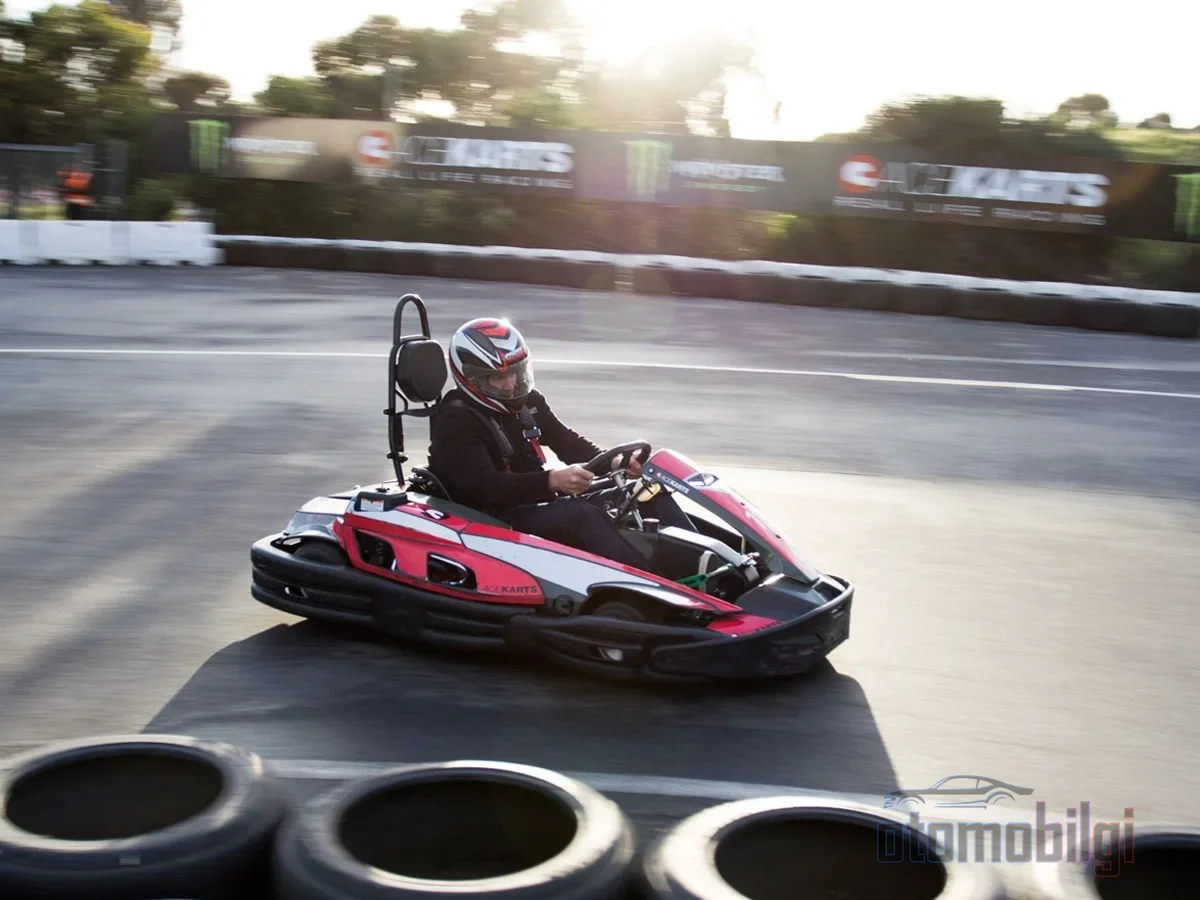
Think about it: two drivers, the same kart, the same engine, the same track. One weighs 45 kilos, the other 65. The lighter one pulls the kart more easily and seems more agile in the corners... but loses the race on the scales. How can weight in karting determine a driver's fate so decisively? The answer lies both in technology and in the least-talked-about pages of the rulebook. If you're ready, let's take a close look at the weight and ballast system, karting's invisible equalizer.
How Does the Minimum Weight Rule Work in Karting?
The fundamental rule set for each class in karting is this: the kart and driver are weighed together with full racing equipment, and this total cannot fall below the class's minimum weight. In other words, the number on the mechanical scale is not just your body weight; it is your total mass combined with the kart, including everything from your helmet, suit, gloves and neck brace. This system exists to allow drivers with different physical builds to compete under the same conditions.
The numbers change significantly from class to class. In the FIA Karting OK-Junior category, aimed at the 12-14 age group, the kart plus driver total must be at least 150 kg. In Türkiye's national karting rules, the limit in one category is set at 165 kg, at 185 kg in one Australian state series, and at 220 kg in one category of the Rotax MAX Challenge Grand Finals. In the Cadet class, a combined minimum of approximately 104 kg is mentioned for drivers aged 8-12. So there is no such world where "the kart is light, weight doesn't matter"; every rung of the age and category ladder has its own scale.
Highlights
- The kart and driver are weighed together, including racing equipment; minimum 150 kg in OK-Junior.
- Missing weight is made up with ballast fixed to the kart with bolts of at least 8 mm diameter.
- In the Cadet class, a weight shift of nearly 1 kg makes the difference between oversteer and balanced grip.
- According to the 2026 Canadian rules, a young driver must weigh at least 40 kg with equipment.
- A kart found underweight has the right to be weighed once more, after the other competitors.
How Is Missing Weight Compensated? Ballast Systems

So you step on the scale and you're 5 kilos short. What happens? This is where ballast comes into play. Three methods are common: fixed ballast plates bolted to the kart, weighted seat pads and ballast carried on the body. In some championships, this matter is even settled on a weight basis; While drivers under 50 kg are given 10 kg of ballast, those between 50-60 kg may carry less weight. This way, everyone is equalized at the scale line.
Safety Rules for Ballast: Bolt, Paint, Nut
The first rule that comes to mind with ballast is simple but vital: all additional weights must be fixed to the kart with bolts of at least 8 mm (5/16 inch) diameter. Connections such as tape, hose clamps or cable ties are strictly forbidden. In addition, ballast pieces are painted white and the kart number is written on them; double nuts or spring pins must be used. Why? A piece of lead that breaks off from a kart traveling at 80 km/h means serious danger for everyone on the track. That is why ballast mounting is one of the strictest items in the rulebook.
Is Body-Carried Ballast Recommended?
Technically, weight vests, wrist and ankle weights are accepted in some series. But in practice they seriously impair driving comfort: Ankle weights exceeding 2-3 kg make even walking tiring, and on long race days they can lead to friction and bruising. That is why the common advice from experts is to carry the ballast on the kart or in the seat pads if possible. Some tracks and organizations provide pilots with ballast boxes placed inside the left side panel, with a capacity of up to 30 kg; this is both a safe and a balanced solution.
Is Ballast Placement an Art of Setup?
So far, ballast has seemed like an "obligation," hasn't it? Now for the enjoyable side of the matter: for a pilot below the minimum, ballast is also a setup tool. You decide where to place it. Whether the lead is placed under the seat, on the seat profile, on the chassis rails, or at the front bumper mount directly changes the kart's balance point.
To set up a kart correctly, the pilot is first weighed at all four corners while seated. A typical starting target for cadet karts is a 43-44 percent front and 56-57 percent rear weight distribution; the cross weight target, meanwhile, is 50 percent. If the track slopes in one direction, a deviation of at most 1 percent from this value is accepted. And the fine-tuning is truly fine: a seat movement of just 5 mm can change the weight distribution. In classes with a low total weight like cadet, a shift of close to 1 kg can make all the difference between a kart that bounces and a balanced one. That is precisely why young pilots are advised to be weighed again along with their kart at every race weekend; a growing child means a changing distribution.
A practical piece of advice is this: entering the minimum of a class above your natural weight with ballast prevents you from remaining heavier than your rivals in your own class. So ballast not only makes up the missing kilograms; with the right strategy, it can also put you in an advantageous position on the kart. While ballast is a setup opportunity for light pilots, pilots at or just above the minimum have very little of this margin; the kart everyone can play with is not equal.
Heavy and Light Pilots: Which Track Loves Whom?
Let's say the weights have been equalized; so who actually has the advantage? The answer lies in the track. Regardless of the total weight on the kart, where the center of gravity sits, and whether the race is run on long straights or sequences of tight corners, affects the outcome. If a heavy pilot is well above the minimum without using ballast, they struggle especially on tracks with long straights where acceleration is needed. A light pilot, on the other hand, can optimize the center of gravity by placing the ballast wherever they want.
There is also a concrete measure of this: in one experiment, the heavier pilot added 10 kg of ballast to his kart in the second session and measured how much it slowed him down. The result confirms that weight is a real and measurable performance factor on track. For this reason, some circles voice the criticism that kart weights are left too light for racing, that - regardless of experience - heavier pilots cannot be competitive against rivals ballasted to the exact minimum, and they call for a rule change. The debate is not over; there are advocates on both sides of the scale.
Weight Management in Young Drivers: The Ethical and Safety Boundary
This is the most sensitive part of the matter. Karting is the first step on the talent journey to F1; there are drivers who continue their careers by moving up to Senior classes at age 15. In other words, these rules concern children in the middle of their growth years. The Canadian regulation update that came into force in 2026 explicitly added the requirement that young drivers must always weigh at least 40 kg including safety equipment. While the rules try to balance weight, the principle that must never be forgotten is this: health and well-being should never be compromised to meet the minimum weight, especially for drivers in their growth years.
Another genuine concern is the balance between seat and kart weight: a kart weighing over 80 kg sits beneath a 25 kg child. Raising the seat can restrict the driver's field of vision; which is a safety issue that brings extra measures like mirrors and communication headsets into play. For parents and teams, the lesson is clear: weight management is an engineering problem to be solved with ballast and technical setup, without putting the child's development under the microscope.
Weigh-In Day: How Does Post-Race Weight Check Work?
At the end of every final race, classified drivers go to the scales; the 2026 Rotax global sporting regulation organizes this with the "weighing of the day" procedure. You must meet the minimum weight after every race, weighing equipment included. What if you fail to meet it? Then there is still hope: if the kart fails the weigh-in the first time, you have the right to be weighed once more after all other competitors have been weighed. This second chance is granted for a small deviation on the scale or a malfunction in the equipment; but coming in underweight twice is a scenario that ends in disqualification. So when the race ends, do not go straight into celebration mode - pass the scales first.
Why Is the Weight Limit Decisive in Karting? The Short Answer
So the clear answer to the opening question: the weight limit is decisive in karting, because the combined mass of kart and driver directly affects acceleration, braking and tire loading; minimum weight rules balance the competition by equalizing this difference with ballast, and the process of making up missing weight also becomes part of the kart's balance setup. The scale is the track's quietest but strongest referee.
What is your weighing story? Are you well below the minimum, seeking balance with ballast, or living right on the limit? Everyone involved in this balancing game knows: in karting, seconds speak in grams.
Sources
- does weight matter a lot in karting?
- Cadet Kart Weight Distribution Setup Guide
- Ballast - Elite Karting Series (EKS)
- Race Weight
- Regulations Formula Karting 2021
- Does Weight Matter in Karting? | Finding Out With Ballast!
- In racing, weight matters. This DeepDive explores the tactical side of weight distribution
- Karting weight safety rules and risks