OK or X30? The Engine Platforms of World Karting
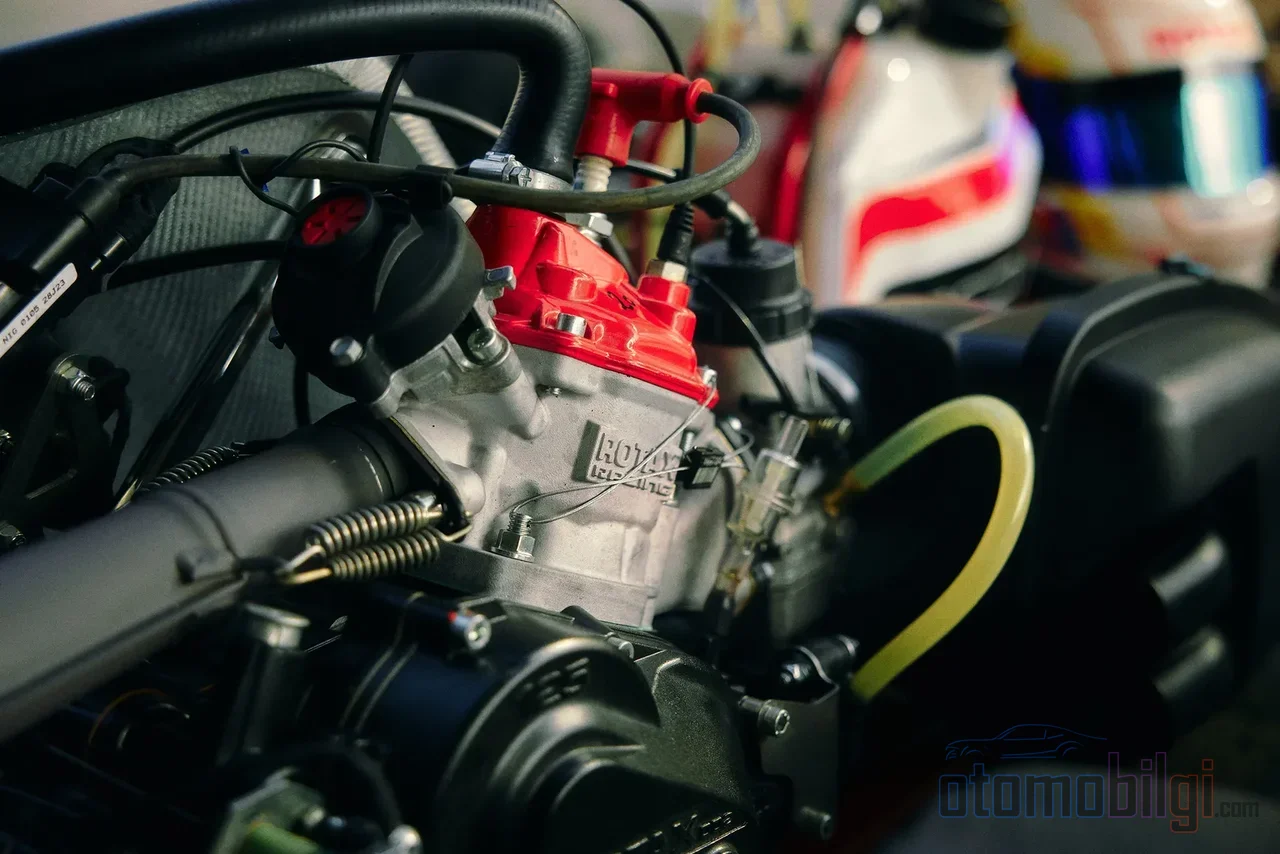
Two karts enter the corner side by side on the track. One seems to grip the asphalt a little earlier, while the other has its nose ahead on the straight. The difference is not in the driver, but in the engine platform. The karting world works just like football leagues: on every continent, in every series, a different engine builds its own kingdom. So if it were you, which one would you choose? CIK-FIA's direct-drive OK classes, the IAME X30 with its portability and electric starter, the Rotax MAX that has spread around the world, or the KZ where you shift gears and use the front brake too? In this article, I put all four side by side: their power, their maintenance rhythms, and why they reign on which continent. And at the end, we draw a selection map just for you.
Four Platforms, Four Different Philosophies: OK, X30, Rotax MAX and KZ
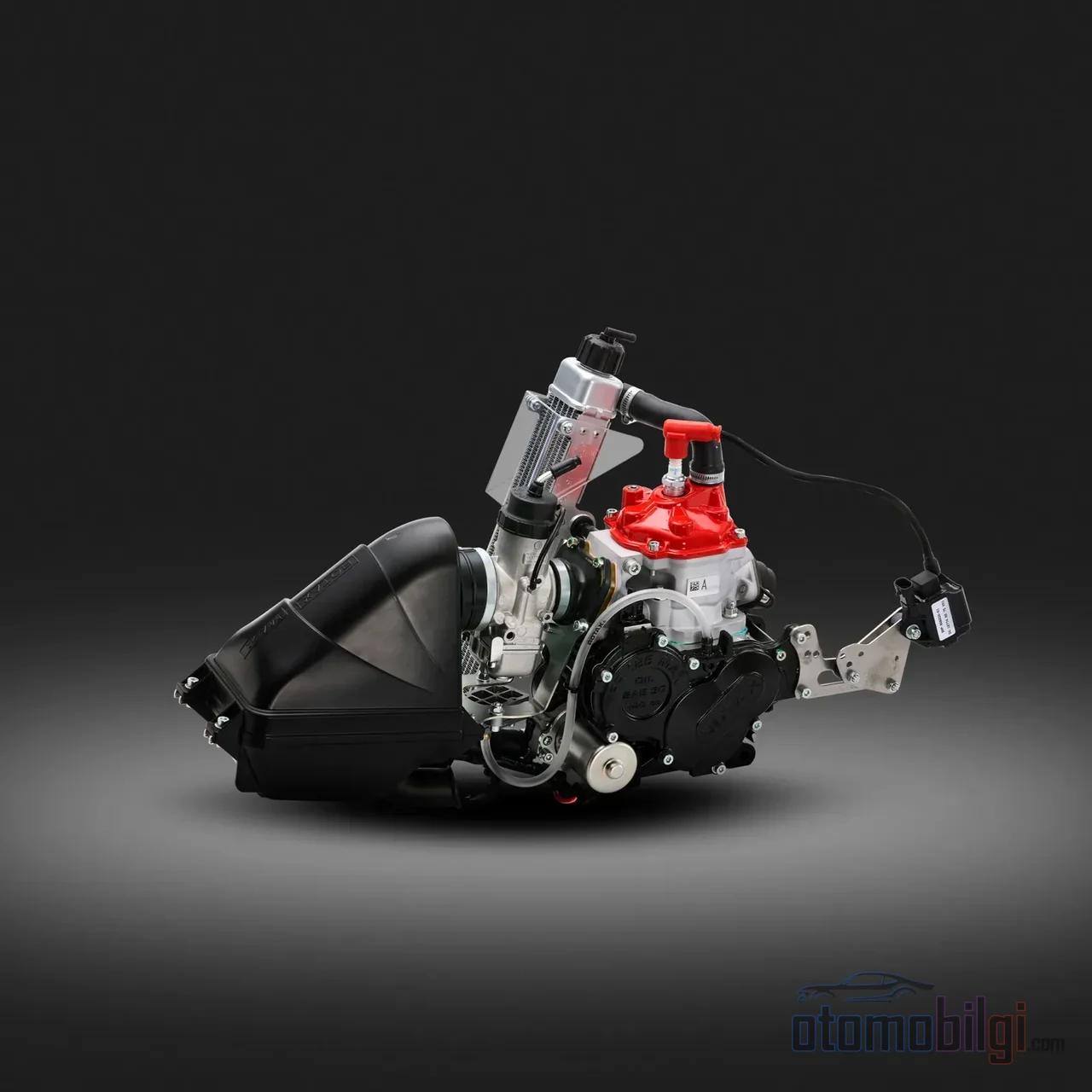
You can divide the karting engine world into two big families: single-speed, direct-drive engines and shifter classes. At the peak of the direct-drive side are FIA Karting's (formerly CIK-FIA) OK and OK-N classes. There is no clutch here, no starter motor; you start the kart by pushing it or with a stand, and the engine never stops revving. Just like old aircraft engines: either it runs, or it doesn't - there's no in-between. OK-N (OK-National) is an international class homologated for pilots aged 14 and over, and its engine definition is built on an engine concept designed to make it easy for manufacturers to participate. Thanks to this open architecture, multiple manufacturers can produce engines under the same rulebook; six manufacturers are mentioned on the OKN-Junior side.
Right next to it stand the somewhat more user-friendly portable engine classes: IAME X30 and the Rotax MAX family. Both are 125 cc, two-stroke and water-cooled. But since the X30 gives you a centrifugal dry clutch and an electric starter, it offers an experience as easy as driving in traffic; stop on the track, press the throttle, and the engine starts on its own. The Rotax MAX is the ancestor of this concept: the first 125 MAX was introduced in 1997, we saw it on karts in 1998, and it quickly gained market share thanks to its ease of use. The king of the shifter side, meanwhile, is the KZ: the main class approved by the FIA for pilots over 15, known in motorsport circles as the Formula 1 of karting. It has a front brake, a clutch lever and a gear linkage; that is, while your left hand shifts gears, your right foot presses the brake. In comparisons made at Lonato, a KZ laps roughly half a second faster than an OK Senior. That half-second gap is exactly the price of those extra pedals and gears.
Highlights
- More than 125,000 Rotax MAX engines were produced by 2022; it has a network of around 50 distributors and more than 700 authorized service points.
- According to factory data, the X30 Senior has an electric starter and is water-cooled; its operating limit is between 14,000-16,000 rpm depending on the version.
- According to user accounts, Rotax engines can last up to 150 hours without a rebuild; on the X30, top-end renewal is needed far more frequently on an hourly basis.
- The KZ has a front brake and gears; at Lonato, a KZ is roughly half a second faster than an OK Senior.
- Rotax introduced its entry-level electric engine, the E10, in 2026: with instant torque and a Boost function.
How Many Horsepower, How Many Revs? Technical Table Comparison
Now let's move on to the most fun part of the topic: the numbers. Let me give a warning when reading power figures; the power of the same engine can appear with small differences depending on the measurement method and version. For example, for the X30 you may encounter both 28 and approximately 30 hp; the rev limits in the manufacturer's official documents are the most reliable reference. The X30's operating limit is stated as 14,000, 15,500 or 16,000 rpm depending on the engine version. The Rotax MAX is described as a 28 hp engine revving up to 14,000 rpm; revisions like the EVO explain why the numbers seem to fluctuate slightly. In comparisons, it is said that the ROK reaches 36 hp, making it the most powerful among portable 125s. On the weight side, 162 kg including the driver for the X30 Light class and 176 kg for the X30 Heavy are given as examples of minimum weight.
| Platform | Type | Power / Revs | Standout Feature |
|---|---|---|---|
| OK / OK-N | Direct drive, 125 cc | High-revving racing concept | FIA Karting's top classes, open engine architecture |
| IAME X30 | Portable, 125 cc two-stroke | 28 hp; limit 14,000-16,000 rpm | Electric start, centrifugal dry clutch, adjustable carburetor |
| Rotax MAX | Portable, 125 cc two-stroke | 28-30 hp; up to 14,000 rpm | Electronic management, fixed jet, long overhaul interval |
| KZ | Geared, front-braked | The fastest main class | Clutch lever, gear linkage, long-term engine homologation |
| Rotax DD2 | Two-speed, chainless | - | With its driving feel, a bridge between MAX and KZ |
Let me add one more detail to this table: the X30 Senior has no diaphragm carburetor or power valve; meaning mechanical simplicity combined with electric start and a balance shaft. On the Rotax, the carburetor has a fixed jet, and you cannot make adjustments while driving. On the X30, however, the high and low speed needles can be played with even at the track. You can think of it as tying one's hands while handing the other a wrench.
When Maintenance Day Comes: How Often Is What Replaced?
Karting's hidden cost lies in the engine's pocket. On the X30, the top end (piston and cylinder head side) replacement interval is as short as 4-8 hours for someone targeting race performance; someone training at club level can stretch it to 10-15 hours, or even up to 15-20 hours. For the bottom end, values between 25-30 hours are given. Moreover, the X30 official maintenance manual requires piston replacement at specific intervals based on liters of fuel mixture consumed; meaning you count the fuel, not the engine hours.
On the Rotax side, the picture is much more relaxed. A user's account of using their Rotax MAX for 150 hours without needing any overhaul is a forum-sourced anecdote, but it shows where Rotax's reputation for reliability comes from: the long overhaul interval. Service prices are also close to each other for both worlds; On the price list of an engine service in Europe, OKN/OKJ/OK/Rotax/ROK/X30 rebuilds are listed at €175 excluding parts, while an OK class rebuild including parts is €395. IAME also has an advantage: Being one of the oldest kart engine manufacturers in the industry since 1968, spare parts are plentiful and prices are reasonable. If you are looking for an entry point on a limited budget, IAME engines like the KA100 or 4-stroke engines like the Honda GX160/GX200 are shown as the sport's gateway. In fact, if you look through the lens of operating costs, electric karts also make a serious claim: for about $0.20–0.30 of electricity per session, you spend $1.50–2.50 on a gasoline kart.
Map of the World: Which Engine Built Its Kingdom on Which Continent?
The three engine names you will hear most in the European paddock are Rotax, IAME X30 and ROK. By far the most popular senior classes in England are Rotax Max and X30. Behind Rotax's global power lies the Rotax MAX Challenge (RMC) series; it is a professional organization founded and organized by BRP and Rotax. The Rotax MAX Challenge Asia Festival was run in Kuala Lumpur with six Rotax categories; among them was even the 5 hp Rotax 125 Micro MAX Evo. In other words, we are talking about a global league network where the same engine rules apply from Thailand to Brazil. Rotax positions its classes as the number one engine of the sport in terms of popularity among teams, and claims that MAX engines have won more championships than any other engine; of course this is a manufacturer's claim, but looking at the distribution network, it does not seem like an exaggeration: more than 125,000 engines by 2022, ~50 distributors, over 700 authorized service points.
X30's stronghold is especially England and Europe's competitive club scene; IAME also has a wide range offering FIA Karting racing engines (R60, R125J, R125K, R125Z, Reedster V OKN) and sport engines (X30, S125, KA100). On the FIA Karting side, the Arrive & Drive platform was launched to promote affordable motorsport; the 2026 European and Asia-Pacific Arrive & Drive Championships will use Kosmic Mercury chassis supplied by OTK and Vortex SV engines. On the Pacific side, there is an interesting example of regulation: Karting Australia introduced a Balance of Performance assessment for TAG 125 classes, and Rotax classes were re-homologated with its own approval and license. In other words, in some countries it is not you but the federation that decides which engine your series will use.
Power or Simplicity? The Fine Line of the X30–Rotax Rivalry
So is the difference felt on track? It is felt, but not where you might think. Rotax (about 30 hp) and ROK (36 hp) are advantaged on the straights ahead of the X30 (28 hp); but the X30 can gain the upper hand on low-speed-heavy tracks with its acceleration out of low-speed corners. The driving characters also differ from each other: the X30 is beginner-friendly with a wide margin for error, while the Rotax demands extra smoothness on the throttle. Rotax's long maintenance interval versus the X30's frequent top-end/bottom-end maintenance; but on the X30, the carburetor that can be tuned at the track strengthens the hand of the tuning enthusiast.
There is also an industry reality that should not be overlooked: it is the depth of the field, more than the engine itself, that determines the competition. One racer wrote that the single good Rotax on his team could beat the X30s, but the other three Rotaxes trailed by about 0.6 seconds on a 0.8-mile track; in the end the team switched to the X30. In short, however many good pilots there are in your class at your club, that is your real stopwatch.
OK or X30? A Roadmap for Choosing the Right Engine
Here is the clear answer I promised you. The order for choosing the right engine is as follows: first age, then weight, then goal, and budget last. If you are over 14 and aiming for the FIA Karting path, the OK/OK-N family is your league; if you are over 15 and love mastering gear shifting and braking at the same time, KZ is for you. In the portable 125 world, the decision criterion is this: if you want to stop on track and continue with an electric starter and accept frequent maintenance, the X30; if you want maintenance to be as minimal as possible and to race under the same rules worldwide, the Rotax MAX. Let's add an intermediate formula as well: Rotax DD2, with its two-speed, chainless design, is a bridge between MAX and KZ; if a single gear is not enough and the gearbox appeals to you, it is just right for you. And the golden rule: always start with your first kart using a single-speed, direct-drive engine; get the engine that matches the class being raced at your track.
If you are just starting out, let's honestly state the budget reality too: engines like the KA100 or 4-stroke classes are cost-effective entry doors; accumulating track time at rental karting tracks and then choosing an engine is far smarter than buying an engine and learning with it. For every new pilot buying a used kart, that classic question - X30 or Rotax - is actually the wrong question. The right question is: on which class's stage, and at what speed, do you want to rise? Give your answer, and the engine reveals itself.
Looking from my window, the picture is as follows: Rotax has swept the world, the X30 pumps Europe's competitive blood, OK shines in the FIA's showcase, and KZ shows karting's upper limit with gears and brakes. Each has its own character, its own maintenance rhythm, and its own league. Now it's your turn: which engine would you chase your first championship with?
Sources
- FIA Karting Categories
- X30 Senior - IAME Karting
- Go-Kart Engines | Rotax 125 MAX Combustion Engines Series
- Pros and Cons of the X30 engine - Kart Class
- Balance of Performance Assessment - Karting Australia
- 2026 FIA Karting Arrive and Drive Championships - Competitor Information
- Price List - Kart Engine Shop
- Your Thoughts IAME X30 or Rotax - eKartingNews
- KZ (karting) - Wikipedia
- OK-N - Wikipedia