KZ Class Shifter Karts: The Speed of Geared Karting
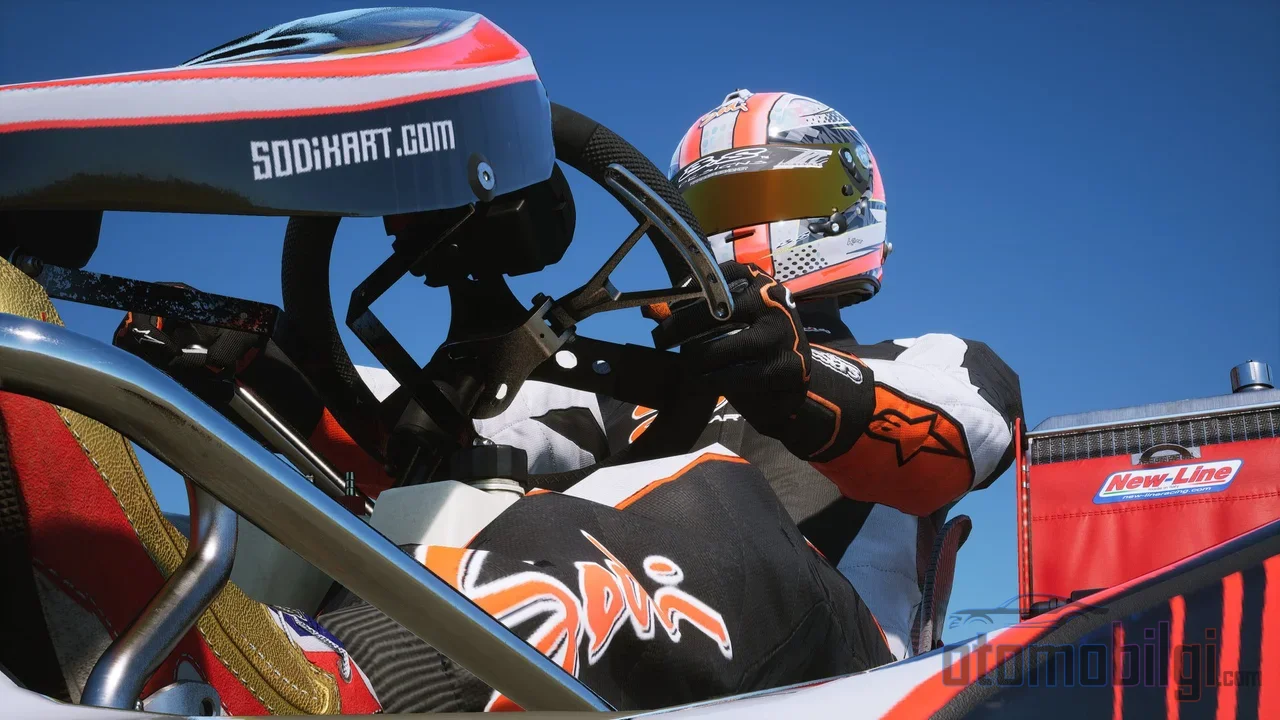
Just imagine: you're sitting in a machine that's just a few centimeters off the ground, made up of four tires and a seat, and you go from 0 to 100 km/h faster than most supercars. And without touching a clutch pedal, just lifting your foot off the throttle, the moment your hand pulls the lever next to the steering wheel, engaging the six-speed sequential gearbox. This is the name of the fastest, toughest, and for some reason least talked-about branch of the karting world: KZ, in other words, the shifter kart. So why is this beast called "the Formula 1 of karting", and why do most drivers running OK or X30 look longingly at moving up to this class one day? Let's break it down layer by layer.
What Is KZ? The Top Class of Geared Karting
KZ is a geared kart class approved by the international motorsport federation CIK-FIA, open to drivers aged 15 and over, and it is the primary gearbox category of FIA championships. Let me put it simply: the rental karts or OK karts you're used to are single-speed, clutchless, and work on a throttle on-off basis. In KZ, things are completely different. There's a gear lever next to the steering wheel, a clutch lever in front of you, and a full 6-speed sequential gearbox at the back. That "one up, one down" rhythm that motorcyclists are familiar with applies here too.
The class's history is older than you think. It first appeared on the international stage in the 1974 European Championship under the name Formula C (FC), and raced in the World Championship between 1983 and 2000. In 2002 it took the name Super-ICC and dropped down to World Cup status; in 2007 it became KZ1, and in 2013 it took its present name of KZ, returning to the World Championship. So this category has been at the very top of karting for almost half a century.
Highlights
- 125 cc water-cooled two-stroke engine, 6-speed sequential gearbox
- 0-100 km/h in under 3 seconds in most cases
- Minimum weight including driver 170 kg, ages 15 and over
- Top speed of 110-120 mph (approximately 175-195 km/h) on long tracks
The Technical Anatomy of the KZ Kart: Engine, Gearbox, Brakes
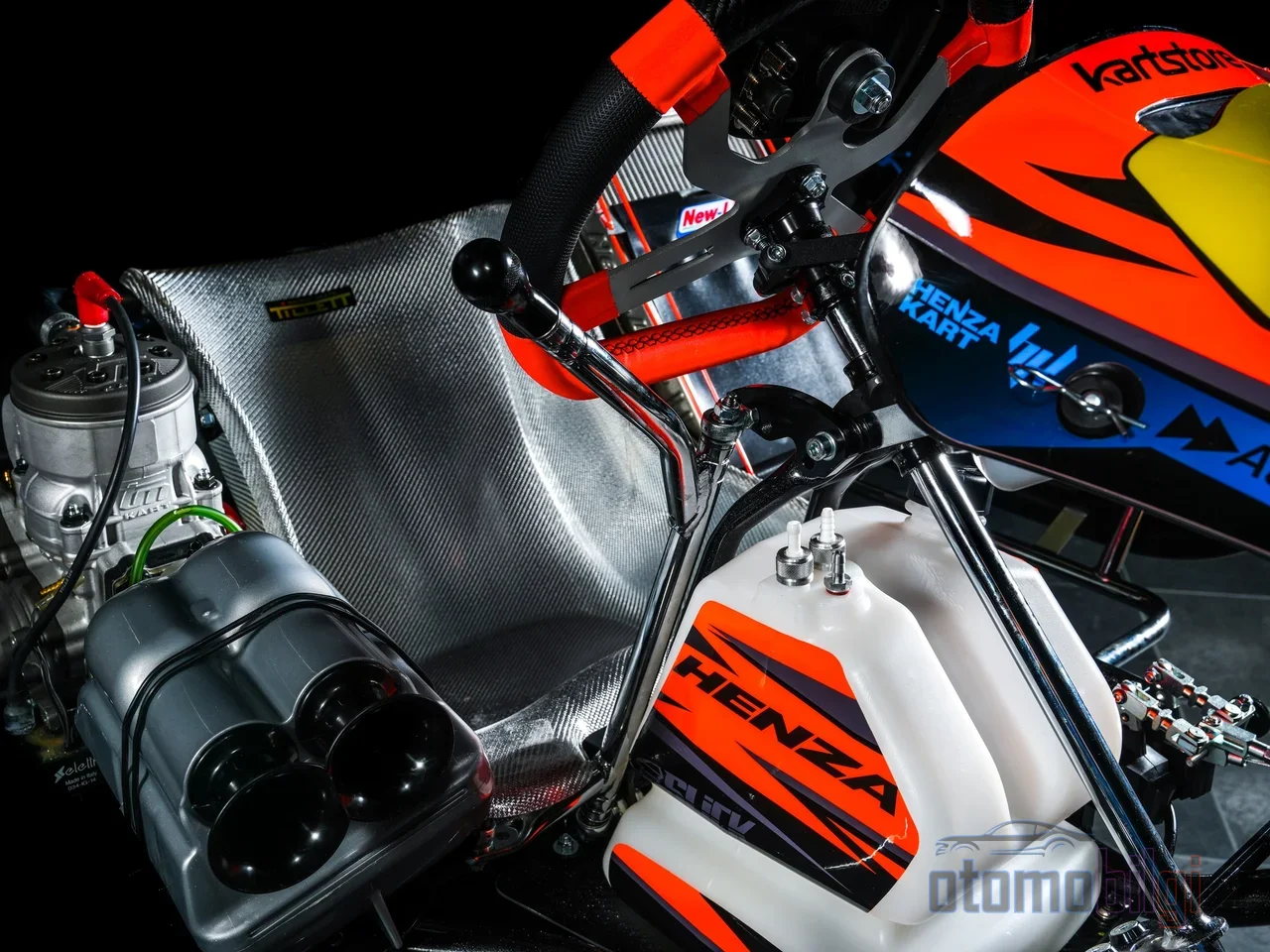
There's no hood, of course, but if there were, what would you look for under it? The rules are clearly drawn. The engine is a 125 cc, directly mounted to the chassis, water-cooled, mixture-lubricated two-stroke unit. It has a valve intake in the piston skirt, the carburetor bore is at most 30 mm, and power is transmitted through a manual clutch to the six-speed sequential gearbox. The braking side is serious too: hydraulic, foot-operated brakes at the front and rear. Yes, front brakes on a kart! This is a luxury not found in most kart classes, and at the same time a huge responsibility.
The chassis, engine, brakes, and tires are all subject to the CIK-FIA homologation system; each year, tire, fuel, and carburetor brands are determined by tender. When Dunlop tires became mandatory in international KZ in 2024, drivers and teams criticized the decision out of concern for competitive performance. Minimum weight including driver is 170 kg, and the tires are premium production of medium hardness.
Up close, the engine side of things is dazzling in its technology. For example, TM Kart's KZ-R2 engine is 2023 CIK-FIA homologated and is the first shifter engine under the TM brand. Its predecessor, the KZ-R1, won the KZ FIA Karting World Championship three times between 2019-2022; it is known for its push-start system, manually controlled clutch, and its ability to pull away from a standstill in 2nd known for its launch from a standstill. On the KZ-R2, however, the cylinder, crankcase, and intake/exhaust ports are fully integrated in the Total Black version; the gearbox and crank balancing are machined to one-hundredth of a millimeter precision. This is not a high school project; it is race art, hand-sculpted.
What's Inside the Engine?
A typical KZ engine has a reed valve intake in the crankcase, liquid cooling with an external pump, a CNC-machined cast iron cylinder, and a 54x54.5 mm cylinder bore/stroke value. Ignition works analog up to 14,000 rpm, and the carburetor is a legendary name like the Dell'Orto VHSH Ø30 mm. In short, every part exists for a single purpose: holding the rev band as aggressively as possible.
How Do You Shift Without a Clutch? Shifter Driving Technique
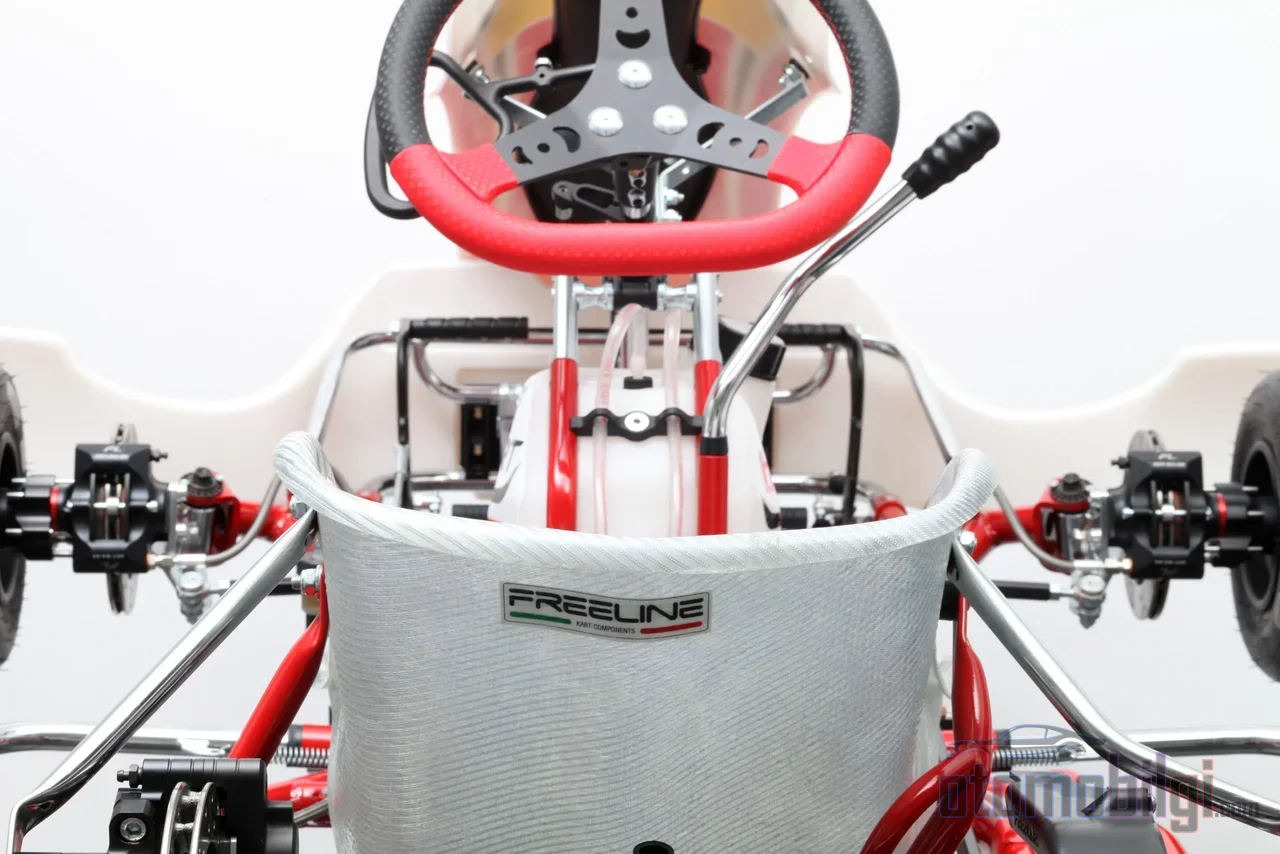
This is where most people are surprised. In KZ, the clutch lever sits next to the steering wheel, but it is used only for pulling away from a standstill. Throughout the race, gear changes are made without the clutch. How? If you have ever tried clutchless shifting in a manual car at a red light and heard noise from the gears, you have caught the logic: to engage a gear, the engine and gearbox revs need to be matched. When upshifting, briefly lifting off the throttle to drop the revs, and when downshifting, blipping the throttle to raise the revs, the gears slot into place almost by themselves.
In KZ, this technique is not a preference but a necessity. In low-speed corner exits, it may be necessary to go from 2nd gear to 4th gear within a few meters; traction is so high and the time window so tight that the driver has to ingrain the reflex of pulling their foot off the pedal and moving their hand to the lever into their muscles. And the mental load is another matter entirely: a shifter kart demands a brain accustomed to doing multiple things at once. Throttle, brake, steering, shifting, rev matching. All in the same second. That is why moving up to a shifter kart means skill as much as budget; experienced names recommend first building a foundation in TaG-style classes.
The Performance Difference Between KZ and OK/X30
OK and X30 are direct drive, single-speed, and clutchless platforms. Both are great schools; X30 is especially popular in the 11-17 age junior category and as a senior class with its own championship. But gearbox karts offer the highest power and speed in the karting world. Let's look at the numbers:
| Feature | OK / X30 | KZ (Shifter) |
|---|---|---|
| Transmission | Single gear, clutchless | 6-speed sequential gearbox |
| 0-100 km/h | No gear concept, progressive | Usually under 3 seconds |
| Maximum speed | Lower | ~145 km/h on short tracks, 175-195 km/h on long tracks |
| Front brakes | None | Hydraulic, foot-controlled |
| Chassis tube diameter | Typically 30 mm | 32 mm chrome-molybdenum (4130) |
The chassis difference is invisible but critical. Shifter-specific chassis are designed to withstand front brake loads, gearbox torque, and far higher torsional loads; a 32 mm chrome-moly tube gives the chassis more torsional rigidity compared to the 30 mm used in TaG. Also, a chassis ordered as "KZ" comes with front brakes, a clutch lever, and shift linkage. Experienced drivers say the KZ produces faster lap times on the same tires in raw form; the price is budget and a completely different driving skill.
Let's also clarify the distinction between KZ and KZ2: the two classes technically share the same engine specification; the difference lies in the chassis and brakes being more open in KZ and a different minimum weight. In the CIK-FIA structure, KZ is the top and primary class, while KZ2 is the rising category that a driver can enter in the year of their 15th birthday year. In some countries, for example South Africa, KZ2 is a national championship class; KZ runs from the year of turning 26, while KZ Masters runs from the year of turning years of age.
How Fast Is a Shifter Kart? The Numbers Speak
If you're ready, let's hit the gas. A shifter kart reaches 0-60 mph in under about 4 seconds; test measurements recorded a value of 4.6 seconds, 87 feet in braking from 60-0 mph, and 1.5 g of lateral grip on a 200-foot skidpad. 1.5 g! That means it takes corners with one and a half times its own weight in force without tipping over. Even most supercars envy that.
Maximum speed varies by track: about 90 mph (145 km/h) on short circuits, and 110-120 mph (175-195 km/h) can be seen on long circuits; a former F1 driver notes that the shifter kart reaches 180 km/h and is more valuable than a simulator for real track preparation. It is known that on some tracks shifter karts exceed 100 mph, and this manual gearbox requiring fast-precise shifts pushes the driver to the absolute limit.
If you're a comparison enthusiast, taking a look at e-karting records is also instructive. The Guinness record-breaking electric kart called Linde E1 completed 0-100 km/h in 3.4 seconds at Oschersleben; the commercial electric kart called Blue Shock Race recorded its own record at 163 km/h in October 2023; Play and Drive's eKart EGT5 model captured a lap of 2'26"608 and a top speed of 167.183 km/h at the Motorland FIA circuit. While electric karts are impressive in acceleration, the driving experience offered by a six-speed two-stroke engine is a whole different story.
Why Do F1 Drivers Train With a Shifter Kart?
Next comes my favorite part of the page. Many IndyCar drivers train with shifter karts throughout the season to keep their skills sharp. Why? Because there are no long straights in a kart; the mind doesn't get a chance to relax. Short reaction times, fast gear changes, and hard braking reflexes are constantly at work. There is also an interesting reverse adaptation for drivers moving up to top-level single-seaters: karts still use shifter transmissions while formula cars moved on to semi-automatic gearboxes and hand-operated clutches; so returning to the old system after the transition can take some time.
Romain Grosjean's shifter kart experience reminded him of a reality of F1: in formula cars tires are constantly managed, a discipline that can make it feel like you're driving the car at 40-50% of its capacity on some tracks. In a shifter kart, the moment you turn the wheel, the price of your decision is instantly in front of you. This is the purest form of the journey of talent.
There are legendary names on the championship side too. Max Verstappen is the only name with the combination of a CIK-FIA gearbox championship and an F1 World Championship; in the KZ World Championship, Gianluca Beggio set a record by reaching the top 5 times, and Gabriele Tarquini is one of the other notable champions. This class truly builds a bridge to the formula world.
The Place of KZ in 2026: Calendar, Categories, Debates
So what's happening now? WSK Final Cup 2026 consists of three rounds, and each event lasts five days from Wednesday to Sunday: Franciacorta on August 26-30 (no KZ2 in this round), Lonato on November 18-22, and Viterbo on November 25-29. KZ2 takes to the track in the last two rounds. In the 2026 WSK Euro Series, Orlov won the KZ2 championship.
Other shifter classes also exist and continue below this category. The Junior Gearbox class was a step with 6-speed karts (offering an experience close to a single-seater race car) powered by 85 cc Honda/TM engines, open to pilots aged 13-17; it is no longer raced much. The 250 National, with 250 cc motocross-based 5-speed engines, can reach 100 mph on short circuits and 140 mph on long ones; twin-cylinder Superkarts can climb up to 170 mph.
The debates are not absent either. Some argue that the shifter's high speed reduces the quality of racing compared to slower classes; in past periods when teams could bring non-homologated equipment, young pilots' lack of access to it was also criticized. Today, it is not possible to enter FIA KZ races with a non-homologated chassis; only some local club events can offer flexibility according to their own rules. This makes the class both expensive and a peak category with rock-solid standards.
When and How Should You Move to the KZ Class?
Let's wrap up and give a clear answer to the question: KZ, open to pilots aged 15 and over, with its 125 cc water-cooled two-stroke engine, manual clutch and six-speed sequential gearbox, is the fastest and highest-level class in karting; the nickname "Formula 1 of karting" is not given for nothing. The hand clutch is used at the start, and 2nd gear is engaged; during the race, gears are shifted without the clutch using the rev-matching technique.
Practical advice on transition timing: first build your foundation in a TaG-style class, then turn 15 and start with KZ2 while preparing both your budget and your reflexes. When choosing a chassis, look for the trio of 32 mm chromoly tubing, front brake compatibility, and durability against gearbox torque. And don't forget: the speed here lies not only on the straights, but in how many tasks your brain can handle at once. One day, if you take the wheel of a KZ, you'll realize that everything karting taught you was actually preparation.
Sources
- KZ (karting) - Wikipedia
- Complete analysis of the KZ-R2 by TM Kart
- TM Racing KZ-R1 - TKART
- OK VS KZ: The Challenge
- Kart Classes Explained - Rookie Racing
- Best Shifter Kart Chassis - KartClass
- WSK Official Site
- Motorsport - Shifter Karts - Motor Trend
- Shifter kart reiterated Formula 1's flaws to Romain Grosjean - Autosport
- The Path From Kart Racing to F1 - Atlanta Motorsports Park