How Did Max Verstappen Tear Up the Karting Tracks?
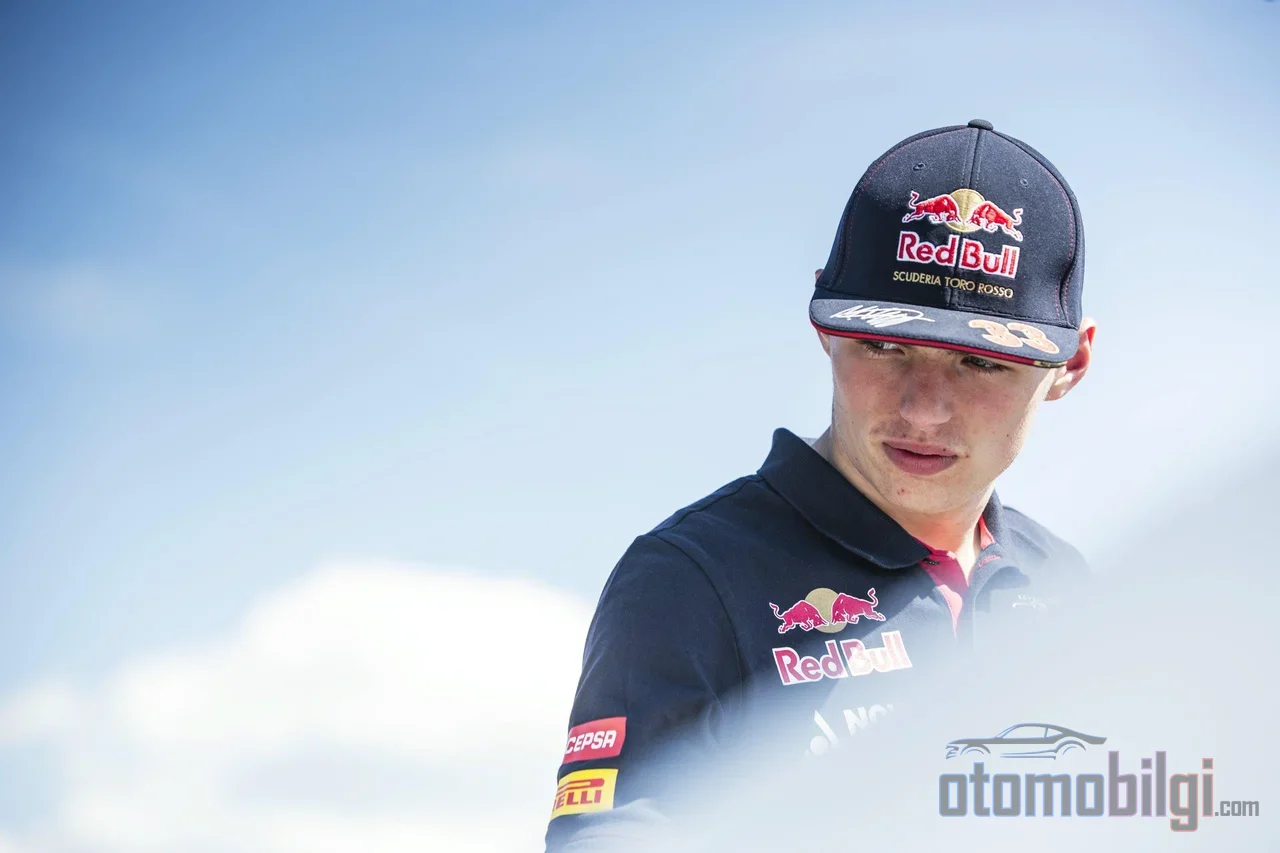
September 2013, the Varennes-sur-Allier circuit in France. In the world final of 125 cc shifter karts, just days before his 16th birthday, a kid enters the final corner on the grass and becomes the youngest KZ world champion in history. What's more, that same year he had already pocketed two European championships. His name is Max Verstappen - and the story of this name, now a four-time consecutive world champion in F1, actually began on a karting circuit. So how does a driver blitz past the peak of karting so quickly at the age of 15? Let's take it step by step.
Hands on the Wheel at Four Years Old: The Verstappen Family's Karting Legacy
Max Emilian Verstappen was born on September 30, 1997 in Hasselt, Belgium, and grew up in Maaseik. He races under the Dutch flag, but his roots are a complete racing family: his father is former F1 driver Jos Verstappen, and his mother is Belgian former kart racer Sophie Kumpen. So Max was born into a world smelling of engine oil the moment he took his first breath.
He first held a kart at the age of four and entered championships at seven. At that age, most of us were only just taking the training wheels off our bikes, you know. Things got serious fast: In 2005 he won the Limburg Mini Junior championship, and won the VAS Championship in the same category again in 2006. In 2007 he appeared in the Belgium and Netherlands Mini Max series of the Rotax Max Challenge, and in 2008 he competed in the Belgian Cadet Championship and the Benelux Karting Series with a CRG kart that his father also drove. In 2009 he joined Pex Racing; he defended his Mini Max titles and added the Belgian KF5 championship. So before stepping onto the international stage, he was already someone who had won everything on local circuits.
Meeting CRG: A Youngster Signing with a Factory Team
2010 was a real turning point for Max: He signed with the factory team of Italian chassis manufacturer CRG and stepped into international karting. To introduce CRG a little: It is a brand with a history of over 30 years and more than 100 FIA titles, and countless F1 champions, from Hulkenberg to Rosberg, from Hamilton to Verstappen, took their first shifter-less grips here. There is another interesting detail: Max's mother Sophie Kumpen also raced with CRG equipment; this family-brand connection goes all the way back to his father Jos.
In his first international season he finished second behind Alexander Albon, who would later become his F1 teammate at Red Bull, in the KF3 world class, but he won the WSK Euro Series and the WSK World Series. In the 28-lap Bridgestone Cup final run in the rain, he beat Dennis Olsen by exactly 11 seconds - a margin like that on a wet track is practically an exaggeration in karting. In 2011 he celebrated the WSK Euro Series championship ahead of Esteban Ocon; he finished 14th in the European Championship, and in the World Cup he was eliminated by an electrical fault while catching the drivers ahead - he had already begun battling ahead of a name like Charles Leclerc.
In 2012 he took a short tour: He moved to Intrepid, winning WSK Master Series and South Garda Winter Cup championships in KF2 and KZ2; Finished eighth as the youngest competitor in the KF1 World Championship. In July he left Intrepid, first raced briefly with Zanardi chassis, then returned to the CRG factory team. He finished second in the KF2 World Cup. At just 14 years old, teams were already lining up at his door.
Highlights
- Max Verstappen started karting at age four and began racing in championships at seven.
- In 2013, he won two European (KF and KZ) championships and the KZ World Championship in a single season.
- He went down in history as the youngest driver ever to become KZ world champion; he beat Charles Leclerc in the final.
- His transition from the peak of his karting career to F1 took about two years.
- CRG launched the careers of names like Hamilton, Rosberg and Hulkenberg, including Verstappen.
What Are KZ and KZ2? The Two Levels of Shifter Karts
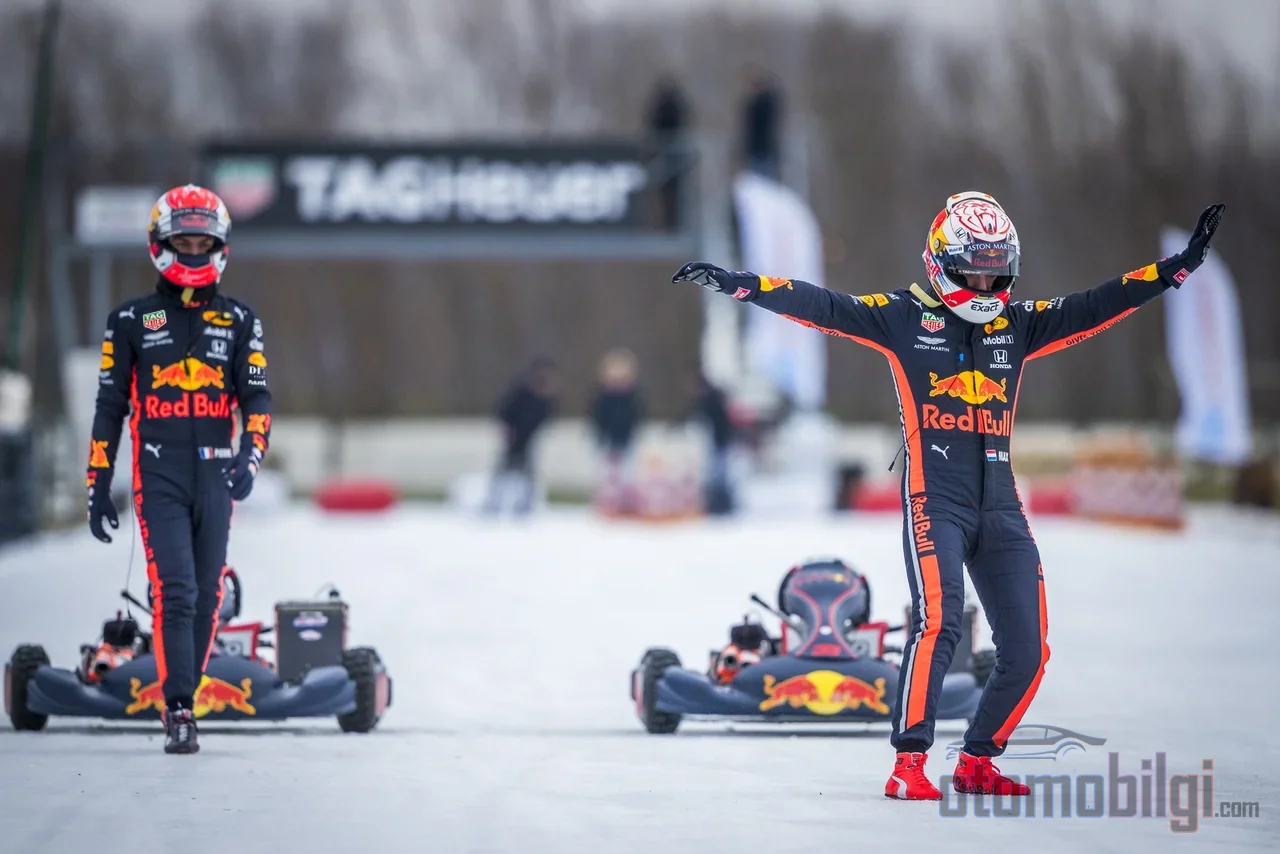
To understand Max's 2013 victory, you first need to know what the KZ class is. KZ is a shifter kart category raced with 125 cc six-speed, water-cooled engines. Don't be fooled by the words "shifter kart"; these are vehicles you brake with your left foot and shift gears with levers on the steering column, riding them just like a motorcycle. Let me make an analogy: if gearbox-less karts are your beloved car stuck in a single gear on the highway, KZ karts are like a full six-speed road bike - if you don't shift into the right gear at every corner exit, the revs drop and you get left behind.
KZ2, on the other hand, is a class based on the same technical foundation, with engine settings restricted according to CIK-FIA homologation. It is open only to drivers aged 15 and over, and the combined minimum weight of kart plus driver is 175 kg. KZ2 is the world's most populated shifter class and is considered the gateway into shifter kart racing. In KZ, there are no restrictions on chassis and brakes; meaning engineering freedom is much broader. These two classes are a proving ground for a driver's maturity in both driving and technical understanding - and Max carried both to the summit in the same year.
2013: Three Continental Titles in a Single Season
That was the year. 15-year-old Max won two European Championships (KF and KZ) and one World Championship in a single season; he became the first driver to do so in the two main categories, with and without gears. With two European titles in the same season, he took his place on that list as the second name after his father Jos. On top of that, he won the South Garda Winter Cup in KF2, the WSK Euro Series in KZ1, and the WSK Super Master Series in KZ2. Karting history had never seen such a season before - they say no driver has ever had a season like Max's 2013, so don't think it's an exaggeration.
| Competition | Result (2013) |
|---|---|
| KF European Championship | Champion |
| KZ European Championship | Champion |
| KZ World Championship (Varennes-sur-Allier) | Champion - youngest shifter world champion |
| KF2 South Garda Winter Cup | Champion |
| KZ1 WSK Euro Series | Champion |
| KZ2 WSK Super Master Series | Champion |
| KF World Championship | 3rd (disqualified in the final) |
His rival in the KZ World final was once again a familiar name: Charles Leclerc. Max became the youngest driver to win a world championship in the geared category by beating him. He was crowned at the FIA Gala at the end of the year; His topping both KF and KZ with CRG-TM-B'Stone equipment was officially highlighted as a box-tick. But was everything perfect? Here's the interesting part: Despite winning the opening lap and the pre-final at the KF World Championship, he was disqualified for the maneuver he made on Nicklas Nielsen in the final and dropped to third place. This was the only competition he failed to win in 2013 after completing all the laps - and the seeds of that aggressive maneuver debate would be discussed again in F1 years later.
How Does the Path from Karting to F1 Academies Work?
In modern career paths, you can think of karting as a pre-university preparatory school for single-seater racing. Max climbed this ladder at a legendary speed: In August 2013, he tried formula cars for the first time, completing 160 laps in two days at Pembrey; In December, he tested the Dallara F311 with Motopark Academy and Formula Renault at Jerez, and in that test he was faster than the regular Formula Renault drivers. In early 2014, he took two wins in the Florida Winter Series; At Homestead-Miami, he beat Nicholas Latifi by just 0.004 seconds - a gap shorter than the blink of an eye.
Then came the 2014 FIA Formula 3 European Championship with the Van Amersfoort team: At 16, with 10 wins and six consecutive victories at Spa-Francorchamps and Norisring, he became the youngest race winner and pole sitter in F3 history. In August 2014, he joined the Red Bull Junior Team; Mercedes' development program was also waiting at the door, but the choice went to Red Bull. The rest was a fast-forward film: At the 2015 Australian GP, he became the youngest driver to start an F1 race at 17 years 166 days; At the 2016 Spanish GP, he became the youngest to win a Grand Prix at 18 years 228 days. His transition from the peak of karting to F1 took roughly two years; The time from the KZ world championship to his first single-seater steps was just 11 months.
Why Did He Quit Karting So Early?
2013 was effectively the final year of Max's karting career. The reason is simple and ruthless: to be on time in a single-seater career, you need to leave karting as early as possible. Since F1 academies place young drivers into categories based on their age, each year lost means dropping one step back on the ladder. Max had won everything karting could offer before even turning 15; there was nothing left to stay for.
One nuance should not be hidden: His father Jos Verstappen has stated that correcting his son's karting mistakes was the key to F1 success; he argues that the aggressive maneuvers permitted in karting need to be taught in single-seaters. The debate even reignited in 2016 when the FIA banned moving under braking. So that famous stubbornness on track is part of a development story with roots stretching back to the 2013 KF final.
The CRG and Verstappen Legacy in Today's Karting World
Verstappen's story is the brightest proof that karting is still the only correct gateway to F1 academies. The CRG side of the story continues too: In September 2025, Lenovo formed a multi-year partnership with Gruppo CRG and became the title sponsor of the KZ and KZ2 World Championship; CRG and Kalì Kart are cited as the starting point for F1 drivers like Hamilton, Verstappen and, more recently, Gabriel Bortoleto. In September 2026, Sparco-CRG won the brand's 28th karting world championship at Le Mans. In F1, meanwhile, Max signed off on four consecutive world championships between 2021 and 2024, 73 wins and 50 pole positions; he closed 2025 in second place, and in 2026 he is racing with Red Bull-Ford, his contract extended until the end of 2030.
So the answer to the question is clear: Max Verstappen bulldozed his way through karting circuits, because from the age of four he learned to win, grew up inside a school like CRG, and at 15, when there was nothing left to learn, he left the door behind him. Keep this in mind while watching the next KZ World final - someone on that grid who will become an F1 champion in the future is probably 15 years old right now.
Sources
- Max Verstappen - Wikipedia
- 2013 - FIA Karting History
- Verstappen wins KZ World Championship at 15 - FIA
- FIA Karting Categories
- Racing Team - CRG Kart
- CRG (kart manufacturer) - Wikipedia
- Lenovo enters the karting world - Lenovo Pressroom
- Sparco and CRG: 28th World Karting Championship Title at Le Mans
- Max Verstappen - World Karting Rankings
- Verstappen and Joyner crowned 2013 World Champions at FIA Gala - VroomKart