Ayrton Senna's Karting Years: From Brazil to F1
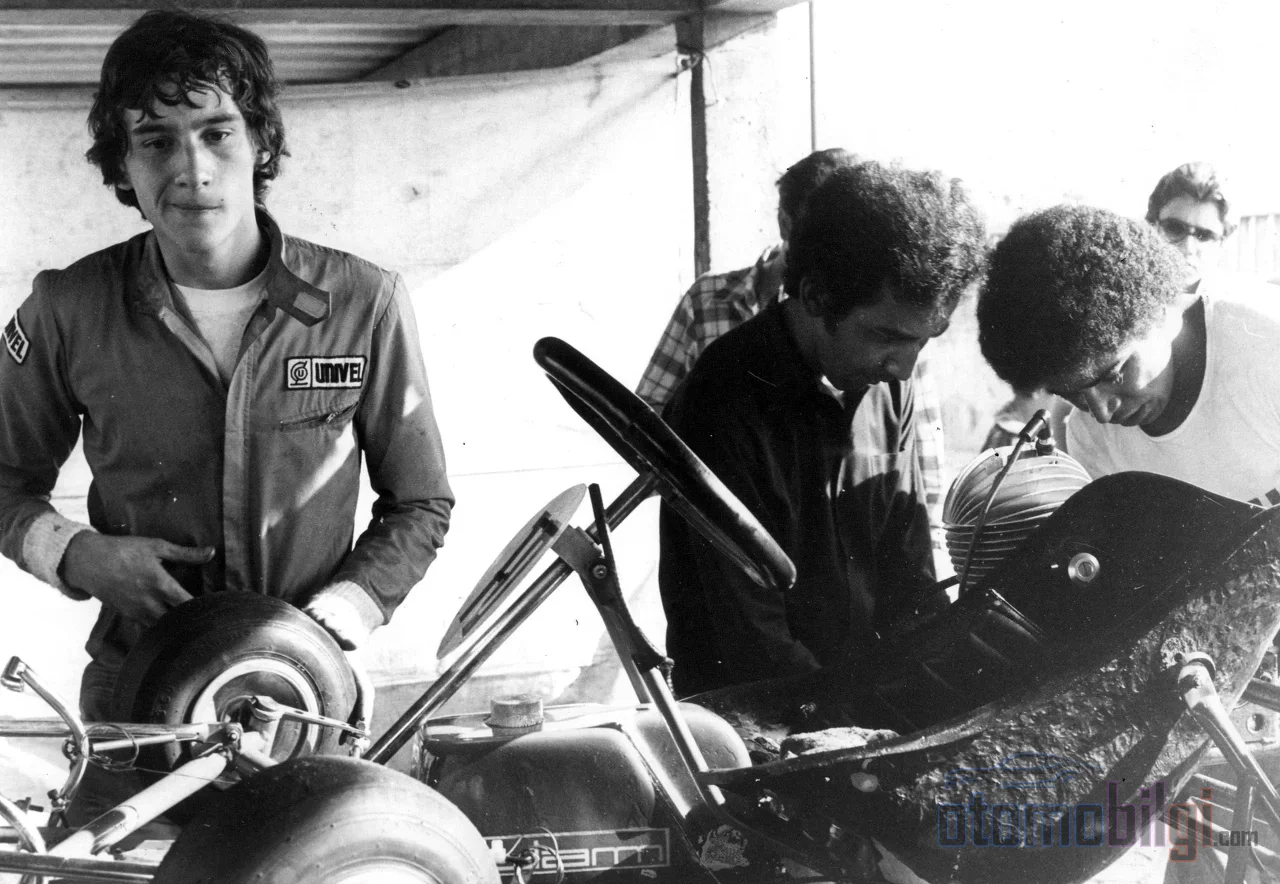
At the age of four, a boy receives a handmade kart powered by his father's lawnmower engine. Twelve years later, that same boy becomes a phenomenon who crushes grown drivers at the World Cup. And a few years after that, he writes his name into Formula 1 history in golden letters. So what exactly happened in those karting years that made Ayrton Senna Senna? Come on, let's watch the story from the beginning - because this story is the finest proof of what a great school motorsport is.
A Boy in São Paulo and a 1-Horsepower Kart
Ayrton Senna da Silva was born in São Paulo on March 21, 1960. His father Milton, wanting to develop his son's manual skills, gave him a kart made with a 1-horsepower lawnmower engine when he was four. Just think about it: a toy bought to help with coordination problems would become the first vehicle of one of the world's greatest drivers. That's exactly the point where you'd say fate has a sense of humor.
Little Ayrton drove this kart on the hills of Tremembé with his neighborhood friends Roberto Kahvogian and Alfredo Popesco. Speeds reached around 60 km/h - quite brave for a child of that age. For those curious about his first race number: 007. Maybe it was a James Bond fascination, we don't know, but that was Senna's first race number.
At the age of nine came the real encounter: his father bought him a kart that had previously belonged to Emerson Fittipaldi. Weighing less than 50 kilos, with hydraulic disc brakes and capable of reaching 100 km/h, this machine completely captivated the child.
First Race: A Pole Position and a Lesson in a Parking Lot
Senna's first race took place in a rather unusual venue: a parking lot in Campinas. His rivals? Drivers aged 18-20, nearly twice his age. The starting order was determined by a draw, and the child drew number 1, winning his first pole position - before even entering an official race. In the race he took the lead on lap 15, but near the end he was tipped over by contact from behind and couldn't finish.
Here's the beautiful part: losing that day didn't stop him. On the contrary, he learned from the very start that even a lost race can be a school. And soon the family got serious about it: Lucio Pascoal Gascon, nicknamed Tchê, a Spanish mechanic who had also worked with Emerson Fittipaldi and José Carlos Pace, joined the team. Tchê remained by Senna's side until 1980.
Official Debut at Interlagos: Two Races, Two Victories
The rules were strict: Senna couldn't enter official races until the age of 13. His first official race day came on July 1, 1973 - the Interlagos Winter Tournament. He raced with kart number 42, and do you know what happened? He won both races he entered. One of the cleanest starts any driver could dream of, don't you think?
Highlights
- First official race: July 1, 1973, Interlagos - won both races
- Runner-up twice in the Karting World Cup: 1979 and 1980
- Never became a karting world champion
- Chosen as the discovery of the race at Le Mans in 1978, setting the third fastest time in the rankings
- From Karting to F1: last karting season 1982, F1 debut 1984
A Chain of Championships: From Paulista to South America
From 1973 onward, Senna's karting record card began filling up item by item like a catalog. A journey that began with Brazilian national championships soon expanded to continental scale:
- 1974: Paulista champion (junior category), again with that famous number 42.
- 1975: Paulista champion (100 cm³) and Brazilian runner-up.
- 1976: A third consecutive Paulista championship; a third place in the Brazilian championship and victory in the Three Hours of Karting.
- 1977: South American champion at age 17, in the city of San José, Uruguay - with number 7.
- 1979: South American and Brazilian championship.
- 1980: Brazilian and South American championship once again.
- 1982: Pan-American championship in Porto Alegre - his last title in karting.
A small note about the history of the South American championship: some encyclopedic records also give this title for 1978; records closer to Senna's own circle point to the 1977 and 1979 championships. In such details, which category and which year the records cover can make a difference - but that first continental victory in 1977 is common to every version.
The Door to the World Cup Opens: DAP, Milan and Le Mans
1978 became the year Senna stepped onto the international stage. The Italian DAP team - the brand of the Parilla brothers - added the young driver to its roster. The Brazilian, who took part in the test in Milan, broke Terry Fullerton's track record. And with only $6,500 in his wallet (equipment and mechanic included!) he set off for the Karting World Cup at Le Mans. In that race he wore, for the first time, the helmet painted by Sid Mosca - yes, that's where the story of that yellow helmet begins.
The result? 6th place in the world cup and being chosen as the discovery of the race. In the rankings, together with Mario S. de Carvalho, he had set the third fastest time; talk had already begun that a world championship could, for the first time, come within reach of a non-European driver. The champion, however, was Lake Speed - keep that name in mind, it will come up in the questions. That same year he finished 4th at the Sugo GP (Japan) and stamped his mark on the season as Brazilian champion at Tarumã.
Twice Runner-Up: The Bittersweet Story of Estoril and Nivelles
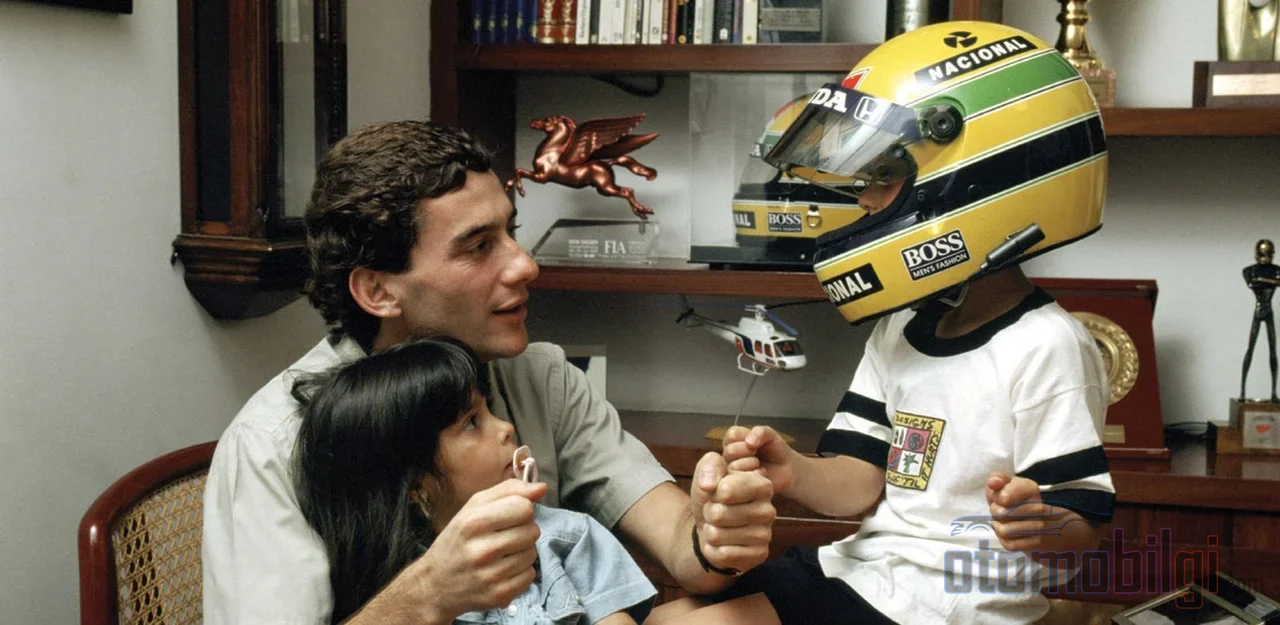
Here are the most dramatic pages of the karting books. Senna competed in the world championship five times between 1978 and 1982 but never managed to reach the top. Twice he came closest to it:
Estoril 1979: The Price of a Rule Change
The 1979 final at Estoril was like an agony of conscience. While leading in the first final, he went off after 7 laps; he finished the second final behind his teammate Peter Koene, beating the third-place finisher. The points were levelled, and that was the moment everything changed: the tiebreak was to be decided not by the third final but by the semi-final results. The result was Senna losing the championship by a margin of 0.4 seconds. In the overall standings Terry Fullerton finished first and Senna second with 50.38 points - you see how little separated him from the leader's 50.25, right?
1980 Nivelles: Knocked Out at the Door Again
At Nivelles-Baulers in Belgium, Senna was pushed wide at the start of the race this time - but true to his style, he clawed his way back up to P2 on track. The champion, however, was Peter de Bruijn. Second place again, keep going without looking down. In 1981 he finished 4th in Parma (he said his chassis wasn't up to it when the engine regulation went from 100 cm³ to 135 cc), made one final attempt in Kalmar, Sweden in 1982 and quit karting with a 14th place finish - but he said goodbye with a Panamerican championship.
Terry Fullerton: The Rival of Pure Racing
Between 1978 and 1980, Senna's teammate and greatest rival at DAP was Terry Fullerton. The interesting thing is: Senna would later say that it was precisely in this period, when there was no money or politics and pure racing reigned, that Fullerton was his most satisfying rival. And there is one more convincing detail: Between 1978 and 1980, neither of them could lift the world championship. Two talents who sharpened each other even further, sharing fate, in a way.
How Did Karting Habits Carry Over to F1?
Now here's my favorite part. Because Senna's legend in F1 is a magnified version of the habits he built on the karting track. Look how:
Training in the Mist of Rain
There is a detail recounted by his father Milton: when the rain started, Senna would drop everything and practice karting on wet ground. So much so that, inside the water spray kicked up behind him (the rooster tail, as we call that curtain of water), he couldn't even see the friend next to him - but he chose it deliberately. He had an obsessive interest in how smoothly the engine ran in the wet, in suspension geometry, and in tire choice. Let me make a simple analogy: it's like training your balance in the rain while everyone else runs in the park. The result? Almost winning the 1984 Monaco GP in the rain with Toleman, followed by rain shows like the 1985 Portuguese race and the 1993 European GP. The wet track became Senna's signature - and the ink of that signature came from his karting years.
Throttle Technique: Not a Pre-Written Rhythm
Senna's style of applying the throttle was not a memorized rhythmic beat. There was high variability in every acceleration zone; opening the throttle, he was constantly testing the grip-loss limit of the rear tires. In other words, he was not a game character pressing the same key combination in every corner, but a living system feeling the track's momentary state. In F1, this gave him an incredible harmony when it came to winning races.
What Did He Himself Say?
Senna always spoke of karting with pure passion: he saw karts as the most exciting sport in the world and didn't even love F1, because it wasn't as pure as karting. When you read this sentence, you stop and think for a moment - a world-famous F1 legend says his heart still beats in karting. It sounds romantic, but it is also a serious technical fact: karting is the purest, unmediated connection between a driver and the steering wheel, the throttle, and the tires.
From Karting to F1: How Long Did It Take and How Did It Happen?
Senna's path from karting to F1 remains a model of a talent journey that is still talked about today. Here is the chronology briefly:
- 1981: British and Townsend Thoresen championships in Formula Ford 1600 with Van Diemen. At the end of the season, a brief retirement due to family pressure, followed by a return with Rushen Green. (A Formula Ford offer from Van Diemen with no sponsorship conditions had been rejected in 1980 at the insistence of his family.)
- 1982: British and European FF2000 championships - 15 wins from 17 races. Since "Da Silva" was a common surname, he began using Senna, his mother's maiden name.
- 1983: British F3 championship (against Martin Brundle) and the Macau GP victory.
- 1984: F1 debut with Toleman. Afterwards: 3 world championships (1988, 1990, 1991), 41 wins, 65 poles, 80 podiums.
His karting career ended in 1982, his F1 debut came in 1984 - so only two years in between. This period shows how short a distance there can be between a karting kid and the world stage. Most modern F1 drivers today start karting between the ages of 3 and 8: Vettel at 3, Verstappen and Schumacher at 4, Leclerc at 5, Hamilton and Norris at 7-8. Senna starting at the age of 4 was, in fact, the first great example of this pattern. The FIA's official Global Pathway, stretching from karting to F1, also confirms this reality: the first step of the talent journey is still karting.
Let's also take a look at the race format of that era, because how did racing work in Senna's world? The 1970s world championship format was different from today's: qualification heats, semi-finals, and three finals. So a single race was not enough for a championship; the whole weekend's performance counted. That is also why the rule change at Estoril was so painful - the results were spread over multiple races, and a tiebreak rule could change everything.
Why Do We Still Tell This Story?
Ayrton Senna lost his life on May 1, 1994, as a result of the accident at the San Marino GP. But his karting years are still a source of inspiration today. An exhibition dedicated to his karting years was held in Lonato on the occasion of the Trofeo delle Industrie; the retro-man of the 1978 Le Mans World Championship was commemorated in 2025 with a new retrospective publication; the FIA Karting official website still has a Senna profile. So the world has not forgotten this era.
My favorite summary is this: Senna never became a karting world champion - but he became one of the best F1 drivers in world history. Two second places, one rule change, and one parking lot pole... Those were his beginnings. Karting taught him purity, the rain, the tire, and himself. The rest is history. Did you ever think karting was this pure? I think after reading Senna's story, your perspective will have changed a bit.
Sources
- Karting Years | Ayrton Senna - A Tribute to Life
- Ayrton Senna - Wikipedia
- Ayrton Senna - FIA Karting
- Ayrton Senna | Britannica
- 1978 World Championship at Le Mans - The Birth of a Legend - Kartcom
- 1979 World Karting Championship: The Story of Senna's... - Alan Dove
- The day Senna missed the Karting World Championship (again) - The Racebox
- How good actually was Ayrton Senna? - McLaren
- How Ayrton Senna Won in Wet Weather Races - Driver61
- Ayrton Senna's Karting Years in an Exhibit in Lonato - South Garda Karting