How Did Lewis Hamilton's Karting Years Go?
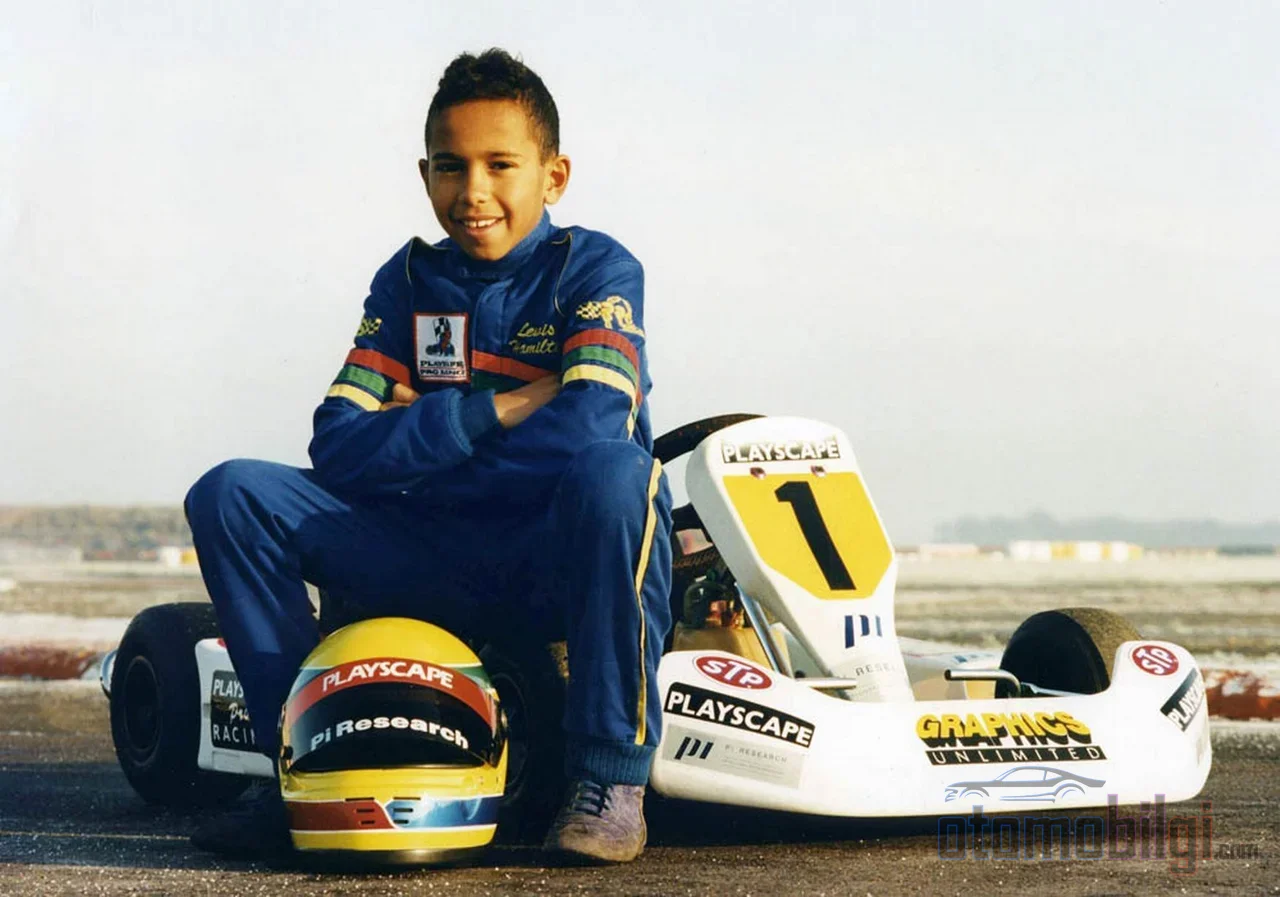
At eight years old, a child is doing laps with an old kart on a 950-meter track in a remote corner of Hertfordshire. Nobody knows it yet, but years later, that boy will become a seven-time Formula 1 world champion. The answer to the question of how Lewis Hamilton's karting years went is actually one of the best-known "from zero to the top" stories of modern motorsport. If you're ready, let's step through the gate of the Rye House track and follow this journey from start to finish.
Rye House: The Track Where It All Began
In 1993, when Lewis Hamilton was just eight years old, his karting career began at Rye House Kart Raceway. Located in Hoddesdon, in the Lea Valley corridor, this track has been in operation since the early 1960s; it is 950 meters long with 12 corners, a floodlit facility that allows night racing. If those numbers feel abstract to you, think of it this way: this track is as small as a tiny sliver of a Formula 1 circuit, but for an eight-year-old child, it's as big as an entire world.
Rye House's place on the British karting scene is so special that two names, Hamilton and David Coulthard, described this track as the Silverstone of karting. That comparison is not made in vain: on the very same track, Jenson Button and Anthony Davidson also took the first steps of their careers. In other words, looking at the names that emerged from this single facility, a significant portion of the last 25 years of British motorsport was shaped in these corners.
From his very first race, young Lewis's driving managed to catch the attention of Martin Hines, the karting legend who had become a three-time world champion. An eight-year-old child standing out to a seasoned champion while racing for the first time on a track is no coincidence. So what did this boy achieve in a short time? Let's take a look at the championship ladder.
Highlights
- Hamilton started karting in 1993, at age 8, at the Rye House track.
- His first major victory: the British Cadet Kart Championship in 1995, at age 10.
- First contact with Ron Dennis came in 1995, and the McLaren contract arrived in 1998, at age 13.
- His father Anthony Hamilton worked up to four jobs at once to finance his career.
- His karting-born late braking style carried him to his seventh championship at the 2020 Turkish GP.
The Championship Ladder: From Cadet to Europe
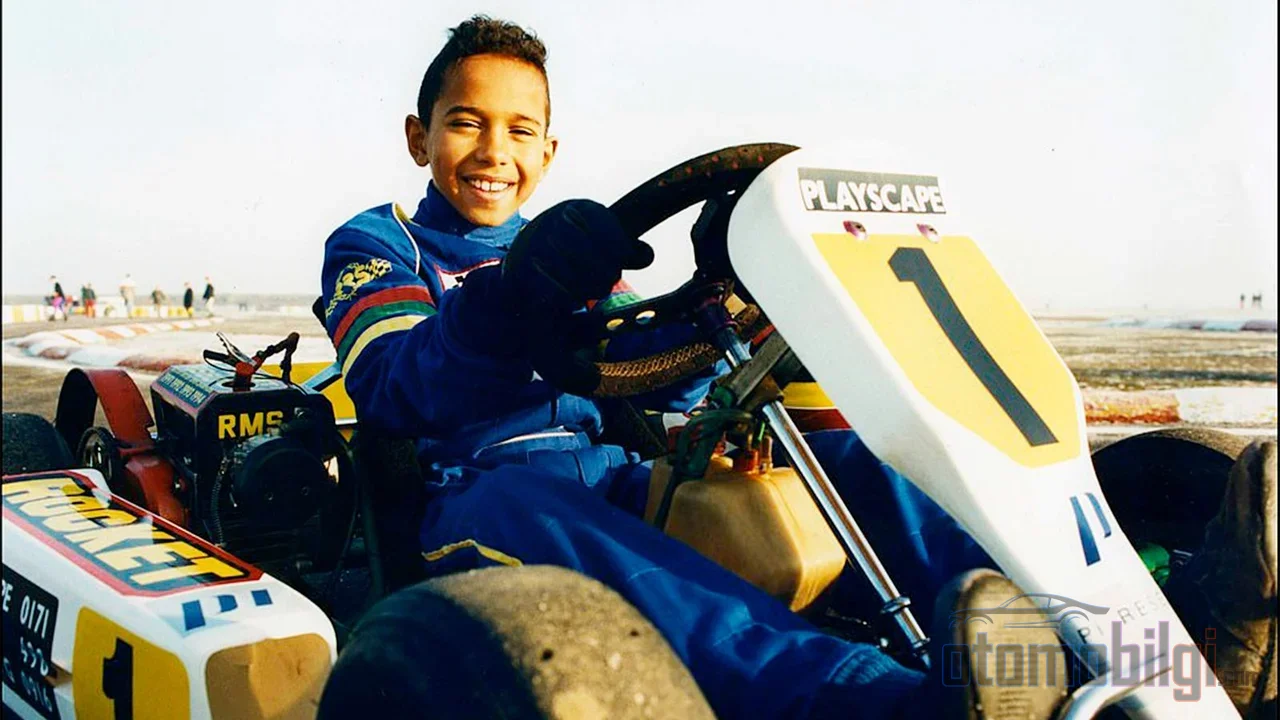
British karting has age-based classes: Bambino (roughly ages 5-8), Cadet (8-13), then the Mini, Junior and Senior categories. Hamilton's career followed this ladder almost like a textbook. In 1995, at age ten, he won the Super One Cadet championship and his first British Cadet Kart Championship title. The Cadet class is precisely the gateway to this age group; meaning Hamilton had already made a name for himself at the national level while still in primary school.
In 1996, things expanded by a dimension: he won the McLaren Mercedes Champions of the Future series at Buckmore Park in Kent, becoming one of the series' first champions at age 11. That same year also came the Sky TV KartMasters championship and the Five Nations championship. The season final at Buckmore Park is particularly worth telling: Hamilton entered the championship with a 41-point lead. He finished 8th, 5th and 16th in the heats; in other words, he was having a bad day, so to speak. But the lead was so big that the championship was already in his pocket before the final. And in the final, he knew how to move ahead by taking the outside line.
Junior and European Years
In 1998, Hamilton moved up to the Junior Intercontinental A class, abbreviated as JICA, and collected European championships back to back; a European junior runner-up finish is also on record in FIA profiles. In 2000, he climbed to the peak of his karting career: he won the Karting World Cup. In 2002 he moved to Formula Renault as champion, in 2005 F3 Euroseries, in 2006 GP2 and then F1. Each link in this chain was built on the previous one.
| Year | Category / Series | Result |
|---|---|---|
| 1993 | Rye House, first races | Start in karting, age 8 |
| 1995 | Super One Cadet / British Cadet | Champion, age 10 |
| 1996 | Champions of the Future, Buckmore Park | Series champion, age 11 |
| 1998 | Junior ICA (JICA) | European championships |
| 2000 | Karting World Cup | Winner |
| 2002 | Formula Renault | Champion |
Let's add one more note to this table: in his karting days, Hamilton also frequently had close battles with Nico Rosberg, who would later become one of his biggest rivals in Formula 1. Their paths were already crossing at those young ages.
Ron Dennis, the Autograph Book and the Phone Call That Came Nine Years Later
The most well-known moment of the story is, of course, that famous first meeting. On the night of the 1995 Autosport Awards, 10-year-old Hamilton, wearing a borrowed suit and carrying his autograph book, approached McLaren boss Ron Dennis and told him he wanted to work with him. Dennis's response was what he had the young Lewis write in his book: to call him nine years later. This anecdote has been told for years; there are even videos of it.
So what happened next? In 1998, when Hamilton was 13, Dennis officially signed him to McLaren's driver development program. So the picture is this: Personal contact in 1995, official contract in 1998. Although these are two different moments, the essence of the story is the same: a child managed to convince the boss of Britain's biggest F1 team with his performance on the karting tracks. After his sixth world championship, Hamilton thanked Dennis for believing in him when he was young. He also described this signing process in his own words in his autobiography.
Father Anthony Hamilton: Four Jobs, One Dream
Now we come to perhaps the most human part of the story. Karting is not a cheap sport; kart, tires, fuel, race entry fees, travel... For a family coming out of Stevenage, this budget was a burden so heavy that the bank would reject a loan application. It was exactly at this point that Anthony Hamilton made the move of his life: he left his job as an IT manager, started working as a contractor, and for a period worked at up to four jobs at the same time. A range stretching from IT contracts to selling double glazing, and even dishwashing. In other words, a career financed not by credit cards, but by sweat.
Anthony Hamilton's contribution was not limited to money: he also served as Lewis's mechanic, prepared the kart, and was by his side on every trip made to races. The reward for his father's sacrifice was written into history today as seven world championships and 106 Grand Prix victories. Viewed as a family's shared project, the Hamilton dynasty is actually rooted not in Rye House's track, but in Anthony Hamilton's work schedule.
How Did Karting Technique Shape His F1 Driving Style?
So, do the things learned on that mini kart really carry over to a Formula 1 car? In Hamilton's case, the answer is a clear yes. Hamilton is known in F1 for his late braking technique: while holding the brakes pressed longer than most drivers, he can still hit the apex accurately. This is regarded as a mastery of sensitivity at the steering wheel and sympathy with the mechanical part, that is, the ability to use the car at its limits without straining it. And the seeds of this skill were sown in the earliest days on the karting track. Indeed, Hamilton explained his driving technique in a video with Johnny Herbert, starting from his karting years.
One of the most concrete pieces of evidence of this was the 2020 Turkiye Grand Prix. In that unmissable wet race where he had dropped back due to a pit lane penalty, Hamilton climbed forward and secured his seventh world championship. Analyses emphasized that the qualities he displayed that day were the qualities we are used to seeing on karting tracks: car control on changing surfaces without losing composure, patience, and the instinct to choose the right moment. Formula 1 circles also frequently point out how karting shapes drivers' styles at an early age.
What Does Hamilton's Journey Say to Today's Youth?
Hamilton's path from karting to F1 was also a preview of today's system. A similar ladder is still working today: Champions of the Future, established in 2020 and approved by FIA Karting, is now collaborating with F1 Academy for a global karting program, and applications for the 2026 Academy Program International Series are open. Additionally, at the 2026 FIA Karting European Championship, British drivers such as Noah Baglin and Will Green reached European titles at junior and OK levels. In other words, the ladder Hamilton climbed in the 1990s is still working today; only the names and organizations of the steps have been updated.
Short Answer: How Did Lewis Hamilton's Karting Years Go?
In summary: Lewis Hamilton started karting in 1993, at the age of eight, at the Rye House track in Hertfordshire. In 1995, at the age of 10, he won his first national championships at Cadet level, in 1998 he reached the European peak in JICA, and in 2000 he won the Karting World Cup. His father Anthony financed this journey by working four jobs at the same time; Ron Dennis, after what he wrote in the guestbook in 1995, signed him to the McLaren program in 1998. The late braking and car control skills gained in karting formed the foundation of the driving style that made him a seven-time world champion.
This story, which began with Rye House's 12 corners, is the best proof of why karting is considered the school of motorsport. The kart in the hands of an eight-year-old child was the first piece of a dynasty; and the same track still hosts new dreams every weekend.
Sources
- Person - Lewis Hamilton - FIA Karting
- About Us & Our History - Rye House Kart Raceway
- Buckmore Park Karting Archives: Lewis Hamilton
- Lewis Hamilton - Wikipedia
- Anthony Hamilton (racing manager) - Wikipedia
- Lewis Hamilton thanks Ron Dennis - Sky Sports
- Ron Dennis fires warning shot - The Guardian
- BBC - The exceptional kid who conquered F1
- Times of India - Hamilton father four jobs story
- Motorsport UK Start Karting Leaflet