How Did Michael Schumacher Develop in Karting?
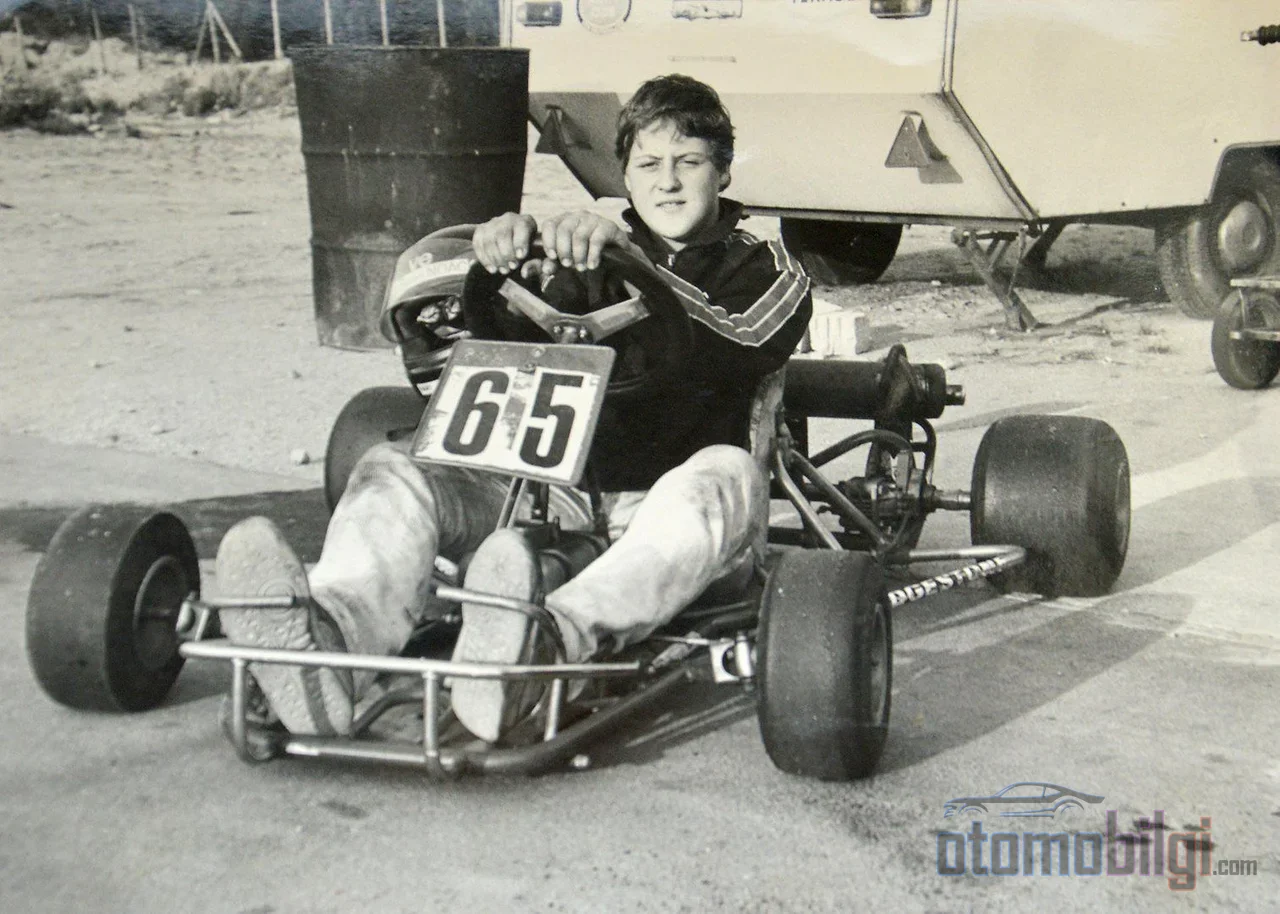
A four-year-old child, on a kart with no brakes, flooring the throttle in a vehicle his father tied to a rope and spun around in circles. One day, that same child would leave the dusty track of Kerpen and become one of the most championship-winning names in Formula 1 history. Michael Schumacher's story begins not with glamorous celebrations, but with a pedal kart that crashed into a lamppost, a track cafeteria smelling of currywurst, and the tires his rivals threw away. So how did such a poor start produce the most complete racer in the world? The answer is hidden within Schumacher's karting years.
On this page, we will only cover those years: The Kerpen-Horrem track, the family's sacrifices, championships climbing class by class, and the door that opened to formula cars in 1988. If you're ready, let's hit the throttle.
The First Kart With No Brakes: The Beginning in Kerpen
Michael Schumacher was born on January 3, 1969, in Hurth-Hermulheim, just south of Cologne. His father Rolf was a bricklayer, and his mother Elisabeth was the other pillar of the household. The family first lived in a cramped two-room house in Fischenich; they later moved about 40 kilometers away, to Kerpen. And it was quite a coincidence: Kerpen and its surroundings were the lands where the German motorsport legend Wolfgang von Trips grew up. Even Schumacher admitted years later that he often heard this name while growing up and felt a connection between them.
His first contact came at the age of four. Rolf adapted an old moped engine to the pedal kart bought for his son - the result was like a death machine capable of reaching 40 kilometers per hour but with no brakes. Do you know what Rolf's solution was? Tying a rope to the vehicle and spinning Michael around in a circle, much like exercising a horse on a lunge line. This arrangement ended when the kart crashed into a lamppost. At that moment, Rolf decided his son needed a real track - and the family's fate changed.
A Family at the Edge of the Track: Rent, Canteen, and Character
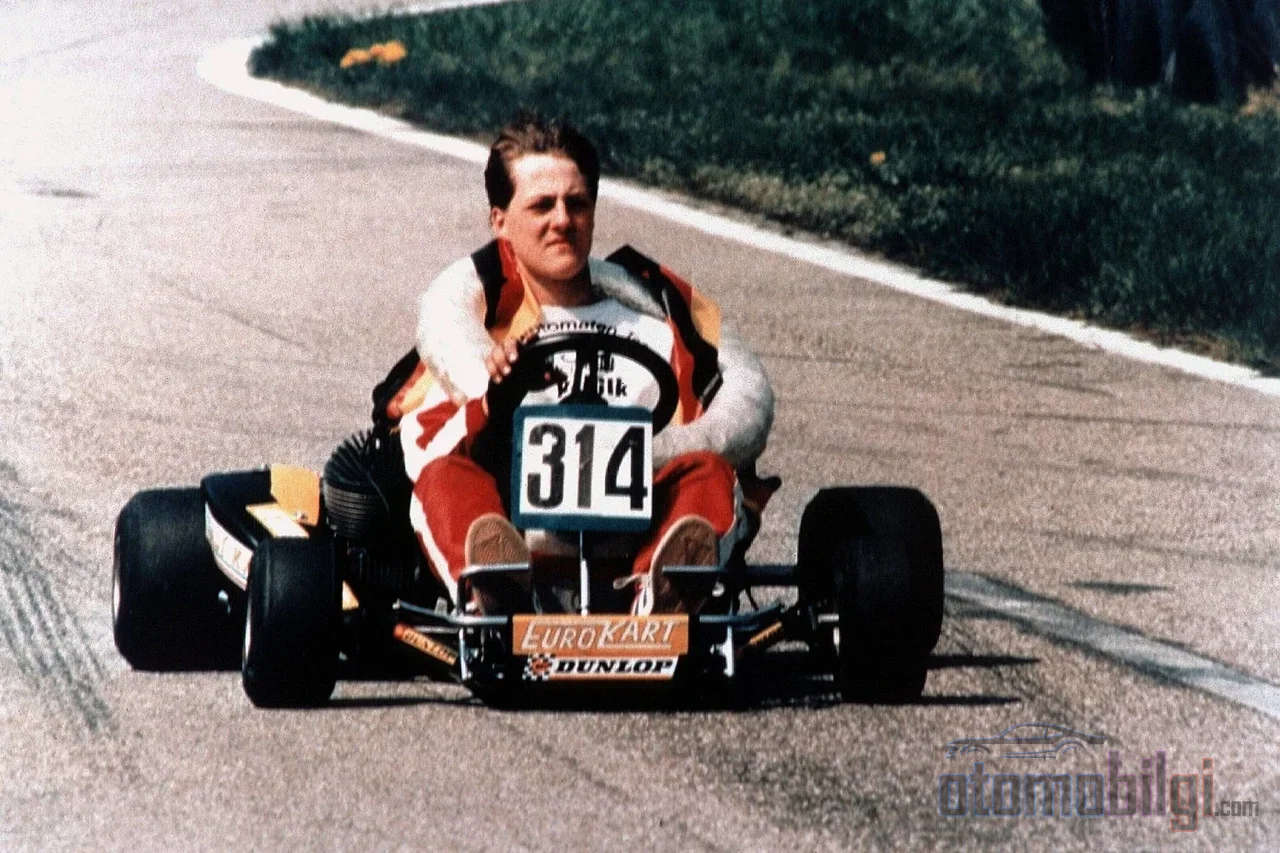
The family headed to the Kerpen-Horrem track, about 10 kilometers from Kerpen. Rolf found a part-time job here; he began working on kart rental and maintenance. Then the family moved to a better house adjacent to the track. Elisabeth took over the track's canteen and prepared currywurst; while Michael was racing around the track, his mother watched him from that place, which had turned into a huge café. Rolf even had a long-term plan: Michael would take over the garage, and his younger brother Ralf would take over the café. (History showed that this plan worked out a bit differently.)
Financially, things were never easy. The family could not afford new tires or a professional kart. So what did Michael do? He collected the tires and scrap parts thrown away by his wealthy rivals and raced with them - and he won. The kart his father built for him was, by Michael's own description, the cheapest kart he had ever seen: A 100 cc engine, parts discarded by club members, and a chassis that had to be cut because it was too long for him.
Highlights
- Schumacher started driving at age 4 in a kart without brakes that his father had fitted with a moped engine.
- The family moved to the Kerpen-Horrem track; his father Rolf worked in the garage, his mother Elisabeth in the canteen.
- He became German Junior Kart Champion in 1984 and 1985, and European Kart Champion in 1987.
- In 1988 he won 9 of 10 races in Formula Konig.
- Winning races with tires thrown by his rivals shaped his pragmatic driving character.
Why Was Rain Schumacher's Friend?
This is one of my favorite details of the story: Michael preferred driving in the rain. Why? The track emptied out, and the gap in equipment shrank with the water that appeared. He loved sliding and drifting on wet surfaces. In other words, the seeds of that famous wet-weather mastery were sown as a strategy to close the budget gap. Poverty turned into a pragmatism that later became part of his character; It is not for nothing that he says Schumacher did not plan Formula 1 at that age, and that everything was done with a calculated pessimism, that is, with a realistic calculation.
The Class Ladder in Karting: From "Small But Fast" to the European Summit
So which rungs did this child climb at such a young age? In 1973, before he was even of primary school age, a local newspaper mentioned him for the first time: the youngest kart driver in the Federal Republic of Germany. The headline was short and said it all - small but fast. He took his first race win at the age of five; the prize was a piston screwed onto a piece of wood. At the age of six, he captured his first club championship.
Karting's age and class structure was, at that time, a ladder just as it is today. In today's international structure, the Academy Trophy runs Junior categories for ages 12-14 and Senior for ages 14-16; In the United Kingdom, there is a Bambino class for ages 6-8. In Schumacher's time, the key threshold was 15: only at that age could he enter the German Junior Kart Championship. That is why his first national successes came in 1984, precisely at the age of 15.
| Year | Result |
|---|---|
| 1973 | First mention in the local press: the youngest German kart driver |
| Age 5 | First race win (prize: a screwed-on piston) |
| Age 6 | First club championship |
| 1984 | German Junior Kart Champion |
| 1985 | German Junior champion again; Junior World runner-up (Le Mans) |
| 1986 | Third in the German Elite Championship in his first senior year |
| 1987 | European Kart Champion |
| 1988 | Formula Konig champion, Formula Ford runner-up |
1985 Le Mans and 1987 Gothenburg: Two Breaking Moments
In 1985 he won the German Junior championship for the second consecutive time and finished one step below the top of the podium in the CIK-FIA Junior World Championship at Le Mans - behind Andrea Gilardi and ahead of Allan McNish, who would later reach Formula 1 just like himself. It was the first concrete proof that he had entered the ranks of the world's best youngsters.
The real drama, however, came in 1987 at the European Championship in Gothenburg, Sweden. The rivals ahead collided with each other in the final corner; The contact between Zanardi and Orsini, combined with the breakdowns the French drivers also suffered, meant Schumacher completed the final lap in the lead and clinched the championship. He had only held the lead for a single lap - but the result counted. His first major international trophy had literally slipped through a door's width.
Guardians of the Orphan: Noack, Dilk and the Luxembourg License
Talent is not enough, a sponsor is needed - Schumacher's sponsors were the local supporters of Kerpen. Carpet and wallpaper merchant Gerhard Noack, later to become one of the country's largest kart dealers, obtained Michael's first real racing license. Businessman Jurgen Dilk, meanwhile, organized money from sponsors and even drove him to races; together with his son Guido they traveled from track to track in a camper - Michael remembered those years as the most fun trips of his life. In return for a small monthly income (about 340 euros in today's value), Dilk collected Michael's trophies; when he was 15, he hired a former footballer and instilled in him the importance of physical training. Schumacher's one-sentence summary was clear: without these people's help, he would not be where he is today.
There is one more detail, the grinning kind: Rolf did not go to the races with Michael - they had no money to travel. Michael read this not as a deficiency but as the autonomy his parents recognized; he said this was the source of his and Ralf's mental resilience. At 13, he showed his practical intelligence: in Germany, qualifying races cost money (and regulations did not allow racing under 14), so he took to the track with a Luxembourg license - fewer rivals, no expense, easy qualification. The child who read the rulebook was the child who won the race.
The Kart of the 1980s: What Kind of Driver Did Direct-Drive Engines Produce?
Now let's get a bit technical, but don't worry - I'll explain with everyday analogies. The racing karts of the 1980s, unlike many of today's junior machines, ran on direct-drive 100 cc two-stroke engines; these machines of the pre-bodywork-protection era had the Class 1 designation. While centrifugal clutches are common today at junior and club level, the kart of that era wrapped you directly, in raw sensations. A simple analogy: this kart was like a mirror that instantly returned every reaction of your hand - whatever you did was reflected exactly.
The race format was instructive too. Karting was divided into sprint, endurance, street, speedway and long-circuit races - the FIA's current categorization is also based on the direct-drive, gearbox and Superkarts families. From sprint to long circuit, this variety forced a driver to be fast in every condition. For Schumacher, add a practical garage education as well: his supporters recounted for years, with pride, the moment in 1985 when he won a race holding a carburetor with loose screws in one hand for the entire race. Understanding the engine was also the key to saving it.
From Karting to Formulas: The 1988 Transition and Weber's Spark
So how did Schumacher go from karting to F1? The answer took shape in 1988, and Jurgen Dilk helped decide that transition. That same season, Michael entered two series at once: In Formula Konig, he won 9 of 10 races and locked up the championship; In Formula Ford, he competed in 8 of 12 races and finished second in the overall standings. Formula Konig was a Germany-based, one-design stepping-stone series run between 1988 and 2004 - meaning everyone raced in identical equipment, and pure driving talent took center stage. Exactly Michael's style.
But it was Willi Weber who opened the real door. Weber watched Michael in a wet race in Salzburg and at two more races; what impressed him most was Michael's ability to clarify the racing line lap after lap. A Formula 3 test was arranged at the Nürburgring, and Michael signed with Weber's WTS team. The rest - the entire massive career we're talking about - is in the history books.
Why Did Schumacher Always Return to Karting?
Here's the beautiful part: Schumacher never gave up karting. In 2001, already having won his second consecutive Formula 1 championship, he raced in the Super A World Championship season finale at his own track in Kerpen-Manheim - and to avoid being at a disadvantage against the young kart drivers, he reorganized his training program and lost 4 kilos. Consider this decision by a man who had already won his championships: millions of euros, world titles, yet he was still losing weight and returning to the kart track. Karting was his way of staying sharp and staying connected to his roots; In Formula 1, everything was done by the mechanics, but in karting you could do everything yourself. He once said that if he hadn't become a Formula 1 driver, he would definitely have been someone who drove or rented karts - even if not as rich as he is now.
This legacy lives on today: The Michael Schumacher Kart & Event Center in the Sindorf district of Kerpen is still operating. The original Kerpen-Manheim track was also saved from demolition, its long-term future secured, and it aims to host world championship events. So the ground where Schumacher started is waiting for the champions of the future.
Conclusion: What Kind of Champion Did Kerpen Produce?
So here is the clear answer to the main question: Michael Schumacher was shaped in Kerpen by his family moving to the edge of the track, the karts his father built from scrap parts, and the generosity of local supporters. The 1984-1985 German Junior championships, the 1985 Junior World runner-up finish, and the 1987 European championship put him on the international map; the 1988 Formula Konig victory and Willi Weber's trust then flew him to Formula 3, and from there to Formula 1. But the real formula was not material - it was mindset: the instinct to extract the best possible results with limited resources - tires from the scrapyard, drifting in the rain, a carburetor tuned by hand - turned him into a racer who could survive under any conditions. Indeed, Kerpen's heart still beats today; perhaps the next great story is already beginning there, with a child learning to lift off the throttle before hitting a lamppost.
Sources
- Michael Schumacher - Official Website (until 1988)
- Michael Schumacher turns 57: a look back at his younger years
- Person - Michael Schumacher, FIA Karting
- Formula König - Wikipedia
- Kart racing - Wikipedia
- 2025 FIA Karting Academy Trophy - FIA Karting
- Famous Schumacher kart track saved from demolition
- Michael Schumacher Kartcenter
- History: Michael Schumacher Special Part 1 - GPToday
- Racing History - mSchumacher.com