Fernando Alonso's Karting Roots and Path to F1
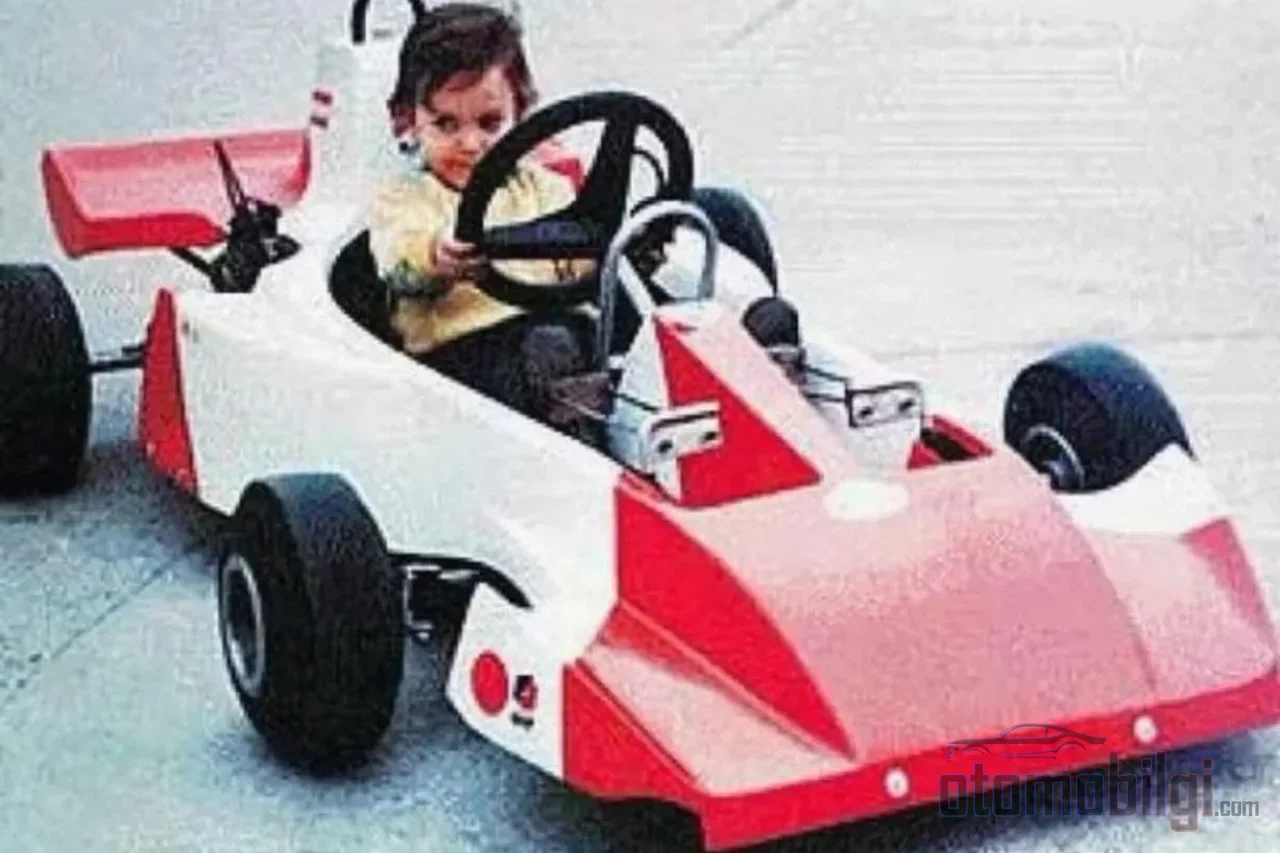
The legs of a three-year-old child cannot reach the pedals, so his father modifies the kart to fit him. No one realizes it, but that moment is the first step of a journey that will change the history of Spanish motorsport. Fernando Alonso's story, which stretches from karting to two Formula 1 world championships, follows a different path from the Senna, Schumacher, Hamilton and Verstappen files: the story of a Spanish school graduate who rose from the small tracks of Asturias to the world's biggest stage on an ordinary working-class family's budget, without being able to buy rain tires.
So what was the real starting point of this journey? The answer lies hidden in a single handmade go-kart in Oviedo in 1984.
It All Began in Oviedo with a Handmade Kart
Fernando Alonso Díaz was born on July 29, 1981 in the city of Oviedo, in the Asturias region of northern Spain, to a working-class family. His father, José Luis Alonso, was a mechanic at a mining explosives factory and raced karts as a hobby; his mother, Ana Díaz, worked in a store. In other words, there was neither a major sponsor nor a luxurious budget at the table.
The interesting detail is this: his father had actually built that go-kart for Alonso's older sister, Lorena. When Lorena showed no interest in the kart, the steering wheel passed, already at that time, to three-year-old Fernando. The pedals were modified to fit the child's height, and little Alonso got his first race car of his life. The local federation issued him the mandatory karting license at the age of five. It was clear that a child of that age would spend more time on the track than in goal: and father Alonso also rejected a goalkeeping offer made to his son.
The family's financial situation was always a limiting factor. During periods when they could not afford rain tires, Alonso had to learn to slide on wet tracks with slick tires. His mother sewed the race suits herself; his father took on every role, from mechanics to accounting, from consulting to management. Imagine: the first "team" of a Formula 1 champion consisted entirely of one family. When he won his first race at Pola de Laviana at the age of seven, the first line of this notebook had already been written.
Highlights
- Alonso discovered the family-built kart at age 3 and won his first race at age 7
- Became Spanish junior champion in the youth categories 4 times in a row (1993-1996)
- Won the CIK-FIA Five Continents Cup in 1996 in Genk
- In F1, 2 world championships (2005, 2006) and 32 Grand Prix victories
- Still racing with Aston Martin in 2026
National Karting Career: From Asturias to the Peak of Spain
Child and Cadet Years (1988-1992)
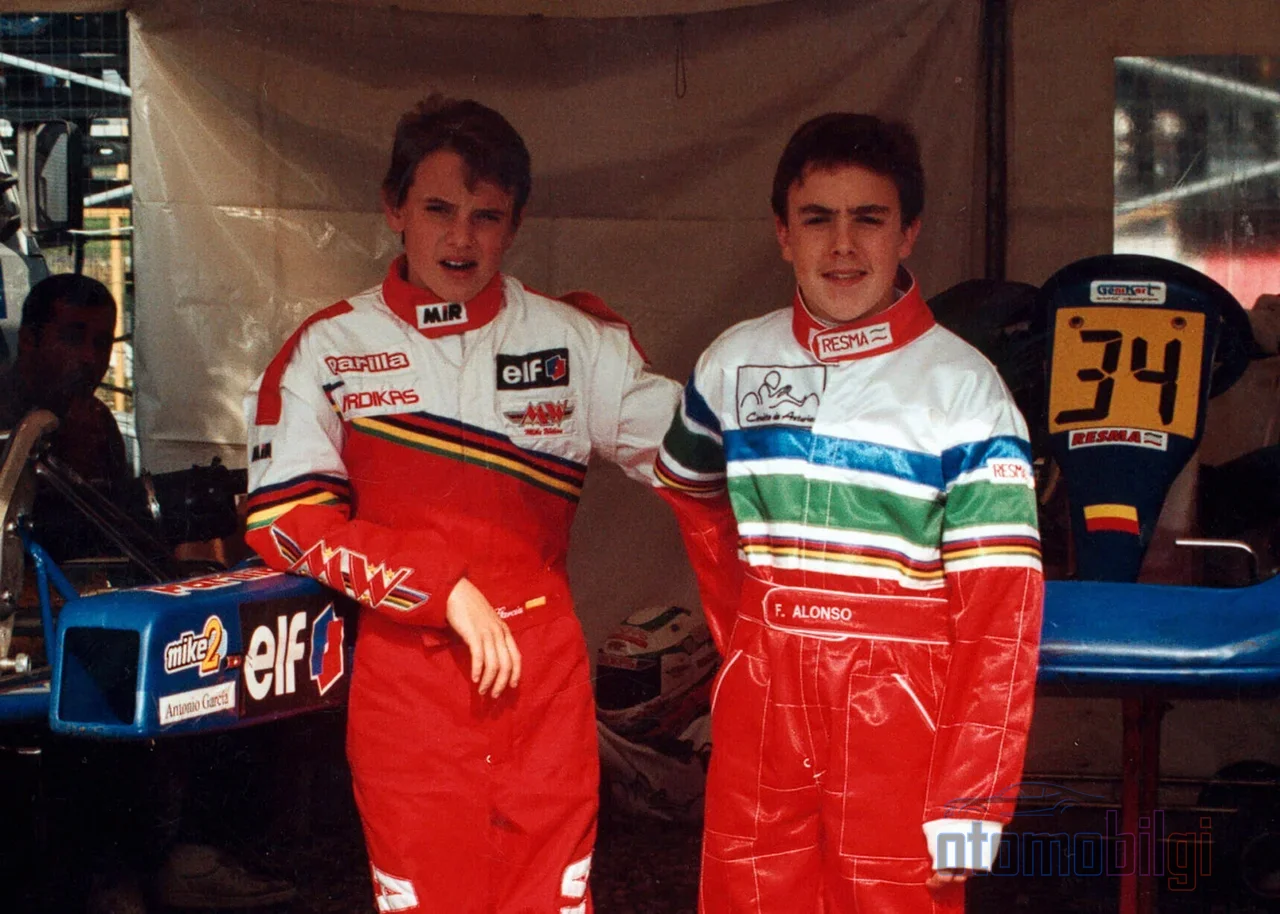
Alonso's rise on the national scene was rapid. He won the children's and juniors' championships in Asturias and Galicia in 1988 and 1989, and moved up to the Cadet class in 1990. That same year he won the Asturias and Basque Country Cadet Championships, and in 1991 he finished runner-up in the Spanish Cadet National Championship. Since he was not allowed to drive powerful machines due to his young age, the local federation opened a special door for him, allowing him to enter the 100cc class. So at that age he was already racing a class above his rivals.
Junior Years and Four Consecutive Championships
At this point, two critical figures entered his career. Go-kart importer Genís Marcó noticed the talent in young Alonso and began mentoring him; finding personal and sponsor money for his family, he opened the door to the European series. What Marcó taught him was not innocent either: keeping the kart in good condition and being frugal. Then six-time Karting World Champion Mike Wilson from Britain stepped in; Wilson gave Alonso a test session at the track in Parma, and the path was opened that would take him to the IAME factory team in 1993.
The results with the factory team came: three consecutive Spanish Junior Championships in 1993, 1994 and 1995, and third place in the CIK-FIA Rainbow Trophy in 1995. Meanwhile, Alonso was earning money by doing mechanical work for young kart drivers. Some sources give different year ranges for the national championships; the most solid chronology is the 1993-1995 trilogy and the fourth championship in 1996.
1996 Genk: Breakthrough on the World Stage
1996 was the peak year of Alonso's karting career. He took his fourth Spanish Junior Championship and won the Trofeo Estival and the Marlboro Masters. But the real big feat was accomplished in Belgium: winning the CIK-FIA Five Continents Cup (5 Continents Juniors Cup) at the Genk track, he signed a junior world title. This victory permanently established his reputation on the international world karting scene. A year later he would dominate the same Belgian track once again with ease.
In 1997 the momentum never stopped: Italian and Spanish Intercontinental A (ICA) championships, second place in the European Championship with nine wins, the Masters of Paris-Bercy victory, and the Spanish Championship. Alonso had done almost everything there was to do in karting. Now it was time for bigger engines.
From Karting to Cars: Climbing the Rungs
Let's clarify a frequently asked question here: does becoming a karting world champion give you a direct ticket to F1? In Alonso's case, absolutely not. He too climbed the rungs one by one, just like everyone else. He moved to car racing at 17, and in 1999 he won the Euro Open by Nissan championship with Campos Racing, taking six wins and nine pole positions ahead of Manuel Gião. Thanks to the championship title, in December 1999 he tested a Formula 1 car for the first time at Jerez.
In 2000 he moved up to International Formula 3000 with the Minardi-backed Team Astromega; he finished second at the Hungaroring, won the season finale at Spa-Francorchamps, and completed the overall standings in fourth. That same year he became Minardi's test and reserve driver, and in 2001, at 19 years old, he truly stepped into Formula 1 at the Australian Grand Prix.
| Year | Step | Result |
|---|---|---|
| 1996 | Genk, CIK-FIA Five Continents Cup | Junior world victory |
| 1997 | ICA Italy and Spain | Double championship |
| 1999 | Euro Open by Nissan | Champion (6 wins, 9 pole positions) |
| 2000 | International F3000 | Overall standings 4th |
| 2001 | F1 debut with Minardi | Australian GP |
| 2005 | Renault, F1 | First world championship |
| 2006 | Renault, F1 | Second world championship |
Two Championships and the Advantage That Came from Karting
He became Renault's test driver in 2002 on Flavio Briatore's instructions, and secured a full-time seat in 2003. In Malaysia he became the youngest pole position holder of that era, and in Hungary he took the title of youngest race winner by breaking Bruce McLaren's record. It was the first Grand Prix victory for a Spanish driver since 1950.
The real explosion came in 2005: seven wins, six pole positions, 14 podiums and the first world championship with 133 points. At 24 years and 59 days old, he surpassed Emerson Fittipaldi's record to become the youngest champion of that era, and brought Spain its first F1 championship in history. In 2006 he emerged victorious from his battle with Michael Schumacher and became the youngest double world champion in F1 history. As it stands today, his career continues with 32 wins, 22 pole positions, 106 podiums and 448 Grand Prix entries; in 2024 he became the first driver to complete 400 Grands Prix, and in 2026 he is still taking to the track with Aston Martin Aramco-Honda.
most F1 drivers start karting before the age of 10, and the FIA's global talent pathway progresses from karting to formula series. Alonso's car control, learned on slick tyres in wet conditions, the economy he learned from Marcó, and the track feel karting instilled at a young age are read as the foundation of his famous consistency in F1. And it is no coincidence that Alonso regards karting as "the purest form of motorsport".
Karting Classes and Where Alonso Fits on the Map
It is also possible to read Alonso's path in terms of today's categories. Traditional karting age groups are arranged as Bambino (5-8), Cadet (8-13) and Junior (12-17); in FIA Karting's current official categories, OK-Junior is open to drivers aged 12-14, and OK to those aged 14 and over. Alonso's junior world victory in 1996 came at the very peak of this youth rung. This kind of junior world championship is a tradition that names like Alain Prost (1973) have passed through before, and Lewis Hamilton is also one of the members of the same junior world championship club who made it to F1.
The standard path today works in a similar way: most F1 drivers start karting before the age of 10, and the FIA's global talent pathway progresses from karting toward formula series. In Alonso's time this structure was not as well organized as it is today; he passed through steps such as Euro Open by Nissan and F3000, which have equivalents in today's feeder series. Springboard mechanisms like the FIA Karting Academy Trophy also show that this path has now become institutionalized.
A Champion Who Returns to Asturias
The most beautiful part of the story is the circle closing. Today there is a karting track bearing his name at La Morgal in Asturias. Alonso actively supports karting through the Fernando Alonso Sports Complex in Llanera; the museum and track bearing his name showcase his career alongside an outstanding collection of F1 cars. The 56.09-second lap record announced on 19 December at the track also belongs to him. The child who started with a handmade kart in Oviedo has now opened his own karting home to the next generation.
In short, the clear answer to the question is: Fernando Alonso started karting at the age of three with a family-made kart, won his first race at seven, became Spanish junior champion four times between 1993 and 1996, and stepped onto the world stage by winning the CIK-FIA Five Continents Cup in Genk in 1996. This foundation carried him to Formula 1 through Euro Open, F3000 and Minardi, and from there to two world championships in 2005 and 2006. The most famous graduate of the Spanish school never turned his back on where his story began, that is, the karting track.
Sources
- Fernando Alonso - Wikipedia
- Fernando Alonso - FIA Karting
- Karting World Championship - Wikipedia
- CIK-FIA Karting World Championship 1996 - DriverDB
- Fernando Alonso remembers the 1996 Junior World Championship in Genk - Kartcom
- Fernando Alonso - Formula 1 Drivers Hall of Fame
- FIA Karting Categories
- Fernando Alonso Museum and Circuit
- Alonso's first F1 title, 20 years later - ESPN
- Fernando Alonso - Turkish Wikipedia