How Did Karting Come to Be? Shedding Light on a Sport from 1950s America to Today
Share This Page
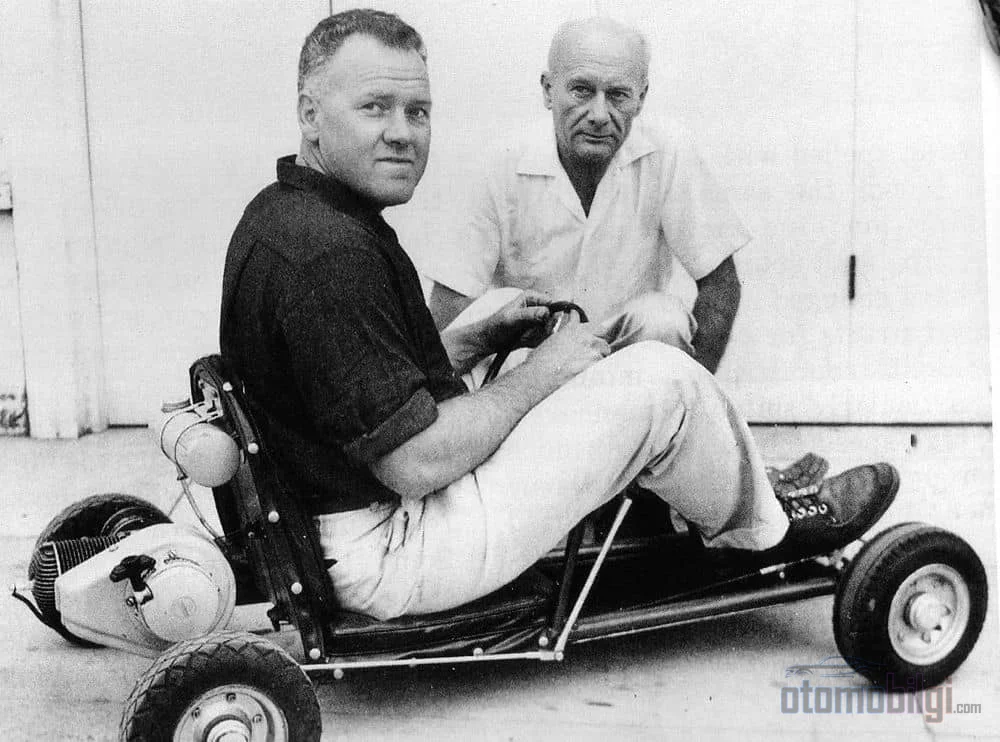
Karting was born in August 1956 in Southern California, in the garage of a metal worker named Art Ingels, with a lawnmower engine mounted on a lightweight chassis he built from steel tubing. Behind that simple vehicle lies a global sport in which millions of people race today and nearly all Formula 1 drivers grew up. So how did a lawnmower become the school of Formula 1? Let's tell it from the beginning.
Highlights
- The first kart was built in California in August 1956 by Art Ingels.
- The first kart's engine was a second-hand lawnmower engine with 2.5 hp of power.
- The first mass-produced kart, the Go Kart 400, sold for $129.50.
- International karting has been crowned with a world championship since 1964.
- In Türkiye, karting can be practiced with a license starting from the age of 6.
How Did Karting Come About? A Garage, a Steel Tube, and a Lawnmower Engine
The hero of the story, Art Ingels, was working at the time as a metal worker at Kurtis Kraft, the famous company that produced Indy 500 cars. In other words, he had someone skilled in the trade at hand; all that remained was an idea. Ingels built a chassis in his garage from steel tubing - light, yet strong enough to carry an adult. His friend Lou Borelli took on the power side of the job: he mounted a second-hand West Bend 2.5 hp lawnmower engine onto the chassis. Doesn't it sound funny when you look at today's karts? 2.5 horsepower - the power of a garden tool. But by the time the wheels turned in that first test, a sport had already been born.
When the first kart was showcased at Pomona Raceway, the interest was greater than anyone expected. Duffy Livingston fell in love with the kart when he saw it and built one for himself; his business partner Roy Desbrow produced his own version as well. What happens today when a product goes viral is exactly what happened in the California hot rod community in 1956: everyone wanted a kart.
So who gave it its name? The name Go Kart was coined by Lynn Wineland, a former editor of Hot Rod Magazine. The first mass-produced kart, the Go Kart 400, sold for $129.50 - roughly $1,100 in today's money. Let's also add that Wineland received a $2 royalty for every kart sold; while this may not be the only example of naming something being one of the most profitable deals, it's certainly one of the oldest.
From Parking Lot Races to the Rose Bowl: The Sport's First Steps
The location of the first races may surprise you: supermarket parking lots. Since karting did not yet have its own track, the young sport was set up among supermarket aisles and raced there. Police interventions became inevitable, and in 1957 a solution was found: the Rose Bowl parking lot in Pasadena was turned into an official racing venue. Around the same time, Dean Moon set up a flat-surfaced track called Moonza - we like the name, don't we? Saluting Monte Carlo and racing in a parking lot - pure 1950s California spirit.
After a while, the sport needed a serious structure. Lawyer and racer Don Broberick, drawing inspiration from Sports Car Club of America rules, wrote karting regulations and founded the Go Kart Club of America with just 12 people. That club lives on today as the International Karting Federation. So karting's rules were fed by a serious motorsport tradition from the very start - which is why the sport continues today as a technical discipline.
Rules, Tracks and the First Dedicated Engine: Karting Becomes Institutionalized
1959 was a turning point for karting. Go Kart Manufacturing built the first permanent karting track in the town of Azusa, California, and in July of the same year, the Go Kart Club of America held its first Grand National event. Thus the sport had moved from parking lots to a home of its own. Meanwhile, Livingston, Desbrow and Bill Rowles had founded Go Kart Manufacturing Co. in Monrovia; Ingels, the creator of the first kart, left Kurtis Kraft and founded his own company, Ingels & Borelli Kart Company, producing just six handmade Caretta karts for the 1958 Christmas season. Considering their collectible value today, it's hard not to envy the owners of those six karts.
From Lawnmower Engines to Dedicated Kart Engines
In the early years, karts ran on practical solutions from start to finish: the engine still came from lawnmowers and chainsaw motors. In 1959, chainsaw engine manufacturer McCulloch introduced the first purpose-built kart engine to the market; Clinton, Power Products and West Bend followed. So it was precisely at this point that karting's identity as a motorsport became clear: there were no longer adapted engines, but engines designed for karts. Imagine: something that started with the machine mowing your lawn one day turns into an industry that produces its own engines. It gives me goosebumps, truly.
That same year, Europe answered the call: Burton Reinfrank introduced the first karts at the Paris Boat Show, and the spread across Europe began in 1959. The sport's center was no longer only California.
What's the Difference Between the 1956 Kart and Today's Kart?
Ingels' first kart was extremely simple: a hand-operated mechanical brake and a direct transmission without a clutch. Controlling the brake by hand? Yes, let's salute those who tried it first. By the 1960s, the solid rear axle, hydraulically operated disc brake controlled from the left pedal, centrifugal clutch and wider tires had become standard. So karting fully matured in a remarkably short span of just twenty years. Let's compare briefly:
| Feature | 1956 First Kart | Today's Racing Kart |
|---|---|---|
| Engine | 2.5 hp lawnmower engine | Purpose-built racing engines (usually 125-250 cc) |
| Transmission | Direct, no clutch | Centrifugal clutch |
| Brake | Hand-operated mechanical | Hydraulic disc controlled from the left pedal |
| Speed | Low, practical but slow | 70-100 km/h in hobby karts, over 250 km/h in professional karts |
This table actually tells the story of the sport all by itself: 70 years of engineering adventure spanning from a garden tool to 250 km/h. Moreover, 2026 marks the 70th anniversary of the first kart's construction - and celebrations worldwide are being held accordingly.
How Did Karting Cross Over to Europe and Become Global?
The names that brought karting to Europe are no surprise: In the 1960s, American soldiers brought the sport with them. The first European karts ran with motorcycle engines, without a gearbox; before long, Italian manufacturers Komet, Parilla and Saetta introduced dedicated kart engines. Combine Italy's passion for motorsport with the energy of karting, and the result spoke for itself: Europe quickly became the sport's technical center.
The institutional step was also swift. In 1962 the Commission Internationale de Karting (CIK) was founded, one of the FIA's six world championship commissions; from that same year, the European Nations Cup appears in the records. International karting has been crowned with a world championship since 1964, and today CIK-FIA organizes three FIA Karting World Championships each year in the OK and OK-Junior categories. So a garage project reached official world championship status in just eight years. That pace is genuinely rare in motorsport history.
From Karting to Formula 1: The School of Motorsport
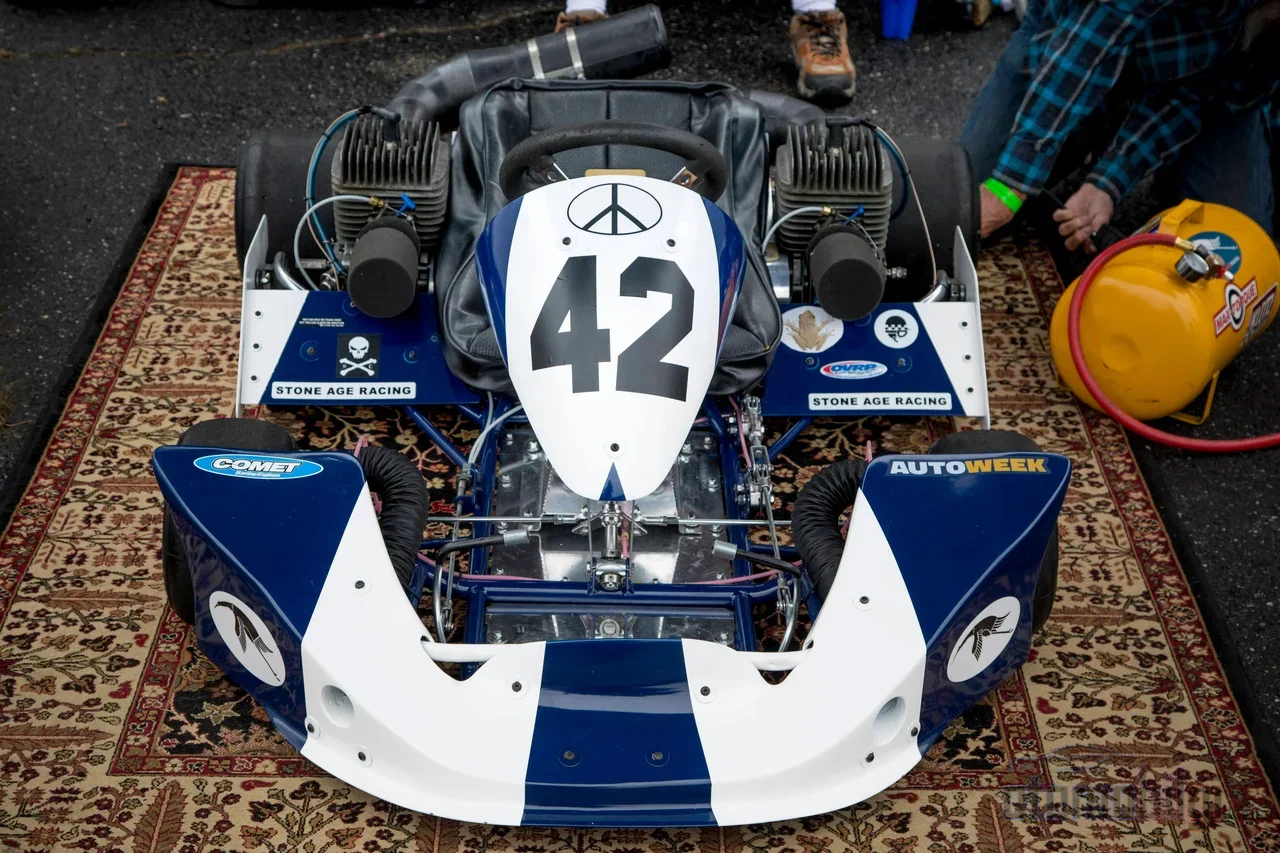
Karting's greatest legacy is the talent pipeline. Ayrton Senna, Michael Schumacher, Alain Prost, Fernando Alonso, Kimi Räikkönen, Jenson Button, Lewis Hamilton and Sebastian Vettel - all of them were raised in karting. Max Verstappen also began his career in karting and quickly rose through the junior categories; Hamilton, meanwhile, started karting at age 8, the minimum age for children. The FIA still runs the FIA Global Pathway program today as a roadmap from karting to F1. So we can say that that lawnmower engine indirectly contributed to dozens of world championships.
An interesting detail: Karting is a discipline even Senna could not win everything in. Senna entered his first karting world championship in 1978 and finished sixth; he never won the Karting World Championship. Toward the end of his career, he always showed his love for his karting days by saying that the rival he enjoyed most in his life was the 1973 world champion, Briton Terry Fullerton. I think that a three-time F1 champion having his most enjoyable duels in a sport with parking lot origins sums up karting's level of competition.
Female champions to remember
Karting's history is not only the story of male drivers. Susanna Raganelli was the first woman to reach the summit of the sport, as 1966 Karting World Champion. Max Verstappen's mother Sophie Kumpen was also a strong racer in her day, winning the Margutti Cup in Formula A. Because karting has participants racing on the same tracks from a young age, it has long been ahead of many motorsports when it comes to gender equality - and women role models are finding their rightful place in history as an integral part of the sport's story.
Let's add one more note: karting is not the only path from karting to F1. Legends like Juan Manuel Fangio, Tazio Nuvolari, and Stirling Moss raced before the karting era; even without karting, motorsports would certainly have produced talent. But today, karting remains the most accessible starting point for a child's racing dream.
So When Did Karting Start in Türkiye?
Türkiye's karting story is younger than America's, but just as determined. The Turkish Automobile Sports Federation TOSFED was founded in 1991 under the General Directorate of Youth and Sports, and has been the umbrella organization of Turkish karting ever since. Today, according to TOSFED, karting in Türkiye can be practiced from the age of 6; training is recommended for beginners. International racing categories start at ages 7-8 - meaning the owners of those little helmets you see on tracks are truly very young but very serious racers.
The Turkish Karting Championship is run every year with a competitive calendar; the last season's rounds included the Bursa, Kocaeli, Tuzla, Cappadocia, and Uşak tracks, with the season finale completed at the Körfez Race Track at the end of October. Rotax Max Challenge Türkiye also runs with its own calendar. Borusan Otomotiv Motorsport's karting team, BOM Karting, opens its season at the İzmit Körfez Track, and with İstanbul Park's return to the Formula 1 calendar announced, we can say that the ladder rising from karting upward now has more rungs than ever for Turkish drivers.
There are also concrete steps for the next generation: TOSFED's Next Talent project set out targeting approximately 2,400 children, and 20 participants were selected in its finale. So, 70 years after the first kart was born in a garage, new pages of the same story are being written in Türkiye as well. Perhaps in the coming years, the first steering experience of a Turkish driver we will see on the F1 grid will take place on that training kart at a karting track.
The Little Kart's Great Legacy
The story that began 70 years ago in a garage with a steel tube and a 2.5-horsepower engine continues today as championships worldwide, a vast industry, and a talent school that opens the door to F1. Karting showed us that motorsports do not need an aristocratic past; the only things required were a love of speed and four tires. At what point would you like to join this story - perhaps starting with a training kart at your nearest track is a beginning just like Art Ingels made.
Sources
- Art Ingels - Wikipedia
- Kart racing - Wikipedia
- Commission Internationale de Karting - Wikipedia
- FIA Global Pathway - Wikipedia
- Art Ingels - the inventor of the go-kart
- Let's Get Familiar With Go-Karting's Origin Story - Petrolicious
- The history of karting: from its origins to the present day - Team Active
- 1959 - FIA Karting History
- What Is Karting? - LAP 29
- Inside Revolution: FIA World Karting returns to PFi - Motorsport UK
- Journey from Karting to F1 Driver - Team Sport
- Why karting isn't the only starting point for F1 - Formula1.com
- TOSFED History
- How Can I Become a Racer? - TOSFED
- TOSFED Next Talent Project Is Starting
- 2026 Türkiye Karting Championship Calendar - TRF1
- BOM Karting 2026 Season - Borusan Otomotiv Motorsport
- The History of Go Kart Racing - K1 Speed
- The Early History of Karting - Fuel Curve