Jenson Button's Karting Years and His Road to F1
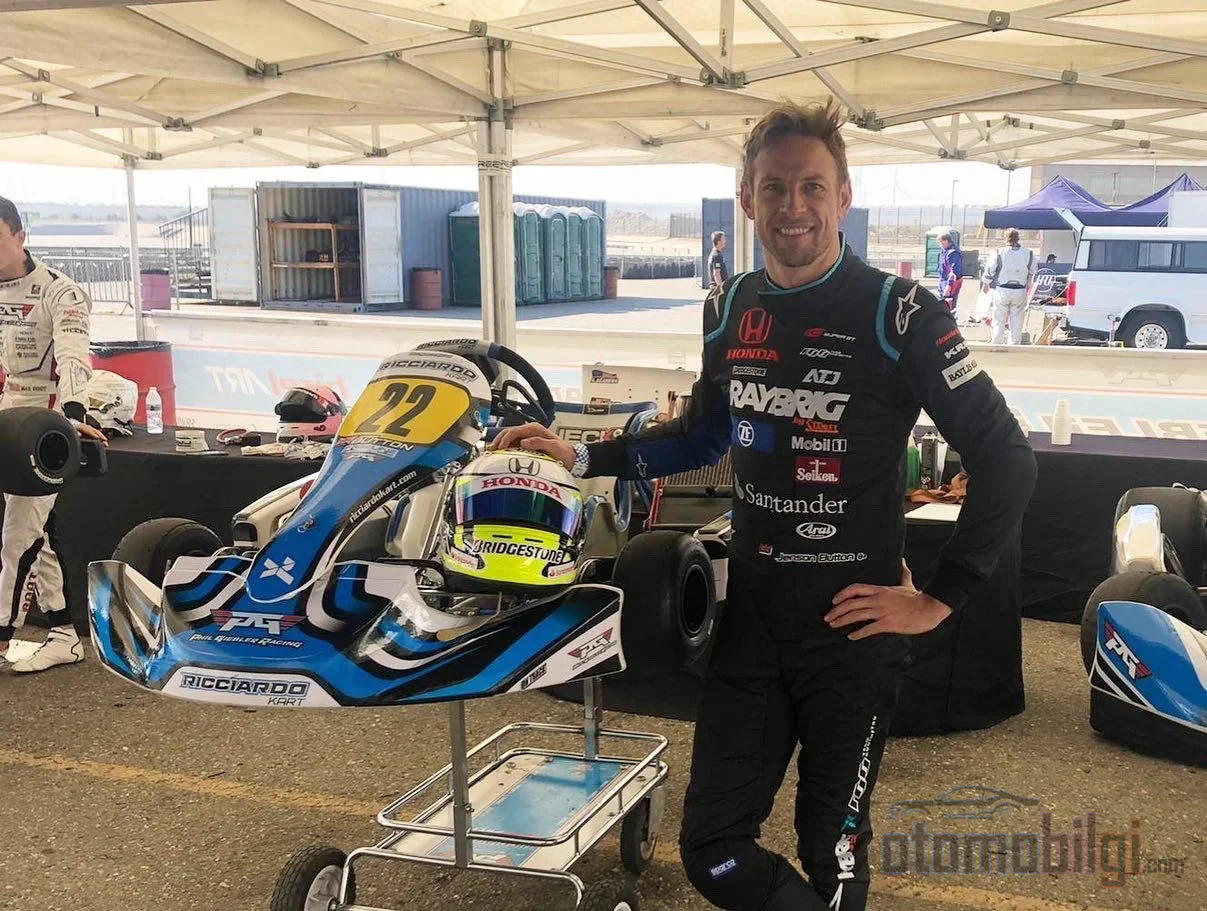
Just think about it: An eight-year-old kid, in his first race, under pouring rain, starting from the very back of the grid and winning. The tires are slicks made for dry surfaces, not wet ones, and the kart is nearly out of control. Before that kid had even properly learned to hold a steering wheel, he already knew one thing very well: Don't panic on wet asphalt. Today we know that kid as Jenson Button; the 2009 Formula 1 World Champion, that is, the guy who pulled ahead at the very moment everyone else backed off in the downpour. So where did that cool-headedness come from? The answer, like for most champions, lies on the karting track. Button's decade-long karting story, stretching from the Clay Pigeon Raceway in England to a Williams F1 seat, is one of motorsport's best school lessons.
His father John Button: The Man Behind the Kart
Jenson Alexander Lyons Button was born on January 19, 1980, in the town of Frome in the Somerset region of England. Even his name smells of racing: his father John chose it, inspired by his Danish rallycross rival and friend Erling Jensen; the last letter was changed to "o" to avoid confusion with Jensen Motors. In other words, even before he was born, his name was starting to resemble a racetrack.
John Button himself was a European rallycross star of the 1970s; he had made a name for himself with his Volkswagen Type 1, known in racing circles by the nickname "Colorado Beetle", and finished the 1976 British rallycross championship in second place. Growing up with a father who felt gasoline in his veins, Jenson's destiny was largely written this way.
Little Jenson got a 50cc motorcycle at the age of seven but quit after half an hour; the reason was perfectly logical and the kind that would make any young racer smile: the machine simply wasn't fast enough. The real turning point came at a racing car fair at Earl's Court. John Button spoke with rallycross driver and Ripspeed owner Keith Ripp, and Ripp suggested a Zip kart for the newly established Cadets class for ages 8-12. The kart arrived home as a 1987 Christmas present. In May 1988, eight-year-old Jenson took to the track at the Clay Pigeon Raceway in Dorset. The rest, as you're about to read, went down in history.
Highlights
- Button started karting at the Clay Pigeon Raceway in 1988 at the age of 8 and won his first race in the rain, from the very back of the grid.
- In 1991, he won all 34 of the 34 races he entered in the British Cadet Championship.
- In 1997, he became the youngest and first British champion of the European Championship in Formula Super A, the top karting category of that era.
- In 1998, he became British Formula Ford champion on his first attempt, and in 2000 he became the youngest British driver in F1 history at 20 years and 53 days.
- The foundation of the smooth driving style that led to the 2009 Formula 1 World Championship was laid during his karting years.
Slick Tires in the Rain: First Victory and the Cadet Years
That first victory was no coincidence; on the contrary, it was a father's project. John Button deliberately ran his son on wet surfaces with slick tires, standing at the corner and pointing out braking points with his hand. Just think about it: while most parents called their children inside when it rained, John Button was deliberately sending his son out onto slippery surfaces. The logic was simple; if you learn control in the hardest conditions, dry tarmac becomes child's play.
This school quickly bore fruit. In 1989, at the age of nine, he won the British Super Prix. In 1991, Button enjoyed a Cadet class season with almost video-game ease: with the Wright Karts team, he won all 34 races and became British Cadet Champion. A whole season without a single winless day. Achieving that at any level of a career is remarkable; doing it at Cadet level is proof of how early the talent shone.
In 1992, both the national and open championships came in the Junior TKM class. But that year, poor results had shaken Button's confidence; the team's coach-mechanic Dave Spencer stepped in and rebuilt his fitness and nutrition regime from scratch. Spencer also taught the young driver to be less smooth and more aggressive when moving up to the more powerful Junior karts, and to manage tyre condition. In other words, a bit of bite was added to that famous smooth style.
Moving to Italy and the Nightmare of 1996
At 15, Button was taken out of school and moved to Italy. Why? Because most of the big names of the karting world - their teams, chassis manufacturers and engine specialists - were there. Winning the Senior Italian ICA Series in his very first attempt showed how right the move had been. He had won the British Open Kart Championship for the third time in 1993, raced in the Junior ICA European Championship with the Birel team in 1994, and at 15 became the youngest runner-up ever in the Formula A World Championship. In 1995 in the USA, he was 0.3 seconds faster than Giorgio Pantano in timed laps; however, engine failures pulled the plug on his season.
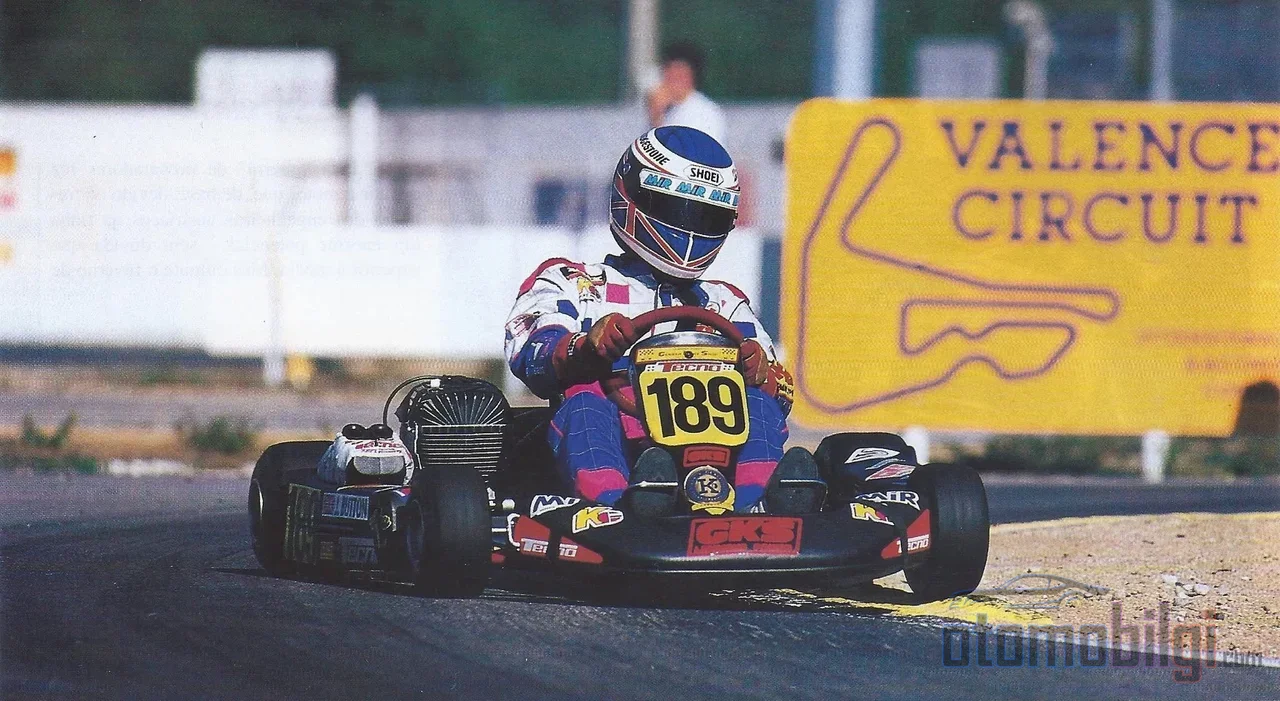
The real test came in 1996. For Button, racing in factory-supported Tecno-Rotax karts with Team GKS-Lemmens, the season was, in his own words, like a nightmare: when the tyre regulations changed, the kart failed to adapt to the new conditions. Even so, that year he finished fifth in European Formula A, third in the Formula A World Cup and third in the American Championship; if even a "lost season" brings results like these, there is nothing left to say about his talent. At the end of the season, one of the team sawed off the rear chassis tube and fixed the kart, and everything began to fall into place.
1997: Formula Super A European Championship
And then 1997. With a kart prepared by Team GKS with a Tecno chassis, Rotax engine and Bridgestone tyres, Button won the European Formula Super A Championship. This was not just a trophy; Super A was the top karting category of the era and Button became both the youngest and the first British champion in this 100cc class. The presence of names like Jarno Trulli and Alex Zanardi on the same list of champions makes the weight of this achievement clear.
That same year, he finished second at the World Cup in Japan, won the Ayrton Senna Memorial Cup and also took second place in the Winter Cup. Kart team owner Paul Lemmens, when asked who the three best drivers he has ever seen were, prefers not to name a third; on his list there are only Ayrton Senna and Jenson Button. Being mentioned in the same sentence as Senna is one of the greatest compliments a driver can receive in the karting world. Button capped off his karting career by closing it out with this Senna Memorial Cup victory.
The Leap from Karting to Formula Ford and F1
1998: Formula Ford Championship at First Attempt
In 1998, at the age of 18, it was time to move to single-seaters. His mentor Paul Lemmens spoke with former driver Harald Huysman; the management team consisting of David Robertson and Huysman found sponsorship. Driving Haywood Racing's Mygale SJ98, Button made a resounding impact in his first year of the British Formula Ford Championship: with nine wins (some official records list seven wins and twelve podiums) he became champion at his first attempt, also won the Formula Ford Festival, and finished runner-up in European Formula Ford. Marlboro took him into its elite lineup of supported drivers in Formula 3; the last British drivers to receive such support were Eddie Irvine and Allan McNish.
1999-2000: From F3 to Williams
In 1999 he finished third in British Formula 3 in his first year and won the McLaren Autosport BRDC Young Driver Award, earning the opportunity to drive a McLaren F1 car as a prize. Then in 2000 he stepped into Formula 1 with Williams; racing in Australia at 20 years and 53 days old, Button became the youngest British driver in F1 history. He attributed this leap to karting: he had been racing in cars for only two years, but in karts for a full ten; during that time he had learned to withstand pressure. The chain of results speaks for itself: 1991 Cadet champion, 1997 Super A European champion, 1998 Formula Ford champion, 2009 F1 World Champion.
How Did Karting Shape Button's Driving Style?
And this is where the real heart of this page beats. Button's famous smooth, silky driving style is a direct product of the physical necessity of the karting track. Kart engines are weak; the only way to be fast is to keep the engine at high revs, which means making throttle and braking transitions in a seamless, smooth rhythm without losing corner speed. In karting, if you enter a corner too hard and kill your speed, the engine revs collapse and you cannot recover on the straights. In other words, smoothness is not a stylistic preference, it is a rule of survival.
The influence of his father's slick tyre sessions in the rain is also visible here. Anthony Davidson recalls watching Button in his cadet karting days at Rye House, and says John Button sent him out on slicks in the rain, and that it was exactly there that this smooth style was polished. This style had one more advantage: smooth driving protected the tyres better and made it easier to manage understeer on wet surfaces. Having shown a natural talent in the wet since his first kart race, Button also won the 1998 Formula Ford championship thanks to this fast, smooth and confident technique.
He saw Alain Prost and Ayrton Senna as his idols; his saying that people found his driving as fluid as Prost's is proof that this resemblance was visible from the outside. The Button signature we know today, that is, a driving style that practically caresses the tires and finds grip in the wet that no one else can, was born on that rainy Clay Pigeon morning in 1988.
What Does Button's Story Say to Young Karters?
First, a brief reminder: karting classes are tiered by age. In the Motorsport UK system, Bambino covers ages 6-8, while the Cadet class covers drivers from their 8th birthday until the end of the year in which they turn covering pilots until the end of the year in which they reach that age; classes are determined by a combination of driver age, engine type, chassis specification, minimum weight, and either a single-speed or geared transmission. Button climbed exactly the rungs of this ladder: Cadet, Junior TKM, ICA, Formula A and, at the summit, Formula Super A.
So at what age did Button start karting? At eight years old, at Clay Pigeon Raceway. What was his father's role? He provided funding by setting up a business that tuned kart engines, and transported the kart across England in a white transit van; John Button passed away in 2014, at the age of 70, at his home in southern France. Until what year did karting continue? Until 1997; it culminated with victory in the Ayrton Senna Memorial Cup. In Frome today there is a Jenson Avenue and a pub named "The Frome Flyer"; the town has not forgotten its champion.
The summary of Button's decade-long karting career is this: composure in difficult conditions, fluidity with underpowered engines, refusing to give up even in a lost season, and a championship at the highest category. When things get tough on the track, you don't press your button; you adjust your braking, your throttle, and your patience. Button did exactly that, and proved how fast an elevator the road from karting to an F1 seat can be when you ride it right.