How Did Kimi Räikkonen Go From Karting to Formula 1?
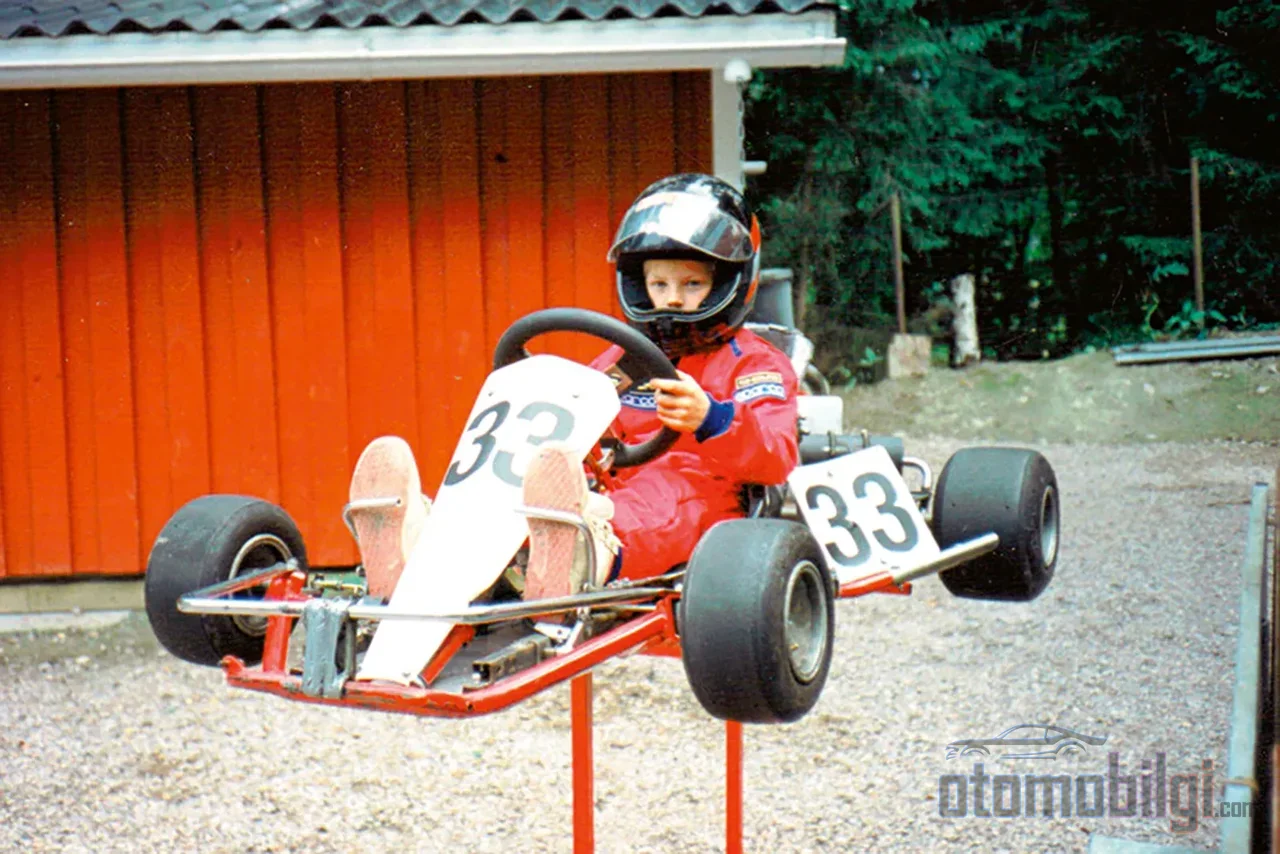
Imagine this: a driver enters Formula 1 and his career has a total of 23 car races. Twenty-three! While today's young talents come up through F3 and F2 with hundreds of races and still wait at the door, at the end of 2000 Peter Sauber handed the steering wheel to this quiet-spoken young Finn. Many people, including FIA president Max Mosley, objected to granting the super license; Sauber vouched for the driver's performance and the matter was closed. So who was this kid, and where did he come from? The short answer: From Espoo, from Finland's ice-cold karting tracks. The long answer is the subject of this page: Kimi Räikkonen's incredibly fast journey from karting to Formula 1.
From Espoo to the Raket Class: Getting Started in Finland
Kimi-Matias Räikkonen was born in Espoo on October 17, 1979. He began competitive kart racing at age 10; some accounts place him on go-kart tracks at age 9, but the accepted information is clear: he started racing seriously at age 10, stepping into Finland's lowest age categories, the Mini Raket and then the Raket class.
What is the Raket class? In karting, classes are generally determined by age and engine type; Finland's Raket category is a stepping stone that lets newcomers with small, low-powered two-stroke engines learn both racing and track culture. Not exactly preschool, but elementary school level: there is speed, there is competition, but the real task is developing steering technique and the reflex to stay in the race.
Looking at Kimi's years in Finland, we see a steady rise:
| Year | Category | Finish |
|---|---|---|
| 1993 | National karting, Raket class (Finnish Cup) | 9th overall |
| 1994 | National karting, Raket class (Finnish Cup) | 2nd overall |
| 1995 | Formula A karting | First entry |
| 1998 | Nordic Championship (Varna, Norway) | 1st |
| 1999 | European Formula Super A (PDB Racing Team) | 2nd in one race |
9th one year, 2nd the next. That is a development curve that sends a message at that age. Moreover, during these years Kimi also won several national championships in Finland's national series. In short, behind that expressionless face everyone knows, there was a disciplined student from the very first day he stepped onto the track.
Highlights
- Räikkonen began competitive karting at age 10, in the Raket class.
- Before entering F1, he had a total of 23 car races of experience.
- In 2000 Formula Renault UK, he won 7 of 10 races.
- In the Mugello test, he was half a second faster than Sauber's lead driver.
- 2007 World Champion; with 21 grand prix victories in his career.
A Broken Steering Wheel in Monaco: Proof of Character
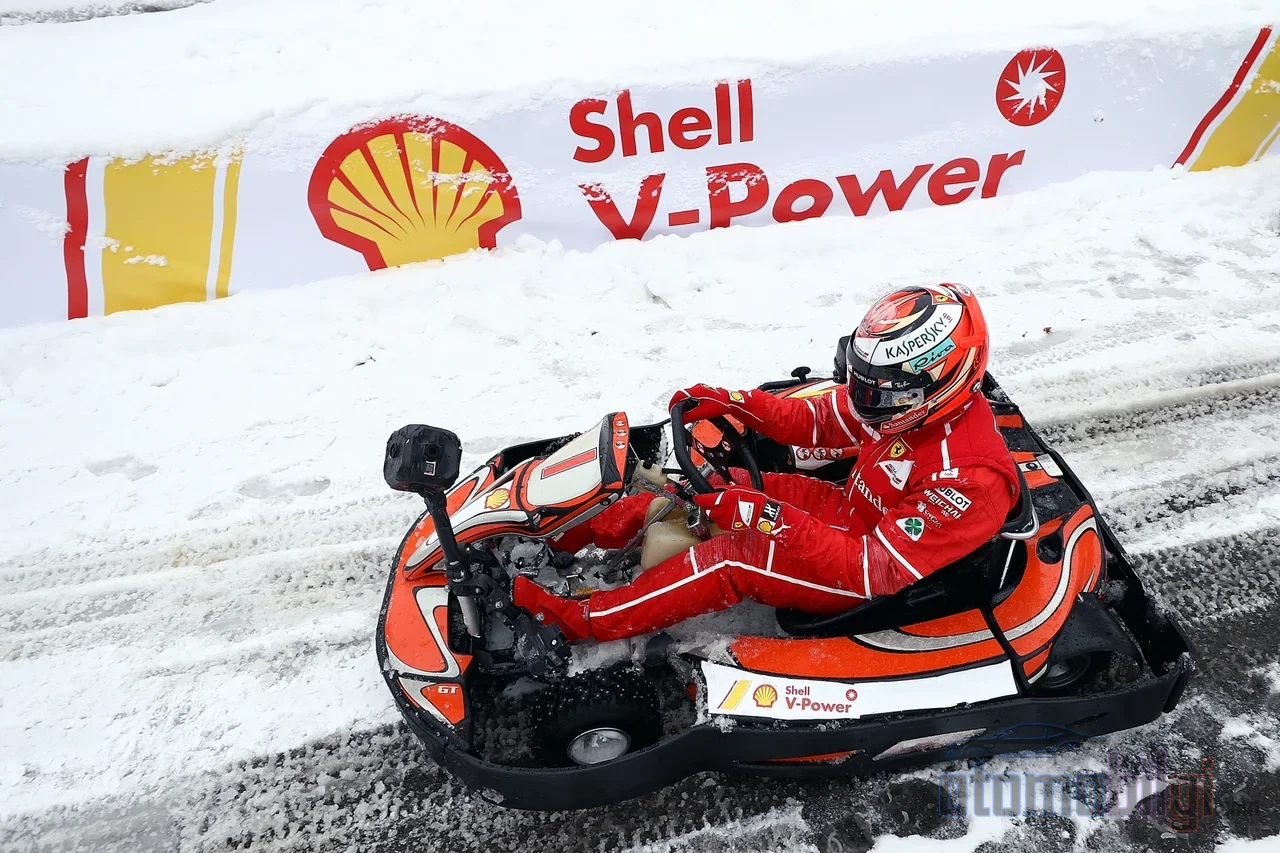
In an ordinary karting biography, this section would pass as a dubious anecdote. But not Kimi's, because it is documented: At 15, he went to Monaco for his first race outside Finland, and during the race his steering wheel broke. What did he do? Did he give up and quit? No. He raised the steering wheel in the air, reported the mechanical failure as he passed by as if nothing had happened, and continued the race. The kart was doing laps on the streets of Monaco with a broken steering wheel; and the driver was proving to everyone that too little was being said about him.
The next Monaco race was even crazier: in a collision he was flung to the wrong side of the safety barrier. He put the kart back on the track and finished the race in third. Now stop and think for a second: if a 15-year-old's problem-solving reflex is at this level, what does this kid's style look like? Part of the answer is hidden here.
A Quiet and Analytical Style? The Truth Behind the Nickname
Everyone has heard of Kimi Räikkonen's Iceman nickname: a racer of few words, showing no emotion, as calm as ice. But does this style come from his karting years? Let's be honest: there is no clear record proving that the karting stage directly shaped F1 style. But the two clues we have say a lot.
First, the Monaco memories: no panic, no drama, just a problem and a solution. Second, Finland itself: icy winter roads, a geography that teaches vehicle control on slippery surfaces from an early age. There is no single definitive answer to why Finland produces such successful drivers, but this country has proven time and again, with names like Räikkonen and Häkkinen, that it is one of the most fertile grounds of motorsport. Kimi's silence is not a shortcoming in this context; while his rivals talked, it was a way of working focused on the track. In short, he didn't talk much because he didn't have a turbocharger either; he had fast laps to tell about (just kidding - but he really did have fast laps).
The Move to England and the Formula Renault Storm
In 1999, Kimi, who finished second in one round of Formula Super A on the European karting scene for the PDB Racing Team, also gained experience in the Formula Ford Euro Cup that same year. Then came the most critical move of his career: moving to England. Why critical? Because the British formula series are among the most visible steps in the world, both in terms of the level of competition and the radar of F1 teams.
The results spoke for themselves:
- he completed the 1999 British Formula Renault winter series as champion by winning the first four races of the season.
- In 2000, with Manor Motorsport in Formula Renault UK, he won 7 of 10 races and finished on the podium in every race he entered.
- Across the two series, he won 13 of 23 races in total: a 57 percent win rate.
Fifty-seven percent. Let's translate this into everyday life: you won one out of every two races you entered. This is a statistic that cannot be explained by luck and demonstrates top-level talent even in raw form. And this statistic reached the desk of a team boss in Switzerland very quickly.
The Mugello Test and the "Eskimo" Codename
In September 2000, Peter Sauber gave the young Finn an F1 test at the Mugello circuit in Italy. On the second day of the test, Kimi lapped half a second faster than the team's experienced reserve driver Pedro Diniz. Half a second stands as a revolution on the F1 scale; and if it comes from someone who had already competed in a few dozen car races, it is incredible.
It is known that Sauber hid this test from its rivals and referred to Kimi internally by the code name Eskimo. After additional tests in Jerez and Barcelona, the signature was put on the deal for the 2001 season. But that was not the end of the story; the real obstacle was outside the paddock.
The 23 Races and Super License Crisis
Here is the most controversial part of the story. Kimi Räikkonen entered Formula 1 with a total of only 23 car races of experience. Many officials, including FIA president Max Mosley, objected to him being granted a super license: entering F1 with so little experience was considered a risk to both the driver's and others' safety. The license was granted thanks to the guarantee Peter Sauber gave regarding the driver's performance; it is also said that a temporary arrangement was made for the first few grand prix events.
So did the risk pay off? In the 2001 Australian GP, he started his first F1 race from 13th on the grid and scored points right away in his very first race. His first season ended with 9 points and eight top-eight finishes; he gave Sauber its best result to date, 4th place in the constructors' championship. He generally trailed behind his experienced teammate Nick Heidfeld in their head-to-head, but the picture was more than convincing for a debutant. Moreover, Mika Häkkinen recommending his Finnish compatriot to McLaren paved the way for Kimi's move to that legendary British team in 2002.
The Karting Legacy and the Career That Followed
So what is the summary of this journey? Kimi Räikkonen covered the path from karting to F1 at record speed: he started at age 10 in the Raket class, collected championships in Finland and Scandinavia, stepped onto the European karting scene, caught Sauber's attention with a two-season Formula Renault storm, and after 23 car races he was in F1. What came after? In 2007 he became World Champion with Ferrari; over a career lasting until 2021, he accumulated 21 wins, 103 podiums, 18 pole positions and 46 fastest laps.
And the story has a sweet continuation: his son Robin Räikkonen is also on the tracks. Robin took his first laps on a wet kart track at age 4, won a major karting championship in 2024, and after joining the Red Bull Junior Team he will enter Red Bull's driver development program in 2027. The next stop of the journey that father Kimi started in Espoo 30 years ago now belongs to the next generation.
The lesson we will learn is this: karting is not only the first step on the road to F1, it is also the secret behind the fastest rises. Do you think it was that composure in Monaco or that 57 percent in Formula Renault that was decisive in Kimi's success? In my view, both; one showed his character, the other his speed. And a team boss who read both signals coming from the track correctly finished the job.