The First Track Experiences of Champions: How Did F1 Stars Rise Through Karting?
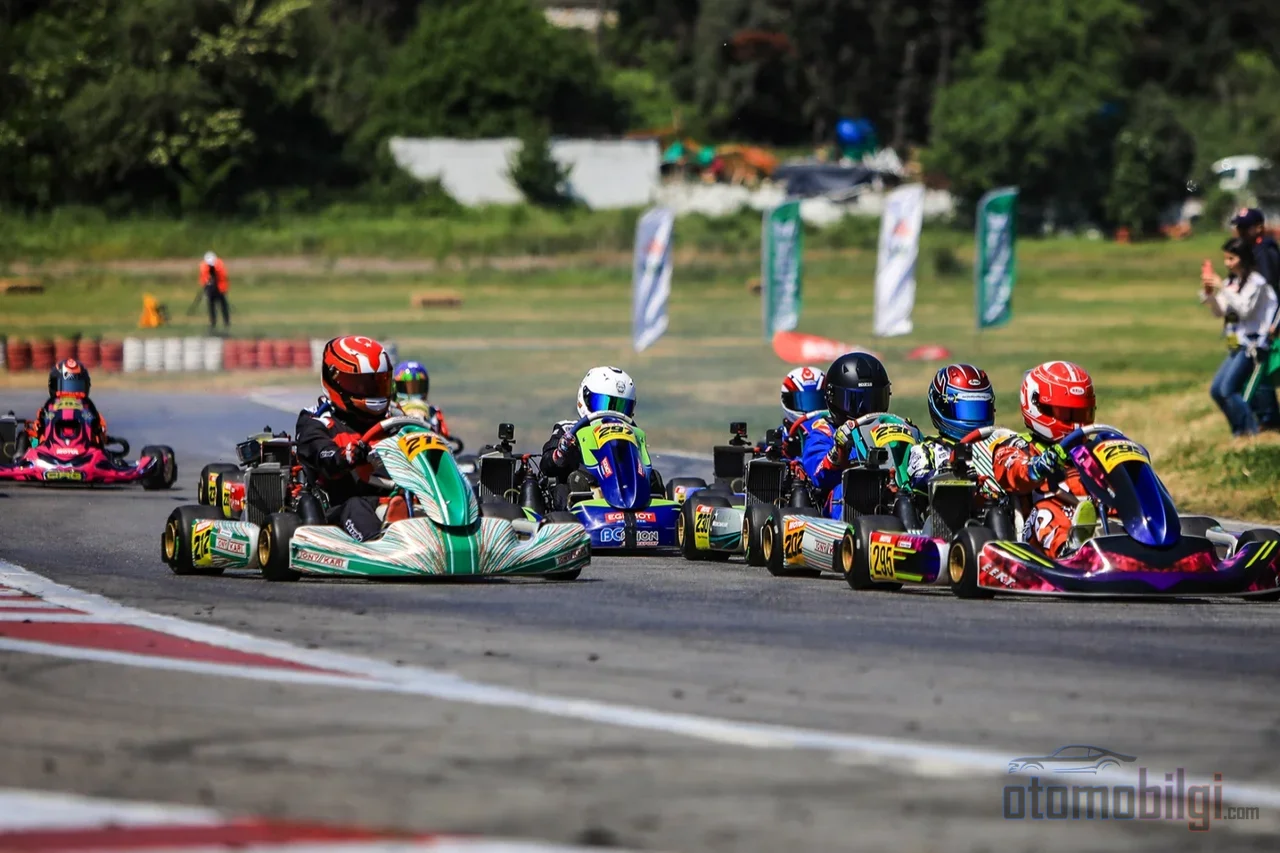
Share This Page
Almost every Formula 1 driver we see on the grid today first realized their dream at the wheel of a tiny kart: 99% of current F1 drivers started karting between the ages of 6-10, and the official road to F1 starts exactly here, in karting, passing through the F4, Formula Regional, F3 and F2 steps. In other words, karting is a true school of motorsport; so how did names like Verstappen, Hamilton, Leclerc and Russell graduate from this school? Here is the answer.
Highlights
- Max Verstappen won three CIK-FIA championships in a single season in 2013, at just 15 years old.
- Lewis Hamilton won the British Cadet Championship at age 10, becoming the youngest British cadet champion.
- Charles Leclerc won the junior Karting World Cup in 2011 before moving up to the formulas.
- George Russell became BRDC Formula 4 champion in his first year moving to single-seaters.
- A competitive junior karting season can require budgets of up to £200,000.
How Did F1 Stars Train in Karting?
Think of it this way: if a Formula 1 car is a university diploma, karting is the elementary school backpack. No one gets through that door without trying, and looking at history, nearly all professional racers' careers start from the same place. Karting categories open up at ages 7-8; engine capacity, tire type, chassis and weight rules are set in detail for each class, and the age group determines which class you race in. In Türkiye's championships there are category titles like Mini, Formula Junior and Formula Senior, while worldwide classes like KF3, KF2 and KZ challenge young drivers in sequence.
A race day runs just like an exam day: technical inspection and warm-up laps in the morning, then qualifying, then heat races and finally the final. The best part of this format is that the driver learns something at every stage. Speed in qualifying, racecraft in the heats, composure in the final. You rehearse everything you will need in F1 at age 10 on a tiny track.
Max Verstappen: The Record-Breaking Kid of Karting History
Max Verstappen's story shows what something becomes when genetics also come into play. His father is former F1 driver Jos Verstappen, his mother Belgian former kart racer Sophie Kumpen. Max started racing karts at age 4, entered championships at 7, and in 2005 won the VAS Championship with Limburg Mini Junior. He repeated in the same category in 2006, and in 2007 became both Belgian and Dutch champion in the Rotax Max Challenge. In 2008 he took three more championships with a CRG kart prepared by his father, and in 2009 came Mini Max titles with Pex Racing and the Belgian KF5 championship.
In 2010 he joined the CRG factory team, and there is an interesting detail: the person who beat him in the KF3 World Cup was Alexander Albon, who would later become his teammate at Red Bull. But Max got his revenge in the WSK Euro Series. The following year he won the WSK Euro Series ahead of Esteban Ocon; in the World Cup, while chasing down the drivers ahead together with Charles Leclerc, he was forced out of the race with an electrical failure.
The real bombshell came in 2013: Fifteen-year-old Max collected three CIK-FIA championships in a single season: two European Championships (KF and KZ) and one World Championship. Max won the KZ World Championship at Varennes-sur-Allier by beating Charles Leclerc, going down in history as the youngest driver to win a gearbox World Championship. It was an unprecedented season in the history of the discipline.
The transition was also remarkable: In August 2013, he completed a formula test at Pembrey, covering 160 laps in two days, and scored two victories in the 2014 Florida Winter Series (one of them by beating his rival by just 0.004 seconds!). That same year he took 10 wins in the FIA Formula 3 European Championship, set a record of 6 consecutive victories at Spa and Norisring, and became the youngest race winner and pole sitter in F3 history. In August 2014 he joined the Red Bull Junior Team, at 17 became the youngest driver in history to start an F1 race, and at 18 won the Spanish GP, breaking the record as the youngest Grand Prix winner. From 2021 to 2024 he followed up by being world champion four years in a row. He did not climb a uniform ladder, but without that asphalt school in karting, this story could not have been written.
Lewis Hamilton: The Legend Who Started at Buckmore Park
Hamilton's story is a bit more human, a bit more dreamlike. His racing career actually began with remote-controlled cars, but in 1993, at the age of 8, he stepped into karting and immediately set about winning championships. In 1995, at the age of 10, he won the British Cadet Championship, becoming the youngest British cadet champion. He then won the McLaren-sponsored series at the Buckmore Park circuit; that track was one of the key places where he honed his skills. Having also taken the STP championship in the Cadet class, Hamilton turned it into a classic British talent story whose path led through McLaren's door.
A bonus fact: Nico Rosberg, whose battle with Hamilton at Mercedes we would later witness, was also the youngest champion of a French national karting series. In other words, rivalries that grow on karting tracks get carried into F1 years later.
Charles Leclerc and George Russell: Two Champions from the Same Class
The karting rivalry between Leclerc and Verstappen is a detail worth gold for F1 fans. The pair had a heated rivalry in karting; while Verstappen dominated KZ in 2013, Leclerc finished second in the World Cup right behind him. Leclerc had moved into junior formulas by winning the junior (direct drive) Karting World Cup in 2011; in the 2014 Formula Renault ALPS he stood out as a rookie, with George Russell and McLaren junior Nyck de Vries among his rivals. Today, Leclerc's F1 page reads 27 wins, 46 poles and 118 podiums.
Russell's story, meanwhile, starts with family: because his older brother Benjy was racing, George grew up among karting tracks and started karting at the age of 7. He moved up to the Cadet class and became MSA British champion and British Open champion, then switched to the Rotax class in 2010. Threw himself into single-seaters in 2014 and became BRDC Formula 4 champion in his first year; then climbed the classic FIA ladder with GP3 and Formula 2 championships. When you put the four names side by side, the picture becomes clear:
| Driver | Karting Start | Standout Achievement | Route to F1 |
|---|---|---|---|
| Max Verstappen | Started racing at age 4 | Three CIK-FIA championships in 2013 | From F3 to Red Bull Junior, into F1 at 17 |
| Lewis Hamilton | 1993, at age 8 | British Cadet Championship at age 10 | From cadet championship to the McLaren path |
| Charles Leclerc | National series at a young age | 2011 junior Karting World Cup | Upward from Formula Renault ALPS |
| George Russell | At age 7 | MSA British and British Open championships | BRDC F4, GP3, F2 championships |
How Does the Official Path to F1 Work?
The FIA has an official program stretching from karting to Formula 1: the FIA Global Pathway. Simply put, the order works like this: karting, then Formula 4, followed by Formula Regional and Formula 3, and finally Formula 2. Junior formulas offer drivers a racing environment far more complex and demanding than karts; aerodynamics, downforce, strategy... Jumping straight from karting to F1 is hardly possible anyway: F1 cars are wide and extremely aerodynamically sensitive, while karts are small and slide in a predictable way. The junior formulas bridge that development gap.
Now for the hard part: money. A competitive junior karting season can reach £200,000, and it is said that moving from karting up to F1 level is associated with budgets of up to 8 million pounds. The difference between Verstappen's route, which ran almost directly from karting to F3 and then to F1 at 17, and the standard F4-F3-F2 ladder also shows this: the roadmap is not one-size-fits-all, but karting is one of the common steps on every path. So talent is essential, and financial backing can also be decisive; if either one is missing, the rungs of the ladder look pretty crooked.
So What Is the Situation in Türkiye?
The doors of this school are open in Türkiye, and the 2026 season is a good example. The MOTUL 2026 Türkiye Karting Championship was run over 7 rounds; the season opened in Bursa, races were held at the TOSFED Körfez Race Track in Körfez with the KO-KART organization, and the October rounds took place at Tuzla Karting Park and in Bursa. On the women's category podium of the Bursa round, Tuğba Yeşiltay took first, Ela Yeşiltay second, and Fatma Zeynep Çiçek third. The RMC Türkiye season was also run on the newly completed Bursa Metropolitan Municipality track, Tuzla Karting Park, and the Körfez Karting track; results and standings can be followed in real time on the federation's official pages.
More importantly, grassroots development work is accelerating: TOSFED ran a talent scouting project for the age 7 and over group, and in the project, which lasted about six months, the selected athlete candidates will receive race training with high-level simulators. Events like Karting Fest in our country are also spreading the message that the road to F1 goes through karting; the goal is for young talents, as in examples around the world, to be on the right track at a very early age. While Verstappen got behind a kart at the age of 4 in the world, doors are also opening for the same age range here; racing is only just taking its first lap, but the direction is clear.
Why Is Karting Seen as the School of Motorsport?
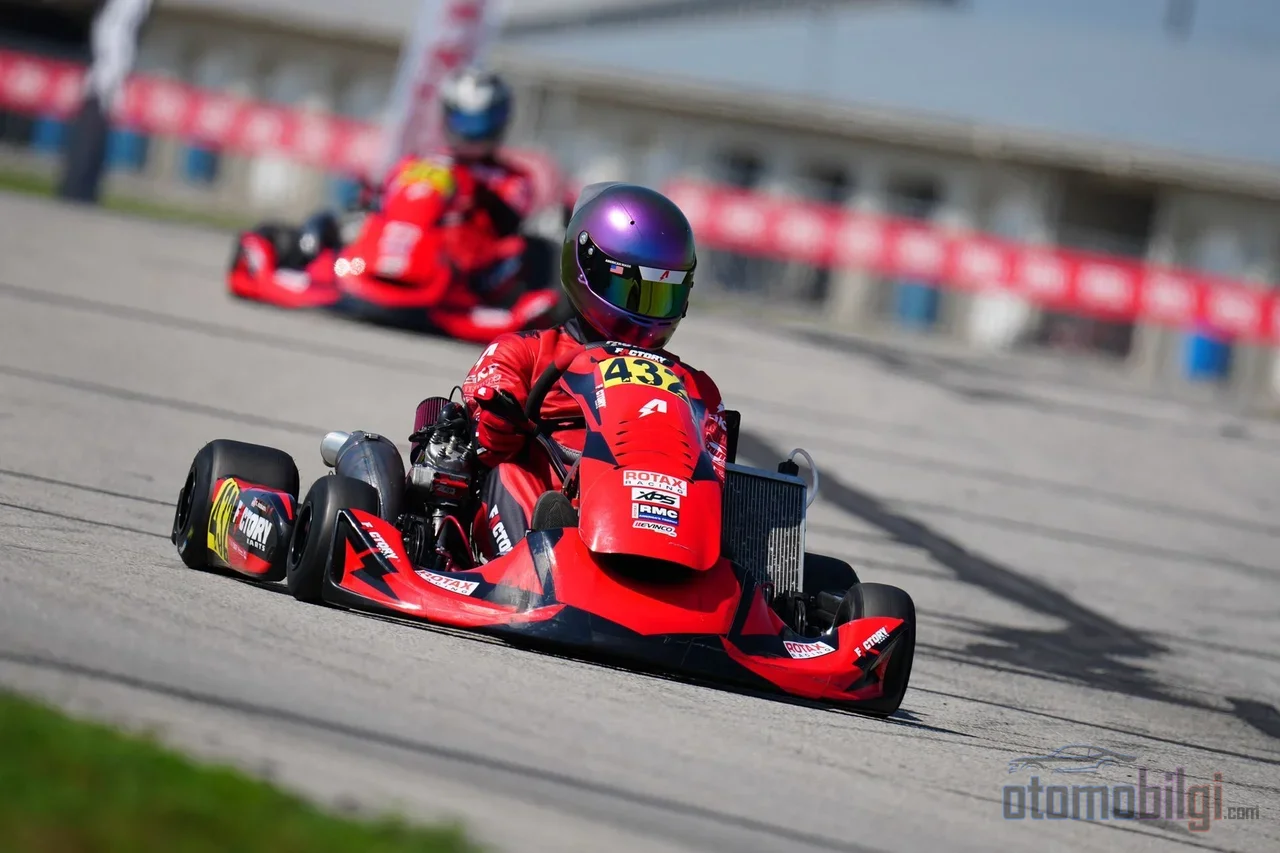
When you put the stories of these three names side by side, the answer reveals itself. First, karting is the art of survival: the thing learned at the youngest age on this journey from kart to F1 is staying calm while passing two centimeters from your rival. The 28-lap Bridgestone Cup final where Verstappen overtook Dennis Olsen in the rain by more than 11 seconds, the seasons where Leclerc finished just behind Verstappen at the World Championship... they were all exams of the same class. Second, karting offers different technical disciplines on its own with both direct drive and gearbox classes; classes with a gearbox like KZ teach the young driver gear and clutch management.
Third, and perhaps most importantly: karting makes talent visible early. Hamilton was noticed when he became a champion at age 10, Verstappen became indisputable when he won three CIK-FIA titles at 15, and Russell became champion in his first year of moving to single-seaters because he grew up on karting tracks. The track gives a report card without cheating. Who do you think the next Turkish name to come out of a karting track will surprise? Let's meet in the comments, I'm very curious.
Sources
- Max Verstappen - Wikipedia
- Person - Lewis Hamilton (FIA Karting)
- Buckmore Park Karting Archives: Lewis Hamilton
- Charles Leclerc - Wikipedia
- Charles Leclerc - DriverDB
- About | George Russell
- George Russell - Mercedes-AMG PETRONAS F1 Team
- FIA Global Pathway - Wikipedia
- A Beginner's Guide to The Formula 1 Ladder - Williams F1
- 2022 TOSFED National Karting Rules (PDF)
- 2026 Türkiye Karting Championship Calendar - TRF1
- 2026 Türkiye Karting Championship was held in Bursa - Motorsport.com TR
- RMC Türkiye - Kronos Motorsports
- "The road to Formula 1 goes through karting" - Gazete Oksijen