How Does a Card Clutch Work?
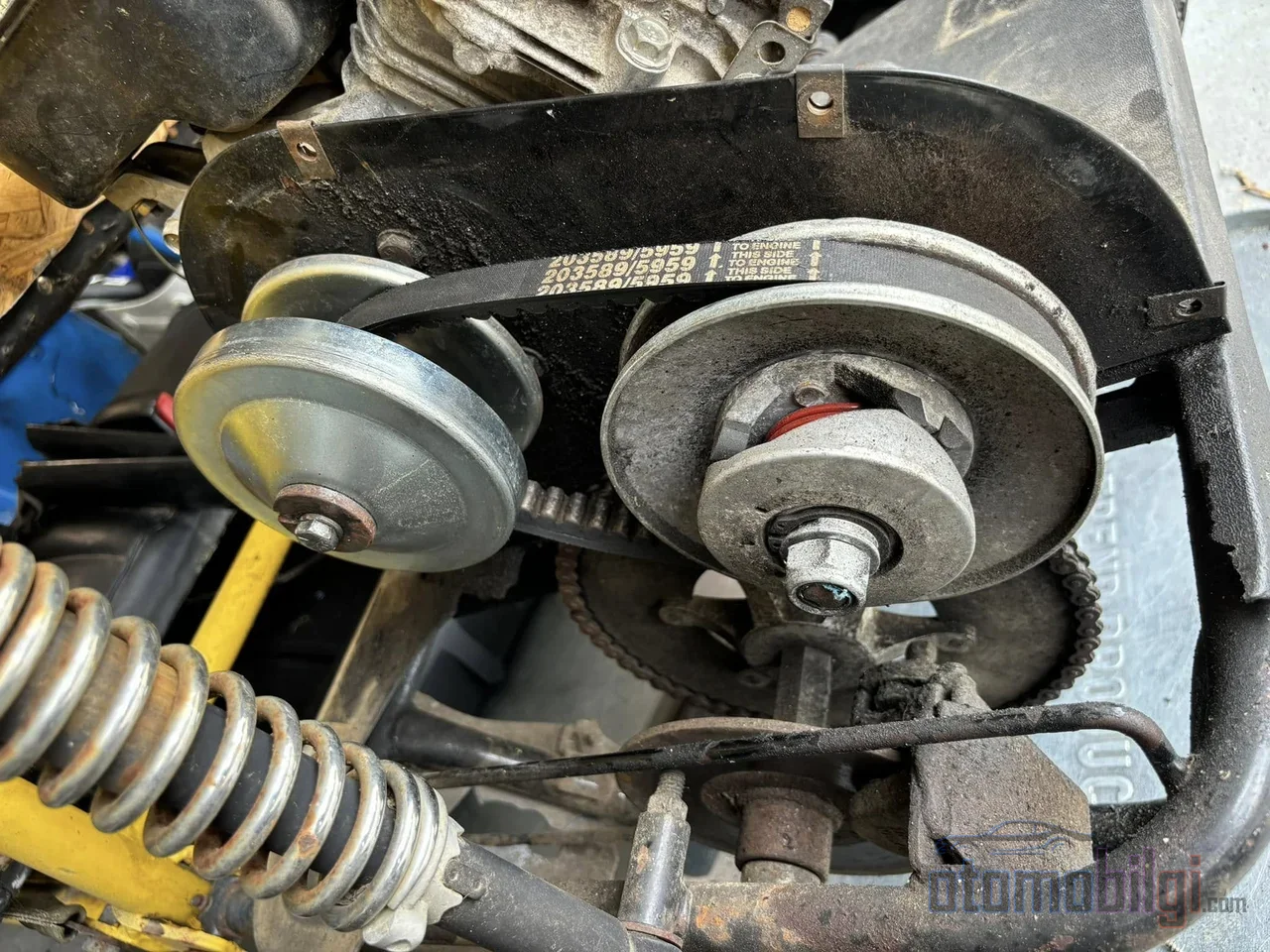
Alright, let's admit it: most of us hug the steering wheel and hit the gas the first time we get in a go-kart, and the kart shoots off in an instant. But have you ever stopped to think about it? That kart has no clutch pedal next to the gas pedal, and no gear lever either. So how is it that your kart sits still while the engine idles, yet comes to life the moment you press the gas? The answer to this question lies in the name of the hidden hero that gives karts their driving lessons: the centrifugal clutch. On this page, I will explain, through a karter's eyes, how this small but critical part works, at what RPM it engages, how it is maintained, and how you can tell when it starts to fail.
What Is a Centrifugal Clutch and How Does It Work?
First, let's clarify the terminology: in pedal-less karts, that is, karts powered only by a gas pedal, a centrifugal clutch is usually used. This is an automatic type of clutch that engages on its own once the engine reaches a certain RPM. In fact, you come across it everywhere outside karting too: it works on the same principle in mopeds, underbone motorcycles, and even lawnmowers.
And its working principle is so elegant that when you first hear it, you'll say "is that all?" As the engine turns, the weights inside the clutch plate swing outward under the effect of centrifugal force. Those weights move toward the drum outside the clutch (called the drum or bell) and, at sufficient RPM, press against it. Once frictional contact is established, engine power is transferred to the rear wheels. Below the threshold RPM, the springs hold the weights inward and the clutch stays disengaged. So when you lift off the gas and the engine drops to idle, your kart comes to a stop. No gearbox, no pedal; just physics.
A little note for those curious about history: the first karts of the 1950s ran with simple friction clutches taken from motorcycles. The switch from manual clutch to centrifugal clutch in the 1970s both reduced driver fatigue and smoothed out power delivery. Most of the karts you see in the paddock today race with this automatic logic, a legacy of that era.
An Analogy: Think of a Washing Machine
The best everyday example of centrifugal force, in my opinion, is the spin cycle of a washing machine. As the drum speeds up, the laundry sticks to the sides of the drum, right? The weights of a centrifugal clutch behave exactly the same way. As engine RPM rises, the weights try to "stick," and once the RPM reaches the point where it overcomes the resistance of the springs, contact begins. The stiffer the springs, the higher the RPM needed for the weights to overcome them and swing outward. Keep this detail in mind, because it will come in handy shortly when we discuss adjustment.
Key Highlights
- In general-purpose karts, the clutch begins to engage at around 2,000 rpm and locks up at 2,600 rpm.
- In Rok classes, the engagement RPM is usually 3,500 rpm, while factory-set racing clutches engage at around 4,000 rpm.
- The shoes of a dry centrifugal clutch must never be lubricated; lubrication causes slipping and wear.
- A quality clutch can last 50-100 hours with regular use.
- Oxidized clutch oil can lower the engagement point by 500 rpm or more.
Engagement RPM: What Do the Numbers Say?
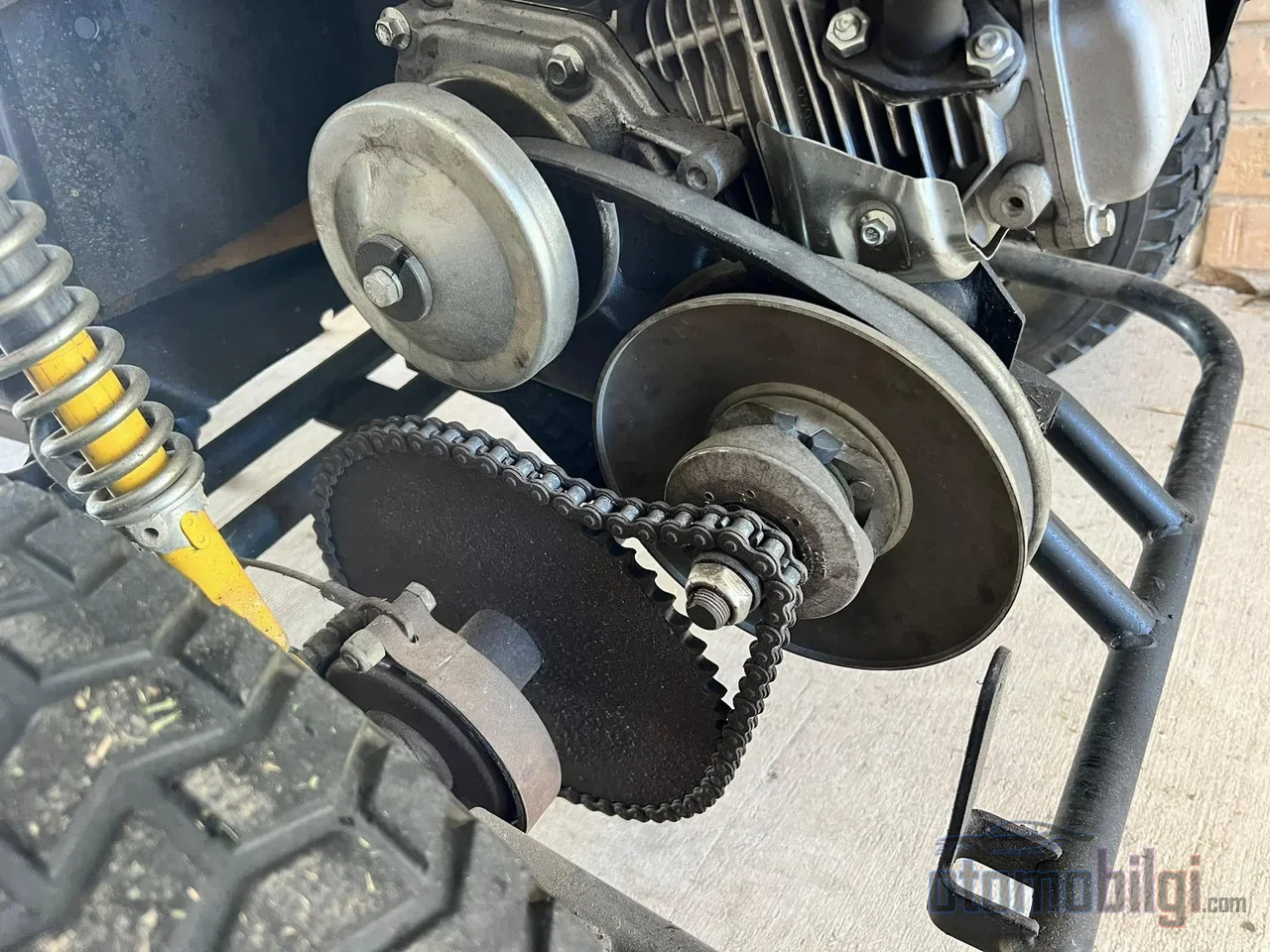
This is where the most hotly debated part of the matter begins. The clutch's engagement RPM, that is, the moment the kart starts moving when you press the gas, is not a single number; it varies depending on the class used, the engine, and even the clutch's tuning. In practice, "engagement speed" is defined as the engine RPM at which the kart, without a driver, starts moving on flat ground.
Let's talk in concrete numbers. In general use, meaning hobby karts, the clutch begins to engage at approximately 2,000 rpm and locks completely at around 2,600 rpm. At roughly 2,000 rpm, the centrifugal force acting on the friction material overcomes the resistance of the springs and full contact is achieved. Moving to the racing side, the numbers climb: In Rok classes, engagement is usually around 3,500 rpm. Factory-set racing clutches are even more aggressive; some models are delivered set to engage at approximately 4,000 rpm on a stock engine. On restricted engines, the engagement point is adapted to the engine by adjusting the spring preload.
So why is this adjustment so important? Because clutches slip somewhat while working, and the goal is to complete that slip at the correct RPM. The common tuning logic is this: if the engagement point is set about 200 rpm ahead of the engine's peak torque RPM, the clutch locks exactly at the peak torque point. This ensures the engine operates in the most efficient part of its RPM range on corner exits. Weaker springs allow the weights to make contact earlier, but beware: making contact is not enough; the pressure generated by the centrifugal force must also be sufficient to prevent slipping. Also, in classes like Lo206, adjusting the engagement RPM from track to track is a setup topic in its own right; teams analyze slip theory and rear axle speed by looking at data.
Dancing with the Gear Ratio: No Clutch or Gearbox, But There Is a Ratio
Now a lightbulb will go off in your head. A kart may not have a gearbox, but the gear ratio, that is, the ratio of the front sprocket to the rear sprocket, directly affects the clutch's character. The two must be considered together; if one is wrong, the other suffers too.
Short Ratio or Long Ratio?
A numerically high ratio, what we call "short," sends more torque to the wheels: that means faster acceleration but a lower top speed. It allows the engine's RPM to recover more quickly on corner exits, but you also reach any RPM limit sooner. A numerically low ratio, what we call "long," is exactly the opposite: you gain top speed but sacrifice acceleration.
The critical point here is this: a ratio used with the clutch that is too long can ruin the clutch engagement. Because with a long ratio, the engine struggles to reach the RPM needed to lock the clutch, and the clutch slips constantly. When we say slipping, I will talk about how dangerous this is shortly in the troubleshooting section. As a general rule, clutches work better with higher (shorter) ratios. Also, if you set a very low engagement speed, the clutch "loads up": it slips without providing the wheel rotation needed to move the kart, then grabs - exhibiting that annoying behavior known as slip-grab. There are also online calculators for calculating the maximum theoretical speed and clutch engagement RPM; doing a calculation before making a setup change prevents many nervous breakdowns in the paddock.
Maintenance: Little But Essential, and Absolutely No Oil
Now let's move on to the part every racer must learn but most learn too late: maintenance. Let me write the biggest rule first, the rest is detail. Never lubricate the clutch shoes in a dry centrifugal clutch. Lubrication causes excessive slipping and rapid wear. As for the mounting bolts, check and tighten them regularly; this is a task far more important than it appears.
A distinction is necessary here, otherwise you'll be caught between contradictory recommendations: while oil is forbidden in dry types, the situation is completely different for wet and disc clutches. In oil-based systems, lubrication makes the clutch engage more smoothly and at higher RPM, maximizing acceleration. So the answer to the question "to lube or not to lube" depends on the type; be sure to know the type of your own clutch.
As for maintenance frequency: for disc clutches, in typical Saturday evening races it is recommended to disassemble and clean the clutch with acetone every 8-10 nights, or every 2-3 race days under heavy use. As a more general practice, inspecting, servicing and cleaning the clutch at the end of every race day is the safest habit. There is one more detail with wet systems: oxidized clutch oil can lower the engagement point by 500 rpm or more. So if your top speed has dropped, change the clutch oil first - don't start fiddling with parts like clutch springs.
The first parts to wear are usually the clutch weights and springs. The good news is that both can be easily inspected and replaced. Regularly checking the engagement RPM allows you to notice in time when these parts are preparing to retire.
Power Loss in Amateur Racing: Is the Clutch to Blame?
Now let's move on to that classic scenario: a weekend race, you press the throttle coming out of a corner, the engine revs screaming, but the kart doesn't launch the way you want. The culprit is usually the clutch. So how do you tell?
- Slipping under load: if the engine RPM rises but speed doesn't increase, there is insufficient friction between the clutch plate and the sprocket.
- Burning smell and smoke: an incomplete clutch engagement generates heat; at an advanced stage the clutch starts to smoke.
- Clutch engaging at idle: if the kart tends to creep forward even when stationary, the springs have weakened, wear has progressed, or the heated sprocket has started to slip.
The common causes of slipping are grouped under three headings: worn friction material, contamination of surfaces with oil or grease, and incorrect spring tension. Heat is also a critical issue: as the shoes slip, heat builds up, and this heat is the classic reason a dry centrifugal clutch suddenly grabs even at idle. Limiting shoe slip is of vital importance both for performance and longevity.
So when is replacement needed? With regular use, a quality clutch can last 50-100 hours. If the friction material has worn to less than half its thickness, or if the wear is uneven, it is time to replace it. Maintaining consistent speed is the simplest way to reduce unnecessary slip and therefore heat generation; in other words, burning the clutch at the starting line longer than necessary will quickly consume its life.
Short Answer: How Does a Kart Clutch Work?
Let's wrap up with a clear answer to the question we asked at the beginning: On a kart without a pedal, the centrifugal clutch engages automatically as engine speed rises, the weights swinging outward under centrifugal force and pressing against the drum; at idle speed, it remains disengaged thanks to the springs. The engagement point varies by class: around 2,000-2,600 rpm on hobby karts, 3,500 rpm in Rok classes, and around 4,000 rpm on factory-set racing clutches. With the right gear ratio, the right spring setup, and regular cleaning, this small part launches you at your best out of every corner, every time.
Next time you see someone's clutch smoking in the paddock, don't just smile and walk past; go warn them about lubrication. That is the only way the karting community grows.
Sources
- Centrifugal clutch - Wikipedia
- 10 Things to Know about a Go Kart Clutch - BMI Karts
- Centrifugal Clutch | Master Your Race - Angriracing
- Clutch engagement RPM? - 4Cycle Karting forum
- clutch rpm. engagement - DIYGoKarts forum
- How Does a Clutch Work on a Go Kart?
- Centrifugal clutches discussion - MG Engines
- At what speed should my clutch engage? - r/Karting
- Go Kart Clutches: Which Kind Should I Use? - Go Kart Guru