How Does a Vehicle Protect Its Occupants When It Predicts a Collision?
On a road lit enough by the headlights, everything changes in an instant: the radar locks onto the vehicle ahead, the camera tracks the distance with millisecond calculations, and the car notices before you do that something is about to hit it. So what happens inside the cabin in that final half second? The seat belts tighten on their own, the seats change position, the windows close, and everything reverses in a single second. This is that final scene before a collision that nobody talks about - so let's step inside together.
Why Is the Wall Between Active and Passive Safety Breaking Down?
Just think about it for a moment: A car's safety equipment is divided into two. Active safety systems try to prevent a crash from happening or to reduce its impact - things like ABS, ESC, and brake assist. Passive safety, on the other hand, kicks in when a crash becomes inevitable: airbags, conventional seat belt pretensioners, crumple zones. For years these two were separate worlds; one spoke before the crash, the other after it.
Modern pre-crash systems - that is, collision preparation systems - were built right in the middle of that wall. The idea is very simple but very clever: If the car can detect a collision in advance, it can put its passive safety equipment into preparation mode without waiting for the moment of impact. In other words, equipment like airbags and seat belts no longer just reacts - it positions itself in advance. The roots of this approach go back to 2005, to the first PRE-SAFE studies that combined active and passive safety; Mercedes-Benz's system had its 10th in 2013. anniversary in 2013, so this idea is hardly new.
But how does a car "feel" a collision? This is where the most enjoyable part of the story begins: the sensor chain.
Highlights
- Pre-crash systems tighten the seat belts, position the seats, and close the windows before a collision.
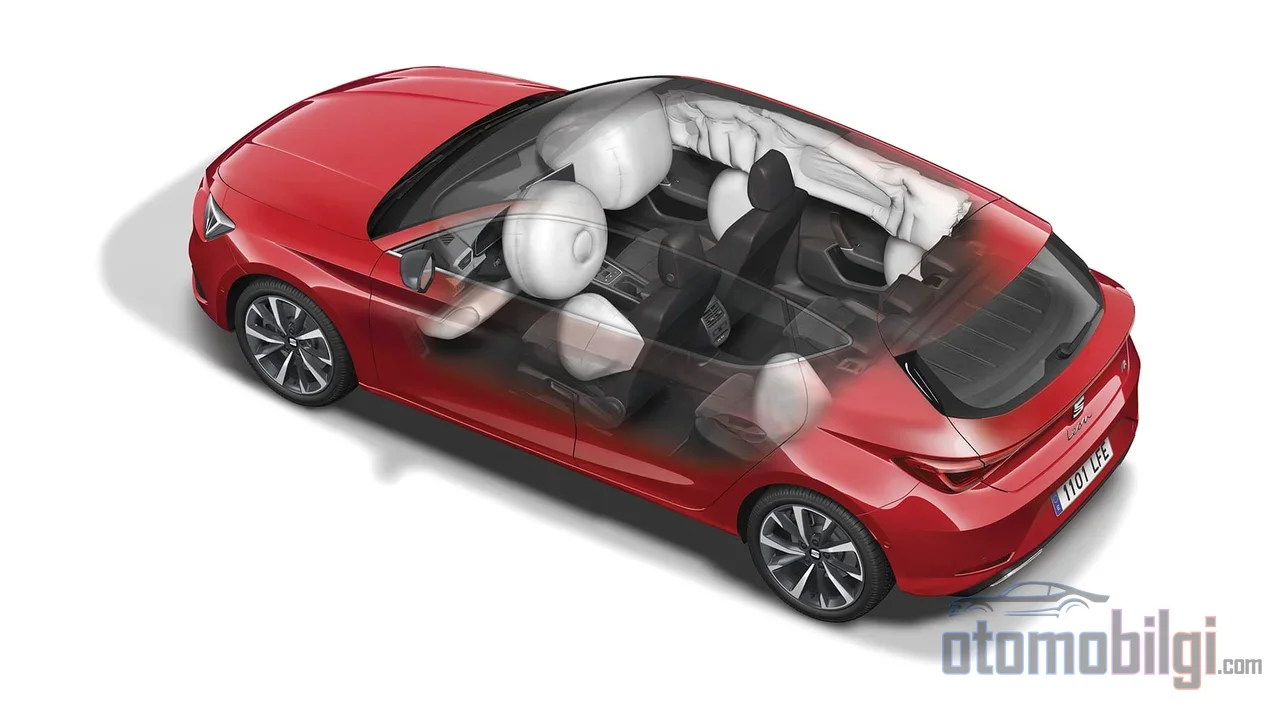
- Side airbags, due to the narrow space between the passenger and the door, must typically deploy within the first 10-20 milliseconds.
- PRE-SAFE-type measures are reversible; once the danger passes, the system automatically resets itself.
- Toyota's Pre-crash Brake Assist aims to reduce the collision speed with increased braking force.
How Does a Car Detect a Collision in Advance?
Think of it like a body's nervous system: The brain is not fed by a single sense; the ear, the eye, and the skin work together. The same is true in a car. Cameras mounted on the windshield scan the view of the road, the millimeter-wave radar in the front bumper area measures the distance and closing speed of vehicles ahead, and ultrasonic sensors cover close range. Toyota's Pre-Collision System, for example, uses millimeter-wave radar to determine both when to apply extra braking assistance and when the seat belt pretensioner should engage.
But the job isn't just about looking forward. The system shares sensors with ESP: the yaw rate, meaning the vehicle's rotation speed, and lateral acceleration data come directly from the control units beneath the steering wheel. This way, the car doesn't just say "there's something in front of me" - it can also assess its own state, such as "I braked suddenly" or "I'm starting to skid and there's a rollover risk." Mercedes-Benz PRE-SAFE requires no action from the driver precisely for this reason; it detects signs of sudden emergency braking, skidding, or abrupt deceleration on its own.
In the final step, mathematics does the talking: When the system decides a frontal collision is inevitable, it acts instead of waiting. Now let's move on to the steps that happen one after another inside the cabin at that moment.
The Cabin Locks Down: The Chain from Sensor to Action
When a collision is declared inevitable, the vehicle, like an orchestra conductor, manages multiple actions at once. All within seconds, and even before the collision occurs:
| Action | What Does It Do? | Why? |
|---|---|---|
| Front seatbelt tensioner | Takes up the slack in the belt and secures the passengers | Minimizes belt load at the moment of impact |
| Seat position | Adjusts the backrest and positions the headrest | Improves head and neck support |
| Windows and sunroof | Closes the side windows, leaving a small gap at the edge | Seals the cabin in a rollover risk and reduces debris entry |
| Brake pre-charging | Prepares the brakes and increases brake assist | Reduces collision speed |
Why Is Belt Slack So Important?
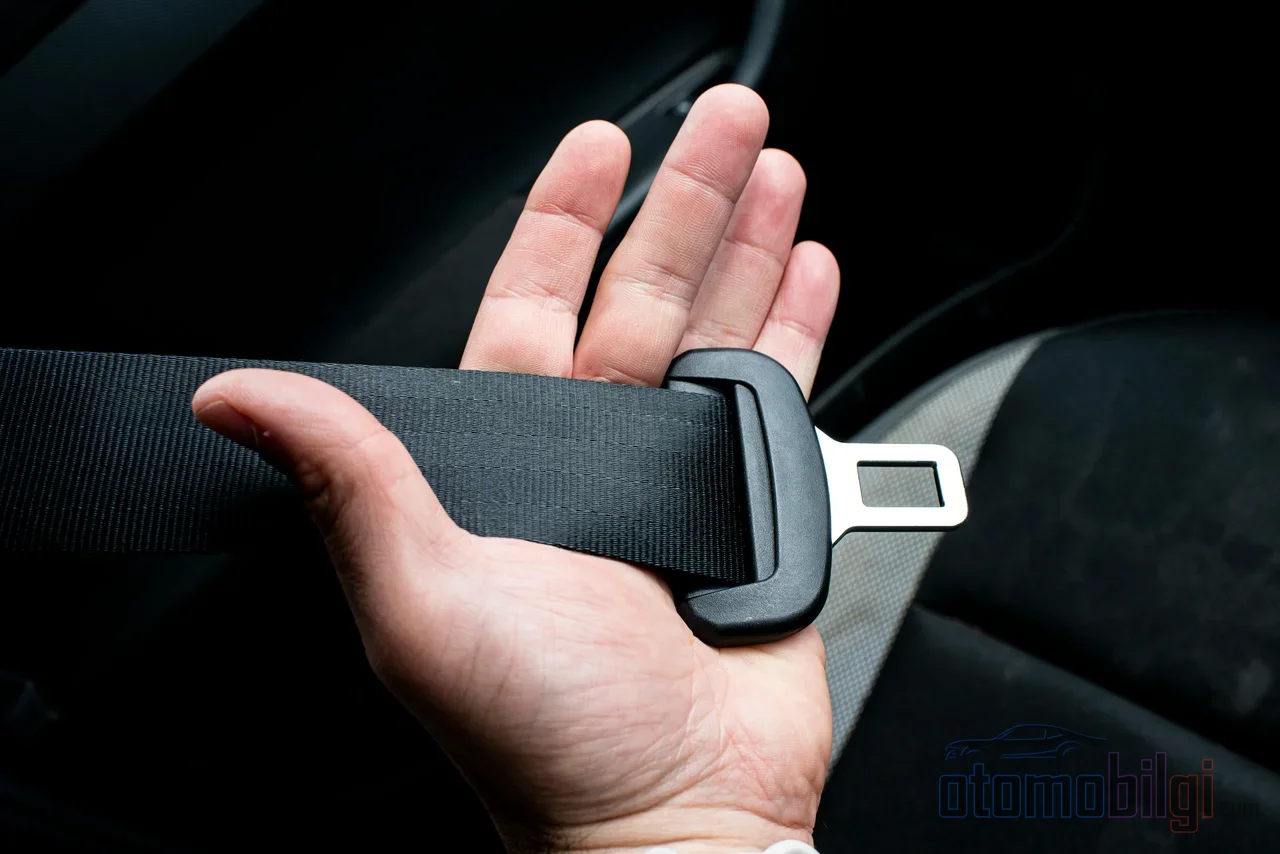
When thinking about how a seatbelt works, most of us imagine it as a taut rope, but in reality there is always some slack in the belt. In normal driving, this slack provides comfort; in a crash, however, it can cause the passenger to lurch forward and the belt to strike them harder. A conventional belt tensioner can only take up this slack after the collision shock wave arrives. Systems called pre-pretensioning solve the problem in exactly the opposite way: before the shock wave even arrives, an electric-motor-driven reversible tensioner takes up the slack in the belt. In Lexus's system, this motor even loosens the belt again once conditions return to normal - so the belt doesn't just tighten once and stay that way.
Honda has also developed an E-pretensioner that works together with its Collision Mitigation Braking; using motor power, it winds the belt back in the pre-collision zone. So this technology is not a luxury belonging to a single brand, but an engineering approach that has become the industry's common language.
Why Do the Windows Close? The Real Cleverness Is Here
One of PRE-SAFE's most interesting moves is closing the side windows when a skidding or rollover risk is detected, while leaving a tiny gap at the edge. This gap is not mere stubbornness; if the window closes completely, the air inside creates pressure, and a small opening balances it. So what's the point of closing the windows? Sources explain this action for two reasons: physically sealing the cabin before a rollover and, after the accident, reducing the amount of debris such as rubble and soil that pours in along with broken glass.
The effect of the side windows closing on the deployment area of the side curtain airbag is a frequently debated topic, but let's clarify this: there is no direct statement in the sources saying "when the window closes, the airbag finds its full area." The known fact is this - due to the extremely narrow gap between the passenger and the vehicle's side surface, side airbags must typically deploy within the first 10-20 milliseconds, and in accidents where the window could shatter, the main protection in front of the head comes into play. Closed windows and the cabin being a closed volume are a background that institutionally supports the environment in which the airbag needs to work; but presenting this as a definitive mechanical claim would not be correct. Engineering meticulously draws the line between claim and probability - let's do the same.
Brakes, Warnings and the Ear Protected by Sound
While the cabin is being prepared, things are also happening outside. Toyota's Pre-crash Brake Assist aims to engage early and reduce collision speed by applying increased braking force based on the driver's brake pedal press. Simply think of it this way: A slower speed over the same distance means the force with which the metal pushes you is significantly reduced. Volvo's City Safety, on the other hand, focuses on preventing the collision; if the driver gives no response and a collision becomes unavoidable, it automatically applies full braking power. In the 2026 Volvo XC90, for imminent risks, visual and audible warnings and brake pulse can be used to remind the driver by touch; the EX90, meanwhile, offers automatic emergency steering.
There is also an interesting detail that very few people know: PRE-SAFE Sound. Before collision noise occurs, a short acoustic signal is generated. What is its purpose? To trigger the natural protective reflex in the inner ear. Our body protects the ear by contracting the stapedius muscle at moments of loud noise; by calling up this reflex in advance, the system tries to soften the effect of the explosion sound on hearing. In other words, the car goes as far as protecting you from your organ of hearing. In addition, PRE-SAFE Impulse Side can detect a possible side impact and push the occupant away from the door with a rapid burst of air; PRE-SAFE PLUS and Sound are optional depending on the model and equipment.
Are the Systems Copies of Each Other? Three Different Approaches
Let's take a brief look at how three major manufacturers interpret the same idea, because the details differ in interesting ways:
- Mercedes-Benz PRE-SAFE: It continuously monitors driving conditions; on signs of sudden braking, skidding or rollover risk, it tensions the seat belts, positions the seats and closes the windows. The same function package is offered in the 2026 S-Class and G-Class.
- Lexus Pre-Collision System: It monitors vehicles and pedestrians ahead, gives a warning when a frontal collision is likely, and improves braking. The front seat belts have pretensioners and load limiters; in most models, in the rear outer seats as well. If the Adaptive Variable Suspension equipment is present, it even contributes to keeping the vehicle's posture with damping force.
- Volvo City Safety: It focuses more on preventing the collision; it detects pedestrians, cyclists and large animals, and if a collision becomes unavoidable, it applies full braking power.
So they all use the same nervous system, but their reflexes differ: one prepares the cabin, while the other is focused on preventing the crash. The realistic view is this: the best results come from a car where both are working at the same time.
System Limits and What the "PRE-SAFE Inoperative" Message Means?
Just as every superhero has a weak spot, these systems have their limits too. When sensors are covered with snow, ice, mud or debris, the system can restrict itself; you may see a warning on the screen indicating that functions are limited. Sensor damage or an electronic fault also leads to a similar outcome. When the PRE-SAFE Inoperative message appears, the situation is as follows: the airbags still deploy, but the pre-collision preparation layer, such as seat belt tension, seat position and window closing, is completely disabled. On the diagnostics side, the main checkpoints are AGM battery voltage, yaw rate and lateral acceleration sensors, seat occupancy matrix, and the Restraint Systems Control Module.
And then there is the classic question everyone wonders about: I braked hard, my belt tightened on its own - did it just fire? No. The retractors used in pre-crash systems are reversible; when the danger passes, the belt automatically loosens and the system returns to normal. No manual reset is needed either - everything resets on its own. Remember, PRE-SAFE doesn't prevent the crash - it prepares the occupants. Preventing the crash is the job of the active safety and driver assistance systems alongside it. So it is a team effort: one prepares the stage, the other tries to save the show.
The Real Value of the Final Seconds
Let's sum it up: A pre-crash system that evaluates data from radar, camera and ESP sensors takes up the slack by retracting the belt the moment it deems a collision inevitable, tightens the seat backrest, positions the headrest, closes the windows, pre-charges the brakes, and can even trigger the ear reflex. As a passenger, you don't even notice any of these seconds - maybe you feel the belt tighten slightly, that's all. But that small difference significantly changes how the load on the occupant's body is distributed at the moment of impact. So what do you think the next step will be in a cabin that has become this smart - when will the world arrive where the car not only predicts a collision but makes it entirely impossible? I'm curious to hear your thoughts in the comments.
Sources
- What is Mercedes Pre-Safe? - JD Power
- Toyota Develops "Pre-crash Safety" System - Toyota Global Newsroom
- How Pre-collision Systems Work - HowStuffWorks
- Pre-Collision System (PCS) - Lexus Europe
- Lexus Safety Feature Summary - Lexus Pressroom
- Airbags - IIHS
- Investigating the Effects of Pre-Pretensioning on Occupant... - IRCOBI 2023
- Development of New Seat Belt E-pretensioner System - Honda Technical Review
- Seatbelt Pretensioning Systems - Clemson CVEL
- Enhancement of Active & Passive Safety by Future PRE-SAFE Systems - R. Schoeneburg, 2005 (TRID)