Who Does the Center Airbag Between the Front Seats Protect the Driver Against?
Share This Page
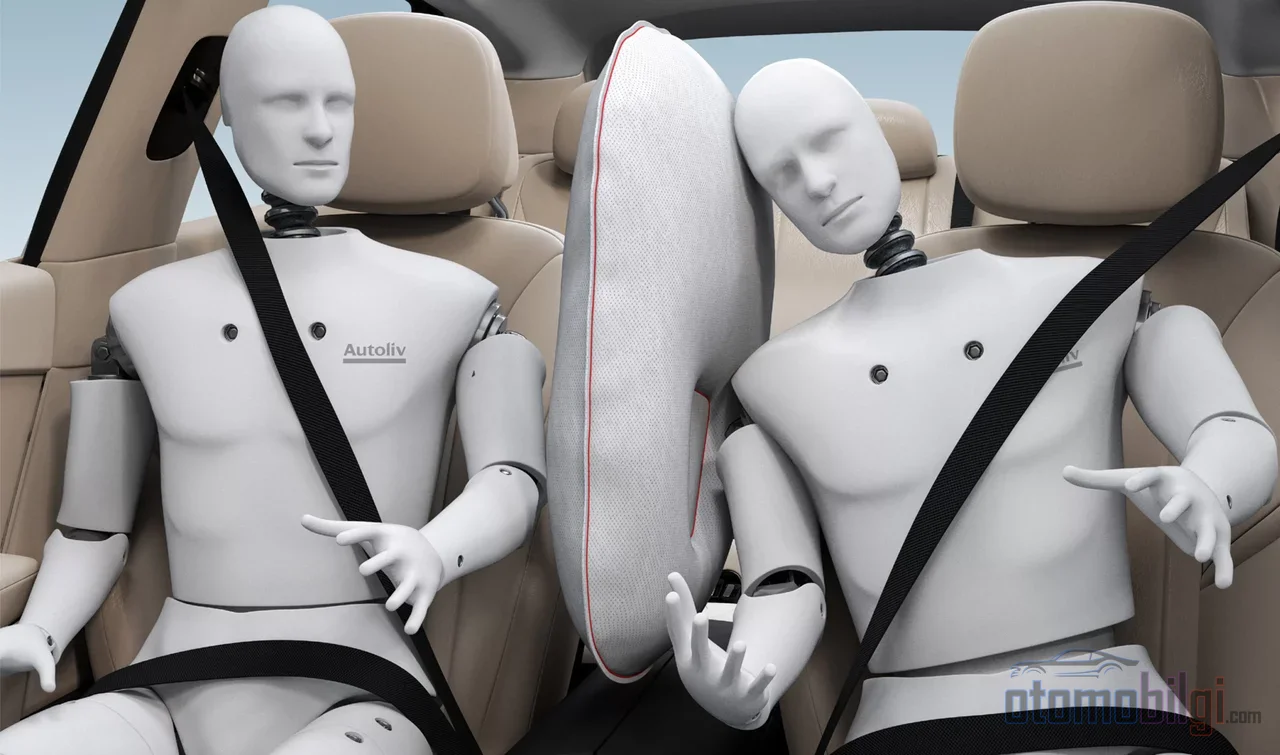
The center airbag, placed between the front seats, is an airbag that deploys from the inboard side of the driver's seat backrest or from the center console, and its primary task is to prevent the driver and front passenger from colliding with each other at the moment of impact. It protects by stopping the passenger from being thrown around the cabin, especially in side impacts from the opposite side and in rollovers.
Highlights
- First entered series production in 2013: General Motors was the first manufacturer to introduce this airbag.
- In side airbags, inflation is usually completed within the first 10-20 milliseconds of the collision.
- Euro NCAP has included far-side occupant protection in its side-impact score since 2020.
- Using curtain and torso side airbags together reduces the risk of death in near-side impacts by approximately 31%.
I'll admit it: The first time I saw an airbag deploy from the middle of a seat backrest, I said for a few seconds, "what kind of invention is this?" Then the logic clicked, and now I consider it one of the cleverest pieces of modern car safety. Because most airbags protect you against something coming from outside; the center airbag steps in between you and the person next to you. An analogy from everyday life: think of that imaginary arm on a bus that slams the brakes during a collision and keeps you from latching onto the person beside you - automotive engineers are building the real version of that arm.
Who exactly does the center airbag protect against?
The answer to this question is surprising at first glance: what it really protects against is the scenario of the two front-seat occupants colliding with each other. In a side impact, the vehicle body is suddenly accelerated sideways; the belts hold your torso but your heads are left free. The person sitting next to you is flung like a cannonball toward the far side of the road with their own head. That is exactly when the center airbag steps in between the two and ensures that contact never happens. Research also shows this contact is a risk that cannot be ignored: crash investigations have documented that contact between passengers sitting side by side in the same row significantly increases the risk of injury.
But it doesn't end with occupant-to-occupant contact alone. Autoliv's Front Center Airbag system and similar designs also cover a second scenario: far-side, meaning opposite-side impacts. Imagine your vehicle being struck from the side opposite to where you are sitting. There is nothing on your side that will fly toward the door, but you are thrown toward the passenger-side steering column or the interior side panel. Even when the passenger seat is empty, the center airbag activates here and cushions you from that hard interior surface. So this airbag thinks of both people: when both are present, it prevents them from hitting each other, and when only one person is present, it prevents them from being flung to the opposite side.
Where does the airbag deploy from, and in which collisions does it trigger?
The mounting position falls into two types depending on the manufacturer. The first option is the backrest on the inboard side of the driver's seat: the airbag deploys from there and fills the gap between the two front occupants. The second option is the center console area: General Motors, the first manufacturer, inflated its 2013 system from a point near the console. Autoliv's design carries the airbag as a pipe- or tube-shaped structure; this shape is the way to efficiently fill that narrow space between the seats.
Deployment conditions: when do the sensors decide?
Like every airbag, the center airbag does not make its decision on its own; at the heart of the matter is the airbag ECU's crash algorithm. This algorithm continuously evaluates the type, angle, and severity of the collision, and when it detects an impact severe enough, it triggers the relevant firing circuits. Hyundai's owner's manual describes it clearly: the side group airbags, including this airbag between the front seats, are designed to inflate depending on the severity of the impact detected by the side impact sensors. So it does not open when you lightly bump a door; it opens when what is involved is a serious side impact.
The second scenario is rollover. Side and curtain airbags can inflate when the rollover sensor kicks in. As the vehicle leans sideways and begins to roll, the sensors measuring the vehicle's lateral movement and tilt can detect it in advance; curtain airbags inflate within the first 10-20 milliseconds of the rollover and can stay inflated for much longer than usual, 10 seconds or more. The reason for this extended duration is simple: the vehicle keeps rolling for several seconds, and the airbag needs to stay up in the air during that time. The standard front airbags, on the other hand, usually do not deploy in a rollover; because in that scenario they provide no extra protection.
Why does the inflation threshold have to be so fast?
In a side collision, engineers have incredibly little time. In a frontal collision, the vehicle's nose area crumples to buy distance; in a side collision there are only a few tens of centimeters between the door and you. That is why in side airbags inflation usually has to finish within the first 10-20 milliseconds. Deployment thresholds also vary by scenario: in a collision with a narrow object like a tree or pole, the threshold can drop to 8 mph (about 13 km/h), while in widespread side collisions between vehicles it is around 18 mph (about 29 km/h). This is why manuals carry the warning "the center airbag may not always deploy": the system does not fire on every impact, only on the impacts the algorithm considers serious. Keep in mind, this entire process is a single-use pyrotechnic process; an airbag that has inflated once deflates and is gone, and the module must be replaced.
How does it differ from the curtain airbag? Don't they do the same job?
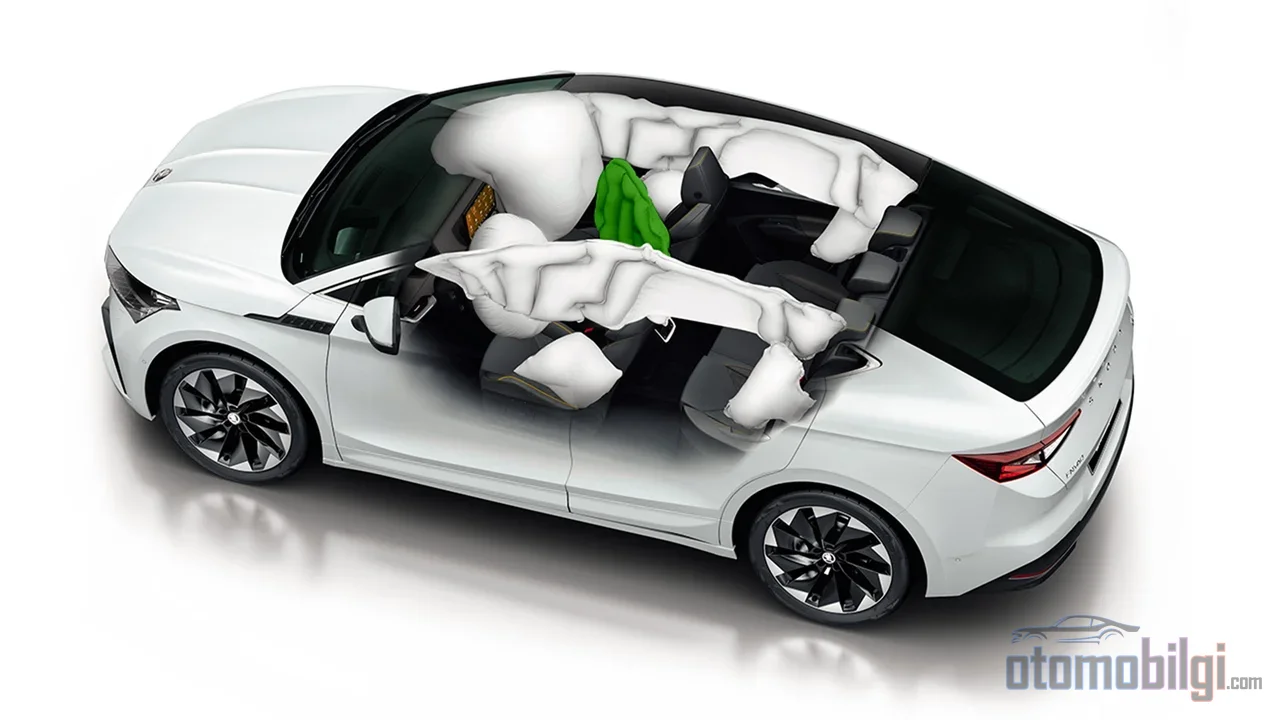
Absolutely not, and this difference may be the most important sentence of this article: the curtain airbag works against threats coming from outside, the center airbag works against collisions on the inside. Curtain airbags extend along the vehicle's window line and protect the head and chest against colliding vehicles and objects like trees or poles. The center airbag does not block any external threat; it only prevents the two occupants, or a single occupant, from making contact with the hard interior surfaces on the opposite side. Different threat, different location, different sensor logic.
| Feature | Curtain Airbag | Center (Far-Side) Airbag |
|---|---|---|
| Location | Along the window line, at the roof edge | Inside the driver's seat backrest or in the center console |
| Threat it protects against | Intruding objects (vehicle, pole, tree) | Passenger-to-passenger contact, being thrown toward the far side |
| Activation | Side collision sensors, rollover sensor | Side collision sensors, in some cases rollover |
| Inflation time | Usually within the first 10-20 ms | Depends on side collision sensor thresholds, fast |
| Behavior in a rollover | Can inflate and may stay inflated for a long time (10 seconds+) | May activate depending on the scenario |
The overall effect of the side safety package is also reflected in the numbers: using curtain and body airbags together reduces the risk of death in nearside side collisions by approximately 31%, while the head and body airbag combination reduces it by approximately 25%. One more note: all the vehicles that score best in side collision tests come with side airbags that protect the head, but the airbag alone is not enough; a robust side structure that prevents intrusion into the cabin is also essential. The same principle applies to the center airbag; the airbag is no substitute for structural integrity.
How did Euro NCAP's far-side test change the scoring?
When a safety technology is to become widespread, test protocols usually open the door for it first, and that is exactly what happened. Euro NCAP announced the far-side occupant assessment in 2020 and added it to the side collision section of the adult protection score. The scoring balance is interesting: while the total score for the side barrier and pole tests is capped at 12, the share of far-side occupant protection is at most 4 points. In other words, the better your vehicle is at far-side protection, the more of that it gets; an effective center airbag is the strongest card to play for that 4-point slice. On the Australian side, ANCAP is following the same path and, from 2020 onward, rewards the presence and effectiveness of the center airbag in rated vehicles; without a good performance, reaching 5 stars has become difficult.
So does this airbag actually work? A biomechanical study on far-side collisions shows that an airbag in this design significantly reduces the head's angular excursion and the risk of rib fractures. The Toyota Yaris, as one of the first vehicles equipped with a center airbag, is also a symbol of this transition. In short, test institutes and manufacturers are pushing in the same direction: the head of the person sitting beside you in the front seat is no longer a threat to your head.
The hard part of the design: tight space, the arm path, and timing
What challenges the center airbag is not the mechanism, but the space. The space available between the two front seats is the narrow gap left after the seat widths and center console have been laid out. The airbag needs to fold so it fits into this gap, deploy at the right moment in the right direction, and not block the path of the driver's arm turning the steering wheel. That is why the tubular airbag structure is critical in Autoliv's solution: inflating like a tube to fill the narrow gap from end to end - filling, not inflating.
The second challenge is living inside the seat. While the airbag is inside the seatback, the seat itself still has to be a seat that is side-adjustable, heated and lumbar-supported. We saw a similar integration issue with panoramic glass roof airbags: deploying the airbag correctly depending on the roof or whether the cover was open or closed caused delays. The same kinds of problems apply to in-seat systems; that's why the industry is developing seat-mounted, cocoon-type airbag systems that can adapt to flexible seating configurations. Let me also add that Toyota is working on a similar concept deployed from the center console for second-row passengers; the idea is expanding toward the rear.
Frequently asked short questions
- Where does the center airbag deploy from? From the inner side of the driver's seatback or from the center console.
- Does it deploy if the passenger seat is empty? Yes; even when only the driver is present, it can deploy to cushion the driver in impacts coming from the opposite side.
- In which crashes does it deploy? In far-side impacts and, in some cases, in rollovers; the severity measured by the side-impact sensors is the deciding factor.
- Is there confusion over the name? There is: the terms front-center airbag, far-side airbag and centre airbag are used interchangeably in the literature, and all describe airbags from the same family.
Conclusion: a small airbag, a big idea
The center airbag is a safety component not yet found in every vehicle, one whose name most drivers don't even know. But when you look at how it works, you see both the manufacturers' tough engineering decisions and the testing institutions' scoring pressure packaged into one. It ensures that the person sitting closest to you is not a threat at the most vulnerable moment of the harshest crash. Next time you inspect a vehicle, I'd suggest taking a look at the inner edge of the seatback; perhaps there's a silent guardian waiting for you in that narrow space.
Sources
- Airbags - IIHS
- Front Center Airbag - Autoliv
- Euro NCAP Far Side Occupant Test & Assessment Protocol
- Euro NCAP Assessment Protocol - AOP - v9.1.3
- Airbag Operation Conditions - Hyundai
- Air bag non-inflation conditions - Kia EV6
- Occupant Protection in Far-Side Impacts - IRCOBI
- Occupant-to-occupant interaction and impact injury risk - Newland 2008
- Airbag - Wikipedia
- Airbag Deployment Systems - Clemson University