The Inside Story of Crash Tests and How Euro NCAP Stars Are Awarded
Share This Page
The Euro NCAP star rating is a weighted evaluation of a car's crash protection and accident avoidance capability, summarized on a scale of 0 to 5 stars. In other words, those cars you see crashing and flipping over in videos are not the exam itself but the exam questions: the actual grade comes from the sensors inside the dummies and the vehicle's technology. In short, the star rating is a safety report card written in the car's own metrics.
Highlights
- A weighted overall score of at least 80% is required for 5 stars, and 70% for 4 stars.
- Adult protection carries 50% of the overall score, while Safety Assist carries only 10%(2009 scheme).
- The MPDB test was introduced in 2020 and caused particularly greater intrusion in lightweight vehicles. was introduced in 2020 and caused particularly greater intrusion in lightweight vehicles.
- Of the vehicles that received 4-5 stars in 2005-2007, 0% could get 5 stars under the 2012 criteria.
- A star rating is valid for a maximum of 6 years ; after that, it becomes invalid even if the vehicle is unchanged.
Now let's get to the main question: why do the stars drop a bit more every year? Are cars getting worse? No. Is the exam getting harder? Absolutely yes. Let's dive in and look at the engineering side of the protocol.
How the Star Rating Is Calculated: Four Boxes and a Weighting Game
Until the 2009 reform, Euro NCAP published three separate star ratings: adult protection, child protection, and pedestrian protection. So why the switch to a single star? Because the improvements in adult protection had left little difference, the weak progress in pedestrian protection was lost in the shadow of the stars, and driver assistance systems were not scored at all. The single "comprehensive" star brought them all together in one report card.
Today's structure is based on four boxes. Each box's raw score is normalized against the maximum achievable; then the weightings come into play:
| Box | Maximum Score | Weight in Overall Score (2009) |
|---|---|---|
| Adult Occupant Protection | 36 points | 50% |
| Child Occupant Protection | 49 points | 20% |
| Pedestrian Protection | 36 points | 20% |
| Safety Assist | 7 points | 10% |
These weightings are not random; they were chosen based on their effectiveness in reducing real-world crashes and injuries. Think of it this way: if the car is taking an exam, adult protection is the main subject and Safety Assist is the oral grade. The oral counts for few points, but you can't get a perfect grade without it.
Star thresholds and balance criteria
The weighted overall score alone is not enough. At least 80% is required for 5 stars ; 70% for 4 stars, 60% for 3, 55% for 2, and 45% for 1. But the truly ruthless part is the "balance" criteria: to get 5 stars, at least 80% in adult protection, 75% in child protection, 60% in pedestrian protection, and 60% in Safety Assist are required per box. So no matter how high the overall score is, if you sink in one box, your star rating drops. A car with legendary adult protection but weak pedestrian performance is eliminated without ever seeing the ceiling.
There is also a "capping" mechanism. If the biomechanical lower limits are exceeded in critical regions - head, neck, chest in frontal impacts; head, chest, abdomen, pelvis in side impacts - no points are awarded for that test at all. A whole box can be zeroed out just because a single measurement of the dummy turned out poorly. Harsh but logical: perfection in everything else means nothing to a passenger who took a hit to the head.
Test Scenarios: Which Bad Days of the Vehicle Is It Experiencing?
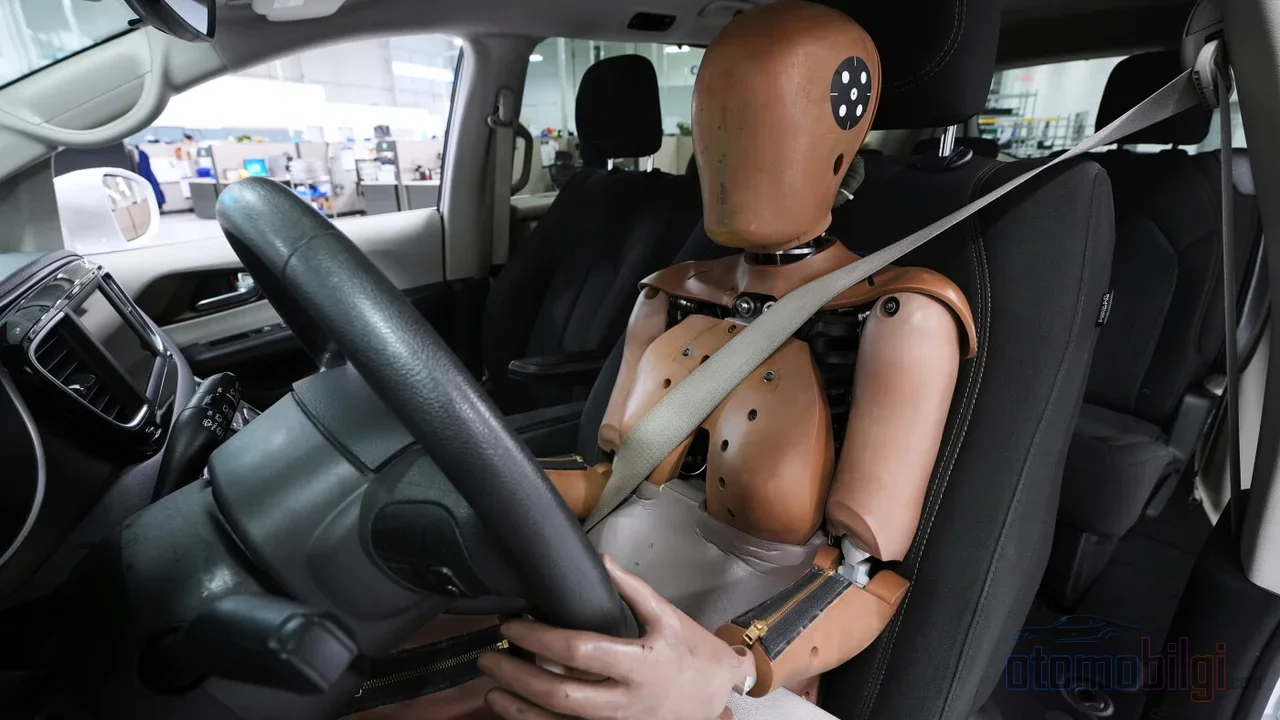
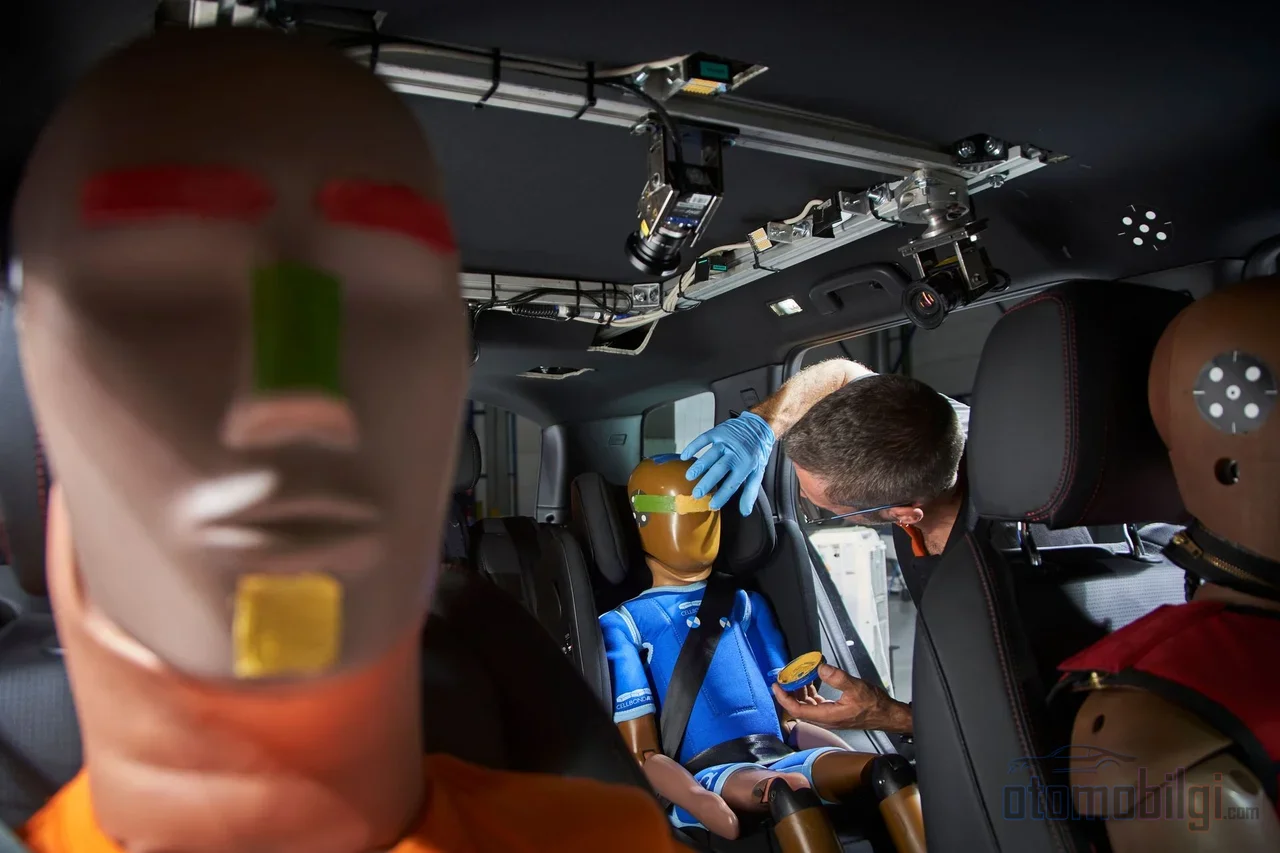
A full assessment can take up to 6 weeks. During this time, the vehicle goes through a lot of scenarios, and each scenario asks a different question.
Frontal tests: MPDB and full width
MPDB, or Mobile Progressive Deformable Barrier, was introduced in 2020 as the world's first crash compatibility rating. The test vehicle's driver side hits an aluminum honeycomb barrier at 50 km/h with 50% overlap. The subtlety here is this: while classic tests ask "how do you protect yourself?", MPDB also asks "how much harm do you cause to the other party?" Data from the official tests in its first three years showed that this test caused greater deformation and intrusion, especially in lighter vehicles - meaning the compatibility problem became visible and designs began to evolve accordingly. In 2026, MPDB offset and full-width tests are still applied at 50 km/h; driver, passenger and child protection are evaluated together.
Side tests: pole, oblique pole and far-side
In the side pole test, the vehicle is launched sideways into a fixed pole at 32 km/h. Think of the tree impact scenario: the contact area is small, all the force is concentrated on a single point, so this test primarily measures side structure strength. In the oblique pole test, a WorldSID 50th percentile male dummy conforming to ISO 15830 specifications sits in the driver position. The MDB test targets a different load distribution with its deformable barrier; in other words, each side test opens a different envelope.
The far-side test, introduced in recent years, is also interesting: in a side impact, it is not the occupant sitting on the same side as the driver but the passenger in the opposite seat who is affected, right? This test evaluates the front seat passenger's excursion and contact injury risk, and it is scaled to a maximum of 4 points within the total adult protection score.
Children, pedestrians and post-crash
Child protection covers frontal and side impacts with dummies representing 6 and 10 year olds; in addition, the installation in the vehicle of all child seats, from infant carriers to boosters, is also tested. On the pedestrian side, the vehicle's front face is scored based on impact forces and decelerations measured in the head, pelvis and leg regions. In the classic scheme, adult and child head impactors carried 24 points, and the leg and upper leg forms carried 6 points each. There is also an overlooked aspect: the post-crash assessment. Rapid intervention via eCall, battery and fuel tank location information for rescue teams, doors opening, even sinking behavior in water are all scored. The star rating asks not only about the moment of impact, but also about what comes after.
How Do Passive and Active Safety Come Together in a Single Star Rating?
Passive safety works after a crash has occurred: systems like seatbelts, airbags, and active headrests reduce injury. Active safety tries to prevent the accident before it happens or reduce its severity; the best-known example is automatic emergency braking (AEB). The beauty on the engineering side is this: combined passive and active functions each produce safety benefits individually - they are not alternatives to one another.
This combination is reflected in the star rating through the Safety Assist box. In 2009, this box carried only 7 points : seatbelt reminder 3, ESC 3, speed limiter device 1 point. Moreover, to earn 5 stars, ESC was required to be standard on at least 85% of sales. Today the picture is completely different: a driver monitoring system (DMS) can contribute up to 25 points as of 2026, and its scope is expanding beyond fatigue and distraction toward behavioral indicators of alcohol or drug use. And from 2023 onward, driver monitoring became a requirement for full points in occupant protection. In other words, the 7-point verbal grade has turned into one of the most expensive courses in the class over the years. The driver engagement protocol is built on three pillars: Driver Engagement, Vehicle Assistance, and Safety Backup - and it contains a balancing principle. The protocol also encourages manufacturers to integrate high-performance active safety technologies such as LiDAR.
Why Do Stars Drop: The Engineering of Tightening Criteria
Here is the number that will surprise you the most: of the 127 vehicles that received 4-5 stars for adult protection between 2005 and 2007, when simulated under the 2012 criteria 0% could achieve 5 stars . The vehicles are the same; the standards changed. Thresholds were gradually tightened from 2009 to 2012, and today the criteria are updated every 3 years. Euro NCAP explicitly emphasizes that scores from different years can only be meaningfully compared if the protocol changes are small - meaning last year's 5 stars are not the result of the same exam as this year's 5 stars.
There is also a validity period: a score is valid for a maximum of 6 years from the date it was awarded. Once the period expires, the score becomes invalid because standards have advanced, even if the vehicle has not changed. Scores are also re-evaluated during facelift operations. Since 2016, there is an interesting practice: a "dual rating" can be awarded based on standard equipment and an optional safety pack. This makes visible the difference between the safety that is marketed and the safety that is delivered; the condition is that the pack must be purely optional and a minimum fitment rate must be sought.
The 2026 Protocol: How Hard Is Five Stars Now?
From 2026 onward, assessment is organized around a "Four Stages of Safety" structure, with each stage expressed as a percentage out of 100 points. Five stars are visibly getting harder too: a physical, non-touch button requirement, a new 35 km/h crash test, and a total of 3,000 km of real-road driving in three countries are on the agenda. Virtual testing is becoming an integral part of active safety assessment; physical proving grounds still retain their criticality.
The list keeps growing: vehicles that cannot detect a wrongly fastened or unfastened seatbelt will lose points. Hazard warning lights become mandatory for 5 stars, and the weight of safe driving protocols will increase every year. The Crash Protection box also includes more detailed assessments in frontal, side, far-side, and vulnerable road user (VRU) collisions.
So is everyone happy?
Honestly, it is not without debate. One view holds that adding and removing non-crash elements from the protocol undermines brands' motivation, while Euro NCAP notes that some brands do not aim to "be the safest." In the 2008 reform as well, an option of equal weighting for the four boxes was discussed against the risk of the 50/20/20/10 weights being seen as "subjective," and the current distribution was chosen for a smooth transition. The fact that MPDB increases deformation in light vehicles is also an ongoing engineering debate on the design side. In short, this system too is a living, debated exam that is redrawn every year.
Test Day: Why Doesn't the Damage in the Video Tell the Score?
While watching crash test videos, everyone asks the same question: they all show similar damage, so where does the score come from? The answer is simple but completely invisible: the score is based on the biomechanical measurements of the dummies, intrusion of the body structure, and compatibility data. It is not the appearance of the damage but the values read by the sensors in the dummy's head, chest, and pelvis that write the grade. If behind a front bumper that looks great from the outside there is a dummy whose chest decelerates excessively, that vehicle loses points.
So what exactly does 5 stars mean? The definition is this: excellent overall performance in crash protection, plus good equipment with comprehensive and robust crash avoidance technology. 4 stars are one level below that. And remember: always check which year's protocol the star in your brochure was awarded under - a score that is 6 years old is no longer valid in today's test.
Sources
- How cars are tested | Euro NCAP
- Protocols | Safety standards, methods & guidelines
- The stars explained | Euro NCAP assessment areas
- The Changing Outlook of Euro NCAP
- Euro NCAP Assessment Protocol – Overall Rating – v9.0.2
- Oblique Pole Side Impact Testing Protocol
- Euro NCAP Far Side Occupant Test & Assessment Protocol v10
- Euro NCAP announces 2026 protocol changes
- Euro NCAP 2026 updates | New car safety categories
- Euro NCAP – Wikipedia
- The Development of a Euro NCAP Far Side Occupant Test
- Ellway – Euro NCAP MPDB Testing
- Watanabe – Frontal car-to-car test and MPDB compatibility
- Page – Combined Passive/Active Safety Benefits
- Fredriksson – European NCAP Developments for Driver State
- SmartEye – Driver Monitoring 2.0 / Euro NCAP 2026
- AVL – Euro NCAP 2026: What's Changing and How to Stay Compliant
- Car side structure crashworthiness in pole and moving deformable barrier side impacts
- How Euro NCAP is changing the standard for vehicle safety