The 60 Milliseconds of a Collision: How Airbags and Seatbelts Work
Share This Page
In the first 60 milliseconds of a collision, the following happens in sequence: sensors detect the deceleration, the control module makes the decision, the seatbelt pretensioner removes the slack, the airbag inflates within 15-50 milliseconds, and the load limiter distributes the force on the chest in a controlled manner. In other words, the protection is not a single miracle, but a flawless choreography measured in milliseconds.
Highlights
- The airbag fully inflates within 15-50 ms after a collision is detected; side airbags are even faster, 10-20 ms.
- Pretensioners reduce the risk of death for belted front-seat passengers by 12.8% .
- The seatbelt + airbag combination reduces the risk of death in frontal collisions by 61% ; with a seatbelt alone, this rate is 50%.
- The airbag is single-use and is designed not to replace the seatbelt, but to work together with it.
- Modern systems use dual-stage inflators that adjust inflation according to collision severity and passenger position.
Sixty-thousandths of a second. Even blinking while reading this sentence takes longer than that. Yet in a frontal collision, this is exactly the amount of time the car has to keep you alive: approximately 60 milliseconds. The belt tightens, the bag inflates, energy is absorbed - all of it squeezed into a time span a quarter of a blink. When I first read about this topic, I thought "the bag pops, and that's it." The reality is far more fascinating: inside there is chemistry, physics, and a computer keeping time in milliseconds. Let's break it down step by step.
Sensors and the Control Module: Who Understands the Collision and How?
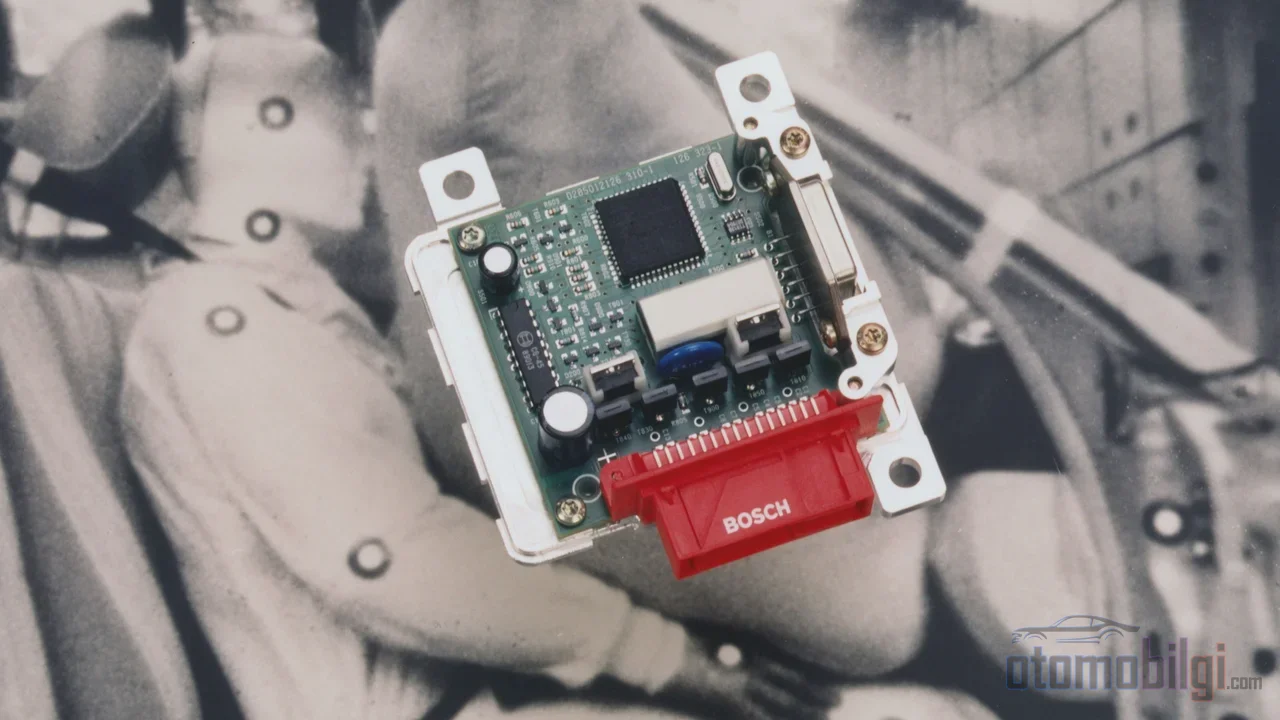
The system starts with sensors placed in the vehicle. They are not distributed randomly: they are placed at strategic points in the front crumple zone, the bumper line, and inside the doors. There are three main types. Accelerometers measure sudden deceleration, impact sensors capture the impact at the front, and pressure sensors monitor sudden pressure changes in the door panels. Since side collisions need to be handled fast, in-door sensors are critical.
But the sensor only collects data; the actual decision is made in the control module. The algorithm here calculates delta-V, that is, the change in velocity, to determine whether the collision has exceeded the triggering threshold. I liked this part, because the car is truly "solving a physics problem": how much did the speed change, how quickly did that change happen, is it a real collision or hitting a curbstone? There are also redundancy checks to prevent false triggering - data is cross-checked so that a fault in one sensor doesn't fire the entire system.
After the algorithm confirms the collision, the chain works as follows: the control module sends an electrical signal to the igniter, the igniter triggers the gas generator, and the generated gas inflates the bag. So the airbag is not a system on its own, but the final link in a triggering chain. And every link in this chain speaks in milliseconds.
How the Airbag Inflates: The Chemistry of Gas Generation
Now let's get to the most fun part, because airbags don't actually inflate with "air." In the pyrotechnic inflator, gas is produced by the controlled combustion of a propellant fuel. The classic example is sodium azide: when ignited, it decomposes into nitrogen gas and sodium metal; the resulting sodium reacts with potassium nitrate and silicon dioxide additives to turn into non-hazardous compounds. Alternatively, guanidine nitrate-based gas generators are also used. So inside your car there's a small chemical reactor that produces gas at exactly the moment you need it - triggered by a signal the size of a coin.
Inflator types fall into three main groups: pyrotechnic, stored-gas, and hybrid inflators. The logic commonly seen in modern vehicles is two-stage inflation: there are two separate ignition chambers in the cushion. This way, the intensity of inflation can be adjusted according to the severity of the collision, the occupant's size, and seating position. In a light collision, one stage deploys; in a severe collision, two stages fire in succession. What's more, today radar and camera data are fed into deployment decisions, making the system even "smarter" - an algorithm that sees the leading information while the crash is still happening can choose the deployment timing more accurately.
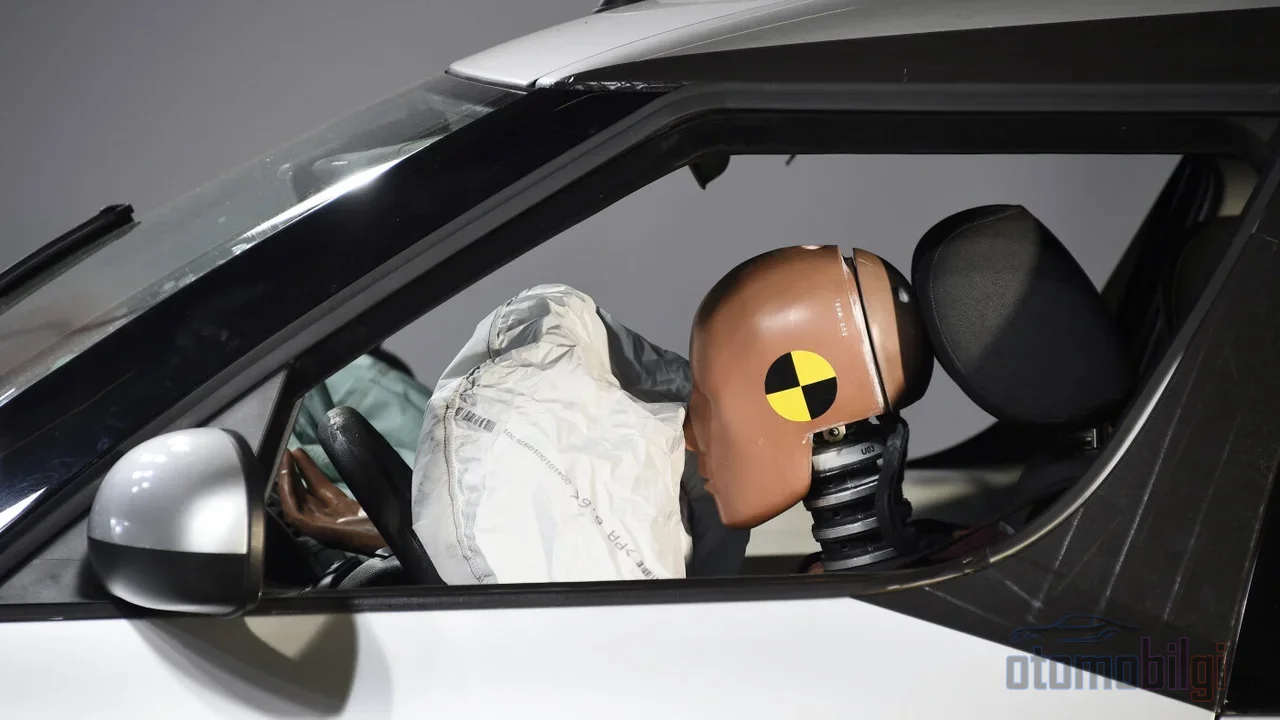
As for timing: front airbags fully inflate within approximately 15-50 milliseconds after a collision is detected; in some cases they can be said to open in 20-30 ms. Side airbags are even faster, 10-20 ms. Why the rush? Because the goal is to insert a soft buffer into the path before the peak impact force reaches the occupant. And the job isn't over: after the airbag inflates, the gas is vented in a measured way. Thanks to this controlled deflation, rather than hitting the airbag and bouncing back, the occupant gradually transfers their momentum through the airbag. This is precisely the detail that prevents rebound injuries.
Why Is the Seatbelt Not Just a Piece of Fabric?
Most people think the belt is a fixed strap. Yet the modern belt system comes with two components that act as actively as the airbag: the pretensioner and the load limiter.
Pretensioner: The part that closes the slack in milliseconds
When you put on the belt, there is always some slack between your body and the belt - folded trousers, a thick jacket, your back not fully touching the seat. This slack is normally harmless, but in a collision, the slack means the distance your body can freely fly before it starts to decelerate. The pretensioner comes into play exactly here: as soon as a collision is detected, it winds the belt webbing onto the spool within milliseconds, taking up the slack in the lap and torso section. The result? The distance your body can travel forward is shortened, the force on the chest is reduced, and the occupant is caught in the optimal position relative to the airbag. In other words, the pretensioner is the part that "catches you and locks you in place" at the start of the collision. Its effect is measurable: belts with pretensioners reduce the risk of death for front-seat occupants by 12.8% compared to those without.
Load limiter: A controlled brake instead of a hard slap
But what happens when the body starts to load forward after the pretensioner has tightened the belt? This is where the load limiter takes the stage: it releases the belt webbing in a controlled manner after a certain force threshold. This may seem contradictory at first glance - "is the belt loosening?" No, it is not loosening. The belt gives just enough slack to keep the force acting on the chest constant above a threshold; this way, instead of the belt itself delivering a hard slap to the ribs, it spreads the energy over a longer time. The pretensioner provides the "connected initial coupling," while the load limiter provides the "controlled slack that softens the final blow." The order is critical: first the slack is taken up, then controlled flow kicks in as the body loads. Real-world data also shows that this duo works: belts with low limiting force (below approximately 4.5 kN) are associated with a significant reduction in the risk of severe (AIS3+) and fatal injuries. One more detail: in frontal collisions, severe injury cases in 76% of involve the shoulder belt - the pretensioner strengthens the work of the shoulder harness by gripping the passenger more tightly with the belt.
The Physics of Passive Safety: Why Do We Spread Energy Over a Longer Time?
Now let us tie all of this to a single principle of physics, because the pretensioner, the airbag, and the deforming seat all solve the same problem: when a car is moving fast, you are moving at the same speed with it, and at the moment of collision that kinetic energy has to go somewhere. Force is directly proportional to acceleration; the only way to reduce acceleration is to spread the change in velocity over a longer period of time. The whole summary of passive safety is in this sentence: lengthen the collision time, reduce the deceleration.
The deformation zones (crumple zones) at the front and rear of the car are the structural form of this: the body crushes in stages, converting collision energy into deformation energy. The energy is spent on the car's exterior, not the passenger. In other words, that frightening "the car was completely crushed" scene is actually proof that the system worked - the body absorbs the energy and does not let it enter the cabin. High passive safety emerges from the combination of maximum energy absorption in the chassis with coordinated restraint systems. The interior is also designed with this logic: rounded corners and seats that deform in a controlled way are the second line of defense. Finally, the passenger enters what we call "ride down": when loading onto the belt and the airbag, they share the deceleration with the vehicle, gradually.
How Do the Belt and Airbag Work Together?
Let us clarify the division of roles between the two systems. The belt keeps the passenger in the correct position; the airbag adds extra protection to the head and chest. The airbag is not designed without the belt - that is why the letters in front of its name matter: SRS, meaning Supplemental Restraint System, "supplementary restraint system." Supplementary. And the airbag is single-use: it is triggered once by a pyrotechnic charge, and then the module is replaced.
Airbags are designed to work with seat belts, not to replace them.
So, does the airbag deploy if the seatbelt is not fastened? Yes, it can. But the protection is seriously inadequate, because the airbag alone cannot position the body - moreover, there is even a risk that the passenger is flying toward the airbag while it is still in the inflation stage. In some modern vehicles, the seatbelt sensor informs the control module and belt status can influence the deployment threshold; still, the basic logic does not change: an airbag without a belt is a half solution. Looking at the numbers, in addition to the lap and shoulder belt, front airbags reduce the risk of death in frontal crashes by 50% to 61%. That extra 11 points comes entirely from the coordination of the two systems.
| Component | Its Function | When It Activates |
|---|---|---|
| Pretensioner | Keeps the belt force on the chest at a threshold | Within milliseconds as soon as a crash is detected |
| Airbag | Provides a soft cushion for the head and chest | Full inflation within 15-50 ms after detection |
| Load limiter | Keeps the belt force acting on the chest at the threshold | When the body begins to load the belt |
| Deformation zone | Absorbs energy through structural crumpling | Throughout the entire duration of the crash |
How Are These Systems Tested?
We can only understand whether all these millisecond calculations work through real simulations. This is exactly why crash test dummies are so advanced: the sensors inside them measure the impact forces on the head, neck, chest, lower spine, abdomen, and hips one by one. Euro NCAP conducts full-scale crash tests to evaluate adult and child protection, and the dummy family represents not only the passengers in the vehicle but also pedestrians and cyclists. On the frontal crash side, there are two main protocols: the offset deformable barrier and the newer MPDB tests - both of which define dummy positioning and pre-test procedures down to the millimeter. NHTSA uses the same logic in its star rating; the star given in the side pole test is based directly on the probability of injury. In addition to these, manufacturers validate inflators and modules individually through static component tests, controlled full-vehicle crashes, and temperature/humidity/vibration durability tests.
Beyond Milliseconds: The System's New Generation and Open Questions
The system keeps expanding every year. Center airbags placed between the seats, inflatable belts, external pedestrian airbags, and airbag vests for motorcyclists are now among the topics being discussed. Additionally, an Event Data Recorder (EDR) integrated into the airbag control module records pre-crash speed, braking, steering, belt status, and airbag timing - it keeps data even if the airbag doesn't deploy, which makes it possible to understand crashes from an engineering perspective.
But there are also unresolved questions. Rear seat protection has fallen behind the front seats: it is clear that better restraint systems are needed for crashes in which belted rear passengers sustain severe injuries. Far-side impacts, meaning side collisions coming from the opposite direction, remain the most challenging scenario for a belt. Another interesting finding concerns crash overlap: high-overlap crashes such as 75% significantly increase driver injury risk, and active (motorized) belt systems can effectively mitigate these injuries. So the architecture of 60 milliseconds is not finished; it becomes a little more refined every year.
Closing: Three Systems, One Purpose
Let's look back: the sensor solved a physics problem, chemistry filled a bag with gas, the belt caught you first and then released you gently, the structure absorbed energy by crumpling. They all served the same sentence: spread your deceleration over a long time. Which do you find more impressive - the airbag's explosion in 30 milliseconds, or the silent and flawless cooperation of this entire system? I still can't decide. But the next time you fasten your belt, I'm sure you'll be thinking of the thousandths of a second.
Sources
- How Airbag Deployment Systems Work: Sensors, Timing, and Data Recording
- Continuously Predicting Crash Severity - NHTSA
- Effectiveness of Pretensioners And Load Limiters - NHTSA 811835
- The effect of seatbelt pre-tensioners and load limiters - Accident Analysis & Prevention
- Pretensioners and Force Limiters
- Seat Belt Pretensioner and Load Limiting Systems - Mazda
- Airbag Inflators & Initiators - Autoliv
- What chemicals make airbags inflate - C&EN
- How Fast Does an Airbag Deploy?
- Apply Physics Principles to Collision System Design
- Passive Safety - ARRK Engineering
- IRCOBI 2022 paper - rear-seat occupants
- Vehicle Air Bags and Injury Prevention - NHTSA
- Airbags - IIHS
- How cars are tested - Euro NCAP
- NHTSA NCAP resources
- Will an Airbag Deploy if the Seatbelt is Not Fastened?
- Dynamic behaviour of multi-stage crash energy absorption
- Rear-seat occupant protection - IIHS