How Does a Car Send an Emergency Call Automatically When It Crashes?
Share This Page
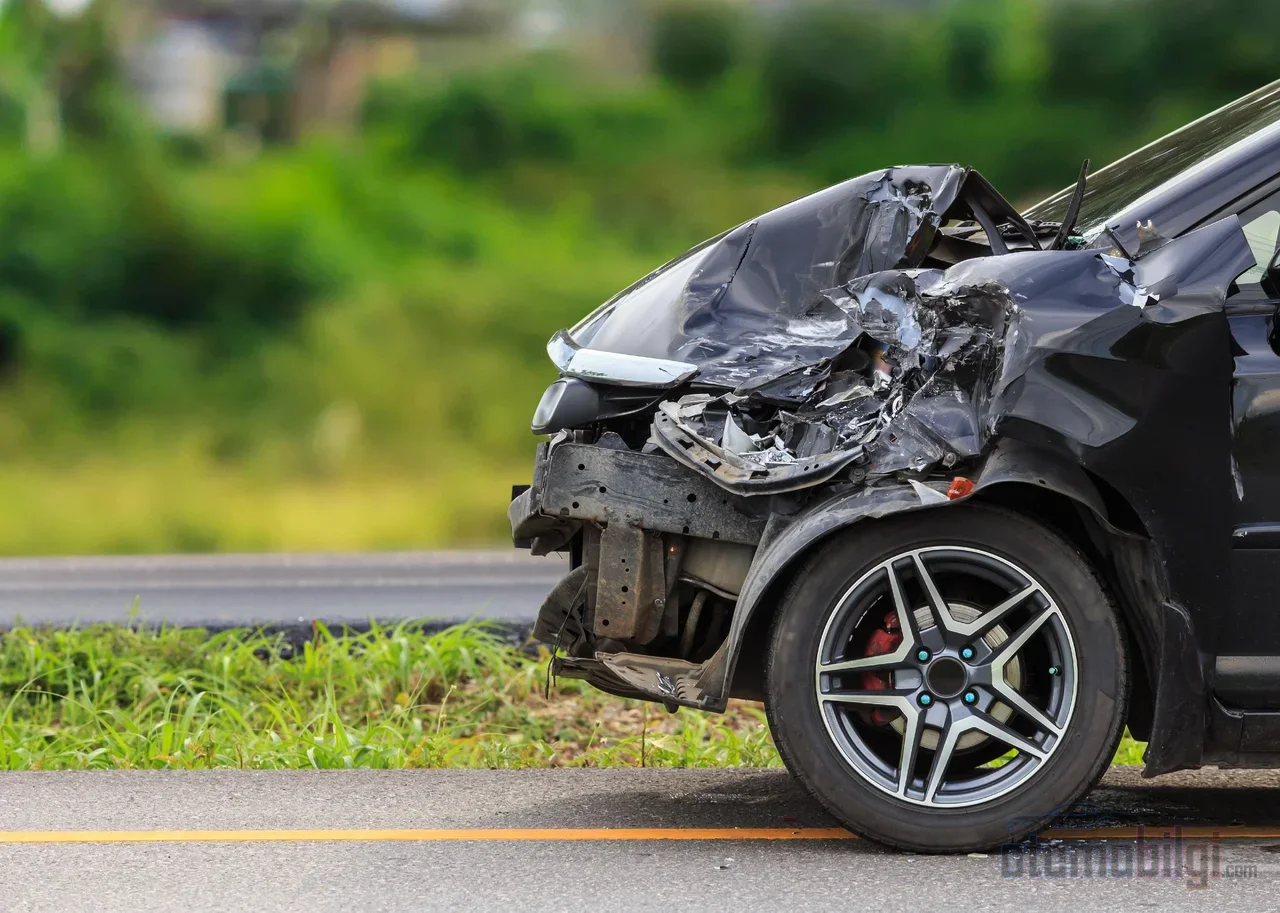
When a crash happens and the control unit reads a sudden deceleration from the acceleration sensors inside the car and interprets it as a serious collision, it automatically establishes a free 112 emergency call on its own and transmits a small data packet containing the vehicle's location, identity and crash information to the emergency call center. Even if you lose consciousness, this chain kicks in.
Highlights
- In the EU, eCall is mandatory in all newly type-approved passenger vehicles after March 31, 2018
- The data packet (MSD) is at most 140 bytes in size
- The system does not transmit any data outside a crash and does not track your location
- The goal is to reduce response times by up to 40% in rural areas and 50% in cities
- The SOS button is the backup for both the automatic system and you
How the Car Detects a Crash: From Sensors to the Control Unit
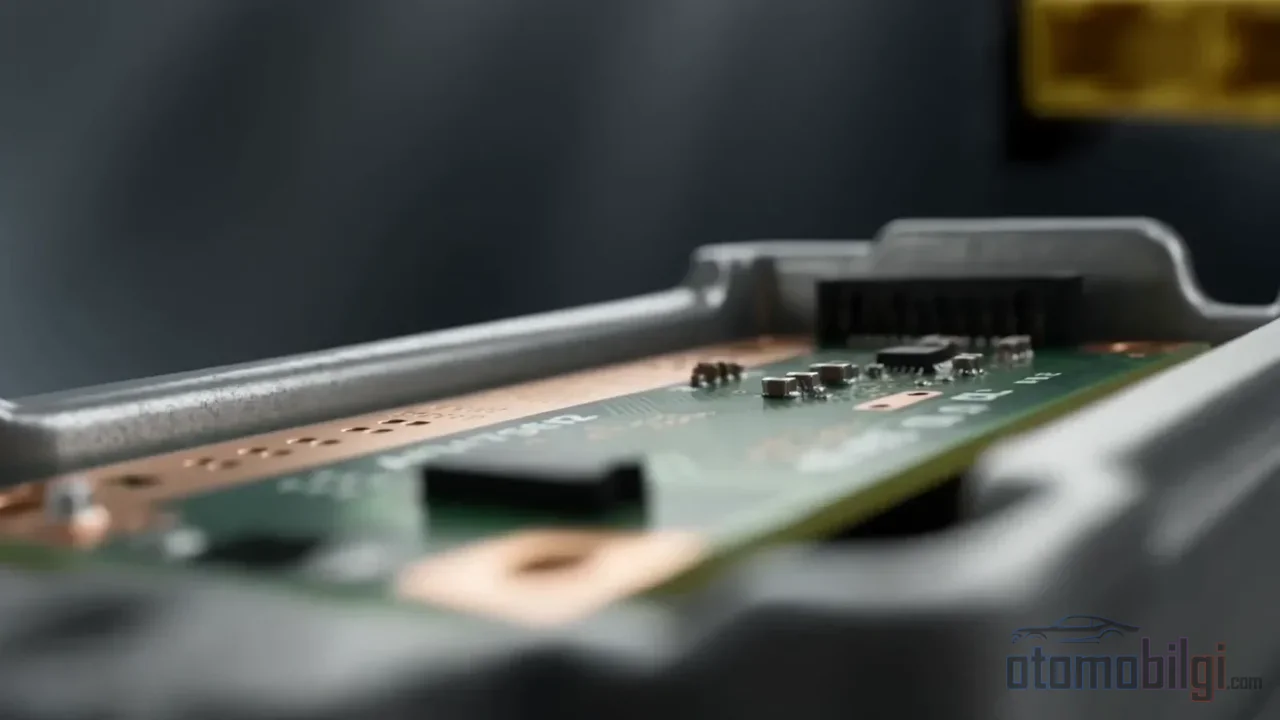
Everything starts with a question: how does the car know it has been in a collision? The answer is hidden in accelerometers placed at strategic points around the vehicle. These are tiny MEMS-based chips; the name sounds fancy but the logic is very simple. Just like your phone's screen rotating when you shake it, these chips constantly measure acceleration changes along the axis they are mounted on. When the car suddenly slows down at the moment of impact, the sensors detect this abrupt drop within milliseconds.
For the airbag to deploy, the sensors typically need to measure a deceleration of at least 3-5 g; that is, a force several times that of gravity. So where does this signal go? Data from multiple accelerometers is sent via an integrated circuit to the main electronic control unit, the ECU. The ECU is the brain here; it reads the raw signals from the sensors and decides, "is this a crash, or did we just hit a curb?"
When you think about it, it is a very clever setup: a single sensor would not be reliable, so data is collected from multiple points. Frontal collision, side collision, rollover... each produces a different acceleration profile, and the control unit has been trained to distinguish these profiles from one another. It is a bit like you recognizing a song's genre from its first two seconds; the ECU likewise classifies the type of event from the first moments of the collision.
How is the activation threshold determined?
This is the most sensitive part of the system. If the threshold is too low, the car keeps sending emergency calls on speed bumps; if it is too high, it reacts too late in a real crash. The algorithm works in two stages: it first identifies the collision mode to determine airbag deployment timing, then continues to continuously estimate the severity of the event. So the decision is not an instantaneous "yes/no"; the system re-evaluates the data throughout the collision.
eCall's trigger events are also tied to this: a sudden drop in speed, airbag deployment, and the firing of the seatbelt pretensioners. All three together indicate a serious collision, and eCall does not wake from its sleep without seeing this sensor data. Also, the system is normally in a "sleeping" state; during normal driving it neither tracks location nor transmits data. This is also the foundation of the privacy topic we will discuss in later sections.
Data Package Transmitted at the Moment of the Accident: What Is Inside the MSD?
When the system activates, the car first establishes a phone connection, then sends a standard data package over the voice channel at the very beginning of the call: Minimum Set of Data, or MSD for short. The word "minimum" in its name is no exaggeration; the entire package is at most 140 bytes. Yet this tiny package contains nearly everything rescue teams need.
- The exact time the accident occurred
- The vehicle's precise GPS location and direction of travel
- Vehicle identification number (VIN) and vehicle type
- Fuel type: gasoline, diesel, electric, or hybrid
- The number of fastened seat belts, which hints at how many people might be in the vehicle
Why is fuel type important? The procedure a rescue team entering an electric vehicle must follow differs from that for a gasoline car; the high-voltage battery must be disconnected. The number of belts matters the same way: if three belts are fastened, the operator knows to search for three people. The MSD package has been standardized by the European Committee for Standardization, and the location is determined by the vehicle's own onboard system. Even if the passengers cannot speak, this package automatically reaches the emergency call center.
Some manufacturers enrich this base even further. For example, Bosch, operating as a third-party service provider, transmits additional information such as accident severity and passenger count on top of the MSD. Devices offering advanced automatic collision notification (AACN) share similar minimum data: location, fuel type, whether the airbag deployed.
Who Provides This Communication: The Telematics Control Unit
The physical hero of all this work is the TCU, or Telematics Control Unit. Imagine a small box inside the vehicle: it contains a modem, a GPS receiver, and electronics connected to the vehicle network. The TCU acts as a data gateway between the vehicle and the outside world; in some vehicles, even over-the-air (OTA) software updates pass through this unit.
The TCU communicates with other ECUs via the in-vehicle data bus called the CAN bus; it pulls information such as engine performance and vehicle speed from there. Its built-in modem provides two-way communication; meaning the car does not just send data - the operator can also establish a voice connection with the vehicle. When an accident occurs, eCall establishes both a phone and a data connection and connects to the nearest emergency response center. The operator can speak with the occupants through a microphone and speaker; if no one answers, the vehicle automatically transmits the information to the police. In other words, the vehicle can speak on your behalf.
What Happens If the Call Center Cannot Be Reached? Backup Mechanisms
No system is flawless; what happens if there is no network coverage or the call center is busy? This is where layered backup mechanisms come into play. European 112 call centers carry out callback procedures via an automatic mechanism called CSFB (Circuit Switched FallBack). One study indicates that approximately 20 seconds after the first call, the 112 system initiates a voice callback to the vehicle's MSD resource. So the vehicle calls you, and if it can't connect, the center calls your vehicle back. Much like your friend calling you back when your phone doesn't ring, just far more vital.
Another nice detail: 112 eCall can connect through any mobile network. Even if you're outside your own operator's coverage area, the system works as long as there's signal there, connecting to the nearest emergency center across the entire EU; the country where the vehicle was purchased or registered doesn't matter at all.
Manual SOS button and system malfunction
Automatic triggering isn't the only way. You can also trigger eCall manually with the SOS button, located on the roof console next to the interior rearview mirror behind a pop-out cover, or on the center console. If vehicle sensors haven't kicked in during an accident you witness, this button can save lives. Caution: the button is not for testing, only for real emergencies; if you press it accidentally, this alarm is filtered at the call center but you still need to speak with the operator. The good news is that false alarms are already rare, since the system requires significant impact forces.
The system's health is also continuously monitored: every time the vehicle is started, eCall runs a self-test, and if there's a malfunction, a warning lamp or message appears on the instrument panel. If the call fails completely, you need to pick up your phone and dial 112 yourself; the technology is great, but your backup plan should always be your own mobile phone.
112 eCall or Private Systems? Differences and the 2026 Rules
Things get a bit interesting here, because there are two different models on the market. The EU-mandated 112-based eCall connects directly to public rescue centers and is free of charge. In contrast, some manufacturers use the third-party service provider (TPSP) model: the alarm first goes to the provider's own call center, staff verify the incident, filter out false alarms, and only forward real emergencies to rescue teams; they also stay on the phone until emergency services arrive. These systems may be paid; while automatic collision notification is offered free of charge in some vehicles, in others it can cost more than 20 dollars per month. TPSP systems cannot exchange data with 112 eCall, and if the TPSP is not working, automatic switchover to 112 eCall is mandatory.
Quality tracking is also evolving. From 2026 onwards, Euro NCAP is structuring its assessments around four Safety Stages, with each stage expressed as a percentage out of 100 points. Under the new protocols, post-crash systems must work after full-scale collisions as well, and eCall data must be consistent with sensor measurements within a ±10% tolerance. Vehicles must also provide standardized rescue information sheets (Rescue Sheet) and carry upgraded eCall systems that transmit critical crash data to emergency services. There is also an interesting comparison: The similar system in Australia cannot yet automatically send data such as GPS location, airbag status, and incident severity to emergency call centers; ANCAP is also advocating the introduction of this advanced functionality. So the arrangement in Europe serves as a reference point here.
This also shows why this whole endeavor is valuable: It is estimated that shortening emergency response times could save 2,500 lives per year in Europe. The target is a reduction in response time of up to 40% in rural areas and up to 50% in urban areas. When you consider the importance of minutes, even seconds, these figures are huge.
Conclusion: A Silent Co-Pilot
Let me summarize: the sensors measure the impact, the ECU interprets it, the TCU establishes the connection, the MSD package tells the center who and where you are, and the voice line connects you with an operator. If things go wrong, you have the callback, the manual button, and your own phone. The system is not watching you; it only speaks up at the moment you need it most, on your worst day. In my opinion, calling it the car's silent co-pilot is the most fitting description. Do you have a vehicle with eCall too, and have you ever wondered where the button is located?
Sources
- eCall 112-based emergency assistance from your vehicle - Your Europe
- eCall SOS - National Highways
- Bosch eCall - a service that saves lives
- Airbag and Crash Detection - NXP
- What Triggers the Airbag? Sensors Explained
- Continuously Predicting Crash Severity - NHTSA
- eCall - SOS system in cars - u-blox
- Telematic control unit technical article - Texas Instruments
- eCall - European Commission Road Safety
- eCall - Inside GNSS
- eCall minimum set of data transmission - VTT field test
- The Effects of Circuit Switched FallBack on Emergency Calls - EENA
- Euro NCAP announces 2026 protocol changes
- Euro NCAP 2026: What's Changing - AVL
- Cars That Come With Free Automatic Crash Notification - Consumer Reports
- What Is eCall and How Does It Work in Cars? - Car Owl