How Do Side Curtain Airbags Protect Your Head Along the Window?
Share This Page
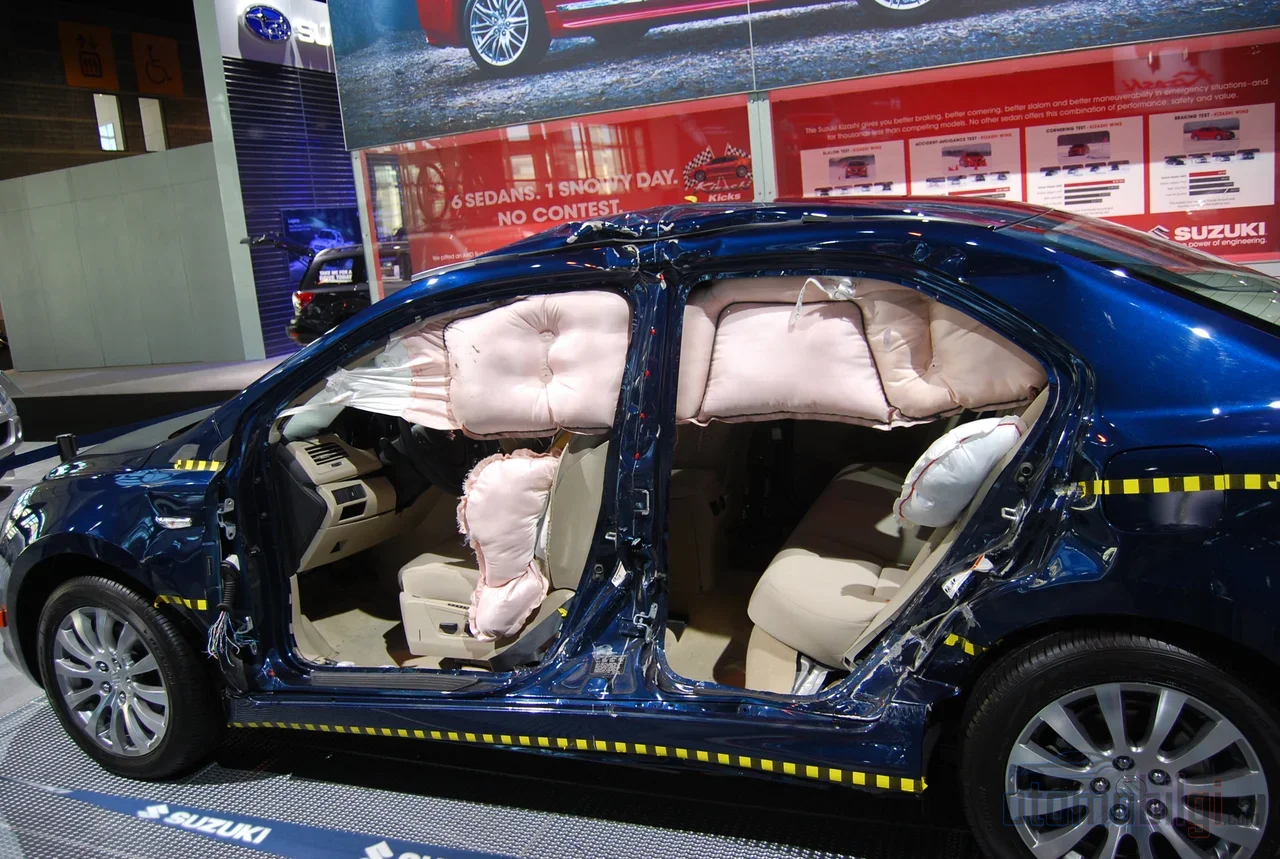
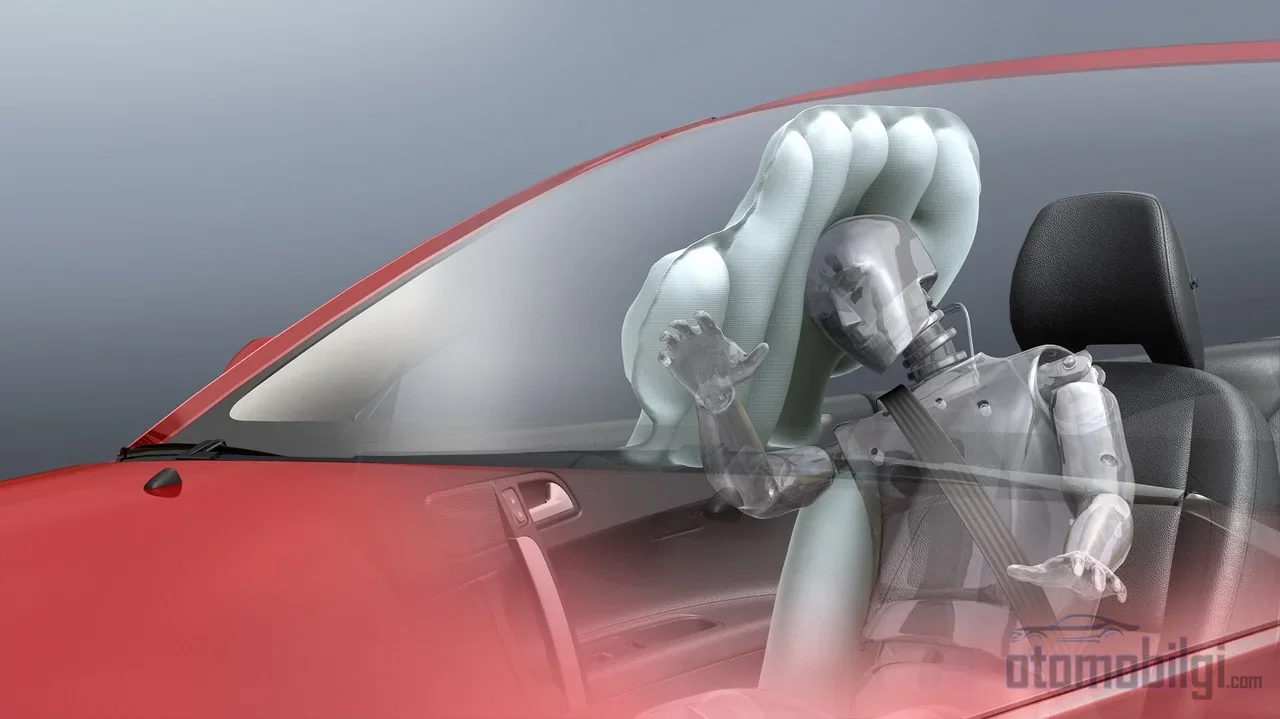
The side curtain airbag is a long fabric curtain that runs along the roof rail and prevents the head from being flung outward past the window edge in a side impact. Since glass can shatter, this curtain is often the only thing between your head and the striking vehicle or a utility pole; it does a different job than the side torso airbag inside the door and works on entirely different logic. Here are the details of that logic, presented as a topic I stumbled upon myself.
Highlights
- The curtain airbag deploys within the first 10-20 milliseconds of a side impact; a blink of an eye is 5-7 times slower than that.
- Head-protecting side airbags reduce the risk of death in side collisions by 37% for car drivers and 52% for SUV drivers.
- Curtains triggered by rollover can stay inflated much longer than normal - 10 seconds and beyond.
- In a rollover scenario, the curtain plus seatbelt combination reduces the likelihood of passenger ejection by 99%.
- The deployment threshold is around 13 km/h for narrow object impacts like trees or poles, and around 29 km/h for vehicle-to-vehicle side collisions.
How does the side curtain airbag deploy?
In a frontal collision, everything follows a set order: the nose crumples, the deformation zone does its job, the sensors manage the process. In a side impact, there is no such luxury. The distance between the passenger and the striking vehicle is sometimes just a hand's width; here the crumple zone is practically just the door. That is why the curtain airbag's deployment logic has to act radically faster and more selective than a front airbag.
Side impact sensors embedded in the vehicle body measure the intensity, speed and angle of the blow and send it to the control unit. The control unit evaluates this data within milliseconds and fires the curtain if the threshold is exceeded. There is also a second trigger: the rollover sensor. This sensor monitors the vehicle's lateral movement and tilt angle; even if a real rollover has not yet begun, it can inflate the curtain when lateral displacement and tilt exceed the detection threshold. In other words, the curtain airbag can know to fire even without a rollover when the possibility of one appears - a behavior not found in front airbags.
Thresholds vary by impact type
The control unit's most delicate task is deciding which impact deserves the curtain. Hitting a narrow object like a tree or utility pole from the side is more deadly than a broad vehicle-to-vehicle collision, because it concentrates the force on a single point; yet paradoxically, it transmits less force to the sensors. That is why the deployment threshold for narrow object impacts is kept low, around 13 km/h (8 mph); in distributed vehicle-to-vehicle side collisions, this value is around 29 km/h (18 mph). For comparison: front airbags inflate at around 26 km/h with the seatbelt fastened, and around 16-19 km/h without one. The side of the car has to decide earlier.
The practical conclusion from this: after an accident, it is perfectly normal to ask "why didn't the airbag deploy?" Impacts below a certain angle, low speeds, collisions passing over the vehicle, or blows focusing on a single point and not transmitting full force to the sensors may not cause the curtain to inflate. This is not a malfunction, but the natural result of threshold logic. In some accidents, the front seatbelt pretensioner fires before the airbag inflates; what is decisive is always the control unit's threshold evaluation.
Inflation racing against milliseconds: how does speed calibration work?
The most impressive feature of the curtain airbag is its speed. In a side impact, it takes tens of milliseconds for the head to reach the glass, so the curtain must be fully in position between the passenger and the vehicle's side before that happens. A typical side airbag inflates within the first 10-20 milliseconds of the collision. For curtain airbags, laboratory measurements have shown inflation times of around 20 ms, with deployment speeds reaching up to 7.77 meters per second. Autoliv, a curtain manufacturer, says its curtain is in position in less than 30 ms; a single blink of your eye takes 5-7 times longer than that. Seriously, try it once and think about it: within that brief moment, a fabric curtain completely covers the glass opening extending from the door to the ceiling.
Although the inflation time is thought of as a fixed factory setting, it is actually designed according to the impact characteristics. In a high-speed collision with a narrow pole, the head moves forward faster, so the curtain must inflate earlier and harder; in a distributed vehicle-to-vehicle contact, the journey takes a few milliseconds longer. The curtain's gas generator, fabric stiffness, and the size of the air vent holes are calibrated to cover all of these scenarios. In other words, inside that thin fabric strip lies a decision system written with collision physics.
The hidden engineering behind the B and C pillars
Have you ever wondered where the curtain airbag is hidden? A long fabric bag waits folded behind the headliner and pillar trim, along the roof rail above the doors. Since it is located above the front and rear doors on both roof rails, it protects the heads of passengers in both the front and rear seats at once. When triggered, it opens downward and its fabric body expands like a curtain without glass, covering the glass opening.
The finest detail of the job is at the B pillar. The curtain descends downward in front of the B pillar; not from behind the pillar. The reason is simple: the wiring harness runs through the inside of the B pillar, and if the curtain gets mixed up with that harness, its deployment is compromised. Engineers have developed special solutions for this; such as patented "pillar ramp" structures that keep the airbag's deployment channel away from the wiring. Next time you touch your car's B pillar, know that inside it hides a system that appears passive but whose every millisecond is planned.
Why does the curtain stay inflated for 10 seconds in a rollover scenario?
In a normal side impact, the curtain deflates within seconds; its job is done. In a rollover, the situation is completely different. If the vehicle rolls over, it is not enough for the curtain to cover only the initial moment of contact, because a rollover lasts for seconds and the vehicle may flip over several times. That is why rollover-triggered curtain airbags inflate within the first 10-20 ms of the crash, but can then remain inflated for 10 seconds or longer. They inflate more firmly than usual even in multi-rotation rollovers, in order to keep the window opening closed and prevent belted occupants from being ejected through the window.
How well does this capability work? In federal standard tests that evaluate rollover-triggered curtain airbags together with seat belts, a 99% reduction in the probability of occupant ejection during rollover events was calculated. Reading that figure through that thin fabric behind the roof pillar is, in my view, one of the most striking achievements of automotive engineering. One more interesting detail: this rollover behavior is not specifically mandated in the US, but cars have already met the requirement to prevent occupant ejection through side windows with these curtains since 2018. In other words, regulation opened the door a crack, and engineering filled it in.
To be honest, the rollover side has its limits too. Spin and full-scale rollover tests have shown that rollover-triggered curtains cannot fully prevent the upward-outward movement of a belted occupant; in addition, the rollover sensor can fire unnecessarily even during slight tilts. Since the airbags are designed for a single inflation, they cannot provide the same curtain protection for a second impact in a multi-stage crash.
How effective is the curtain airbag - and is it enough on its own?
Let the numbers speak. Head-protecting side airbags reduce the risk of death in side-impact crashes by 37% for car drivers and 52% for SUV drivers. Curtain and torso airbag combinations reduce the risk of death in near-side impacts by 31%, and single-piece head/torso combination airbags by 25%. In the US alone, side airbags are estimated to have saved 2,252 lives by 2012. Since 2003, all vehicles earning the best rating in side-impact crash tests have been equipped with head-protecting side airbags; and since 2008, curtain airbags have been a prerequisite in Australian test programs. On the European side, the pole test is performed at a speed of 32 km/h, and the inflated energy-absorbing areas of vehicles with curtain airbags are also evaluated.
But the critical sentence of the matter is this: The curtain airbag alone is not enough; the cabin structure must maintain its integrity in a crash. The airbag places a cushion between the head and the outside world; but if the wall behind that cushion is crushed and pushes inward, no fabric will do any good. Moreover, pole test data has not shown seat-mounted chest/head airbags to be as effective as the curtain. The curtain is the most proven format of side protection.
| Airbag type | Trigger scenario | Inflation duration |
|---|---|---|
| Front airbag | Frontal collision | Short, not triggered by rollover |
| Standard side curtain airbag | Side collision | Deflates within seconds |
| Rollover-sensored curtain airbag (RSCA) | Side collision and rollover | 10 seconds and above |
| External side airbag (precrash, not in series production) | An approaching side impact, under the door | Deploys before the collision |
Looking ahead: In 2020, new side tests for far-side collisions were added; far-side airbags reduce the risk of head flailing and rib fractures. A supplier's external side airbag with precrash sensors also aims to counter an approaching side impact by deploying a mattress-sized cushion under the doors; it is not yet in series production, but the concept means extending the curtain logic to the outside of the vehicle.
Do you wear your seat belt? The curtain works for you
The main task of the curtain airbag in a rollover scenario is to prevent occupants, especially those wearing seat belts, from being ejected. In other words, the seat belt and the curtain are a team; one secures you to the seat, the other closes the window opening. It is also reassuring data that children under 15 show no increased risk of injury from side airbag inflation; side airbags are already smaller and inflate with less energy than front airbags.
The practical lesson you should take from this is simple: wear your seat belt, do not secure hard objects to the headliner or pillar trims, and align the headrest of the seat by the window correctly. You cannot manage the milliseconds at the moment of a crash, but engineers have been doing exactly that for 30 years - and the statistics say it works. Do you think this changes your next glance at your car's B-pillar? I certainly think it does.
Sources
- Airbags - IIHS
- Side Curtain Airbag - Autoliv
- Experimental Testbed for Nondestructive Analysis of Curtain Airbags - MDPI
- Evaluation of FMVSS No. 226 - NHTSA
- Why didn't my airbag go off in a collision? - Kia Owner's Manual
- Airbag Operation Conditions - Hyundai Owner's Manual
- Euro NCAP Assessment Protocol - AOP - v9.1.3
- Side Pole Impact Test - Latin NCAP
- Pillar ramp structure patent - US20070132217A1
- Curtain airbag with deflation mechanism - US20060202456A1
- Occupant Protection in Far-Side Impacts - IRCOBI
- Vehicle Air Bags and Injury Prevention - NHTSA