How Do ISOFIX Anchors Connect a Child Seat to the Body?
Share This Page
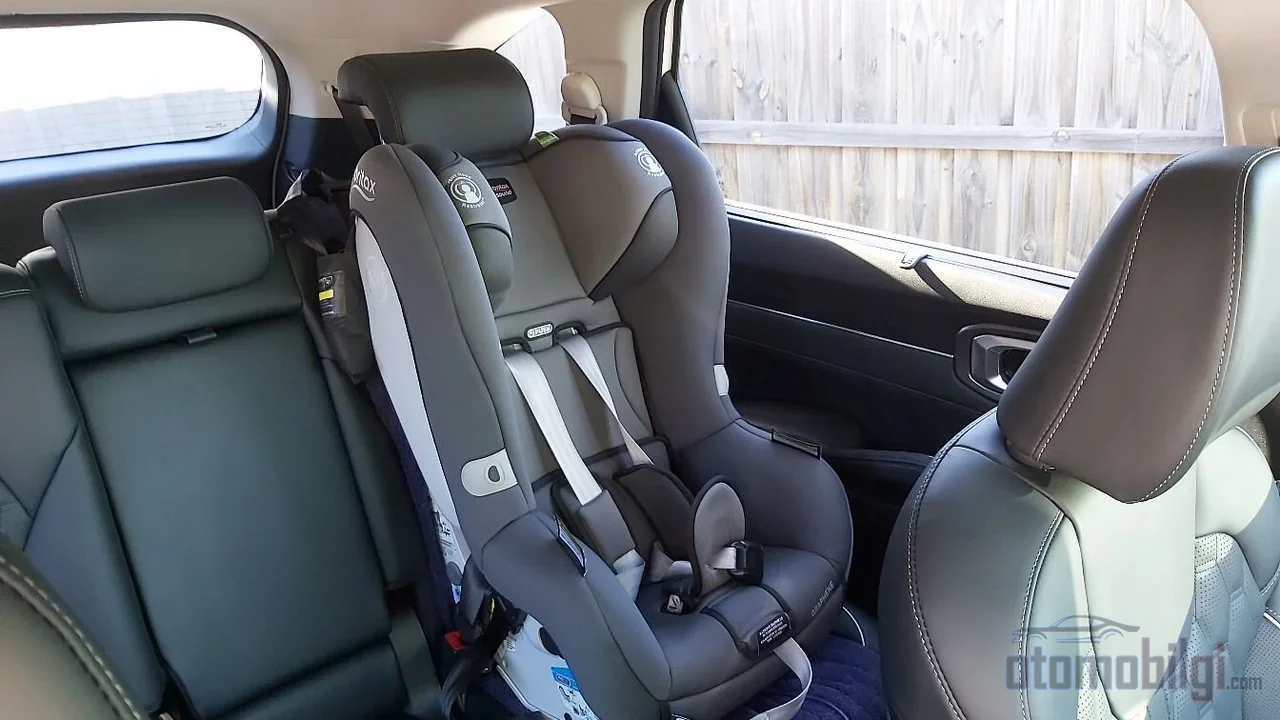
An ISOFIX anchor consists of two steel anchorage points that attach the child seat directly to the vehicle's body instead of the seat belt. The seat locks onto these two points at the junction between the seat cushion and backrest of the rear seat; in forward-facing seats, a top tether connection also comes into play. The result: instead of that small slack the belt leaves, a rigid connection with almost no movement in a collision.
Highlights
- Center-to-center distance between the lower anchors 280 mm; based on the ISO 13216 standard
- The top tether typically reduces the forward movement of a child's head in a collision by 10-15 cm ISOFIX lower anchors and top tether connections are mandatory on all new vehicles produced from February 2013 onwards
- According to studies, approximately
- 88% of forward-facing seats, and the misuse rate for LATCH seats is around 90% were measured A correctly installed child seat reduces the risk of fatal injury in infants by approximately
- 71% Now, here's a question for you: what are you actually attaching a child seat to when you secure it to the car? Most people say 'the seat belt.' But the engineers' answer is much cooler: you attach the seat directly to the vehicle's skeleton, in other words, its body. That's where all the magic of ISOFIX lies. Come on, let's examine this system through an engineer's eyes, without blowing your mind. What exactly is ISOFIX and where is it hidden?
ISOFIX is an international standard for connection points for child safety seats. Its technical name is ISO 13216; the same idea is known by different names such as LATCH in the USA, and LUAS or Canfix in Canada. The first standard defining the lower anchorage points was published in 1999, and the second part defining the top tether anchorages was published in December 2004. So this system is not as new as you might think.
So where are these points in the vehicle? Sit in the rear seat and feel that crease where the seat cushion meets the backrest; right there, behind the fabric or leather covers
two steel bars
are embedded. Two connectors on the base of the seat lock onto these bars. In the European version, these connectors close with 'crocodile-like' clips; a slightly different design from the common open-clip type used in the USA. The center-to-center distance between the anchors is a standard 280 mm , meaning the seat always fits in the same places no matter which car it is. The point where the top tether connects is a metal ring or bar behind the rear seat backrest. In sedans, it is usually hidden beneath the rear parcel shelf; in SUVs, wagons, and minivans, the location varies by model. The most interesting part: in the USA, for model year 2003 and later, lower anchors are required in at least 2 positions and tether anchors in at least 3 positions. That's why the middle seat often has a tether but no lower anchor - knowing this might come in handy when buying a car. Body instead of belt: what difference does it make?
The point where the top tether attaches is a metal ring or bar behind the rear seat backrest. In sedans it is usually hidden under the rear parcel shelf; in SUVs, wagons, and minivans the location varies by model. What's most interesting: in the US, from the 2003 model year onward, at least 2 positions must have lower anchors and at least 3 positions must have tether anchors. That's why the middle seat often has a tether but no lower anchors - knowing this may come in handy when buying a car.
Body instead of belt: what difference does it make?
Let me make a simple analogy. A seat attached by the seatbelt can be thought of as a load attached to a bungee cord; the belt stretches a little, loosens a little, and the seat first moves freely by the amount of that slack in a collision. ISOFIX, on the other hand, is a system that locks the seat directly to the vehicle's steel frame. Whatever the vehicle does, the seat does the same; the slack in between is completely eliminated.
Its technical name is rigid connection. In some seats this point is taken to the extreme: in what we call 'rigid LATCH' designs, the seat's steel frame connects directly to the vehicle's steel frame, and in a side impact the sideways movement, or in a frontal impact the forward-and-backward movement, is almost reduced to zero. Manufacturers say this openly: the metal frame both reduces incorrect installation and prevents the swaying of the belt method.
Don't forget: the system is designed for a total of seat and child with a maximum of 33 kg carrying capacity. With larger children, the connection method changes, so it's essential to pay attention to the seat's kilogram limit.
Why is the top tether so critical? The physics of head excursion
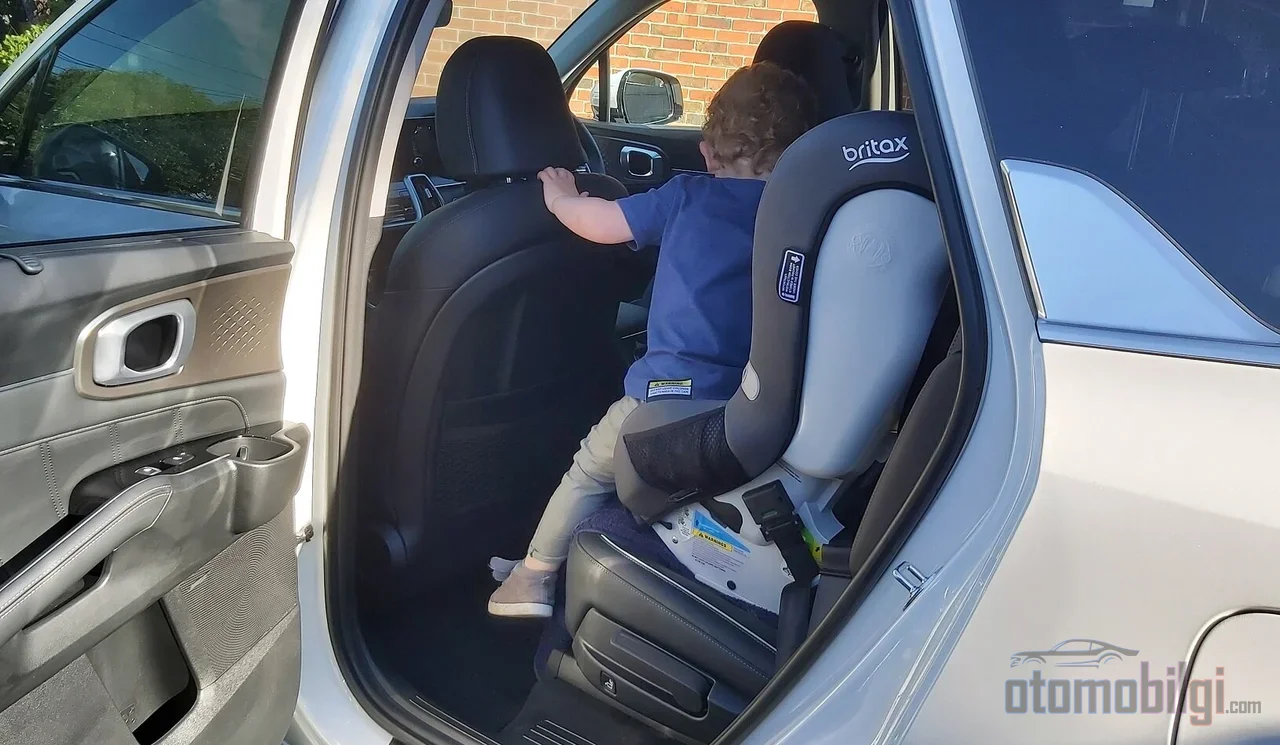
In a frontal impact, the vehicle suddenly stops, but everything inside it does not want to stop. A child secured in a forward-facing child seat is also subject to this rule; even if the seat is attached to the lower anchors, the upper part begins to rotate forward and the head starts to be thrown forward. This is exactly where the top tether comes into play: by anchoring the top of the seat to the vehicle, it prevents this tipping motion.
The numbers are impressive. Tether use typically reduces the forward movement of a child's head in a collision by at least 10-15 cm or more. You might think 'so what about 10 centimeters?' but those 10-15 centimeters mean whether the head hits the door frame, the window, the front seatback, or the passenger in front. The tether also reduces the acceleration in a collision and the force applied to the spine; in other words, it directly lowers the load on the neck. Scientific studies with sled tests also confirm this: seats with tethers have consistently shown lower head excursion and neck loads in crash test dummies.
The bad news is this: the tether is the most overlooked part of the system. According to one study, 64% of parents never use the top tether. Moreover, the tether is never used alone; it is always in addition to the lower anchors or the vehicle belt. The cost of skipping this 30-second extra step is the head traveling that many extra centimeters in a collision. In my view, this is the cheapest insurance in the safety world.
Why does belt installation remain inconsistent?
Installing with a seatbelt is actually not a bad idea. The problem is this: it's hard to do correctly. The belt must pass through the special belt path of the child seat, then be tightened, and the seat should barely move at all. With a loosely installed seat, however, at the moment of impact the seat first moves freely; the belt only engages once that slack is used up. In other words, there's an archaic 'slack phase,' and in a collision every millimeter matters.
The incorrect installation rates are also alarming. A study conducted in Australia before ISOFIX was legalized found that 88% of forward-facing child seats were incorrectly installed found; two-thirds of baby and booster seats were also installed incorrectly. The most common mistakes: twisted seat belts, poorly positioned straps, missing or wrongly fastened buckles, and using a seat that is entirely the wrong size. The lower anchors added to the LATCH system were actually invented to reduce this rate; but honestly speaking, it missed the target - the misuse rate still hovers around 90%. That's because the problem isn't just the connection type; strap tension, angle, tether, and other additional details are still open to human error.
The difference between seat belt versus seat mounting is clear: a correctly installed seat reduces the risk of fatal injury in babies under 1 year old by about 71% ; in the toddler age group, that rate is 54%. Compared to the adult seat belt alone, it reduces the risk of death by only 36% in the 1-4 age group. That's why child seats are not up for negotiation.
Let's compare them side by side
| Feature | ISOFIX Connection | Seat Belt Connection |
|---|---|---|
| Attachment point | Directly to the vehicle body (rigid) | Via the vehicle seat belt |
| Crash behavior | Transfers forces rigidly, prevents swaying | Allows controlled movement, carries a risk of loosening |
| Installation speed | Fast, locks with clips | Requires belt routing and tension adjustment |
| Risk of incorrect installation | Lower; most seats have a color indicator | Higher; misuse rates of up to 88% have been measured |
| Additional component | Top tether required in forward-facing seats | Buckle and belt path must be correct |
The accuracy check is also simple: when you pull the belt or strap along the belt path, the seat should not move sideways or front-to-back by more than 1 inch . ISOFIX connectors usually have an indicator window that turns green at the correct tension; if it's green, you can rest easy.
What did i-Size change? Direction and locking rules
Introduced in 2013, i-Size - that is, the UNECE R129 regulation - rewrote child seat rules in Europe from scratch. Its best-known rule is this: children up to 15 months (approximately up to 83 cm in height) must travel in a rear-facing seat - and the rear-facing position can be applied at any age, so the longer they stay rear-facing, the better.
The second major change is on the installation side. i-Size approved seats are always installed either directly via ISOFIX or via a combination of seat belt plus top tether. The seat's ISOFIX connectors, whether built-in or on a separate base, lock onto the vehicle's integrated anchor points to establish a solid connection. This regulation covers 'Integral Universal ISOFIX' and 'vehicle-specific ISOFIX' systems; meaning the seat and vehicle recognizing each other is now guaranteed at the regulation level.
The old system (the R44 framework) was a bit more complicated: in the 'universal' category a top tether was mandatory, in the 'vehicle-specific' category it was tether-free and only suitable for certain vehicles, and in the 'semi-universal' category a support-leg installation was involved. In later years, i-Size seats that could be installed with a seat belt also came onto the market; so the new regulation didn't eliminate options - it raised the minimum safety bar.
How does Euro NCAP score this connection system?
When looking at a vehicle's safety rating, most of us focus on adult protection, but since 2003 all rated vehicles have also had a separate Child Occupant Protection assessment. This assessment covers frontal impact protection, side impact protection, and child seat compatibility.
My favorite part is this: test organizations verify not just crash performance but practical safety as well. How easily and safely a wide range of seats, from rear-facing infant carriers to forward-facing seats, can be installed in the vehicle is examined separately. In other words, the location, accessibility, and labeling of the ISOFIX points also affect the vehicle's rating. If you're someone who looks at safety ratings when choosing a car, this detail will come in handy.
So which one is really safer: ISOFIX or the seat belt?
Let me give you an honest answer, because this is also debated among experts. When crash test data, real-world data, and usage habits are evaluated together, the picture becomes clear: ISOFIX is a safer choice in everyday use because it structurally reduces the risk of incorrect installation. The rigid connection, quick installation, and color indicators minimize human error at the system level.
But saying "a correctly installed belt is unsafe" would also be wrong. A significant portion of experts agree that a rule-compliant and tightly installed belt is just as safe as ISOFIX. Indeed, there is a contrary research finding as well: in rear impacts, the LATCH connection may not offer protection against head injuries equivalent to what a lap/shoulder belt provides in infant seats. So there is no one-sentence answer to "which one wins in every situation"; the bottom line is this - whichever method you choose, applying it correctly matters above all else.
One final footnote: In Australia, using a top tether with ISOFIX seats is a legal requirement, and some experts advocate also routing the three-point belt through the seat as a third layer of redundancy. However, manufacturers generally do not want the lower anchor and belt to be used together; the seat's user manual always has the final say. Redundancy is a nice idea, but it does not replace the instructions in the manual.
Locked and ready for the journey
The story of ISOFIX actually summarizes the general lesson of safety engineering: removing the human from an error-prone step means making the system itself more fault-tolerant. Two steel bars, a top tether strap and a standard 280 mm spacing; a simple design that speaks directly to the physics of a collision. The next time you open those little covers on your car's rear seat and see the metal rings inside, you will know what they are. So, how many tether anchors does your car have? Don't forget to check.
Sources
- Isofix - Wikipedia
- An Introduction to LATCH - The Car Seat Lady
- ISOFIX - Autolexicon
- Regulation 129 (UNECE R129)
- Use of top tethers with forward-facing child restraints - ScienceDirect
- New Research on Car Seat Tethers Released - Safe Kids Worldwide
- Child Restraint - Injury Facts - National Safety Council
- Child safety - IIHS
- Effects of LATCH versus Available Seatbelt Installation - PubMed
- Euro NCAP FAQs
- ISOFIX Insights - Hyundai Motor Group
- Your Basic Child Seat Installation Guide - BestFamilyCars
- Car Seat Basics: Checking for Belt Path Movement - CSFTL
- i-Size law regulation and child car seats - The AA