Why Doesn't the Airbag Deploy in Every Accident?
Share This Page
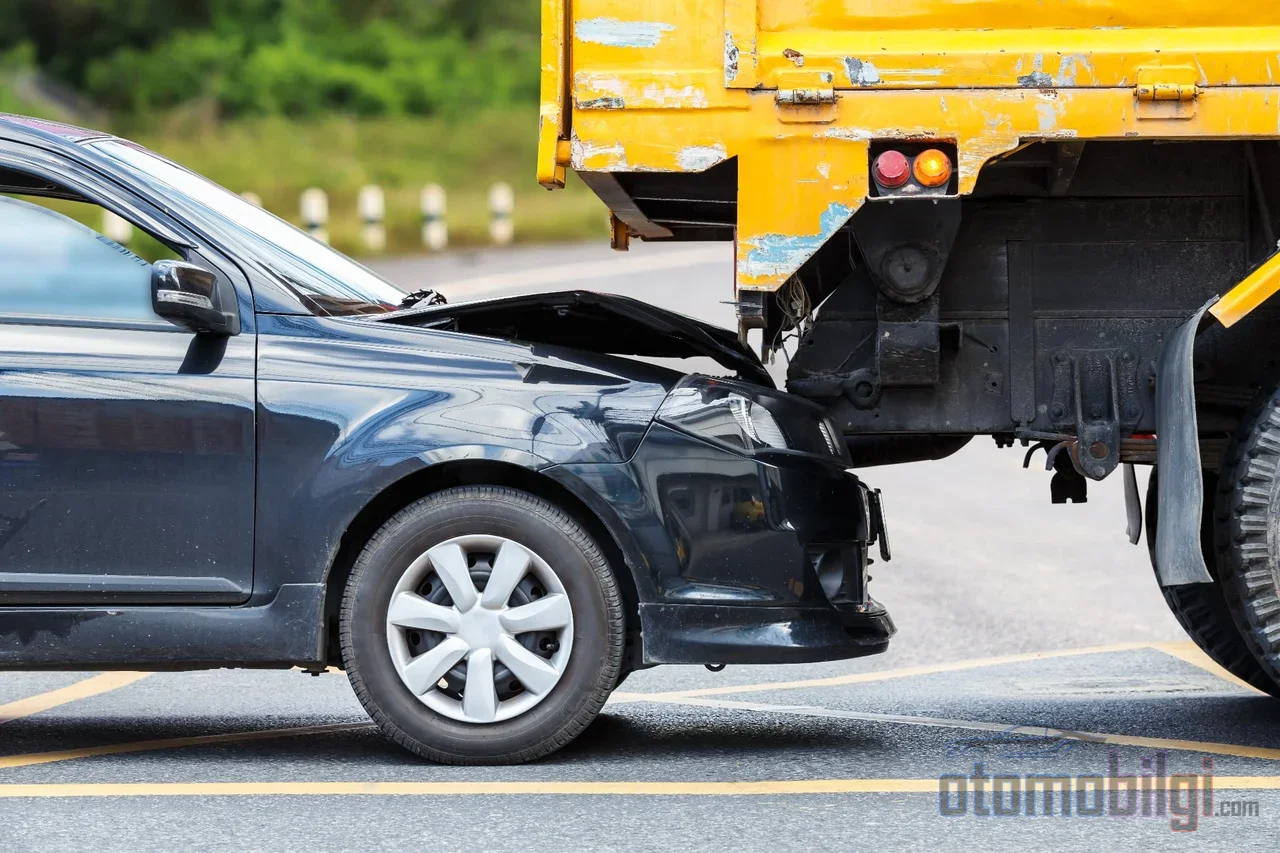
Seeing a photo of a car with a crumpled hood after a crash and muttering "why didn't the airbags deploy?" is very common. Here's the strange part: sometimes in an accident that looks genuinely serious, the airbags stay silent; other times, in what seems like a lighter impact, they all go off. Do you think it's random? It's not. Because behind the scenes, a small computer working in milliseconds is constantly doing calculations and making the "fire / no-fire" decision. So how exactly is this decision made, and is a non-deploying airbag a fault, or a deliberate choice by the engineers? Let's dive in.
Who Makes the Decision? Job Description of the Airbag Control Unit
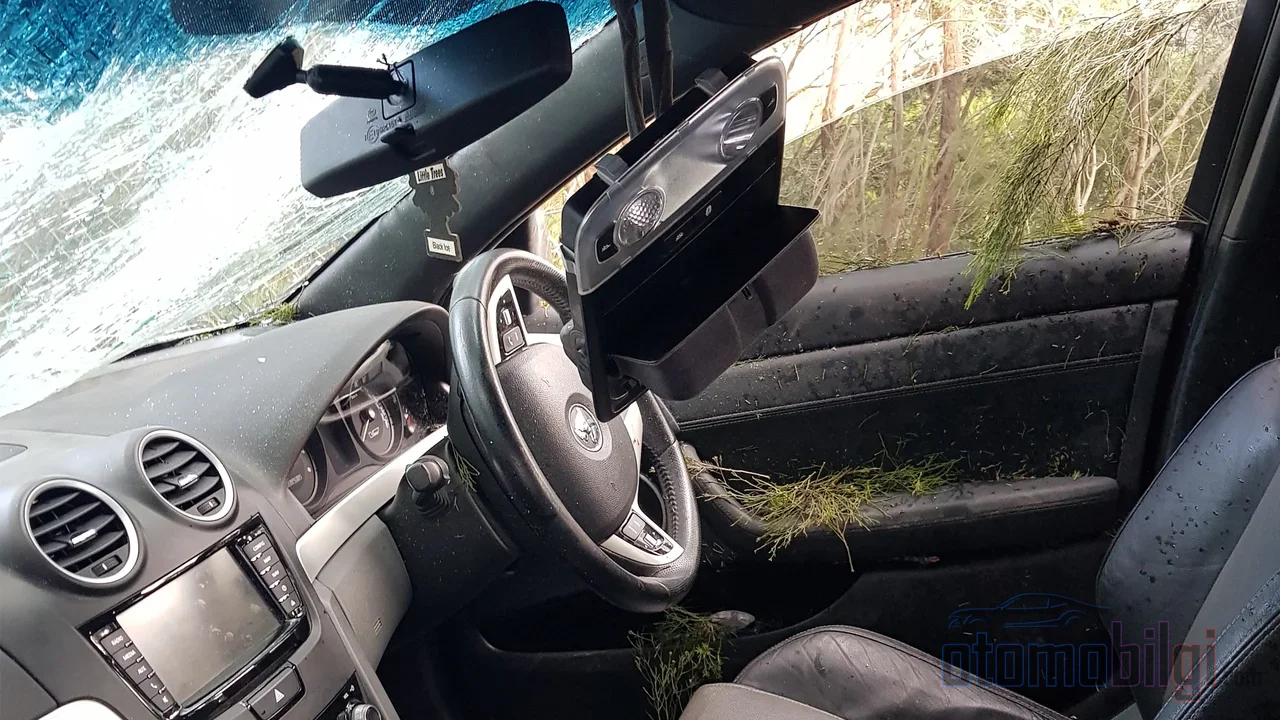
A single component decides whether the airbag deploys or not: the airbag control unit, or in short, the ACU. This is an electronic brain stored around the center console, the size of a box but with an incredibly critical job. Inside it are acceleration sensors; these continuously measure how quickly the vehicle is decelerating. It is also connected to auxiliary sensors: front sensors in the engine bay that give early warning of a frontal collision, and pressure sensors in the doors that detect a side collision from a sudden increase in air pressure.
Good question: why so many sensors instead of just one? The answer is two words: the safing sensor. The control unit fires the airbag only when both a crash sensor and the safing sensor confirm the collision. In other words, a single faulty or corrupted-signal sensor cannot deploy the airbag needlessly. Think of it like a safe lock: opening the lock requires two separate keys; even if one key is stolen, the safe won't open. The unit also reads engine load, ESP signals, steering angle and brake status, and classifies the type of crash. Think of it as a very meticulous colleague.
The Decision Algorithm: The Calculation Battle Lived in Milliseconds
Now let's get to the truly exciting part, because the control unit waits in a sleepy mode during normal driving. The processor "wakes up" when a predefined acceleration threshold is exceeded, and the calculation cycle begins. The control unit samples the deceleration every 1 millisecond; when the deceleration exceeds roughly the 2 g level, serious calculations kick in and the velocity change of the crash, i.e. delta-V, is calculated as an integral. This delta-V value is the direct criterion for the firing decision.
The sequence of operations roughly goes like this: measurement, threshold exceedance, integration of the velocity change, multi-sensor consistency check, and finally the fire/non-fire decision. The consistency check part is crucial: the unit checks whether the story told by the different sensors is consistent with each other. So what happens when you hit a bump? A bump does not produce enough deceleration in the direction of travel; the sensor data does not match a collision story, and the algorithm does not count it as a crash. In other words, that terrifying nightmare of "the airbag deployed on a bump" is something that should not happen by design.
Highlights
- The decision is made by the airbag control unit (ACU); confirmation from at least two independent sensors is required.
- Front airbags typically deploy at a collision-induced velocity change of around 25-30 km/h (rigid wall equivalent).
- In rear collisions and most rollover accidents, front airbags do not deploy by design.
- A typical collision lasts 80-150 ms; the deployment decision must be made roughly within the first 30 ms.
- Modern units classify an accident into four severity levels; at the light level, the airbag deliberately does not deploy.
How High Are the Threshold Values? Deployment Limits in Numbers
So at what severity of impact does the airbag deploy? For front airbags, the typical figure is a collision-induced velocity change of around 25-30 km/h, equivalent to hitting a rigid wall. There are also assessments saying that for belted occupants this range drops to a band as low as 13-22 km/h; the reason for the difference is which criterion is taken instead of a "threshold": are you measuring the vehicle's speed, or the velocity change the collision imparts to the occupant? The picture changes with narrow, focused impacts: in cases like hitting a narrow tree or pole, the deployment threshold can drop to as low as 8 mph (about 13 km/h), because the impact concentrates on a single point. By contrast, in collisions spread over a wider area, the threshold can rise to around 18 mph.
Then there is the time pressure, and it is incredibly harsh. A typical collision lasts a total of 80-150 ms - not even half a blink of an eye. But for the airbag to be of any use, the deployment decision must be made roughly within the first 30 ms. Once the countdown starts, there is no going back; which is why the algorithm has to be both extremely fast and extremely cautious. In two-stage (adaptive) airbags, the decision is not just deploy or not: at low severity, only stage 1 is fired. While the airbag inflates more gently, in a very severe impact both stages engage at once and the airbag deploys at full volume.
Severity Levels: The Hidden Ramp Inside the Airbag
Modern control units classify an accident into four severity levels and respond differently to each one. Here is this table, the engineering summary of the question "why doesn't it deploy in every accident?":
| Level | Accident Severity | Response |
|---|---|---|
| Level 0 | Light | Airbag does not deploy, the seatbelt is deemed sufficient |
| Level 1 | Moderate | Stage 1 of the airbag may deploy |
| Level 2 | Severe | Stage 1 deploys |
| Level 3 | Very severe | Both stages fire simultaneously |
So when the system says "the airbag did not deploy" at Level 0, it is not actually a refusal but the correct answer. The seatbelt is already holding the occupant in that impact; the airbag deploying would not be extra protection but an unnecessary and even risky shock. Also remember that the decision logic is based not on speed but on the severity of the collision (deceleration and velocity change): the airbag does not deploy because you are doing 100 km/h, it deploys because of how hard the impact slowed you down.
Accidents Where the Airbag Deliberately Does Not Deploy
Now let's go through the most confusing scenarios one by one. Because the engineers have a clear logic for each one.
Low-Speed Collisions: The Belt Is Enough - Why Do You Want an Airbag?
Below certain force thresholds, the airbag does not deploy; manufacturers state this explicitly in their manuals. The logic is this: at this severity, the belt alone protects the occupant sufficiently, and the airbag provides no benefit beyond the belt. Soft targets also change the equation - when you hit a parked vehicle or a barrier, the car decelerates more gradually, the peak deceleration drops, and the threshold may not be exceeded. Scenarios such as off-center impacts, low-angle crashes, and hitting a pole with the corner of the car also fail to convey sufficient force to the sensors. So even if the damage looks major, if the deceleration felt by the occupant did not exceed the threshold, the airbag keeps sleeping.
Rear-End Collisions: Why Does the Front Airbag Never Deploy?
A vehicle that hits you from behind pushes you forward, not toward the front - meaning the occupants sink into their seats. Front airbags exist to catch bodies thrown forward; in a rear impact, an inflated airbag provides no protection and even becomes a useless surface. For this reason, front airbags are designed not to deploy in rear collisions, and the manufacturers' official manuals state directly that this is not a malfunction.
Rollover Accidents: Why Do the Airbags Stay Silent?
In vehicles without a rollover-specific detection sensor, the front airbags may not deploy in a rollover - since the impact profile does not resemble a typical frontal collision, the algorithm does not make the firing decision. But the picture is not entirely dark: side and curtain airbags can inflate in some cases in vehicles equipped with roll and tilt sensors capable of detecting a rollover. Curtain airbags can be designed to deploy in a rollover specifically to prevent the head from going out of the windows when the vehicle flips onto its roof. So the statement "the airbags did not deploy" does not always mean "the system failed"; one must ask the question of which airbag, in which scenario.
Passenger Seat: The Weight Sensor Affects the Deployment Decision Too
One also has to look at what's across from the airbag: who is sitting in the seat? If the seat's weight sensor detects a low-weight condition - for example, a child seat or a light object - deployment on the passenger side is typically suppressed. Advanced systems go even further: seat weight, camera-based image classification, and crash detection decisions are combined to classify the passenger as an adult, a child, or an object; in addition, the occupant's seating position is evaluated. If the passenger is "out-of-position," that is, outside the normal seating position, the airbag may not deploy even in a crash. Because when an airbag deploys into a body at the wrong distance, it causes harm, not protection.
Not Deploying: Fault or Design? The Honest Answer
If we were to hand down the referee's verdict: airbags are not designed to deploy in every crash. The official position of safety authorities points in the same direction; the collision conditions may have been such that the airbag was unnecessary. The assessments of engineering firms that analyze accidents also reach the same conclusion: the airbag not deploying is often appropriate behavior, because the accident is not severe enough to require airbag protection. In other words, the answer to that angry initial question of "why didn't it deploy?" may largely be "because it wasn't needed."
But there is another side to the coin. In a moderate or severe accident - an impact where passengers genuinely need protection - non-deployment may be a sign of a fault, not a design choice. The most common culprits: a faulty sensor, a defective control unit, electrical issues, or the airbag never having been replaced after a previous accident. Never forget this last item when buying a used vehicle; if a deployed airbag has not been replaced with a new one, that airbag will never deploy again. And every airbag is single-use; it must be completely replaced together with its inflator, there is no such thing as repairing and reusing it.
Here is a reliable practical tip as well: the airbag warning light on the dashboard does not come on for nothing. When the system detects a problem, it warns you with this light; if the light is on, the airbag may fail to deploy at the moment of need due to reasons such as a faulty sensor or an electrical issue. Ignoring the light is like hitting the snooze button on a smoke alarm and carrying on.
Frequently Asked Questions
- Does the airbag deploy when you hit a bump? No; the sensors and consistency checks do not count factors like bumps as accidents.
- What happens to the control unit after the airbag deploys? The unit records the accident data and locks itself; it must be repaired or replaced.
- Can the airbag deploy without an accident? Very rarely; it may be caused by a faulty sensor or a short circuit.
- Can a non-deployed airbag be reused? No; the airbag and its inflator are single-use and are replaced as a complete unit.
The bottom line is this: the airbag is not a reflex, it is a calculation. The control unit reads deceleration every millisecond, calculates the change in speed, compares the sensor stories, and issues the firing command only if the impact is truly severe enough to require protection. Low speed, a rear collision, a rollover, an unsuitable passenger - in these situations, silence is not a defect, it is exactly what the system is supposed to do. Suspicion of a fault should only come to mind when there is non-deployment in a moderate-to-severe accident together with a lit warning light. So rather than grumbling "why didn't the airbag deploy?" next time, first ask this: did this impact really call for the airbag?
Sources
- What Triggers the Airbag? Sensors Explained
- Vehicle Air Bags and Injury Prevention - NHTSA
- Airbags - IIHS
- Why didn't my air bag go off in a collision? - Kia Owner's Manual
- Airbag control unit - Bosch Mobility
- Airbag Deployment Systems - Clemson University CVEC
- Decision Fusion via Integrated Sensing System for a Smart Airbag Deployment Scheme
- Evaluation of Advanced Air Bag Deployment Algorithm
- Evaluating Air Bag Non-Deployment
- Who is Liable When Your Airbags Don't Deploy
- How Serious Does a Collision Have to Be for Airbags to Deploy?
- Airbags Didn't Deploy in Front-End Collision
- Why Did My Airbags Not Deploy?
- Why didn't my airbags deploy when I was rear-ended?