Airbag Risk in Child Seats: How to Deactivate It?
Share This Page
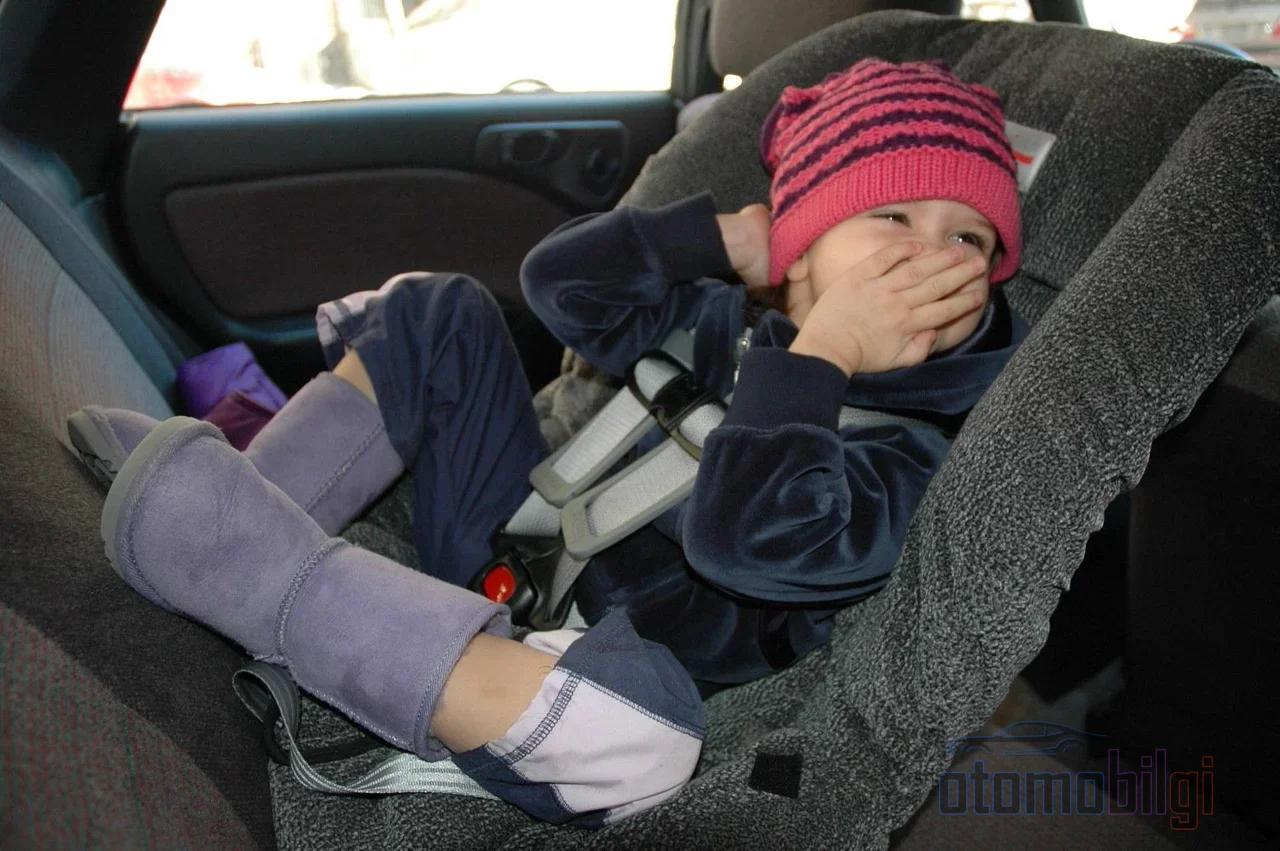
Just think about it: an airbag - that inflated cushion that sometimes saves lives - deploying right behind a rear-facing child seat, in one twentieth of a second, at hundreds of kilometers per hour. What happens then? That is the question every parent forced to put their child in a vehicle without a back seat needs to know the answer to. Fortunately, engineers have developed both keyed locks and smart sensors that recognize the seat's occupant to solve this conflict. Now, let me not explain how these systems work step by step, in exhaustive detail.
Why Can't a Rear-Facing Seat and an Airbag Ever Share the Front Seat?
Despite its name, an airbag does not behave like a soft, cozy pillow. At the moment of impact, a chemical reaction triggered by the sensor signal produces nitrogen gas, and the bag fully inflates in about 1/20 of a second - half as long as the blink of an eye. This enormous energy, designed for adults, strikes the back of a rear-facing child seat - right behind the child's head and spine. The result is not a cushion gently catching an adult's chest, but a potentially fatal blow to a child.
The numbers make the picture even clearer. According to children's hospital research, the risk of serious injury in children exposed to an airbag doubles. A clinical study published in 2000 found that the front passenger airbag increased the risk of death by 31% in belted children and by 84% in unrestrained children - yes, the data is old, but the physics is still the same. That is why the rule is similar everywhere: a rear-facing seat is never installed in a front seat with an active passenger airbag. But what if the car has no back seat? This is exactly where deactivation mechanisms come into play.
Key Takeaways
- An airbag fully inflates in about 1/20 of a second; with a rear-facing seat, that timing creates a fatal conflict.
- In vehicles with manual locks, the lock is turned to the OFF position only when the vehicle is stationary and the ignition is off.
- Vehicles with OCS automatically switch the passenger airbag on and off using sensors in the seat cushion.
- Side and curtain airbags inflate with far less force than front airbags, but they are still dangerous if the head is very close.
- With the Euro NCAP 2026 protocol, automatic deactivation is becoming mandatory for child seats.
Keyed Lock System: How Is Manual Deactivation Done?
The most common solution is a small lock located next to the dashboard or in the glove compartment area on the passenger door side. You operate this mechanism, turned with a key, using a flat key similar to a mechanic's torch. But here, the order is everything - if you get it wrong, the system will not engage, and you will drive off without noticing.
- Park the vehicle in a safe place and turn the ignition completely off. The lock should only be turned under this condition.
- Insert the key into the lock and, pressing it in, turn it to the OFF position.
- When the ignition is switched on, check the airbag warning light on the dashboard. The light should stay lit - this is the sign that the passenger airbag is off. Now you can install the seat.
The magic doesn't end here. When removing the seat, you must reverse the process: be sure to switch the airbag back to the ON position and verify that the light has gone out. Otherwise, an adult sitting in that seat travels with no front airbag protection at all - a deactivated airbag means zero protection for an adult. But what if the light never goes out? Manufacturers define this situation clearly: if the warning lights keep burning, it is forbidden to install a rear-facing seat in that front seat or to seat anyone there; the vehicle must go to an authorized service center. The labels on the sun visors and the markings on the instrument cluster exist precisely for this reason - never remove them.
Let me also give a small warning: the lock position and key type vary from manufacturer to manufacturer. In some vehicles, even a written application and a special form may be required to disable the driver's airbag. So you should always verify how things work in your own car from your own owner's manual.
Automatic Systems: Do Seat Sensors Turn the Airbag Off Themselves?
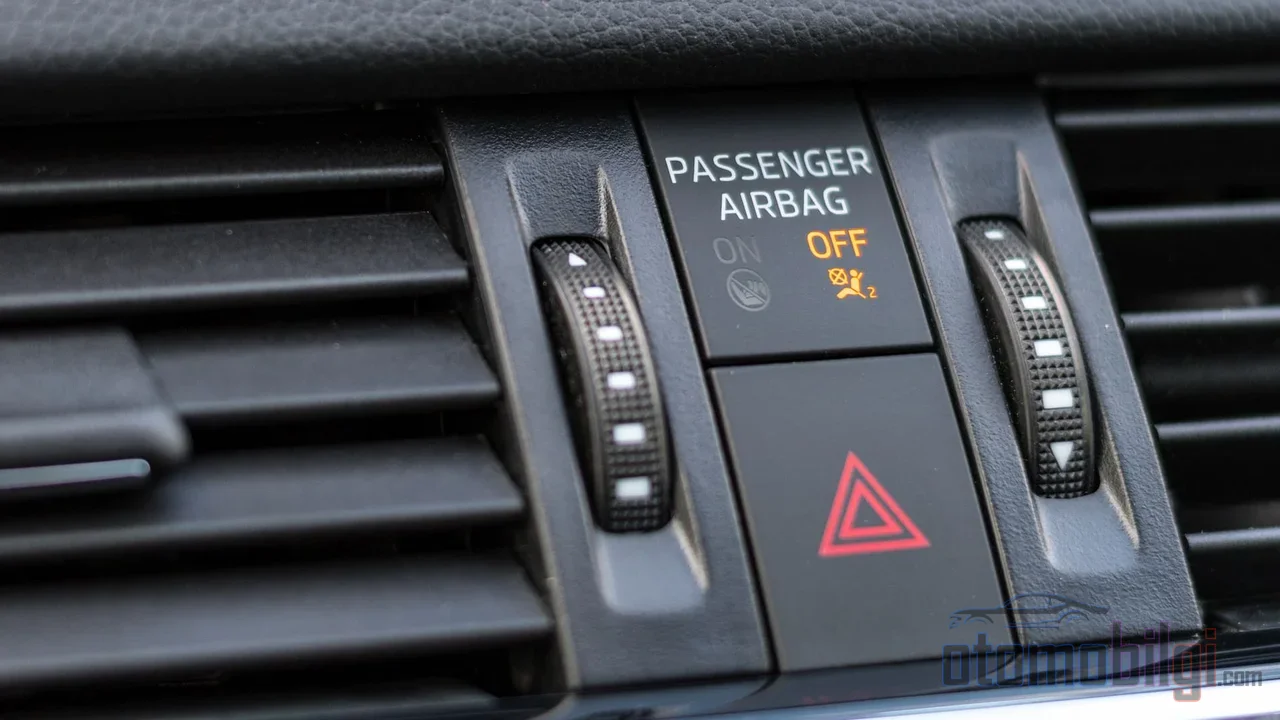
The solution developed to avoid dealing with a key is called the Occupant Classification System, or OCS for short. The logic is very clever: sensors embedded inside the seat cushion measure the size of the person sitting on it and classify them into categories. In pressure-based systems, the pressure on the seat is transmitted to a sensor through a tube, while in capacitive systems, changes in the electric field are read. The computer classifies the data and decides whether the passenger airbag will be automatically active or passive - including a baby in a child seat. In other words, it completely eliminates the need for a key lock in most vehicles.
But no system is perfect. Sensors can misclassify and fail; after an accident repair, sometimes the sensor or the control module itself needs to be replaced. In some vehicles, a faulty OCS doesn't recover until the ignition is turned off and restarted. That's why it's worth also checking the light that indicates whether someone is in the seat: the system thinks for you, but it's still up to you to see that this thinking is correct.
What About Vehicles Without a Rear Seat? The Journey of the Airbag Deactivation Switch
In vehicles without a rear seat, such as pickups, where should a child sit? To answer this question, regulators created an exception mechanism. NHTSA-approved retrofit on/off switches installed by authorized dealers and repair shops in North America do exactly this job. The procedure is based on an application form and costs about $1,785 - so it's technically possible but not wallet-friendly. For vehicle owners in Türkiye, the practical route is again the manufacturer's own key-based system or OCS: since it varies from brand to brand, the manual is the single true source here.
Do Side and Curtain Airbags Conflict with Child Seats?
Everyone fixates on the passenger airbag, but the real fine detail is hiding on the sides. Side body airbags deploy from between the seat and the door to protect the pelvis, abdomen and rib cage, while curtain airbags unfold downward from the roof section above the window. The good news: these two inflate both smaller and with far less force than the front airbags. The bad news: if a child's head is very close to the bag - for example, leaning against the door - serious injury is still possible.
There is a tension here, and to be honest, a tension I like: curtain airbags are seen as the most effective protection method for a child's head in a side impact. So it is by no means an enemy that must always be switched off - quite the opposite, a hero. The critical thing is position: the child must be taught not to lean against the door, and the seat placement should be adjusted accordingly. The automotive industry has also developed optional test protocols that measure the interaction of side airbags with child seats to reduce this risk; vehicles that pass these tests are specifically marked in child occupant safety brochures.
Euro NCAP 2026: Automatic Deactivation in Child Seats Becomes Mandatory
This is the future-looking side of the matter. With Euro NCAP's 2026 protocol changes, airbags must now adapt to the occupant's size, position and posture - and most importantly, automatic deactivation for child seats is becoming mandatory. Child presence detection - that is, the vehicle recognizing whether a child is in the seat - is also within the test scope of the child protection protocol. The basic principle in one sentence: children must be protected in a crash as much as adults. This year, a model even emerged that reached 93% - the highest child protection score to date - meaning engineering is genuinely solving this conflict.
One more scoring detail caught my interest: for every airbag that does not deploy fully as designed, the protocol has a -1 point modifier. In other words, an airbag either works properly or the vehicle takes a direct points penalty from its safety score - there is no credit for a half-baked deployment.
Frequently Asked Questions: In Which Situation Should an Airbag Be Deactivated and How?
Can a rear-facing seat ever be installed in the front seat?
Only if the passenger airbag is fully deactivated or locked in the OFF position. The combination of a rear-facing seat with an active front airbag is the very situation that is prohibited on its own.
Should the airbag also be deactivated with a forward-facing seat?
It is not mandatory. The deactivation requirement typically applies to rear-facing seats; with a forward-facing seat, the goal is to move the seat as far back as possible, secure it, and fasten the child properly with the belt.
Can an adult sit in that seat while the airbag is off?
A deactivated airbag offers no protection for an adult. If an adult is going to sit there, the airbag must be switched back to ON and the warning lamp must be confirmed to have gone out.
Can a child under 13 sit in the front seat?
The general rule is that children under 13 should travel in the back seat. Even with a booster seat, the front seat is not a recommended place for small children in vehicles with an active passenger airbag.
Summary: Golden Rules for Safely Turning Off the Airbag Risk
Let's sum it up point by point, because there is no room for error here:
- The rear seat is always the first choice; a rear-facing seat can only move to the front if the airbag is off.
- Turn the manual lock to OFF only when the vehicle is stationary and the ignition is off; do not install the seat without seeing the lamp light up.
- When the seat is removed, switch the airbag back to ON; confirm the lamp has gone out.
- In vehicles with OCS, leave the system to do its job - but still check the indicator.
- Side and curtain airbags are protection-friendly; make sure the child does not lean against the door.
- Do not use the front seat in a vehicle with a faulty system and go to an authorized service center.
In my view, the one-sentence essence of this page is: the airbag is an incredible invention designed for adults, but in the world of babies and small children, physics works against it. The correct lock position, the correct lamp check, and a child who is not leaning against the door - when these three come together, even the front seat can become a safe travel spot. Do you think automatic classification systems will one day completely relegate manual keys to history? My bet is placed.
Sources
- Child safety: deactivating, activating the front passenger airbag
- Air bags
- How Occupant Classification Systems Work
- Occupant Classification System (OCS)
- Occupant Classification
- What's In A Seat: Occupant Classification System (OCS)
- Side Air Bags and Kids
- Airbags
- Child passenger safety: decisions about seating location (2000)
- The Air Bag On-Off Decision - Transports Canada
- Euro NCAP Child Occupant Protection Protocols
- Polestar 3 SUV sets the standard for child safety
- What's Changing in Euro NCAP's 2026 Safety Ratings?
- Air Bag Safety for Children