How Does Aerodynamics Work in a GT3 Car?
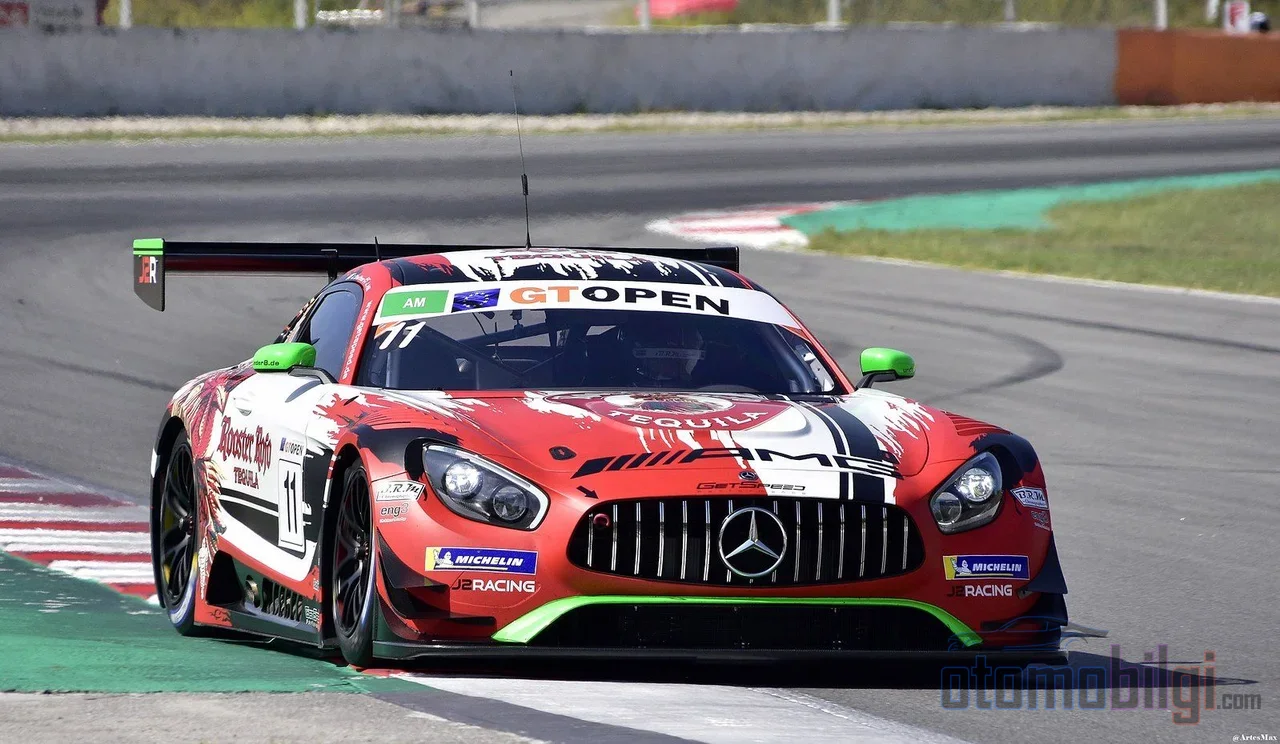
At first glance at a GT3 car's rear wing, you'd say "whoa, what's the point of a wing that big?", right? But that wing acts almost like a strip of concrete, sticking a car traveling at 200 km/h to the road. Moreover, most people think exactly the opposite: the wing isn't there to speed the car up, but to press it onto the road. So how do they turn the air into a race car's best friend? Let's break it down step by step.
What Is Downforce, and Why Does It Press the Car Onto the Road?
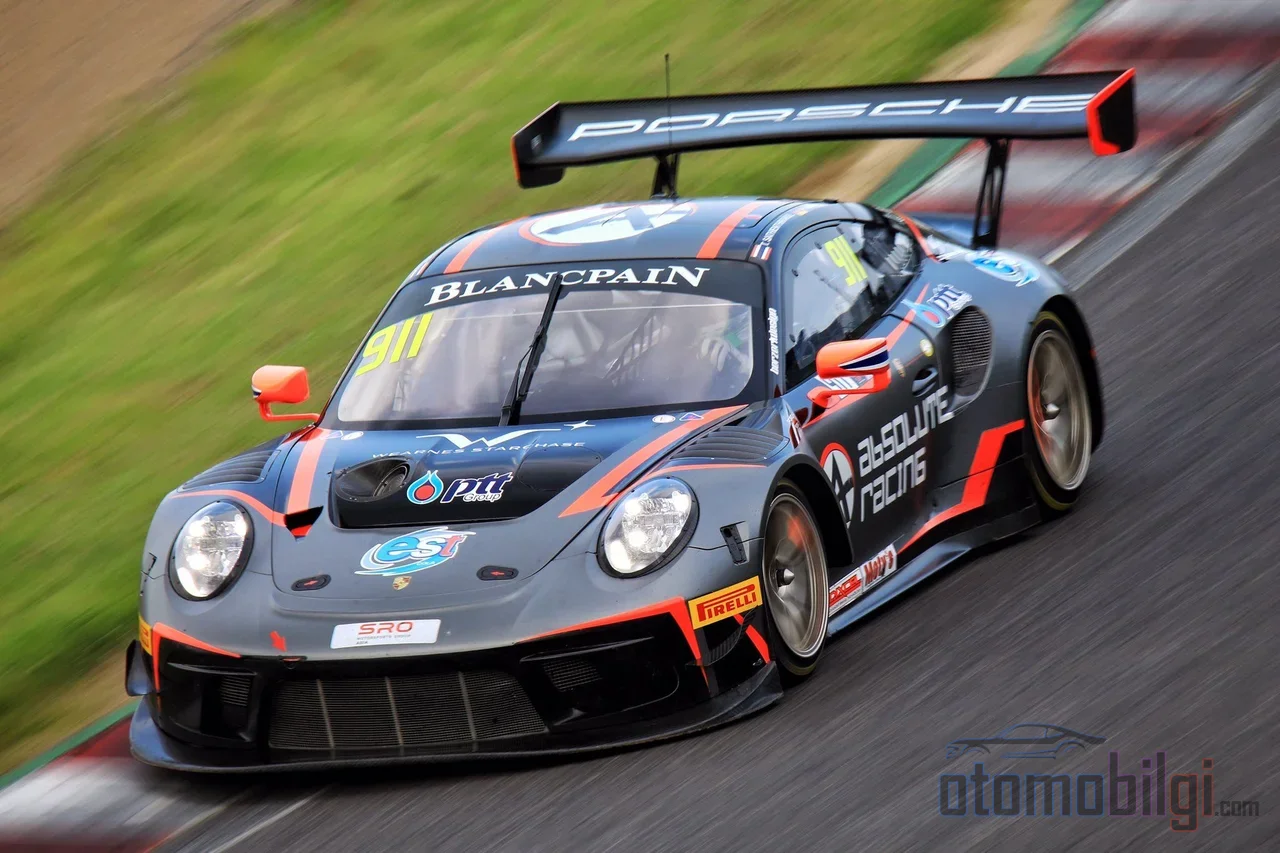
Airplane wings lift things up; race wings do the exact opposite. A GT3 rear wing works like an inverted airplane wing, shaping the air flowing over it so that instead of lifting the car, it pushes it downward. This pressing force is called downforce, or aerodynamic pressure. When you look at the numbers, the seriousness becomes clear: The Nissan GT-R Nismo GT3 can generate up to 1,000 kilograms of downforce at 200 km/h. That means at that speed, nearly an additional ton of load is pressing on the car's tires, on top of the car's own weight.
Why is this load so important? Because a tire's grip increases directly with the load pressing on it. More grip means faster cornering, shorter braking distances, and a calmer car at high speeds. Let's make an analogy: when you press your palm against a table on a wet surface, it becomes hard to slide; if you merely touch it lightly, it slides easily. Downforce is the very hand pressing the tire strongly against that table. As speed increases, more air passes over the wing, so grip grows; the faster the car goes, the more capable it becomes of going even faster.
Highlights
- The Nissan GT-R Nismo GT3 can generate up to 1,000 kg of downforce at 200 km/h
- The Porsche 992 GT3 RS produces 860 kg of downforce at 285 km/h
- On the Porsche 911 GT3 R, the wing accounts for only about 5.7% of total drag even at its maximum angle
- BoP; it maintains parity between cars through wing angle, ride height, and weight settings
Splitter and Diffuser: Putting the Air to Work Under the Car
The wing alone isn't enough. The first piece to come into play at the front is the splitter, that rigid protrusion extending beneath the front bumper. It splits the air hitting the car's front in two: creating a high-pressure zone on top and a low-pressure zone below. While the stagnant air above pushes the car down, the air rushing underneath creates a kind of vacuum effect, sticking the car to the road ahead. A well-designed splitter does serious work; breakaway forces can reach 500 pounds, or about 227 kilograms. That's why it must be firmly attached to the chassis.
The interesting part is this: as the splitter's distance to the ground decreases, its performance increases dramatically. But there's a limit - if it sits completely flush with the ground, the underflow is cut off and downforce drops. Engineering here is a game of fine balance. So what's at the rear? The diffuser.
Diffuser and Ground Effect: The Hidden Hero Underneath
The diffuser is that black carbon piece at the lower rear of the car, letting air pass through expanding channels. Its job is to accelerate the air under the car and create a low-pressure zone. You can think of it as turning the narrow gap between the car and the track into a suction area; this concept is called ground effect. The diffuser converts the kinetic energy of the air flowing underneath into pressure at the exit, and this pressure difference pulls the car down. From open-wheel cars to sports cars, ground effect is considered one of the biggest sources of downforce.
There is one critical feature that separates the diffuser from a wing: efficiency. While increasing the angle of attack on a wing raises drag sharply along with downforce, in a diffuser this trade-off is not nearly as steep. In other words, the underbody is a far more generous source of downforce relative to the drag it costs. With one condition, of course: underbody aerodynamics is delicate work. Tire turbulence, side airflow, and the flat floor need to be properly sealed to the chassis; if the flat floor is not sealed correctly, the diffuser may barely work at all. Also, since the diffuser increases tire grip, it directly improves cornering speed, stability, and lap times.
How to Adjust Wing Angle and the Downforce-Drag Balance?
Now let's step into the setup kitchen. As the angle of attack of the rear wing increases, downforce increases, but so does drag, meaning drag. Drag is the penalty the car pays from the air as it moves forward; it reduces top speed. For example, Porsche's first-generation GT3 R wing, at full angle, takes about 4 mph off the car's top speed. So is steepening the wing expensive? Here comes the surprise.
Looking at Porsche 911 GT3 R data, even at maximum angle of attack, the wing accounts for only about 5.7% of the car's total drag. In other words, adjusting the wing angle does not bring the big speed penalty one might expect; the rest of the car is already burdening the air with friction. That is why teams usually set the aerodynamic balance by playing with the wing angle in small steps of 1-2 degrees. In addition, the Porsche 911 GT3's rear wing can be adjusted by hand to four different positions, and the front diffuser can be adjusted in response.
How do they decide? On a track requiring high-speed grip, the wing angle is raised and, if necessary, the front splitter is lowered; on fast tracks where low downforce suffices, the opposite is done. There is also a nice trick when it comes to balance: keeping the rear weight slightly on the heavy side so that the car understeers under aerodynamic load is generally a safer and more drivable choice. Understeer means the car does not turn into the corner as much as desired - annoying but forgiving. Oversteer, on the other hand, means the rear sliding out, and that gets costly in a race.
How Does Aerodynamic Grip Change Braking and Cornering Speed?
In racers' terms, mechanical grip is the grip provided by the tires, the suspension, and the stickiness of the tire itself. This is there at low speeds too. But since aerodynamic grip grows with speed, it works quite the opposite: engages at high speed, and is almost non-existent at low speed. That is why in high-speed corners the car finds more grip as speed increases and can corner at astonishing speeds. While a car with weak mechanical grip shows long braking and acceleration zones and low cornering speeds, aerodynamic grip reverses this picture at high speed.
The effect of downforce on braking also shows up quickly: because tire load increases, the wheels tend toward lock-up, and the likelihood of spinning drops. Inside the corner, aerodynamic balance also shapes the driver's technique. If rear downforce is greater than the front, the driver has to stay on the brakes later into the corner entry phase, meaning more trail braking. In short, wing angle is a setting that affects not only the engineer's but also the driver's right foot.
Why and How Does BoP Restrict Aerodynamics?
So if aerodynamics is this powerful, why can't every team set its wings however it wants? The answer is two letters: BoP. Balance of Performance, that is, performance balancing; the backbone of the GT3 class. The aim is to be able to pit the completely different designs of different manufacturers fairly against each other in a single class. Instead of rewarding the fastest engineering solution, BoP narrows the performance gaps between cars with weight, engine power, and aerodynamic restrictions. Without this mechanism, it would have been nearly impossible for five different brands to truly race on the same track.
On the aerodynamic side, the tools in BoP's hands are clear: rear wing angle limits, ground clearance rules, that is ride height, and splitter regulations. The race team can choose the wing angle itself, but the options are drawn by the aero window defined in the manufacturer's homologation file. In other words, a controversial car can be pushed to the very bottom of the aero window and additionally penalized with power and weight. What is more, these settings are more complex than you might think: not only total downforce but also whether the aerodynamic balance is biased toward the front or rear can be adjusted. To give a concrete example from the simulation world, in one BoP update the aero balance, drag, and rear downforce were redistributed between the wing and diffuser; even the center-of-gravity height was adjusted. From 2026 onward, in some series the cars are shrinking - a 20-centimeter wheelbase reduction and a 10-centimeter width reduction - and the door to active aerodynamics is opening; teams will be able to make aero adjustments during the race. So BoP's toolkit keeps growing.
What Aero Differences Cost in a Race: Dirty Air and Tire Management
In theory everything is fine; on track, however, the harsh reality of aerodynamics emerges. The dirty air trailing behind the car ahead reduces the following car's downforce. As downforce decreases, grip decreases, the tires slide and deform more against the car's momentum; wear accelerates. The irony is this: you follow closely to close in on your target, but close following slows you down and destroys your tires. Since the overtake attempt isn't over, the entire race strategy revolves around this dilemma.
Tire management also cannot be considered independently of the aero setup. On a car with downforce, the tires work more balanced thanks to the load placed upon them; on a car that has lost downforce, the tires slide too much, overheat and degrade. With degraded tires, the pit window strategy also changes: should you play the undercut and switch to fresh tires early, or stay out on track to find clean air? If the front and rear downforce in the aero setup are mismatched, there is also a spin risk at high speed, which indirectly writes extra load onto the tires. In short, what doesn't appear in the lap time table but determines the race result is usually these invisible air games.
So, If We Had to Explain GT3 Aerodynamics in One Sentence?
Let's summarize: Aerodynamics on a GT3 car means the wing, splitter and diffuser working together to press the car onto the road at high speed; this pressing directly increases tire grip, braking distance and cornering speed. The wing angle works a little at the expense of drag for every extra grain of downforce, while the diffuser provides the most efficient contribution through ground effect. When BoP kicks in and limits these aero settings with the homologation window, the real race on the field becomes a delicate balance struck between engineering and regulation. While watching the next race, take a look at the wing angles of two GT3s running side by side on the straight - the one- or two-degree difference there may be telling the most exciting story you won't find in the lap time table.
Sources
- DIY Race Car Aerodynamics and Downforce Guide
- Race Car Aerodynamics - Nissan GT-R Nismo GT3
- Technical fine-tuning for further enhanced performance – Porsche Newsroom
- Diffusers | Engineering basics | Aerodynamics
- Balance of performance - Wikipedia
- Chat GT3: Who Created Balance of Performance?
- Release: GT3 Balance of Performance – February 2021
- 2026 Season 2 Patch 3 Release Notes – iRacing Support
- What Does A Front Splitter Do?
- How to Set Up GT3 Aerodynamics