How Does the GT500 Class Work in Super GT?
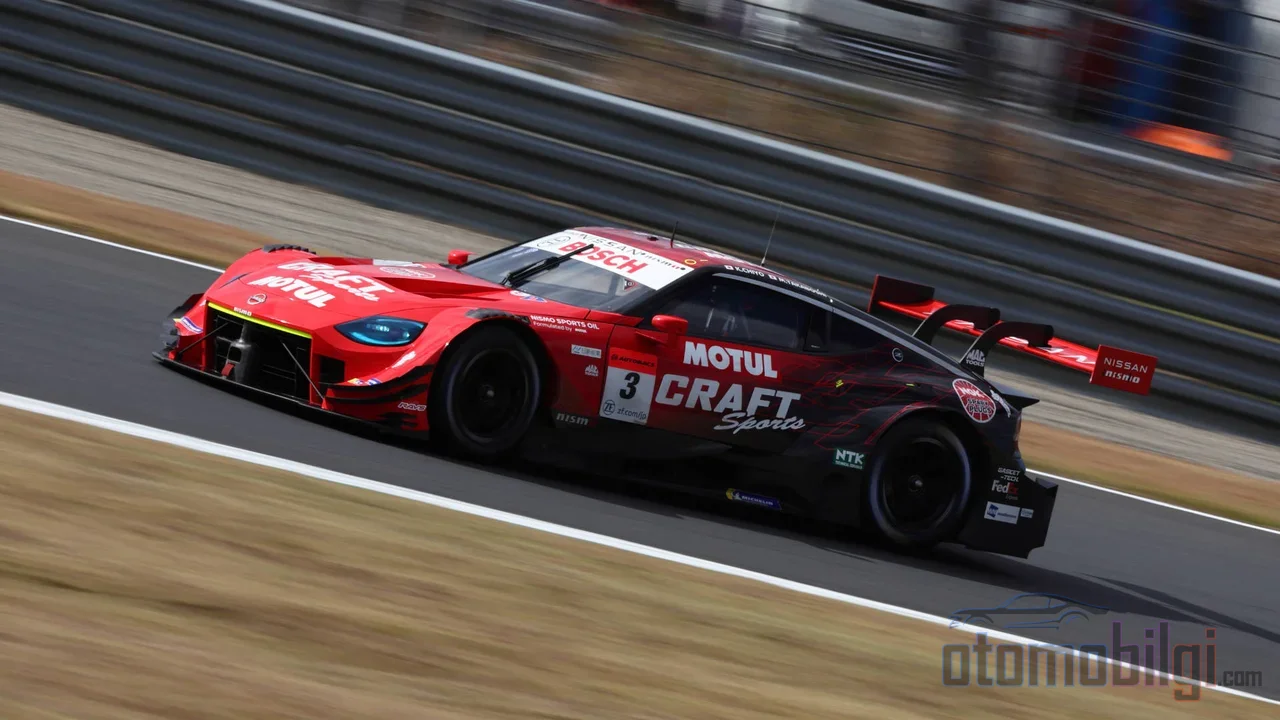
Imagine it's Sunday morning, you've settled onto the couch, and there's a race from Japan on TV. Yellow, red, and blue cars sweep through corners glued to each other, and you ask yourself: are those GT3s? No, they're not. Because the group running at the very front of the field there are the children of a completely different world from the GT formula we're used to in Europe: the GT500 class of Super GT. So how does this class work, and why is it so different from GT3? Buckle up, because we're diving deep into the rules of Japan's fastest factory-backed GT formula.
On the GT300 page, we talked about the slower half of the class and its BoP-based balancing. Now it's time for the other half: the pinnacle class, where the engineering prowess of three giant manufacturers - Toyota, Honda, and Nissan - is on full display. And let me tell you from the start: the way things work here almost turns the logic of the European GT3 world upside down.
What Is GT500, and Where Does It Fit Within Super GT?
Let's first take a quick look at the history, because the class's identity comes from these roots. The championship was born in 1993 as the All Japan Grand Touring Car Championship, or JGTC, and was transformed into Super GT under its current name in 2005. The series is sanctioned by the Japan Automobile Federation (JAF) and run by the GT Association (GTA); Autobacs has been the title sponsor since 1998. So what we're talking about is a young but well-rooted organization.
Two classes race on track at the same time: GT500 and GT300. GT500 is the top class; although the 500 in its name is a legacy reference from the past, today's cars produce more than 650 hp (485 kW). They are machines derived from production sports cars, but built inside and out entirely for racing. So much so that on track they are the cars with the fastest acceleration and highest grip of any elite touring car category. The GT300 side, on the other hand, hovers around 500 hp; that class's story is the subject of a separate page.
Highlights
- GT500 cars produce more than 650 hp from 2.0-liter turbocharged 4-cylinder engines.
- Since 2020, the technical regulations have been based on the Class One framework developed jointly with DTM.
- Balancing is not BoP but the Success Weight system: weight per point, with a fuel flow restriction at the upper limits.
- The current rules were extended until 2029; new GT500 cars will appear at the earliest in 2030.
- In 2026, the engine allocation per season was reduced from 2 to 1.
Technical Rules: The World of 2.0-Liter Turbos and Carbon Monocoques
Engine Formula
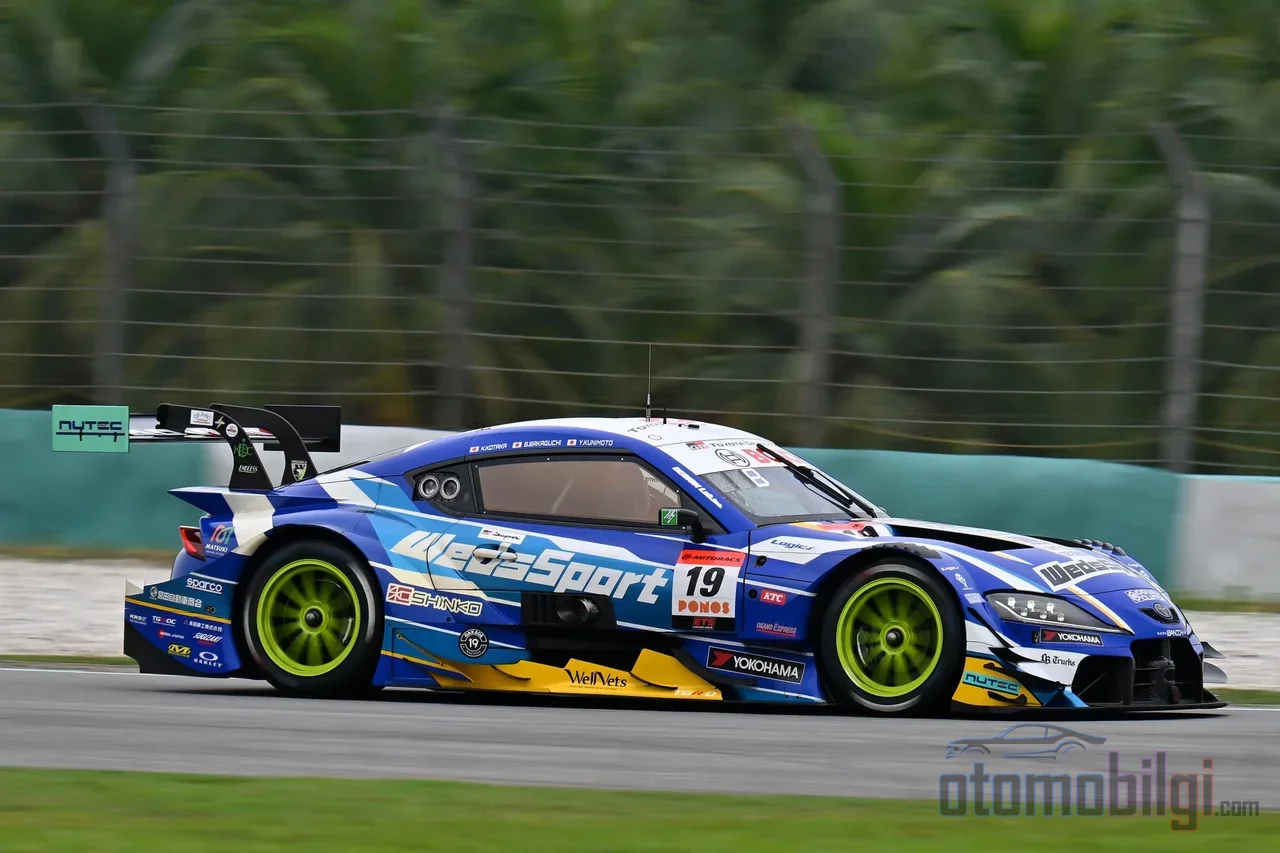
The heart of GT500 today is an engine formula of 2.0-liter, inline 4-cylinder, direct-injection turbocharged design. Each manufacturer develops its own engine independently; meaning the Toyota, Honda, and Nissan engines are completely different projects from one another. This brings a technical pride war to the series: whose engineering is better is reflected on the track. At one time, naturally aspirated engines ran in the class; in the period between 2014 and 2019, the switch to 2-liter forced-induction engines took place. Today's situation is clear: turbocharged, direct injection, four cylinders.
Chassis and Aerodynamics
On the chassis side, GT500 uses carbon monocoques produced in Japan. These regulations come from Class One, the technical framework jointly prepared with Germany's DTM series since 2020. DTM switched to GT3 on its side in 2021, but Super GT chose to keep these regulations. In 2026, new specification monocoques were also delivered to all teams, meaning the grid now sits on a completely fresh foundation.
When it comes to aerodynamics, there is an interesting distinction: In GT500, the development area is restricted and the rear spoiler is a common part. Why? Because unlimited aero development increases both cost and the gap between cars. The class looks for speed in the engine and chassis, not in the wind tunnel. There is a restriction on the tire side as well: In GT500, Bridgestone, Yokohama and Dunlop provide service; front tires are limited to a maximum of 336 mm in width and 685 mm in diameter, while the rears are limited to 356 mm and 712 mm.
How Is Power Limited?
Here is the fine detail most people don't know. In GT500, no air restrictor is used to slow down the engine; instead, a fuel flow restrictor is used, meaning the amount of fuel (in kg/h) that can enter the engine per unit of time is limited. In GT300, the classic method applies: air restrictor and turbo boost control. Two classes play with power under two different philosophies on the same track. Nice, isn't it?
A Different Philosophy in Balancing: Success Weight and Fuel Flow
Now let's come to the most characteristic aspect of this class. In European GT3, the name of balancing is BoP, meaning Balance of Performance: interventions are made on the cars based on each model's homologation data; the fast one is slowed down, the slow one gets to breathe. In GT500, there is no BoP. Instead, there is a Success Weight system, meaning success ballast: as you win, weight is loaded onto your car.
The system is simple but clever: teams carry weight in proportion to the championship points they have collected. The formula works like this: until the sixth race, each point is 2 kg; at the seventh race, 1 kg per point; and at the eighth race, there is no additional load. The upper limit is 100 kg. In other words, a team dominating midway through the season carries extra load, together with its race car, equal to the weight of a full-grown adult.
The Penalty System Combined with Fuel Flow
In 2026, a new layer was added to the system: Success Refueling Restrictor. Now, in vehicles reaching a Success Weight above 68 kg, the physical load is fixed at 50 kg; the remaining penalty is applied by adjusting the fuel flow restrictor diameter and the restrictor diameter regulating the fuel flow during pit stops. Why was such a change made? Because reducing engine power by restricting fuel flow narrowed the speed gap between GT500 and GT300, putting the two classes racing safely on the same track at risk. The new system keeps the competitive balance intact while preserving race safety.
| Success Weight range | Physical load | Fuel flow |
|---|---|---|
| 0-50 kg | 0-50 kg | 95.0 kg/h |
| 51-67 kg | 34-50 kg | 92.6 kg/h |
| 68-84 kg | 50 kg (fixed) | 90.2 kg/h |
| 85-100 kg | 50 kg (fixed) | 88.0 kg/h |
What Is the Difference Between BoP and Success Weight?
Let's compare the logic of the two systems to everyday life. BoP is like a teacher cutting everyone's pencils to different lengths before an exam: balance is established on paper, before anyone has raced, based on the data. Success Weight is like watching the match and enlarging the goal of whoever scores: the penalty is based entirely on the result produced on the field. The winner is loaded down, and room is opened up for the loser. While the GT300 side uses a BoP approach in which Super GT adjusts both the differences between the two classes and those between GT300 cars through regulations, GT500 operates in this entirely result-based model. Two different philosophies, two different racing cultures.
The Manufacturer War: Toyota, Honda and Nissan
Another appealing aspect of GT500 is that it is a pure three-way battle. In the 2026 season there are 15 GT500 cars and 28 drivers on the grid. On the Nissan front, three Nissan Z NISMO GT500s are running: Team Impul, NISMO and Kondo Racing. On the Toyota front, there are the GR Supra GT500s; for example, under the TGR TEAM au TOM'S banner, names like Sho Tsuboi and Kenta Yamashita are at the wheel. Honda, meanwhile, made a big move in 2026: the new HRC Prelude-GT has replaced the Civic Type R-GT.
What's more, the rulebook gives manufacturers some flexibility: although the current regulations run until 2029, teams can bring in new base models during this period. Honda's Prelude move is exactly this. Toyota, meanwhile, is rumored to come with a new model in place of the GR Supra from 2027 at the earliest. Completely new GT500 cars, on the other hand, will appear in 2030 at the earliest; starting from 2026, a four-year aerodynamic freeze period has begun.
The driver roster is serious too: the series has hosted names like Ryo Hirakawa, Nick Cassidy, Jenson Button, Heikki Kovalainen and Jann Mardenborough. Ronnie Quintarelli is one of the most successful drivers in the series; Sho Tsuboi is chasing his fifth championship. Naoki Yamamoto in 2018 and Ritomo Miyata in 2023 won both the Super Formula and GT500 championships in the same year, donning a double crown. The most recent champions are the duo of Naoki Yamamoto and Tadasuke Makino, and Stanley Team Kunimitsu.
The New 2026 Engine Rule and the Cost War
2026 was a year of serious trimming in the GT500 rulebook: the engine allocation per season was reduced from 2 to 1. When an additional engine change is needed during the season, a 5-second penalty pit stop is applied after the final race. Manufacturers accepted this gradual reduction by mutual agreement; the aim is both to reduce costs and to reward durability. Now all hardware development must be finished before the season starts. Just imagine: living with a single engine for an entire season. In the past, teams could use two engines without penalty, and some of the three manufacturers could catch up on performance with a fresh engine mid-season; that door is now largely closed.
An interesting subplot also played out this season: with the switch to carbon-neutral fuel, early engine changes were seen, and it was debated whether a third engine would be penalized. The fuel supplier's contract ends at the end of 2026; the possibility of a domestic supplier for 2027 is on the table.
Is GT500 Faster Than GT3? An Honest Look
Now we come to the question everyone is asking, and I owe you an honest answer: there is no definitive data out there saying exactly how many seconds faster GT500 is than GT3 in direct lap time comparisons. But the overall picture is clear. GT500 hosts the cars with the fastest acceleration and highest grip in elite touring car racing; over 650 hp, wide carbon chassis and massive rear spoilers are the architects of this performance. The GT3 side, meanwhile, is a different universe, tightly balanced by BoP and focused on customer racing. Rather than inventing exact second figures that put the two on the same scale, let's say this: their design philosophies are so different that the comparison is more a difference in worldview than a lap stopwatch.
Race Format: Sprints, Golden Week and Sepang
The GT500 calendar consists of eight rounds: Suzuka, Fuji, Motegi, Okayama, Sugo, Autopolis and Sepang, returning to the calendar in 2025. The 2026 season opened at Okayama on April 11-12. Most races are in the 300 km sprint format with a single mandatory pit stop; at Fuji and Autopolis, 3-hour races are run. Two drivers per car are mandatory, with a third name joining in the longer races. On the points side, a win is worth 20 points; in races exceeding 700 km or 4 hours, this figure rises to 25. Qualifying sessions also distribute points to the top three in a 3-2-1 format.
The calendar's prestige event is the race run at Fuji throughout Golden Week: the two-day event in 2019 drew 91,000 spectators. You can feel the pulse of Japan's motorsport passion there.
Summary: How Does GT500 Work?
To sum up briefly: GT500 is a pinnacle class where 2.0-liter turbocharged four-cylinder engines sit in carbon monocoque chassis, three Japanese giants battle with factory support, balance is ensured not by BoP but by Success Weight that increases as you win, and from 2026 onward also by fuel flow restrictions. The rules are fixed through 2029, engine allocations have been reduced to a single unit, and completely new cars will not arrive until 2030. Against GT3's universal customer racing model, GT500 is a formula unique to Japan, results-based and factory-spirited. Though the two worlds carry the same three-letter GT name, they represent two separate philosophies that diverge from each other. Which side are you on?
Sources
- Technical Regulations | SUPER GT Official
- 2026 SUPER GT Regulation Updates: GT500 cars limited to one engine per season
- Sporting Regulations | SUPER GT Official
- Current GT500 Rules Extended Through 2029
- Nissan announces 2026 Super GT GT500 team lineups
- Everything you need to know about Super GT
- Super GT