How Is BoP Calculated in GT3 and Why Does It Change With Every Race?
Share This Page
In GT3, BoP, or Balance of Performance, is a regulatory system that balances the cars of different manufacturers based on weight, engine power and aerodynamic settings. Race management updates these settings by looking at performance data collected for each circuit and each race; this allows technically very different cars to approach similar lap times.
Highlights
- In GT3, performance parity is achieved not through factory wars but through BoP settings.
- Key data sources: acceleration rates, top speed and aerodynamic measurements.
- Adjustment tools include weight, air restrictor, ride height and turbo pressure.
- The target window varies by class: in GTD, a tolerance of approximately 0.5% difference per lap.
- BoP tables can change from race to race, sometimes even midweek.
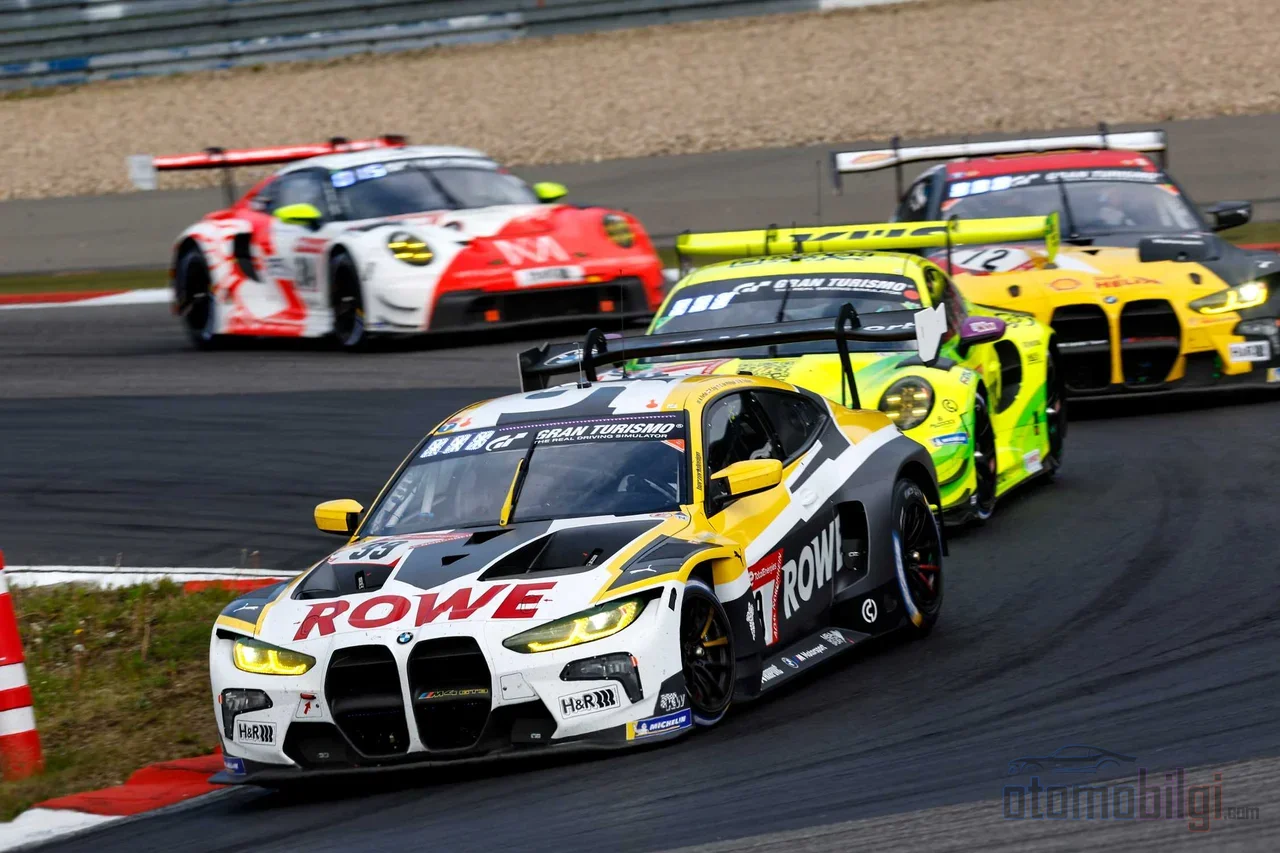
Think about it: the field includes Ferrari, Porsche, Mercedes-AMG, BMW and more; they all race in the same class, and sometimes only tenths of a second separate them in the fight for pole position. In F1 this is impossible, because every team designs its own car. But in GT3, this closeness is not a coincidence; it is the work of a system. In this article, we dive into that system: how exactly is BoP calculated, what data is used, and why is it reviewed again for every race?
What Exactly Is BoP and Where Did It Come From?
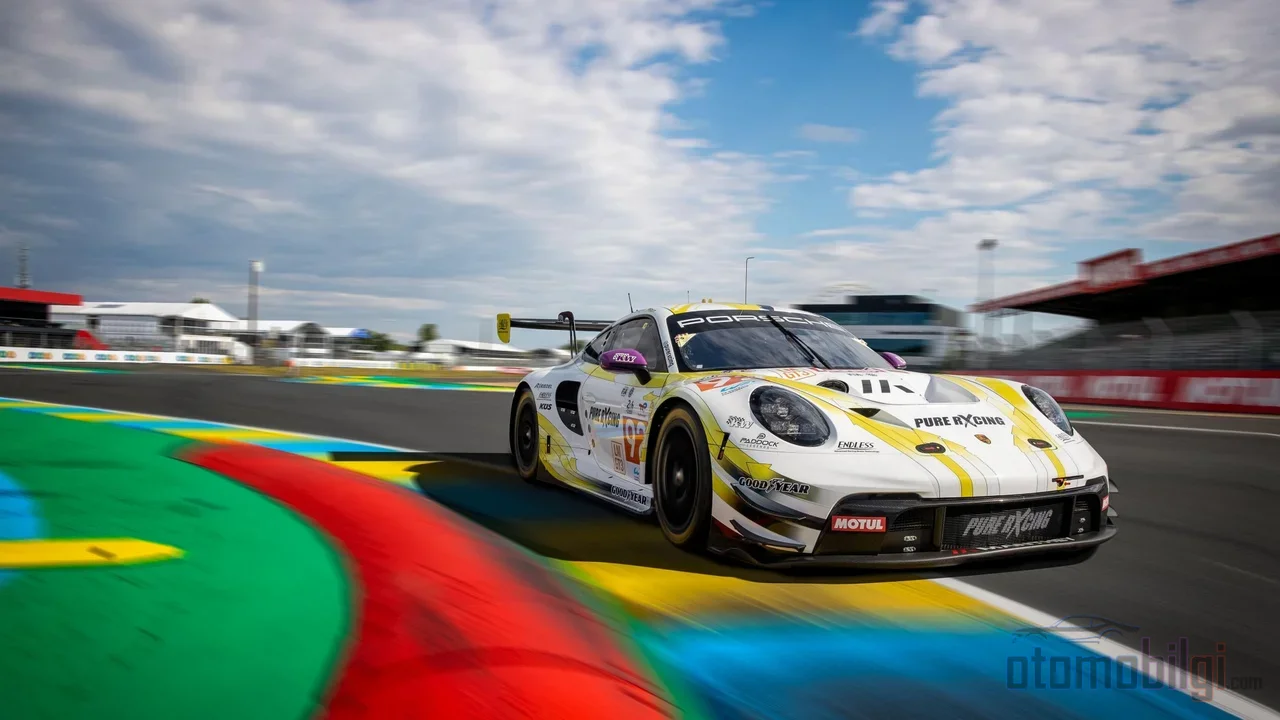
Balance of Performance, or BoP for short, means that the performance limits of cars with different designs (such as weight, engine power and aerodynamic aids) are adjusted by the regulator so they can compete fairly on the same field. The philosophy is this: we do not make the cars copies of one another; we preserve each brand's character. One can be a straight-line monster, the other a cornering master; BoP only tries to balance the results, that is, the lap times. This is the fundamental difference from parity systems that force all cars into identical performance (such as the approach in Supercars).
So where did this idea come from? In the early 2000s, international GT racing was in a serious crisis: development wars between manufacturers were driving costs through the roof, and privateer teams and small manufacturers were being wiped off the field. Stéphane Ratel, founder of SRO Motorsports Group, proposed a customer-focused GT category: instead of an open development category, a system that controls performance through regulation and is therefore sustainable. That concept became GT3.
The technical side was implemented by FIA Technical Consultant Peter Wright, with the support of FIA President Max Mosley. An interesting detail: BoP had never before been applied at the international GT level; one of Wright's first major tasks was balancing the Maserati MC12 in the FIA GT Championship for fair competition at the end of 2004. Today, SRO runs the application and management of BoP in its own championships.
What Data Is Collected? How Is BoP Calculated?
Calculating BoP isn't a simple matter of looking at a single race's results; it's serious data work. The performance data used includes acceleration rates, top speed (V-max) and aerodynamic data. These are collected from official tests, dedicated BoP tests, and dynamometer (dyno) tests.
SRO's method roughly works like this: Each model is first grounded with its homologation document, meaning the manufacturer's official specs are the starting point. Then group tests are conducted with SRO's own drivers, and each car's strengths and weaknesses are measured. This data is combined with the homologation information and fed into comprehensive computer simulations. So it's not just team lap times you're dealing with; it's a combination of measured physical data plus simulation.
What Happens If Teams Try to Hide Their Data?
This is where things get interesting. For a while, the only data sources were timing and scoring data; some teams became so skilled at hiding their car's true performance in this data that regulators were forced to change the rules. Today, in series like IMSA, every car is fitted with independent data loggers. That way, no matter how hard a team tries to look slow, the car's true performance is recorded. An eight-member technical committee analyzes the timing and logger data after every race, proposes adjustments, and holds meetings with all manufacturers. BoP tables are also published no later than 7 days before the official track activity.
Which Adjustments Are Used for Balancing?
BoP actually has a toolbox at its disposal, and it makes selections from it according to regulatory needs. The main tools are:
- Weight: Adding or removing mass from the car. The most classic method; it directly affects acceleration and braking.
- Air restrictor: Power is limited by restricting the air entering the engine.
- Turbo boost pressure: In turbocharged cars, maximum pressure limits are set according to the rev range.
- Ride height: A minimum suspension height requirement, used especially to balance cars that generate excessive downforce.
- Fuel rules: Refueling restrictions and capacity adjustments equalize pit stop cycles (stint lengths).
- Maximum revs: Engine rev limits are another balancing tool that affects power output.
A nice analogy goes like this: It's like a tall student in a class having to solve slightly harder questions on an exam... Nobody is changed, only the conditions are equalized. And a crucial detail: BoP adjustments apply not to a single car, but to all cars of the same model racing in the field. So every car racing under your favorite brand's name is subject to the same table.
Why Does It Change at Every Race and Every Track?
Because two different cars setting the same lap time doesn't mean they are equally fast. One may be fast on the straights, the other in the corners; when the track character changes, so does the advantage. That's why lap time data alone is not enough; the regulator must also understand where and how the car gains speed.
One of the best examples of this is the Bathurst 12 Hour. Mount Panorama's long straights, steep climbs and technical corners open up different areas of strength for each model: Mercedes-AMG and Bentley stand out on the climb with their big displacement and torque, while the Audi R8 shone with its downforce and balance in the upper section; Porsche was strong on fuel economy. Under the same BoP, completely different characters.
Some tracks require a special approach. For example, the initial BoP for the 2020 Rolex 24 was based on the previous year's post-race analysis; for newly homologated models, FIA/ACO wind tunnel and dynamometer data came into play. That's why BoP is never a fixed document; it is a living document reshaped from race to race with data and debate. Even in the sim racing world the situation is the same: on platforms like iRacing, when official race data shows meaningful gaps between cars, the BoP is updated and performance tables can be revised almost every race weekend.
| Track / Race | Track Character | Who Was Strong Where? |
|---|---|---|
| Bathurst (Mount Panorama) | Long straights, steep climbs, technical corners | Mercedes-AMG and Bentley on the climb, Audi R8 in the upper section, Porsche on fuel economy |
| Daytona (Rolex 24) | International speedway, requires special preparation | Initial BoP based on wind tunnel and dynamometer data for new models |
| Nürburgring 24 Hours | Long, complex, variable weather | In some years individual brands could be targeted before the race; BMW and Lamborghini, for example |
The Criticisms: Is BoP Really Fair?
No, BoP is not perfect and nobody claims it is. Teams and drivers regularly look to the BoP for the reason behind performance gaps. At Bathurst in 2017, the Mercedes-AMG teams complained about their lack of straight-line speed; Shane van Gisbergen's AMG couldn't battle the winning Ferrari. A year earlier, Laurens Vanthoor admitted he had to drive the Audi R8 literally at the limit in the track's upper section, pushing it to the max on every lap. When the regulator sees a car has a big advantage mid-season or even mid-race-week and takes regulation away from it, the debate lands in the center of attention.
Another point of contention: secrecy. Keeping the BoP tables closed means manufacturers don't know what is being done to them, and it draws criticism. Stéphane Ratel, the architect of GT3, argued that the system works transparently against such secret-adjustment conspiracy theories. Some series do exactly the opposite: they open the tables to everyone's view no later than 7 days before the race.
The system's tensions also produced concrete results. One GT3 team owner is known to have withdrawn from the VLN, citing BoP changes; the VLN management also worked on a revised procedure that involved GT3 manufacturers more in the process through the Technical Working Group. In other words, the criticisms are not left hanging in the air - they are transforming the system.
But Does It Actually Work?
In my view, the most convincing answer lies in the numbers. The 2018 Bathurst podium featured three different brands: Audi, Mercedes-AMG and Porsche. In 2015, a record had been set with seven different brands taking the top seven positions; in recent years, pole position has also been changing hands between different brands. A massive grand tourer like the Bentley Continental being able to race wheel to wheel with a McLaren 650S would not have been possible in any other system. The counterargument is also strong: without BoP, brands and sponsors who believed they could not win simply would not race at all; the field would not be this crowded. So how is it explained that the same teams keep winning? This is where the things BoP cannot balance come into play: pit stops, tire management, strategy and driver quality. The cars are equal, but the team work is not.
Frequently Asked Questions: Things People Wonder About BoP
Are all GT3 cars exactly equal with BoP?
Theoretically that is the goal, but in practice there is no perfect equality; there are only targets for how narrow the performance window should be kept. For example, IMSA aims for the lap time difference between cars in the GTD class to stay within approximately 0.5% ; for a 100-second lap, this corresponds to half a second. In higher classes, this target is pulled into an even narrower band such as 0.3% . Half a second may sound like a lot, but over a 24-hour race, combined with tires, fuel and traffic, this gap is often closed.
How is the system evolving?
Regulators are constantly updating their data collection methods. For 2024, IMSA had introduced a new BoP data collection process in order to adapt to the wide range of vehicles in the GT classes, aiming to capture better data; updated GT3 models (including the Ford Mustang GT3 EVO and Porsche 911 GT3 R Evo) are providing new data to this process. In addition, new metrics that better represent the average pace within a stint are also being used: alongside a metric focused on peak performance, approaches such as the Weighted Sorted Sector Lap, which more fairly reflects the overall pace throughout the race, are in effect. Wind tunnel data, engine dynamometer data and recorded vehicle data also continue to be monitored as references.
Conclusion: Not Perfect, But a System That Keeps Racing Alive
BoP in GT3 is not a perfect balancing system; but what could replace it? Having left behind an era when factory development wars monopolized the field, it lets dozens of different models race under the same roof. In doing so, it is a living mechanism that combines homologation data, group tests, logger records and simulations, recalibrates for every track, listens to criticism and revises itself. The next time you watch two different brands fighting within half a second at the finish, you now know which data and which debates lie behind that closeness. If it were you, which setting of the system would you change?
Sources
- Chat GT3: Who Created Balance of Performance?
- Understanding IMSA's Balance of Performance and Why It's Necessary - Autoweek
- How does 'Balance of Performance' work? - Race Torque
- Balance of performance - Wikipedia
- Balance of performance for COTA - GT World Challenge America
- IMSA rolling out new GT BoP process for 2024 - Racer
- Insight: How IMSA is Aiming to Capture the "Best Data" for BoP - Sportscar365
- Stephane Ratel on WEC's BoP secrecy - Motorsport.com
- BMW Gets Pre-Race BoP Hit - Sportscar365
- Explainer: What is Balance of Performance? - GT Report
- What Changed for GT3 in iRacing Season 3 - iRacerHub