Why Do ABS and Traction Control Work Differently in GT3?
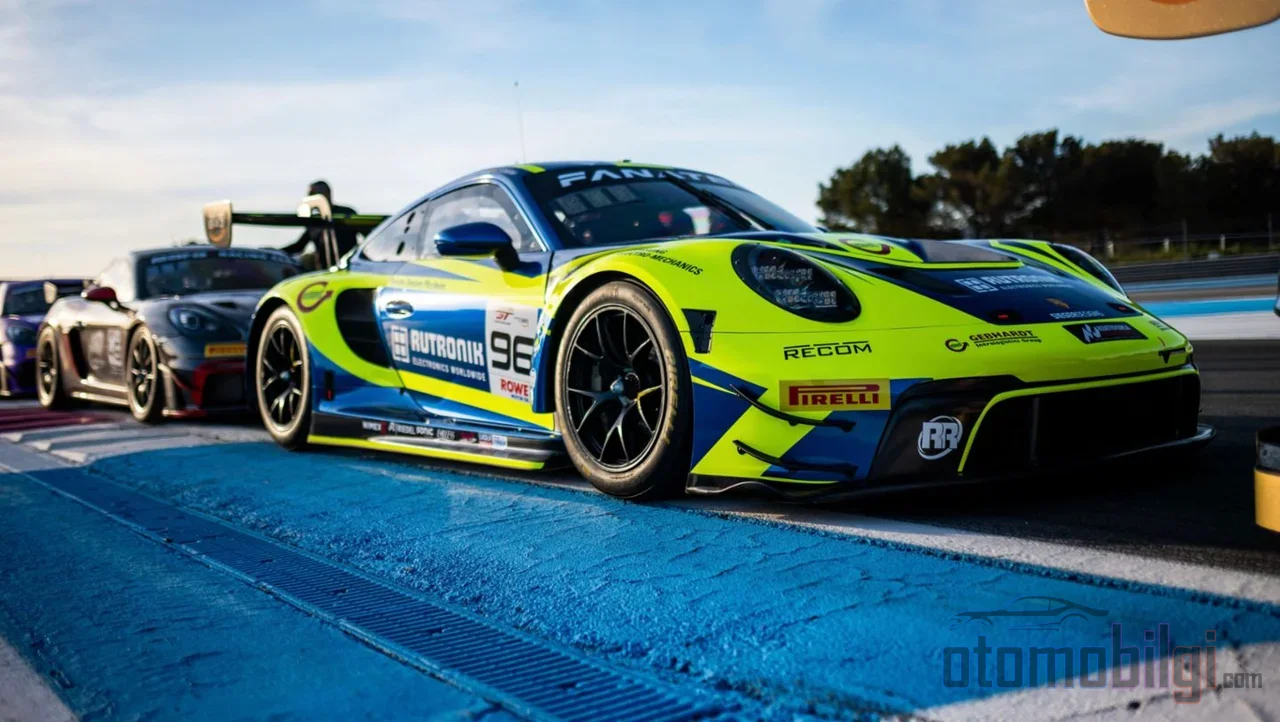
Have you ever slammed on the brake pedal and felt like the car was about to take over from you? GT3 cars have exactly that feeling, but they hold a surprise inside: these massive, hundreds-of-horsepower monsters actually come with driver aids that resemble the cars you drive on the highway. Except here, everything has a rule, a setting, and a story. So why do ABS and traction control work differently in GT3, and why are these allowed while other things are banned?
I'll admit, I was surprised when I first heard about it too. Shouldn't a race car keep everything pure? But the logic of the GT3 world works completely differently, and once you understand that logic, you see how cleverly the system was designed. Let's take a look together.
Which Driver Aids Are Allowed in GT3, and Which Are Banned?
In the GT3 class, the rule set is clear: the cars feature traction control, ABS, and embedded air jacks for fast pit stops. So these two systems are not luxuries; they are part of the class's standard equipment. Manufacturers either build the cars themselves or deliver them to customers through authorized workshops. Porsche also clearly states that a GT3 car has only the basic driver aids, and that basic pair is ABS and traction control.
But note, the list of what's allowed ends here. The rules open the door only to traction control, which manages the engine; electronic stability control, meaning the ESC we all know, is banned. What's the difference, you ask? While traction control suppresses rear wheel spin and controls engine power, ESC interferes with the car's entire dynamics, brakes, and torque distribution. The GT3 world says this: the computer can reach into the engine's behavior, but you will manage the car's nose. For a car enthusiast, this balance is the story itself, in my opinion.
Highlights
- In GT3, only ABS and traction control are free; ESC is strictly banned.
- The 992 generation 911 GT3 R arrived with fifth-generation racing ABS software.
- Low ABS setting numbers are used for wet, high numbers for dry surfaces.
- Thanks to the sequential gearbox, clutchless shifts at full throttle are possible.
Homologation: Why Are the Manufacturer's Hands Tied?
When a GT3 car is homologated, the core components and specifications are locked in. Major performance updates are restricted. So a manufacturer cannot say "we'll crush everyone with this engine update"; before entering races, the car is pinned to a specification, like an ID card. This lockdown also includes the driver aids: adjustable racing ABS and optimized traction control are defined as part of the homologation package.
Porsche gave a fine example of this. The 992 generation 911 GT3 R, introduced in 2022, came with a software application developed for the fifth-generation racing ABS, and it was emphasized that this software reduces tire and brake wear. The manufacturer's own traction control system is also part of the car. So the systems are fixed, but on the software side there is room for manufacturers' fine craftsmanship - and that is exactly where the interesting part begins. How does freedom seep into a locked-down car? The answer is in the settings menu.
Tuning Freedom: One System, Twelve Different Characters
Here is my favorite subtlety of GT3: the systems are fixed from car to car, but a wide range of settings for how to use them is left to the driver and the team. This is clearly visible with ABS. Low ABS setting numbers are used for wet surfaces, high numbers for dry surfaces, and 12. steps correspond to a separate function. So the person at the wheel gives their own answer to the question "how much help do I want right now?" before every corner.
The situation is similar on the traction control side. More TC is set on wet surfaces, less on surfaces with high grip, and this setting can even be adjusted inside the car during driving. In the cockpit, you change the character of the system with a single button - just like turning up your phone's brightness when stepping into the sun. The system is the same; its response is shaped according to the conditions.
So, Do Professionals Turn These Systems Off?
This is also one of the most debated questions in sim racing circles: Do GT3 drivers always keep traction control on? In reality, cars use both systems, and they contribute significantly to lap time. ABS prevents the tire from flat-spotting; TC, in turn, reduces excessive slip on the rear tire. Preventing excessive wear on the rear tires is also one of TC's important jobs - and since tire management is a matter of life and death in 24-hour races, its value is immense.
Still, not everyone agrees that the system is always an advantage under every condition. There are those who argue that deeper, harder braking is possible without ABS and that apex control increases; this debate continues in both the sim and real worlds. Another widely discussed topic is that keeping TC fully off (TC0) increases risk on worn tires, and managing that risk is a skill in itself. So these systems are not an automatic speed button; using them in the right place with the right settings is still the driver's job.
The BoP Equation: Performance Is Balanced, Hardware Is Not
At the heart of GT3 racing lies the Balance of Performance, or BoP. This system aims to create an equal playing field between different cars through technical adjustments, primarily weight and power. The goal is for cars from different manufacturers to compete on the same arena. With the sensors they carry, the cars feed the data pool at every race, and BoP comes to rely on more and more data over time. This makes BoP not a static decision, but a living mechanism.
But the critical detail is this: BoP balances performance, it does not equalize hardware. Two cars brought into balance can still feel completely different from one another. A car's ABS character, TC map, or the engine's torque delivery can create an entirely different experience in your hands. Even though they are close on the timeline, the steering feel is never quite the same. Detailed, explicit information on exactly how the BoP is embedded inside the electronic maps is limited; it is best to avoid definitive statements on this matter.
Amateur and Professional in the Same Car: Whom Do the Systems Serve?
In GT3's pro-am world, driver categories compete together in the same car. In the classification, Silver covers rising talents and semi-professionals; Bronze covers amateurs, meaning gentleman drivers - not full-time, but people who race with passion. In this mix, the role of ABS and TC becomes far more meaningful, because everyone is subject to the same laws of physics but does not have the same experience.
The point Tommy Milner raises is very apt here: ABS made it easier to extract maximum braking performance and changed GT3 racing compared to the previous GTE. For a gentleman driver, this means an incredible safety net in braking. A professional, meanwhile, can keep the same system at a threshold and set it up to provide less assistance accordingly. In other words, the same system offers a different car depending on the driver's level. In my view, one of the secrets of GT3 bringing so many teams together on so many stages worldwide - at legendary events like Spa, the Nurburgring, Daytona, and Bathurst - is precisely this accessibility.
There is of course a debate that deserves discussion: some argue that "racing should be about driver skill, remove ABS and TC, bring back the skill," and complain about the loss of clutch skills. They have their valid points, but GT3's business model comes before this debate: this class was designed to bring amateurs and professionals together on the same stage, and the systems are the building blocks of that design.
Sequential Gearbox and Engine Management: The System's Next-Door Neighbor
Traction control and ABS do not exist on their own; the same brain manages them along with engine management and gearbox control. In a sequential gearbox, the shift signal is sent via a switch on the paddle assembly, and the ECU responds to this input and commands the gearbox to shift. Thanks to sensors, upshifts and downshifts can be performed safely at full throttle, without the clutch. In a sequential system, traction interruption is minimal, which is a big advantage - on the other hand, the gears are subjected to far higher stress. In other words, the price of speed is paid as mechanical fatigue.
When you think of this trio - the ECU, the sequential gearbox, and the assistance systems - together, you see that a GT3 car actually works like a single electronic organism. While TC protects the rear wheel, the gearbox shifts gears, the ECU calms the engine, and you only choose the direction and the braking point. The distinctions you see in sim racing, like TC1 and TC2, come exactly from this architecture; different maps are used for low-rev, low-speed zones versus other zones.
In summary: Why Do They Work Differently?
Now we have arrived at the answer to your question. In GT3, ABS and traction control work differently because the whole logic of this class is built on controlled balance: the manufacturer locks the systems into a fixed package through homologation, BoP balances performance without deliberately equalizing the hardware, and the remaining freedom - fine calibration according to setup level, track surface and tire condition - is left to the driver and the team. The systems are essential for safety and tire management, but their character is shaped in every driver's hands. The ban on ESC also protects this balance: assistance is limited to the engine, and the car's dynamics are yours.
In my opinion, this is one of the most beautiful ironies of motorsport. People who complain that the assistants in your street car "kill talent" find themselves arguing the exact opposite for GT3, for the same reasons. Because in GT3, these systems are not just about speed - they are a bridge that carries the amateur's dream onto the same stage as the professional's reality. Do you think this balance can be preserved in the long run, or will technology one day narrow that field of freedom too? I would put my money somewhere in between.
Sources
- Group GT3 - Wikipedia
- Debut for the newest generation of the Porsche 911 GT3 R - Porsche Newsroom
- A different class: How LMDh and GT cars differ - Porsche Racing
- Chat GT3: What Does Homologation Mean? - GT World Challenge America
- Chat GT3: How are Driver Rankings Categorized? - GT World Challenge America
- What is Balance of Performance? - 24 Heures du Mans
- Balance of Performance: The Equalizer in GT Racing - Fanatec Explorer
- Sequential gear systems - PPG
- Sequential Transmissions - Everything You Need to Know - BAR-TEK
- Should You Use Traction Control and ABS? - Track Titan