How Does the GTD Pro Class Work at the Daytona 24?
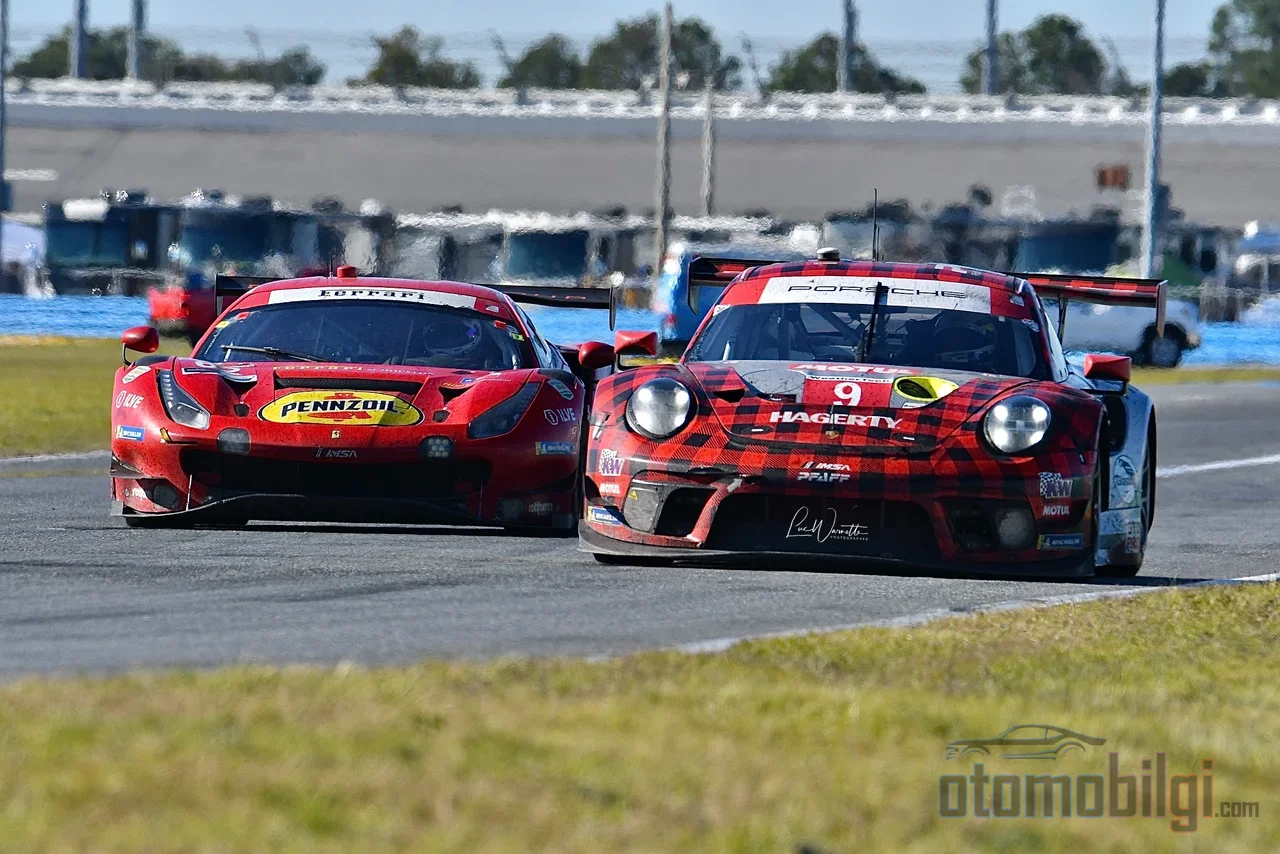
What happens at midnight when three different classes enter the same corner on Daytona's banked oval? How many times have we heard the question that nags at you while watching the GT side of the Rolex 24: Why are cars that are absolutely identical racing in two separate classes? Here's the answer, more fun than you'd expect - and it rests entirely on the drivers' shoulders.
Highlights
- The cars in GTD and GTD Pro are built to the same FIA GT3 standard; the only major difference is the driver categories.
- The classes are distinguished only by the color of the number plate: green for GTD, red for GTD Pro.
- At the 2026 Rolex 24, 36 GT cars raced: 15 in GTD Pro and 21 in GTD.
- GTD requires at least one Silver or Bronze-rated amateur driver.
Same Car, Two Different Classes: Where Is the Difference Hidden?
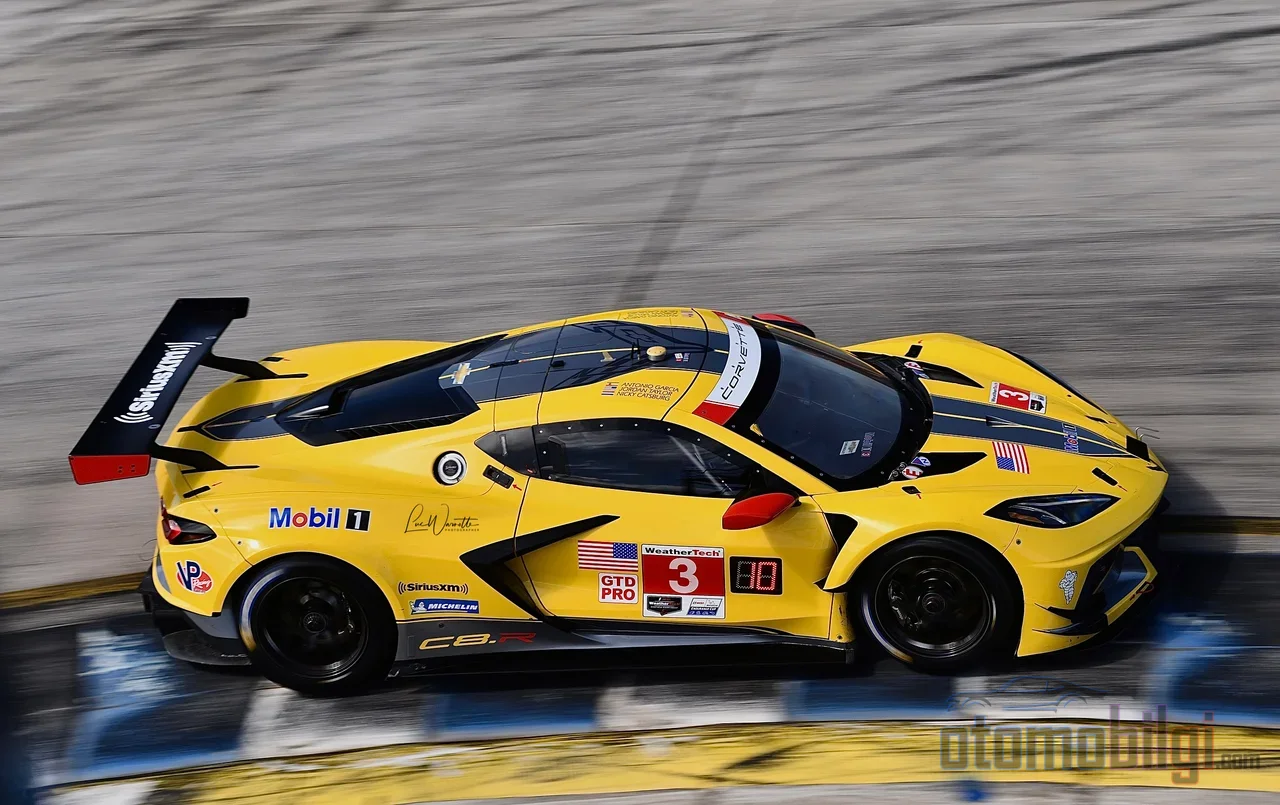
The IMSA WeatherTech SportsCar Championship has two main vehicle philosophies: Prototypes with closed cockpits and GTs derived from road-going production models. These are divided into four classes: GTP, LMP2, GTD Pro, and GTD. The interesting thing about the pair we're putting under the microscope today is this: when the car in GTD Pro and the car in GTD come nose to nose on track, there is technically no difference between the two.
Both are built to FIA GT3 regulations, and both use standard Michelin tires. So what separates the classes from each other? The answer is one word: categorization. The FIA rates every driver as Bronze, Silver, Gold, or Platinum based on age and career record, and these ratings are updated every year. GTD Pro is a door opened entirely to fast names; GTD, on the other hand, is IMSA's Pro-Am class, where amateur speed is blended with professional speed. Think about it: the same brand of car, but one sits in a factory driver's seat and the other in that of a weekend-enthusiast businessperson - that's the cornerstone of the whole system.
Looking from outside the track, it's not even easy to tell them apart. The two classes are distinguished from each other only by the color of the number plate: green for GTD, red for GTD Pro. While watching the race live, it's genuinely hard to guess which class a car is in without looking at the plate. GTD Pro entries usually come with manufacturer support; meaning engineering resources and factory-affiliated Gold/Platinum drivers form the backbone of this class. In the 2025 season, this class featured Aston Martin, BMW, Chevrolet, Ferrari, Ford, Lamborghini, Lexus, Mercedes-AMG, and Porsche - pretty much the entire GT world.
FIA Ratings: An ID Card from Bronze to Platinum
For this system to work, a yardstick is needed. FIA Driver Categorization divides drivers into four groups based on on-track performance, career history, and age: Bronze is the entry-level tier, while Platinum is the top factory-level tier. At the start of each season, IMSA looks at these ratings and puts each team's roster rules into effect.
GTD's rule is clear: the lineup must include at least one Silver or Bronze-rated amateur driver. Moreover, the number of drivers is limited; In GTD, teams may take at most one Platinum or one Gold-rated professional, and at least one Silver/Bronze name must be in the lineup. Thanks to this rule, the identity of the class is preserved: this is the Pro-Am model as it stands at Daytona. The system has been continuously adapted so far; ahead of the Rolex 24, the minimum lap time for Bronze drivers in GTD Pro had been reduced, because wisely scheduling the amateur driver's stints during the night hours is part of teams' strategy.
These ratings do not serve exactly the same function in every series; a name counted as Am in one series may race in the Pro category in another. It sounds strange but it makes sense: every championship wants to balance its own pool with its own rules.
Classes Merging in Traffic: What Is Life Like on Track?
At Daytona, GTD and GTD Pro race on the same grid, in a combined GT field. They take their places according to overall order, not qualifying times; that is, if a GTD driver sets a faster lap than a GTD Pro driver, he starts ahead. This structure, where not only the rules but the track itself is shared, rewrites the character of the race from the start. For example, at the 2024 Sebring 12 Hours, the fastest GT qualifier was a GTD Pro car, but three GTDs followed immediately behind - the gap between classes is not as wide as we think.
The real challenge of the race, however, is on the track. Experienced GT drivers stress that long races are serious business: because of constant traffic, the pit stop rhythm and the mix of classes, duels outside one's own class happen frequently on track. GTD teams normally do not follow GTD Pro cars at pit entry, they set their own rhythm; but when the entire GTD Pro field gets stuck behind the slowest GTD car - especially when an Am driver is at the wheel of that car - things become seriously complicated. During the night stints, this picture gets even harsher: the lights narrow the targets, two-class traffic combines with driver changes, and the team tries to open the pit window at exactly the right moment. At these moments, a one-second mistake can turn into tens of seconds in the class's overall classification.
Moreover, the use of high-rated drivers is also at the center of strategies. Some teams specifically schedule their Gold or Platinum drivers for night duty, because experience behind the wheel is the biggest asset in the riskiest hours.
The 2026 Rolex 24: How Did the Field Look?
In the 2026 race, the GT field was divided into two classes: 15 GTD Pro and 21 GTD cars, represented by nine manufacturers. BMW, Chevrolet, Ford, Lamborghini, Lexus, Mercedes-AMG and Porsche were present in both classes, and a total of 12 GT manufacturers were counted across the entire field. Porsche, on its own with 9 cars, was the most represented brand; Ferrari, Chevrolet, Mercedes-AMG, BMW, Aston Martin and Ford were also heavily present in the field.
Among GTD Pro's 15 factory-backed cars, names like Paul Miller Racing's BMW M4 GT3 EVO stood out. On the Chevrolet front, the No. 4 Corvette Racing by Pratt Miller car raced with the trio of Tommy Milner, Nicky Catsburg and Nico Varrone. The defending GTD Pro Rolex 24 winning lineup was said to have kept two-thirds of its crew, with the only change being the addition of the previous year's pole sitter to the roster - the fact that teams trust winning combinations that much is telling in itself.
Looking at mid-season, BMW was sitting ahead of Mercedes-AMG, Chevrolet, Porsche and Lamborghini in the GTD Pro manufacturer standings. So Daytona is not just a single race, it is the opening scene of a manufacturer battle that will run all year long.
How Is It Different from Europe? Comparison with GT World Challenge
The same GT3-based cars exist in Europe too, but the class architecture is built completely differently. In GT World Challenge Europe, cars race in four separate classes: Pro for fully professional lineups, Pro-Am for mixtures, and additionally Silver, Gold and Bronze Cup tiers for amateur and semi-professional drivers. So class separation is based mostly on the driver makeup within the lineup; IMSA, on the other hand, gathers GTD under a single roof as one Pro-Am class and places GTD Pro, a separate all-pro class, alongside it.
The Nurburgring 24 Hours system, meanwhile, comes from a completely different tradition: In lineups entered in the SP9 Pro-Am class, the sum of the drivers' ratings must stay below a certain threshold. You can liken this to a hand of playing cards: add up the ratings of the drivers you hold, and if you exceed the limit you move up to a higher class. At Daytona, however, this calculation is more flexible; the rating and number of amateur drivers you put in the lineup are what matter, but they do not change the class name.
| Feature | Daytona 24 (IMSA) | GT World Challenge Europe | Nurburgring 24 |
|---|---|---|---|
| Technical basis | FIA GT3 | FIA GT3 | FIA GT3 (SP9) |
| All-pro class | GTD Pro | Pro Cup | SP9 Pro |
| Amateur rule | At least one Silver/Bronze required in GTD | Silver/Gold/Bronze Cup lineups | Lineup rating total against a threshold |
| Based on class separation | Driver categorization | Driver categorization | Sum of lineup ratings |
Night, Traffic and Driver Changes: The Strategy Chain
What sets the Rolex 24 apart is the rhythm of the drivers on track. The car does not go to the pits throughout the race, only its driver and tires change; so the team treats every pit window like a chess move. Wayne Taylor Racing's GTD team had to switch into a strategy mode balancing pit stops with driver changes during a stretch of the 2026 race that coincided with the longest safety car period in history. So the real work is done not only on the track but at the pit wall too.
The middle-of-the-night stretches push this balance to its peak. During a driver change, the new name sitting in the cockpit heads onto the banked oval before finding their rhythm and immediately enters two-class traffic. On one side, the factory-pace cars of GTD Pro; on the other, the paces of GTD that leave room for amateurs. In short, for 24 hours the track sits inside a constantly shifting puzzle.
Can a GTD Car Beat GTD Pro? Here's the Clear Answer
Yes, technically it can be beaten. Since the cars are exactly identical, on a good day a GTD crew can end up ahead of GTD Pro. Sebring 2024 was a live example of this: The GTD winner rose to the overall GT lead for a while. But at the end of the race, GTD Pro filled the top nine ahead of the GTD winner. So surprise is possible in isolated moments, but at the end of 24 hours, factory support and a fully professional crew usually take the win.
According to the system's defenders, IMSA's two-class GT approach is right: Winning in GTD Pro requires 100% efficiency, and the system has been running with the same GT3 cars for years - despite occasional grumbling, the structure keeps working well. On the other hand, some argue the class structure needs to be rethought; in particular, it is debated that the hierarchy within GTD itself shadows the amateur drivers' contribution to the race. So the GT story at Daytona is constantly being written not only on the track but also in the rulebook.
So, in summary, what's the difference between GTD and GTD Pro? The cars are the same, the tires are the same; the difference lies in driver categorization, the color of the plates, and the amateur-professional balance of the crew. Whether a driver counts as amateur is also defined by the FIA's Bronze or Silver grade. This seemingly simple framework turns the track into a stage of strategy at every moment of the 24 hours. If it were you, how would you plan who takes the night stints?
Sources
- WeatherTech: The Classes | IMSA
- Class Warfare: GTD PRO, GTD Cars Race Together Yet Separately | IMSA
- 2025 IMSA Sporting Regulations (PDF)
- 64th Rolex 24 At Daytona – GTD PRO and GTD Team-by-Team | IMSA
- Entry List Notebook – 2026 Roar Before the Rolex 24 | IMSA
- IMSA class guide | RACER
- Bronze GTD Pro Drive Time Reduced for Rolex 24 - Sportscar365
- GT World Challenge Europe capacity grids announcement
- Guide to the Nürburgring 24 Hours classes | Race Car Engineering
- 2026 GTD - Rolex 24 Post Race Report | Wayne Taylor Racing