Why Is the 24 Hours of Spa the King of the GT Calendar?
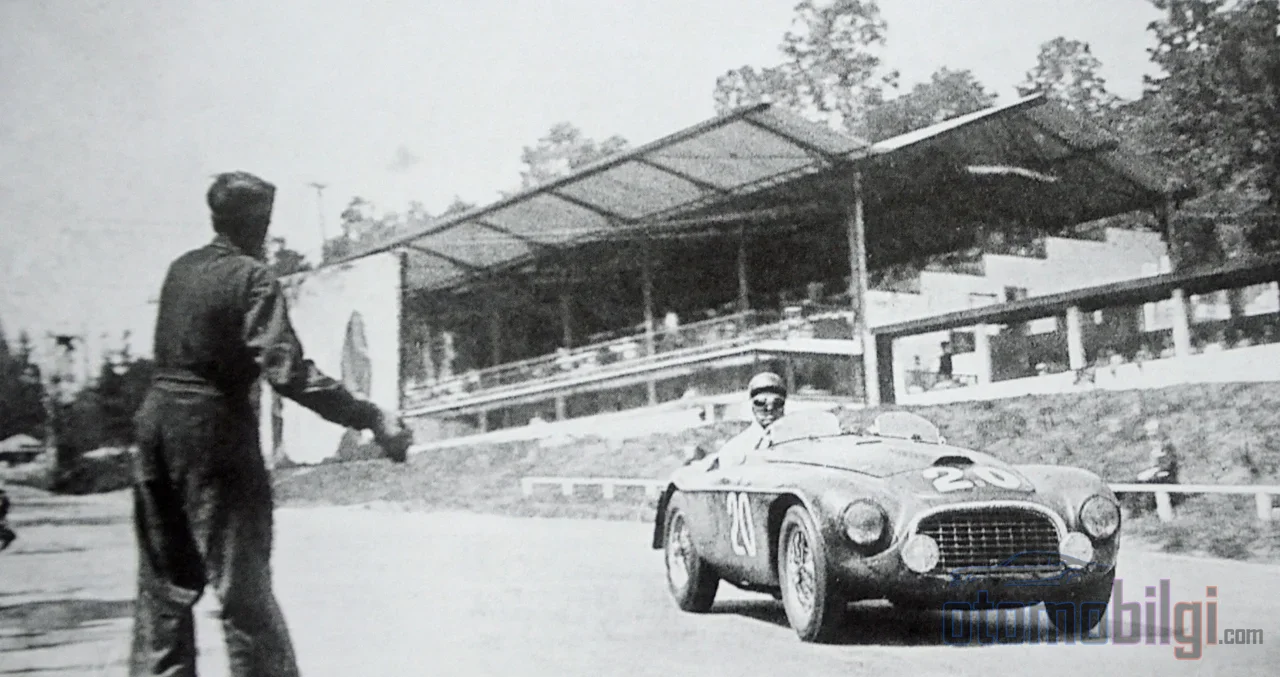
In the middle of the night, the Ardennes forest, and 70 GT3 cars on the same track all at once. One is calculating its braking distance at the bottom of Eau Rouge, another is searching for the rain line at the top of Raidillon. Why is the 24 Hours of Spa not "just a GT race," but considered the annual summit of the GT world? The answer doesn't fit in a single sentence; it's hidden in a century of history, a massive grid, and the brutality of night conditions. If you're ready, let's unfold this legend layer by layer.
A Century-Old Story: The 24 Hours of Spa from 1924 to Today
It all caught fire from the flame that started at Le Mans in 1923. Seeing the success of the French 24-hour marathon, the Royal Automobile Club of Belgium decided to establish the same on their own soil. The first race was run on July 19-20, 1924, under the name Grand Prix de Belgique, with 27 cars taking the start. So Spa's 24 hours is only one year younger than Le Mans - think of them as two sibling races with almost no difference between them.
The first victory went to the duo of Henri Springuel and Maurice Becquet, with a 2.0-liter Bignan; their average speed barely reached 78 km/h. It seems slow compared to today's GT3 cars, but on the roads of that era, it was a true display of courage. In 1927, Excelsior went down in history as the only Belgian manufacturer to win the race.
Then came the rising Alfa Romeo era: Between 1929 and 1938, the Italian marque collected five victories with its 6C and 8C models, and in its shadow, Attilio Marinoni won three years in a row - a record that could only be matched 54 years later by Hans Heyer. Interspersed were the cancellations of 1934, 1935 and 1937, followed by the war years and a gap lasting until 1948. In the post-war era, in 1948 the Aston Martin factory team competed with the DB1, and the following year Luigi Chinetti wrote his name into the record books as the first driver to win both Spa and Le Mans in the same season.
How Did the GT Era Begin?
Until 2000, the race was under the monopoly of touring cars. At that point the line changed: the track was opened exclusively to GT cars, and the 24 Hours of Spa earned a universally agreed-upon title - the biggest GT race in the world. The GT era officially got underway in 2001; the race was first part of the FIA GT Championship between 2001 and 2009, and in 2011 it took on its current format, becoming the flagship race of the GT World Challenge Europe series.
Highlights
- The first race was run in 1924; only one year younger than Le Mans.
- The 2026 edition featured 70 GT3 cars and 10 manufacturers on the grid.
- A record-breaking 132,000 spectators watched the 2026 race.
- Five classes race on the same track: Pro, Gold, Silver, Pro-Am and Bronze Cup.
The Track: Why Is Spa-Francorchamps So Special?
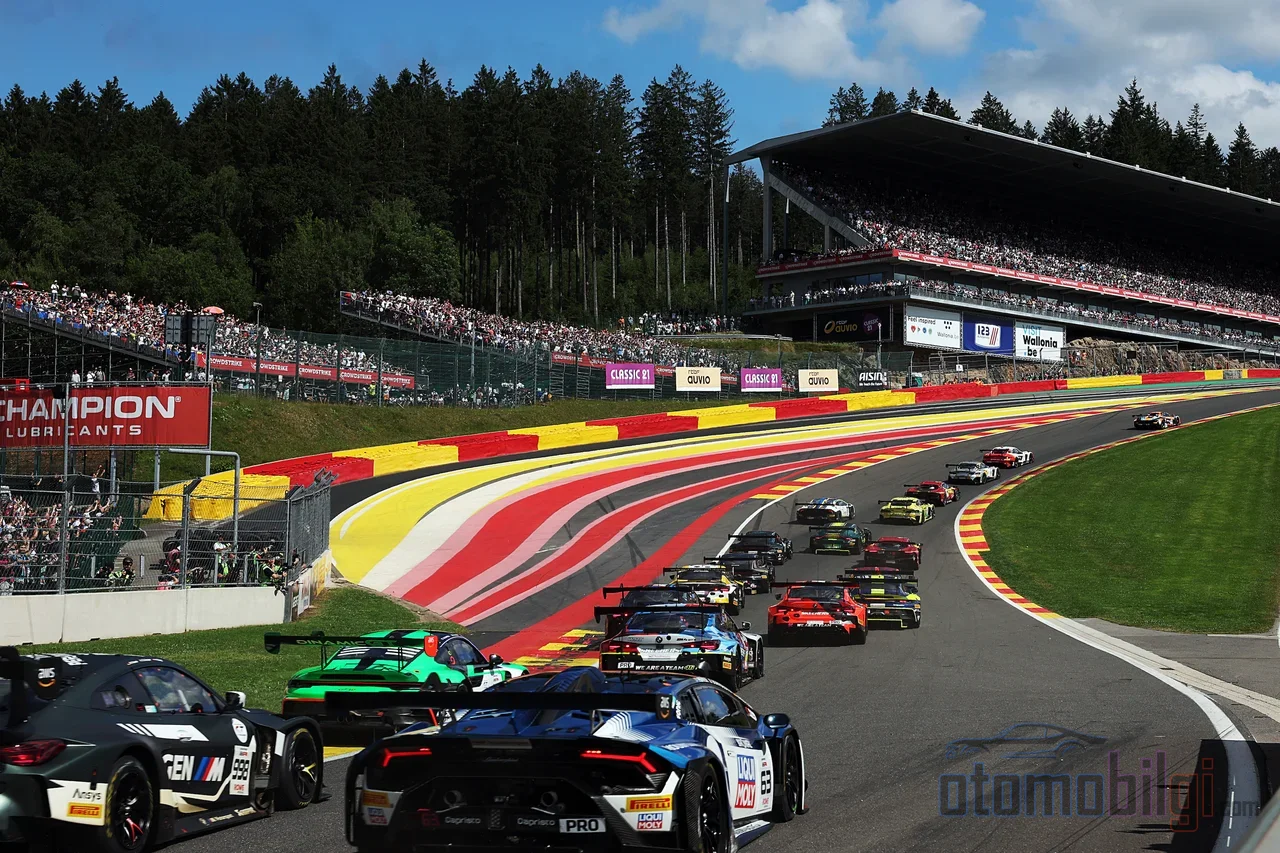
Spa-Francorchamps is a track drawn by Jules de Thier and Henri Langlois Van Ophem on public roads between Francorchamps, Malmedy and Stavelot. The original triangular circuit was approximately 15 km; in 1979 it was reduced to today's roughly 7 km permanent layout. Despite this shortening, the track still holds the distinction of being the longest circuit on the F1 calendar.
The fastest recorded lap average on the old 14 km layout was over 226 km/h - in an era of public roads, long before today's safety barriers existed. Even this figure sums up Spa's character: this is the track of speed and driver courage.
Eau Rouge or Raidillon?
This is where most fans get it wrong. When the "Virage de l'Ancienne Douane" corner was cut in 1939, today's legendary climb was born. In common usage the whole sequence is called "Eau Rouge", but technically the lower corner is Eau Rouge and the corner at the top is Raidillon. So the summit of that famous full-throttle climb the drivers race up is actually Raidillon. That's the distinction in lap time slices; the goal is to make it up that sharp corner combination without ever lifting off the throttle. GT cars go through here at 160-180 km/h - imagine it: night, rain, and nothing in front of your eyes but the glow of headlights.
Another of Spa's surprises is the weather. Since the track stretches over more than 7 km through the Ardennes forest, one section can be dry and another wet. Taking Eau Rouge and Blanchimont flat out is critical both for a fast lap and for overtaking; that's what makes the track highlight driver skill so much - these unpredictable conditions. A new weather lottery is drawn on every lap for 24 hours straight.
The Massive Grid and Class Structure: Why the "Biggest GT Race"?
The numbers speak for themselves: In the 2026 edition, run on 27-28 June, the 79th race had 70 GT3 cars on the grid. All of these cars race on a single track, at the same time, under the same rules. For comparison, an analogy from everyday life: you're used to seeing 20-30 cars in a normal GT3 race; at Spa that number more than doubles. At 70 cars times three drivers, nearly 200 pilots are battling for the same victory - the 2026 grid had exactly 45 different nationalities among its drivers, the largest groups being 35 British and 20 Belgian drivers.
The manufacturer side tells the same story: in 2026 the track featured 15 Porsches, 11 Mercedes, eight each of BMW, Ferrari and McLaren, 8 Aston Martins, 6 Audis and cars from other brands. Porsche, alongside Mercedes-AMG, is among the most represented brands together with BMW, Ferrari and McLaren. The fact that 10 manufacturers commit serious resources to the same 24 hours shows that this race is a showcase for manufacturers too.
Five Classes, One Track
The classes are determined by the drivers' FIA ratings: Pro, Gold Cup, Silver Cup, Pro-Am and Bronze Cup. While the Pro class is the battlefield of fully professional line-ups, categories like Bronze Cup and Pro-Am carry amateur-origin drivers into the same car as the professionals. The 2026 grid had 18 Pro, 8 Gold, 17 Silver, 16 Bronze and 10 Pro-Am cars. So at midnight at Raidillon, a world champion and a businessman can pass as close as possible - this is the purest form of the pro-am spirit of GT racing.
The Pro-Am class has a separate detail: this category races only at Spa throughout the season. In 2026, nine cars fought for the championship solely for this single race. No other GT race can be the sole reason for a class's existence.
Impact and Prestige on the Championship
The 24 Hours of Spa is the most prestigious round of the GT World Challenge Europe Endurance Cup. The series aims to be a WEC-like endurance championship, and Spa is the race that leaves the heaviest mark on this cup. It is also the flagship round of the Intercontinental GT Challenge - meaning both main arteries of the global GT calendar build their highest tension over this single weekend.
The manufacturers' view of this race is, in one word, serious: Mercedes-AMG describes the race as the world's biggest GT event and one of the most grueling endurance races in motorsport. What this means is that manufacturer squads and customer teams devote the season's biggest budgets, the best driver combinations, and the most highly developed car packages to Spa. For a driver, the cup won there is one of the highest ranks attainable in the GT endurance side of a career; for a team, it is the year's most visible record of success.
What Happened in 2026
The 2026 edition once again showed what this prestige means. Porsche customer team Lionspeed GP took the victory with its lineup of Thomas Preining, Ricardo Feller, and Bastian Buus, and Porsche celebrated its first Spa win since 2020. The grandstands saw a record broken: 132,000 spectators followed the five-day event. The event was not only about the race either: A three-evening music program called "Nights of Spa" and the newly introduced "Rooftop Party" at Thursday night practice turn Spa into more of a festival than a race weekend. Considering that the 2025 winner was Grasser Racing's Lamborghini Huracán EVO2, the summit changes hands every year - in other words, this is not a cup easily won.
Spa's Place Compared to the Other Great 24-Hour Races
Among endurance classics, Spa is always mentioned alongside Le Mans, Daytona, Sebring, and the Nurburgring. But there is an important nuance: The Le Mans-centered "Triple Crown" definition covers Daytona, Sebring, and Le Mans, not Spa. This is not a shortcoming - Spa's summit belongs to a different category. While Le Mans and Daytona are the crown of prototype racing, Spa is the kingdom of GT3 cars alone. So the question is not which race is bigger; it is which race is the peak of its own domain.
| Race | Focus | Difference from Spa |
|---|---|---|
| 24 Hours of Le Mans | Prototype + GT mix | Spa is open only to GT3 cars |
| 24 Hours of Nurburgring | GT3 and more classes | Spa is not a single-marque event; 10 manufacturers at once |
| 24 Hours of Daytona | Prototype + GT mix | Spa is the flagship round of the GT world |
| Bathurst 12 Hour | GT3, 12 hours | Spa is twice the distance and twice the grid |
The comparison is clear: no GT3 race comes close to Spa's scale on its own - the number of cars, manufacturer diversity, and participation. Over 100 years of history, 70 vehicles, 10 manufacturers, 45 nationalities and 132,000 spectators come together in a single event at the same time.
So What Is the Short Answer: Why Is Spa the King of the GT Calendar?
To sum up: The 24 Hours of Spa is a 24-hour marathon run in the Ardennes since 1924, bringing 70 GT3 cars, 10 manufacturers and 45 nationalities together on a single track, serving as the flagship round of both the GT World Challenge Europe Endurance Cup and the Intercontinental GT Challenge, and awarding one of the most prestigious trophies in GT endurance racing to its winner. Drivers tested by night conditions on the Eau Rouge-Raidillon sequence race on the same track in the purest form of the pro-am model, and the result becomes the annual summit of the GT world.
If Le Mans is the king of prototypes and Daytona the king of mixed classes, Spa is undisputedly the king of GT3. And in 2026, with a record-breaking crowd, that title was confirmed once again. When June arrives next year, there will be one more reason for eyes to turn to the Ardennes.
Sources
- Total 24 Hours of Spa: A History Part I: 1924-1953
- 24 Hours of Spa - Wikipedia
- History of the circuit Spa-Francorchamps
- CrowdStrike 24 Hours of Spa presents exceptional 70-car grid for 2026 edition
- Porsche triumphs in record-breaking CrowdStrike 24 Hours of Spa
- Porsche customer team Lionspeed GP wins the 24 Hours of Spa
- A guide to multi-class racing at the Total 24 Hours of Spa
- Circuit de Spa-Francorchamps
- Explainer: What is the 24 Hours of Spa?
- Nights of Spa 2026