How Does the Sprint Cup Work in GT World Challenge?
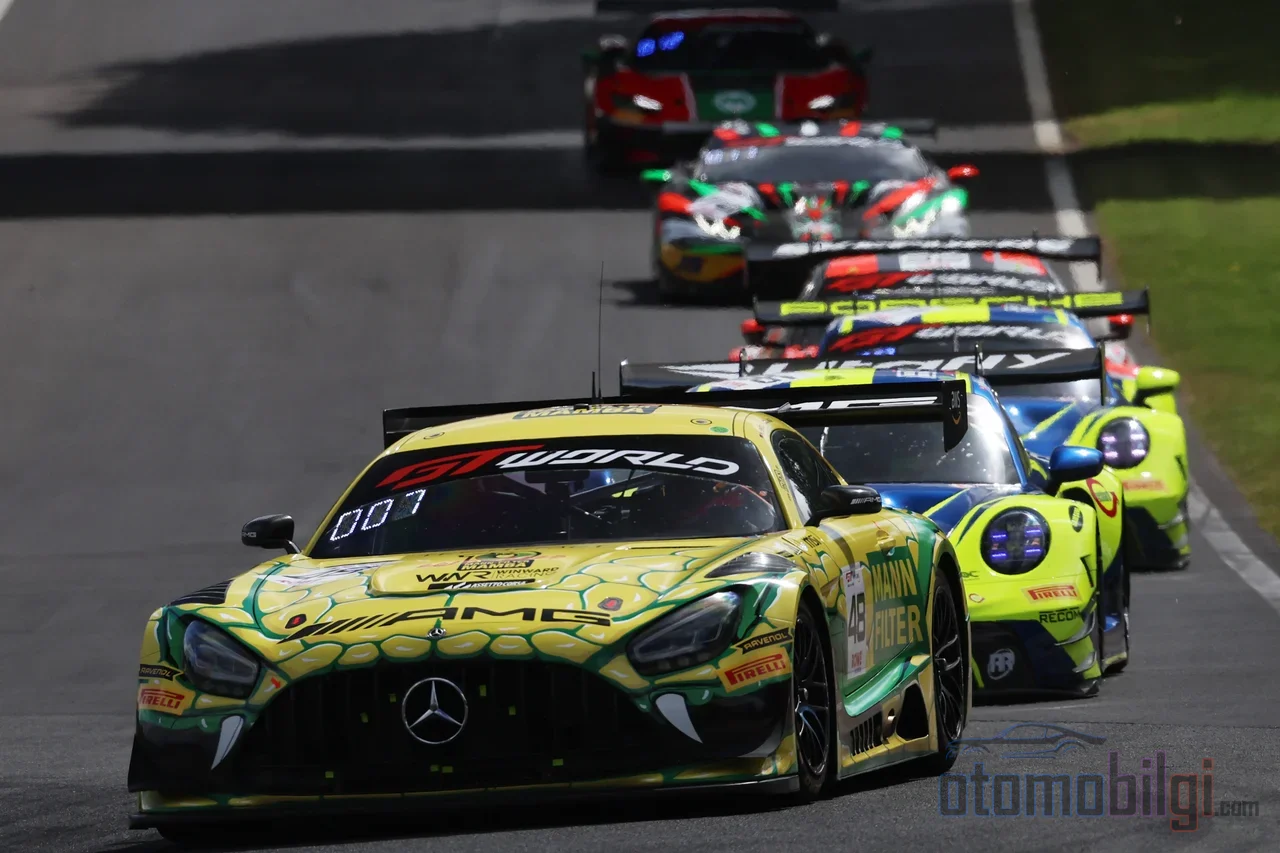
Say you're watching GT3 cars on TV on a Sunday evening: Ferrari, Porsche, Mercedes, Audi, all within seconds of each other. The race ends in an hour, two pilots share the car in turns, and everyone has to pit at the same time. A question mark immediately pops into your head: if there are marathons like the 24-hour Spa, what's the point of these short races? Well, the GT World Challenge Europe Sprint Cup is exactly the answer to that question, and believe me, it can be far more relevant than endurance racing.
On this page, I'll explain how Sprint Cup weekends flow, how the two races are scored, and why that famous mandatory pit stop isn't as simple as you think. If you're ready, let's get started.
What's the Difference Between the Sprint Cup and the Endurance Cup?
GT World Challenge Europe is a championship organized by SRO Motorsports Group, run with cars that comply with FIA GT3 regulations. It's split into two separate cups: the Sprint Cup and the Endurance Cup. Both cups consist of five weekends each, and the season is spread across a calendar of 10 rounds in total. In other words, the same championship is run with two different spirits.
You already know the Endurance Cup side: long marathons ranging from 3-hour races up to the 24 Hours of Spa, night stints, fuel strategy, fatigue management. The Sprint Cup, however, has a philosophy that's the complete opposite. Two 60-minute races are run at every sprint weekend: one on Saturday, one on Sunday. There's no room for error; you won't find time to recover within 60 minutes.
The cars are the same in both: GT3 machines with roughly 500-600 horsepower, in the 1,200-1,350 kg range, a single tire supplier in Pirelli, ABS and traction control free, active aerodynamics banned. The difference isn't in the cars, it's in the spirit of the format. Endurance demands a marathon runner; sprint demands a sprinter. The series' record-breaking Sprint Cup grid of 45 cars in 2026 is proof of how beloved this format is.
How Does a Sprint Weekend Work?
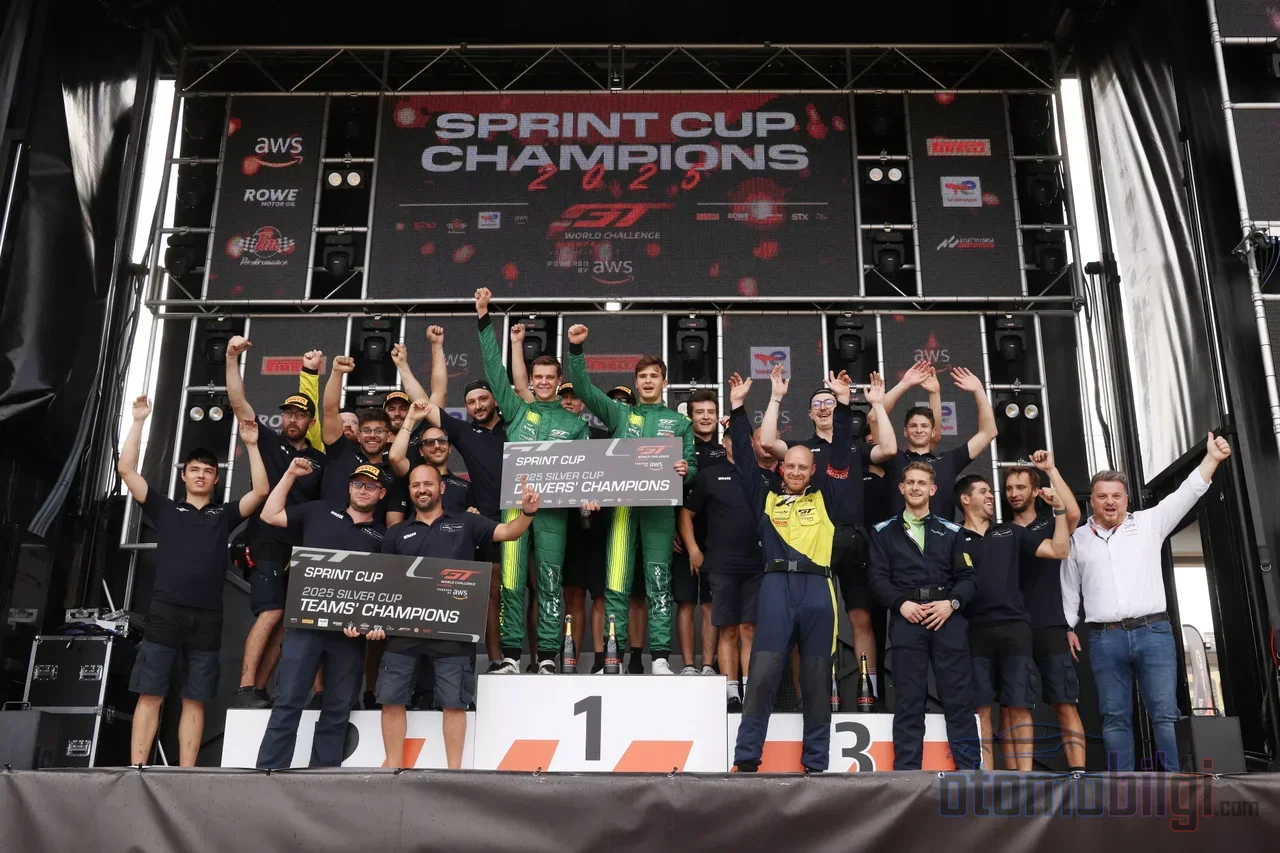
Think of a sprint weekend: practice sessions, qualifying, and two races. The flow works like this.
Highlights
- Every Sprint Cup weekend features two 60-minute races
- The pit window opens 25 minutes after the start and closes just before minute 35
- Each car has two drivers and a driver change is mandatory
- A sprint win is worth 16.5 points; pole position awards an extra +1 point
- Circuits: Brands Hatch, Zandvoort, Misano, Magny-Cours, Barcelona
Two Qualifying Sessions, Two Grids
The cleverest aspect of the sprint format is the qualifying system. Every weekend there are two separate 10-minute qualifying sessions. Driver 1 sets the grid for the first race in Q1; Driver 2 sets it for the second race in Q2. In other words, each pilot sets the starting order of their own race themselves. The fastest single lap counts, just like you're used to.
Starting in 2025, a new feature was added here: split sessions. As the grid gets more crowded and it becomes impossible for 45 cars to complete clean laps in 10 minutes, SRO split qualifying in two. Silver and Bronze Cup cars qualify in the 10-minute Group A, while Pro and Gold Cup cars qualify in the 10-minute Group B; two sessions back to back, with a 5-minute break in between. In 2026 this system was extended to the Endurance Cup as well. A simple but effective solution.
Rare but interesting situations do occur: when qualifying was cancelled before a Sprint final, the grid was determined based on the second free practice results of the starting drivers. In other words, even the practice lap needs to be taken seriously.
Saturday One, Sunday One
Race days are a pure festival of speed. One race on Saturday, one race on Sunday; each 60 minutes long. Classic, short, technical circuits like Brands Hatch, Zandvoort and Misano seem practically made for this format. Here strategy is played lap by lap, not in the long term, and a single mistake can cost the entire weekend.
How Does the Mandatory Pit Stop and Driver Change Work?
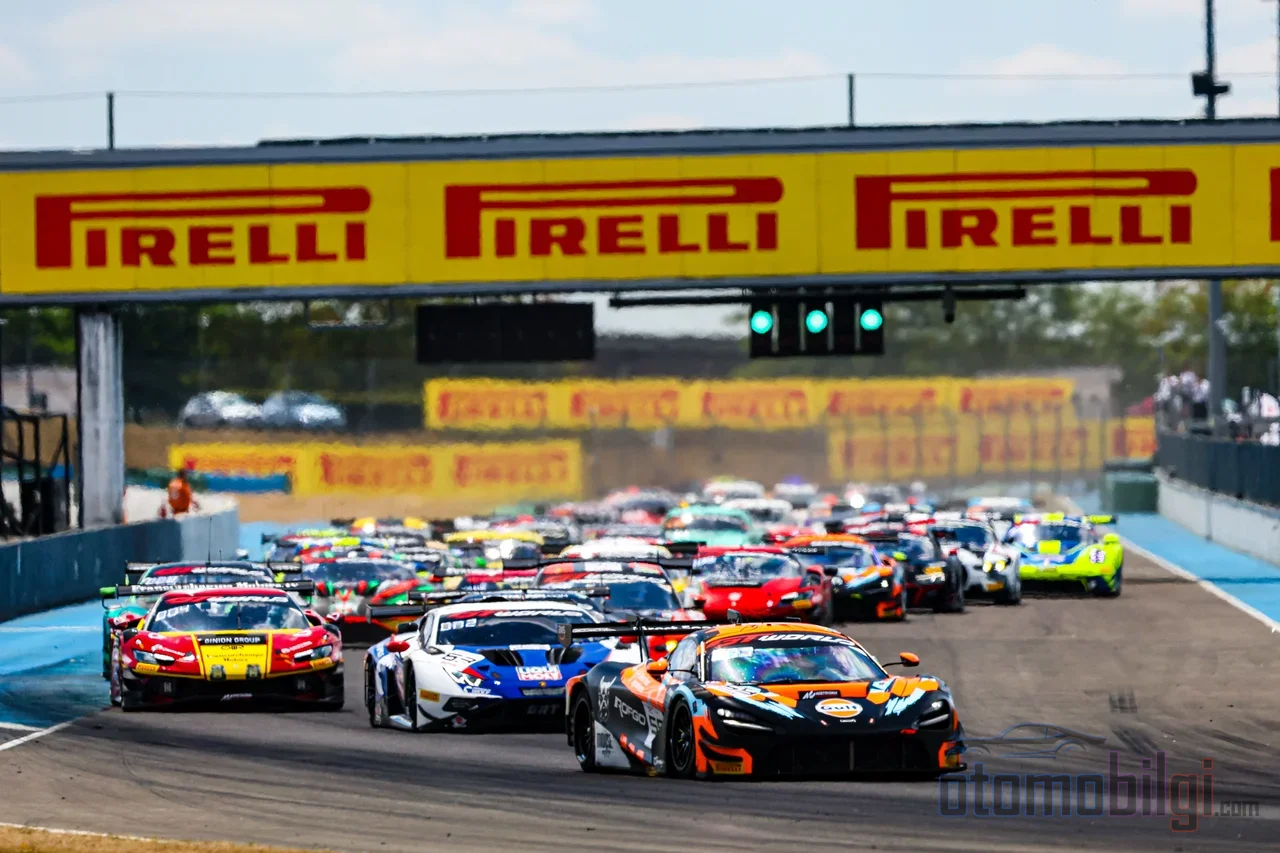
This is the most frequently asked part of the Sprint Cup. Yes, even in a 60-minute race a pit stop is mandatory. But this is not a refueling and tire carousel like in an endurance race.
The sole purpose of the Sprint pit stop is the driver change. No fuel is taken on; changing all four tires is not mandatory either. The only mandatory thing is to enter the pit lane within the designated time window and swap the two drivers. The window usually falls around the middle of the race: it opens 25 minutes after the start and closes just before the 35th minute. Think of it this way: like a card game you share with a friend where the turn-switching time is fixed, but you decide when to play.
So why does everyone pit in the middle of the race? The reason is practical: if the window were compressed into a single moment, the pit lane couldn't fit everyone. To spread out the traffic, the time interval is kept wide, and teams try to read this 10-minute band and pick the right moment. Getting caught in traffic, a slow driver change, or bad timing; huge losses of time in a 60-minute race. That's why some compare this format more to a game of chess than to Formula 1. There is, of course, a counter-argument: in a short race the room for strategy is naturally narrow, and for some, the entire plan fits within the window. This game is played in a space narrow enough to make both sides right.
Driver Classes: A Cup for Everyone
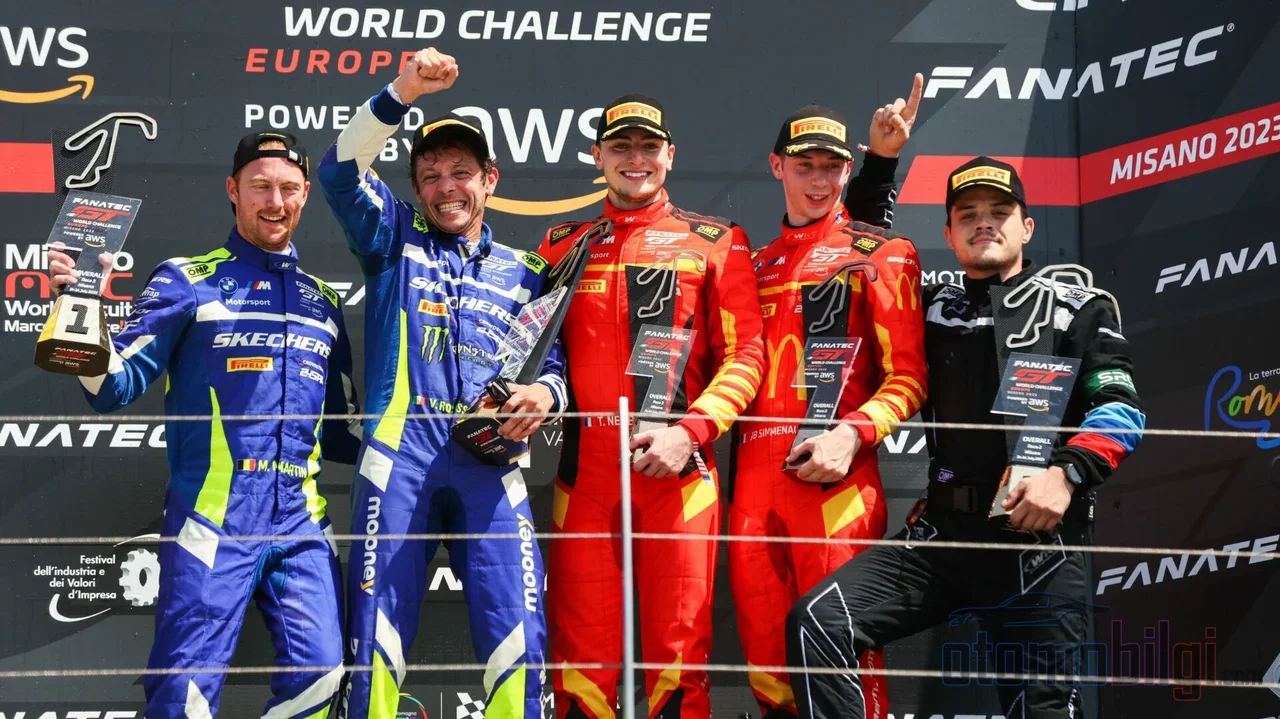
In the GT3 world every driver has an FIA categorization: Platinum, Gold, Silver and Bronze. The cars also fall into classes based on the driver combination:
- Pro: no restrictions, the best drivers, the fiercest competition
- Gold Cup: one Gold and one Silver driver
- Silver Cup: only Silver drivers
- Bronze Cup: lineups built around a Bronze driver; in the sprint with at most one Platinum and one Bronze driver
The Gold and Bronze Cups were introduced in 2023; the former Pro-Am Cup also had its final season the same year. The logic of the system is the same as the pro-am model we describe across the site: Bronze class amateurs bring the resources that make the championship financially possible, while Gold and Platinum professionals bring fan interest. Without each other, this world would not turn.
There is also a sweet bonus: Since 2023, the Bronze Cup winner among the teams that entered all 10 rounds of the season earns an invitation to the LMGT3 class at the 24 Hours of Le Mans. The first winner was Pure Rxcing, and they raced at Le Mans the following year. There is a path that starts with amateurs and leads to La Sarthe - and it is a real one.
Is Sprint Scoring Different?
Absolutely. In the Endurance Cup, the logic is the longer the race, the more points: A 3-hour race win is worth 25 points, the 6-hour Paul Ricard is worth 37.5 points with a 1.5 multiplier, and the Spa 24 Hours distributes points three times at the 6th, 12th and finishing hours. On the Sprint side, things are simpler but on a different scale.
| Race | Win Points | Note |
|---|---|---|
| Sprint race (60 min) | 16.5 | Awarded twice each weekend |
| 3-hour endurance | 25 | Endurance Cup |
| 6-hour Paul Ricard | 37.5 | 1.5x multiplier |
| 24 Hours of Spa | Up to 100 | Points in three separate segments |
In a sprint race, a win is worth 16.5 points, points scale down through the top 10 as 16.5-12-9.5-7.5-6-4.5-3-2-1-0.5, and pole position earns an additional +1 point. The number 16.5 is no coincidence: since two races are held each weekend, a sprint round carries a total weight close to endurance rounds, and the season balance of the two cups comes out nearly equal.
On the championship side, there are three separate calculations: Separate team and driver champions are crowned in the Sprint Cup and the Endurance Cup, and when the points of the two disciplines are combined, the full-season champion emerges. Manufacturers score with their best-placed car in each class. It is normal for new viewers to be confused; the overall designation in the classification tables indicates an absolute category win, not the season championship.
Where Does BoP Come Into Play?
Those familiar with the site know the concept of Balance of Performance, or BoP. The same system applies on the Sprint side: BoP looks at technical performance, not race results; it is not a penalty system like success ballast. SRO collects ECU logs, GPS tracking, engine testing and wind tunnel data, and balances the cars' weight, turbo air restrictors, suspension height and fuel tank capacity. This way, different brands can compete on equal footing in a 45-car grid. The importance of BoP increases even more in the sprint format because in a short race, there is no way to close a speed gap that your car does not have.
In short: How Does the Sprint Cup Work?
To sum up: The Sprint Cup is a championship spread over five weekends, featuring two 60-minute races each weekend, with two drivers per car and a mandatory pit stop with driver change within the window between minutes 25 and 35, scored with a 16.5-point win system. In the 60-minute race there is no fuel stop, and tire changes are optional; the essence of it is pure speed and correct pit timing.
The 2026 season showed just how alive this format is: Emil Frey Racing's Ferrari carried the season to victory in Barcelona, in the overall standings Lucas Auer and Maro Engel finished the season on equal points, and their own champions were crowned in the Silver and Bronze Cup. In short, the sprint is not a treadmill compared to the marathon side of the GT world; it is a fast dose where every second counts, delivering satisfaction twice with two races. Once you get used to it, Sunday evenings are never the same again.