Watching a 24-Hour GT Race from Start to Finish
Share This Page
The clock is passing midnight. A GT3 with condensation streaks on its body cuts through the darkness of the Nordschleife, and you're still awake - because there are still 12 hours of racing to go. So is it really possible to watch a 24-hour GT race from start to finish, or is the smartest strategy to catch the peak moments? I've tried both, and I can never give up one of them. Let me tell you all about it.
Highlights
- The Spa 24, in its 77th running (2025), started at 16:30 in the late afternoon and carried the night segment into prime time
- At the Nürburgring 24, more than 130 cars regularly race on track
- The stream on the GT World YouTube channel is free and uninterrupted
- At Spa, 14 grandstands and 14 giant screens are extra and free, on a first-come-first-served basis
- Fans' favorite moments: the sunset and sunrise sessions
Should You Follow the 24-Hour Race on Screen or at the Track?
These are two separate worlds, and enjoying each is a completely different experience. Watching on screen means seeing everything: onboard cameras, live timing, commentary, pit strategy analysis. Going to the track is a partly blind experience - you can't see the whole race, you can't even see most of it. But no screen can ever give you that moment of feeling in your bones the sound of 130 cars passing through the Nürburgring at night.
My suggestion is a mix of both: if you get the chance, go once, and follow the rest on screen. Because the broadcast experience has advanced so much these days that the viewer at home sees everything the spectator at the track cannot. So what should you watch, and where? First, let's get to know the races themselves, because each one is a completely different animal.
Three Giant Races, Three Separate Viewing Experiences
At the 24-hour summits of the GT world, each race has its own personality. When choosing one, you need to decide what type of endurance story you love.
| Race | Character | A Note to the Viewer |
|---|---|---|
| Spa 24 | The world's biggest pure GT race; late-afternoon start, night segment in prime time | 14 grandstands and 14 giant screens, fan zone, city parade |
| Nürburgring 24 | The breathtaking Nordschleife; more than 130 cars, camping culture | Lots of walking, loud atmosphere, camping from Monday onward |
| Daytona 24 | 24 hours of nonstop intense pace on a short oval track | The whole track visible from the grandstand, infield camping areas |
Daytona's difference is this: because the track is short, no moment is ever dull. While Le Mans is about speed and efficiency and Daytona about nonstop pace, Nürburgring's business is conquering that legendary, breathtaking track. The 2026 running has already gone down in history: the first sold-out 24h Nürburgring - Max Verstappen's first entry broke the ticket sales record. That means interest is growing, which means it's waiting for you too.
The On-Screen Viewer's Toolbox
If you're going to follow it on screen, keep three things at hand: the broadcast, live timing, and a program. The GT World YouTube channel offers free and uninterrupted live coverage of the SRO series (including the Spa 24); commentary comes in English and French, plus Italian, German, Dutch, Portuguese, and Chinese options. The GT World app, meanwhile, brings the broadcast of practice, qualifying and race sessions (depending on location) and live timing together in one place; news, schedule, results and championship standings come as a bonus.
- Live stream: the GT World YouTube channel or the GT World Challenge Europe live page - broadcast and live timing side by side.
- Timing: Perfect for seeing in real time how many laps each car has done, along with pit and sector times. The real heroes of the race are usually hidden in the timing screen.
- Schedule tracking: If you plan to follow multiple series, apps that combine broadcast times with your calendar make your job easier.
Here's a little tip from me: Since the Spa 24's 16:30 start begins in the late afternoon, the night portion falls right in prime time across Europe. So it's possible to tune in from the beginning without missing the race's most atmospheric hours.
Reading the Class Chaos on Track: Which Car Should You Watch?
In 24-hour GT races, multiple classes run on track at the same time, and this is what surprises new viewers the most. GT3 is the fastest class; derived from production cars, these machines race at a very similar pace thanks to the BoP system that balances the competition between different brands. BoP equalizes the cars by adjusting engine power, downforce and weight limits - since all the cars are fast, strategy and the driver determine the winner. GT4 is a slower and simpler class; they lap somewhat slower than the GT3s on track, but they run their own race among themselves.
Here's the point new viewers miss: you're watching two separate races at the same time. While following the GT3 leaders for the overall classification, you also shouldn't miss GT4's internal duel. The colored LED position displays on the cars' windshields are a lifesaver for this reason - at Spa each class is distinguished by its own color, and from the grandstand you can see which class's leader is where at a glance. When the zeros get mixed up, the timing screen on your device comes into play; eyes on the track, mind on the screen.
Reading Pit Dives: Why Does a Long Pit Say So Much?
There's no direct guide for a viewer to read the pit lane - this knowledge usually comes from the racing and sim racing world, but as a fan it's worth gold to you too. The basic logic is this: every pit stop costs the car a few seconds per lap. Teams combine tasks to keep this cost to a minimum; they try to bundle fuel, tire and driver changes into a single stop. Even in the sim racing world the same calculation applies: if the lap time cost of a tire change is greater than the expected lap improvement, the team prefers to double stint - that is, to continue without changing tires.
From the grandstand or from your screen, you read it like this: a short pit, fuel only, the strategy continues. A long pit, driver change or tires - it means the race plan is changing. And take note: starting the first stint without fuel means a long fuel fill at the pit hour, and teams set up their schedules to the millimeter to avoid this mistake. If a pit stop takes longer than expected, something is probably wrong; it can be the first sign of a safety car or news of a mechanical failure. In other words, the fan who watches the pit lane is the fan who reads the race half a lap ahead.
The Critical Hours of the Race: The Start, the Night and the Final Sprint
24 hours is a four-act play. The first act is the start: the cards are shuffled but the race is far from won; only the positions that can be lost are determined. The second act is the evening: temperatures drop, the cars take a beating, and teams put their night driver rotations into action. At Spa this act is watched at prime time, which is a big advantage for the fan at the screen.
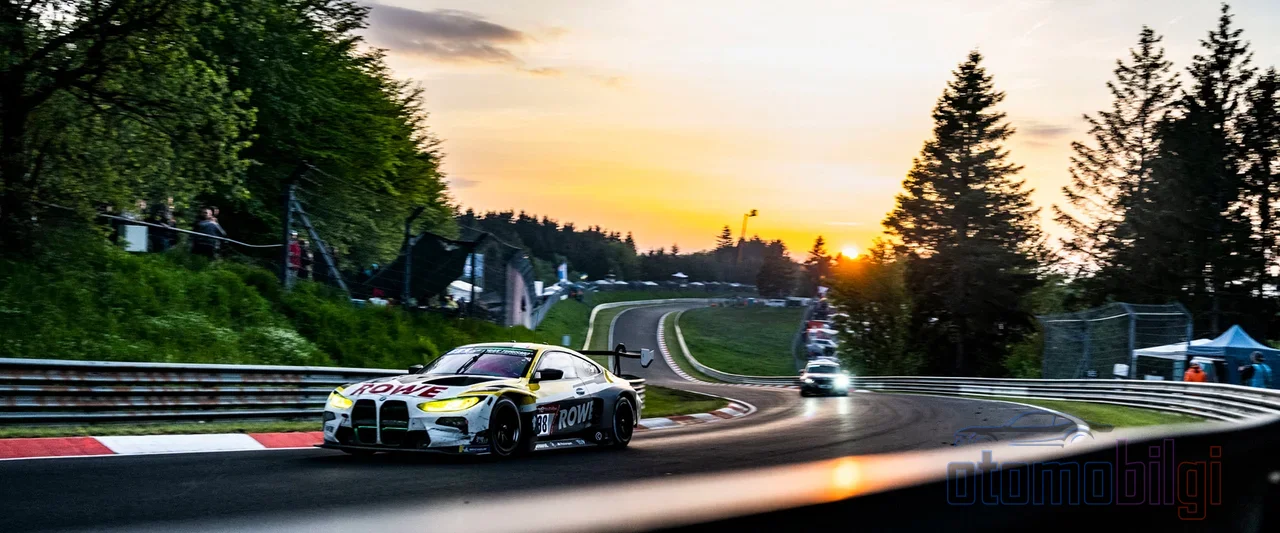
The third act is the night - and for me, this is where the soul of the race lies. Night driving at the Nordschleife is hard to describe for those experiencing it for the first time; participants compare the experience to speeds they associate with supercars. Fan discussions also have clear favorite viewing times: sunset and sunrise. At sunrise the crowd comes back to life, half the race is behind and the class standings begin to settle - at the 2026 Nürburgring 24, the lead became clear exactly during these hours, right at the halfway point. The fourth act is the final sprint: exhausted drivers, worn-out brakes, and walls that mean a single mistake. Here a single decision, a single dive, a single touch can erase the entire 24 hours. This is also the only act that can keep you from sleeping - I never manage to resist it.
Going to Pass My Track? A Spectator's Guide to Spa, Nürburgring and Daytona
Spa: A Relaxed Experience with Big Screens
Spa pushes the limits of spectator-friendliness: 14 grandstands with no extra charge, working on a first-come, first-served basis. The variety of locations is superb - from the La Source hairpin to the descent, to Raidillon, to before the Fagnes chicane, to the Campus corner and the Bus Stop, there is a grandstand at every critical point and most of them have a view of a giant screen. The 14 giant screens around the track do the job too. Before the race, the parade through the town of Spa has become a classic spectacle: GT3 cars flow through public roads to the city center.
My practical warnings: While parking around Eau Rouge and La Source on Saturday can be a nightmare, it is possible to find a spot within minutes on the Les Combes side. The grandstands fill up very fast before the race - if you want to claim a spot in the big grandstand on the pit straight, be there at least 2 hours before the race. Get a portable radio, because French and English commentary can be heard on 106.5 FM. The fan zone has a Saturday night concert, simulators and a kids' area; with 99 food and drink points around the track, you won't go hungry. One more detail: A joint ticket package is offered between Spa and Nürburgring - a sensible option for those planning both classics in one go.
Nürburgring: Campfire and Walking Marathon
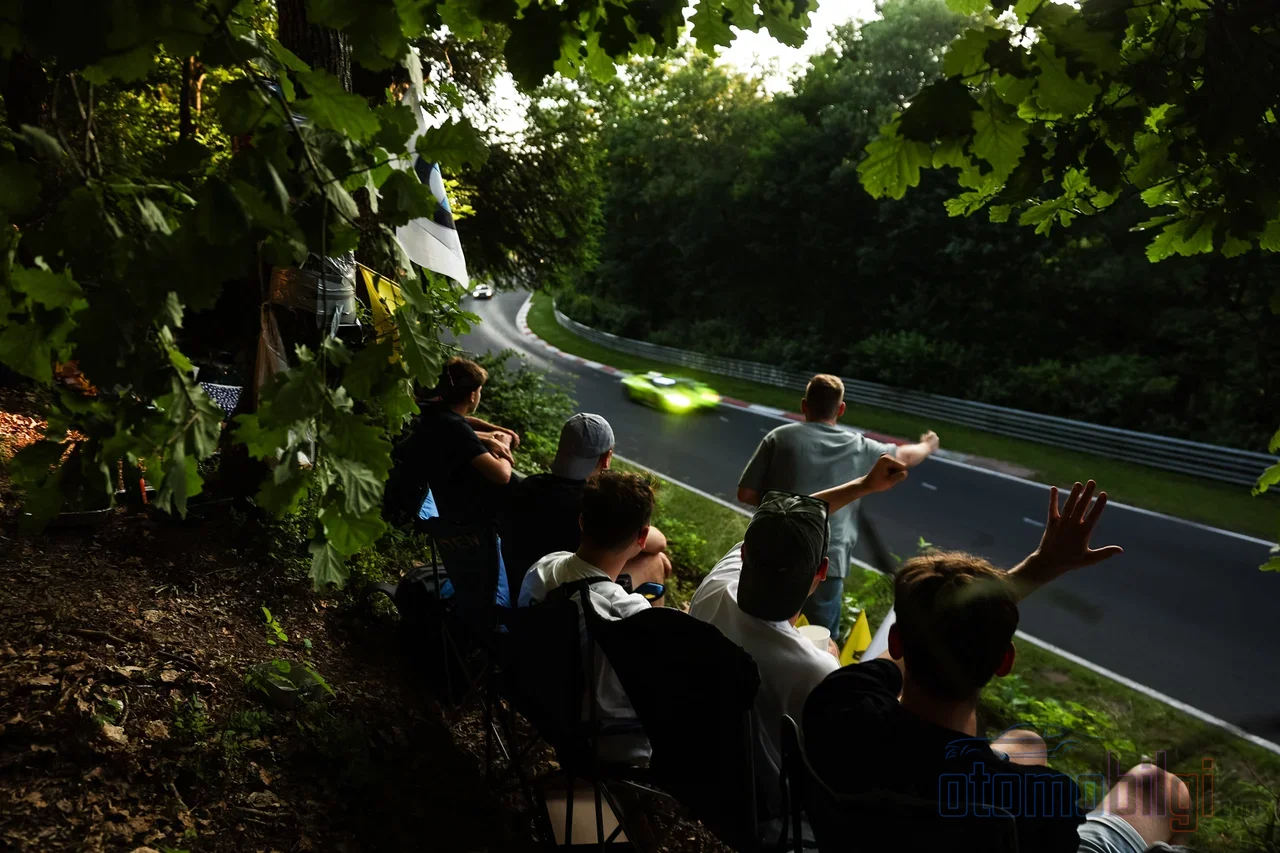
The Nürburgring is less a race than a festival. The camping areas open on Monday morning and the best spots fill up that same morning - even on Wednesday you can still find second- and third-row spots. Camping is allowed only as an exception for this race and the facilities are temporary, with no electricity; so be prepared for a bit of roughing it. On race day, spectators can walk on the grid, which is an experience I still dream about. Around the track, spectator areas like the Adenauer Forst and opposite Brünnchen (P96) stand out for the tourist train tours. You do a lot of walking, the music is very loud, the crowd is very crowded - a completely different vibe from Spa.
Daytona: The See-Everything Grandstand
Daytona's biggest advantage is simple: the track is short, and once you climb into the grandstand, you can see the entire race. For the start, the top of the Turn 1 grandstands is recommended - with that angle, you have everything in view. The infield has RV and camping areas, and quiet hours are enforced from 00:00 to 06:00 every night in all camping zones. Free parking is available, but you'll need to walk a bit to the track; don't forget comfortable shoes.
So What's the Best Viewing Plan for the 24 Hours?
Here's the clear answer I promised: The most efficient way to follow a 24-hour GT race is to watch it in four windows. The start and first hours, the night section, mid-race, and the final sprint. During the hours in between, keep live timing open, watch the pit strategies, and go to sleep - because nothing you miss really matters, the broadcast and replays will cover everything. If you have the chance to go, Spa is the gentlest introduction; if you're looking for a similar event, check out the combined ticket that covers both Spa and the Nürburgring. My personal preference is to start on screen and finish at the track within a year: because without hearing a GT3 passing through the Nordschleife at night, you haven't truly heard the heart of this sport. So which race will you spend your first 24 hours at?
Sources
- The CrowdStrike 24 Hours of Spa Spectator Guide
- Practical Guide Total 24 Hours of Spa
- Comprehensive TV and online coverage in place for the CrowdStrike 24 Hours of Spa
- ring°guide 24h race 2026
- 24h FAQ - ADAC RAVENOL 24h Nürburgring
- The 24-hour classics at Spa and the Nürburgring as a ticket bundle
- DIS Fan Guide | Daytona International Speedway
- Live | GT World Challenge Europe
- GT World powered by SRO - App Store
- Balance of performance - Wikipedia
- Explainer: What is Balance of Performance?
- Max Verstappen's 24h Nürburgring debut: 5 key takeaways
- Halfway Through His First Attempt at the Nürburgring 24 Hours
- Le Mans, Nürburgring or Daytona: Which 24-hour race is best?
- Experiencing the Magic of the Nordschleife
- A Fan's Guide to Surviving the Nürburgring 24 Hours Weekend
- Spa 24 hour newbie - PistonHeads
- iRacing Endurance Pit Strategy: Tires vs Fuel Guide