Why Does the GT3 Ranking Change from Series to Series?

The same GT3 car can race on three different continents in the same weekend - but when you look at qualifying sessions, things change completely. In GT World Challenge drivers split qualifying, in IMSA every class fights fiercely in its own short session, in Super GT the Formula 1-style elimination has returned, and at the Nurburgring a completely different system operates for the massive 160-car grid. So why has nobody stepped in and said "everyone should race in the same format"? The answer is far deeper and more beautiful than you think.
On this page we will put the qualifying formats of the four major series side by side and show why the differences between them are no coincidence. If you're ready, let's begin.
GT World Challenge: Qualifying Is Split, the Driver Stays the Same
SRO's GT World Challenge continent starts by turning qualifying into a team effort. The sprint format has two drivers per car, and qualifying is designed accordingly: each driver completes laps in their own session. While one driver completes the first qualifying segment (Q1), the teammate gets in the car for the second segment (Q2). In other words, your place on the grid depends not only on your fast driver's performance, but on the performance of both drivers together. This is a clever construct that brings the pro-am balance onto the stage right from the start of the race.
In the series' European leg, things get a bit more intricate in the 2026 format: three qualifying segments are used, each driver participates in one segment, and each segment is split into two groups. There are also small nuances between continents; in Asia every car races with two drivers, but single-driver entries are also possible with organizer approval. Pairing rules are a whole different world: professionally weighted pairings such as Platinum+Platinum, Platinum+Gold, Platinum+Silver, Gold+Gold and Gold+Silver are among the combinations that are not allowed. SRO deliberately applies this restriction to preserve the spirit of the series.
IMSA: Short, Sharp, Class-by-Class Sessions
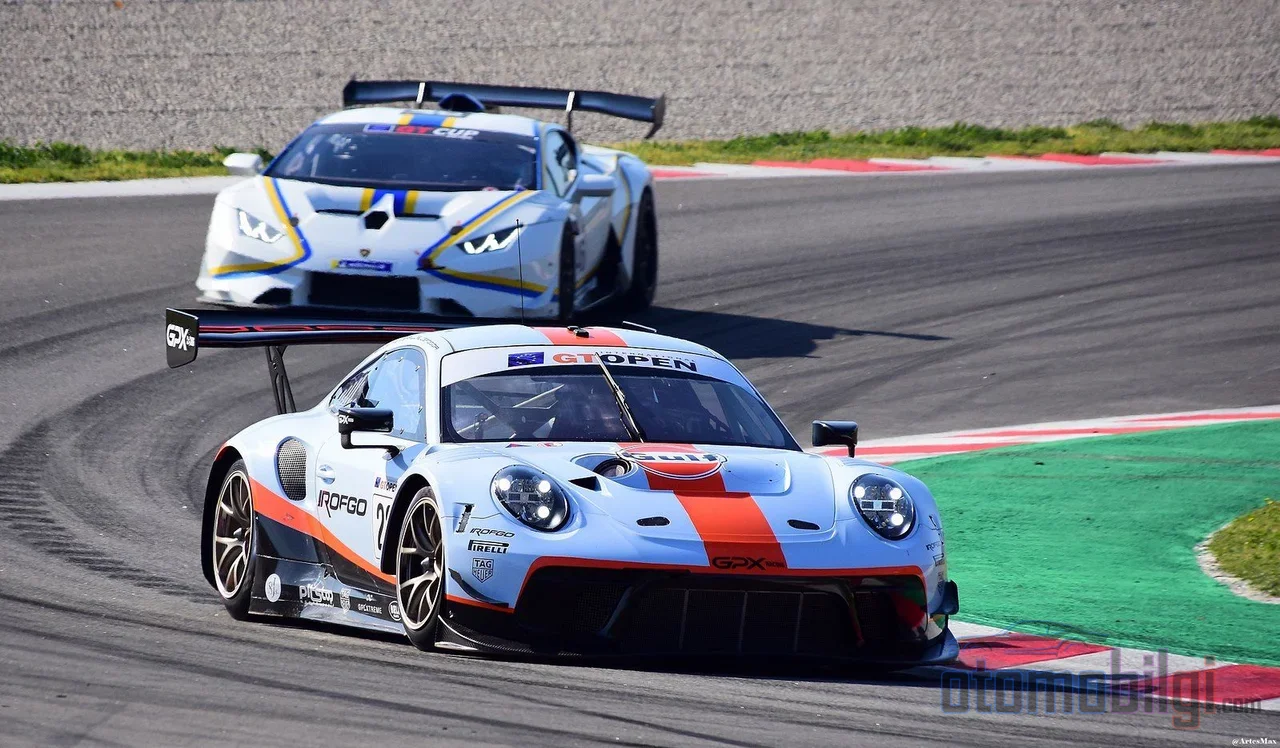
The IMSA WeatherTech SportsCar Championship approaches with a completely different philosophy. Here, qualifying is held in short sessions separated by class: 20-minute segments for GTP and 15-minute segments for all other classes. The fastest driver in each class claims their own pole position. In other words, the GTD class, where GT3 cars compete, fights fiercely in its own time slot without staying in the shadow of the prototypes.
The structure of the calendar also changes the meaning of qualifying. There are six endurance events in the season; the Michelin Endurance Cup is a separate five-race competition covering these big races. The other weekends consist of 160-minute short sprints, some of which are open only to GT3 cars. Being at the front of the grid in a long race and in a sprint requires entirely different strategies - the qualifying format is shaped according to this diversity.
The New Two-Stage Format and the Debate
From the 2026 season onward, IMSA is trying a two-stage qualifying format in the GTD class: Pro and Am drivers set lap times. But this format also sparked debate. Critics say there is a better alternative: Both drivers should be required to set a lap time in a single 20-25 minute long session. That way a single session measures the pace of both the professional and the amateur, and the grid reflects a true team performance. In other words, IMSA's qualifying format is still an evolving structure - there is no perfect standard yet.
Highlights
- GT World Challenge Sprint applies 2 drivers, 2 x 10-minute qualifying runs per car.
- IMSA has 20 minutes for GTP and separate qualifying segments of 15 minutes for the other classes.
- Super GT returned to the knockout elimination format of the 2013-2023 era in 2025; in GT500, the first 10 cars in Q1 advance to Q2.
- At the Nurburgring, TQ1 lasts 35 minutes and only the fastest 20 entries are left for TQ2.
Super GT: How Did Knockout Qualifying Come Back?
Japan's flagship series is perhaps the championship that has fiddled with its qualifying format the most. For many years, a Formula 1-style knockout elimination was used: in GT500, the top 8, and in GT300, the top 16 cars advanced to the next stage. Then the series switched to an aggregate total lap time basis - meaning the two drivers' laps were added together and evaluated as such. In 2025, however, the series returned to the two-stage knockout format used between 2013 and 2023 and increased the number of cars that can advance to Q2: in GT500, now the top 10 cars in Q1 (instead of the previous top 8) move up to the next stage.
The points system also changed. In GT300, only pole position is now awarded 1 point; in previous years, qualifying points were distributed to the top three. In GT500 and GT300, qualifying points are generally at the level of 3 and 2 points. These fine adjustments are proof that the sporting rationale behind format choices is constantly debated: Super GT recalibrates its format year by year for its own audience and its own driver pool.
There is also the series' unique structure: a setup where GT500 and GT300, two different performance levels, race on the same track in a mixed format. In GT300, GT3 cars race on the same grid as cars built specifically for the series - and what makes this competition possible is a BoP optimized for the series. A standard qualifying format would clash with this mixed structure.
24 Hours of Nurburgring: Sorting a 160-Car Grid: The Rules Set the Standard
Why is qualifying for the 24 Hours of Nurburgring so complicated? Because the problem is that big. There are around 160 cars and more than 20 classes on the grid; alongside the special classes divided by engine capacity from SP1 to SP8, pure GT3 cars (the SP9 class) also race. Sorting such a crowd with a single session is impossible.
The system starts with three general qualifying sessions (Q1, Q2, Q3), and for eligibility each driver must complete at least two timed laps. The real show is in Top Qualifying: TQ1 lasts 35 minutes and only the fastest 20 entries advance to TQ2. In 2026, the starting grid for the SP9 (GT3), SP11 (GT2), AT1, SP-Pro and SP-X classes is determined by Top Qualifying. A rule change introduced the same year guarantees the team with the fastest lap in Top Qualifying a starting position based on the standings in the 24h Qualifiers. Nurburgring's format is a direct consequence of the series' massive scale - here, the format is an organizational marvel as complex as the race itself.
Qualifying and BoP: The Chain Extending from the Grid to Strategy
So how much does the qualifying result determine race day? The answer becomes clear when read together with the BoP. BoP (Balance of Performance) is one of the defining pillars of GT3 racing: the mechanism that adjusts the technical limits of the cars in order to balance their performance potential. It makes it possible for manufacturers to race against each other, but it does not completely erase the differences between cars - which is why your position in the grid order is still critical.
Another benefit of the BoP is cost control: it prevents the development race from spiraling out of control. Advancing in qualifying means combining a small advantage in the BoP balance with the right tires and strategy. So grid position is not a result in itself, but the first move of race strategy. Each of the four series' four different formats builds this strategy chain in its own way, according to its own race duration, class structure, and driver lineup.
The Bronze Driver's Qualifying Burden: Pro-Am's Real Exam
Now let's turn to perhaps the most human part of the story. The FIA driver classification divides drivers into the Bronze, Silver, Gold, and Platinum categories. Bronze is generally given to drivers who obtain their license after the age of 30; a category reserved for amateur, so-called "gentleman" drivers. In GT World Challenge Asia, Pro-Am entries must include exactly one Bronze driver, and SRO goes the extra mile to preserve the amateur character: overly experienced Bronze drivers can have their entry rejected, those downgraded from Silver to Bronze in the last two years along with former Platinum/Gold drivers can be left out in the cold, and even a weight penalty of up to 50 kg can be applied for the first race.
This is exactly why formats where drivers share the qualifying duties are a real exam for pro-am teams. The amateur driver's qualifying task affects the team's entire strategy on race day. There is strong supporting evidence from another series for comparison: In the 2026 European Le Mans Series, only Bronze drivers may drive the car in qualifying in the LMP2 Pro-Am and LMGT3 classes - in fact, in LMP2 Pro-Am cars, the Bronze driver's use of the car in qualifying sessions has become mandatory. This rule is the clearest proof of the strategic criticality of the Bronze driver's qualifying task. If the amateur driver is slow, even the fastest professional has to rescue the race from traffic and a starting position at the back.
So Why Isn't There a Single Standard Format?
The short answer is this: The GT3 qualifying format varies from series to series, because each series seeks a separate balance for its own race duration, class structure, driver lineup, and audience expectations; While BoP equalizes the cars, since it is the cars themselves that carry this balance to race day, no one-size-fits-all solution meets the needs of every series.
Consider this: GT World Challenge takes its two-driver sprint concept into qualifying, IMSA manages its multi-class structure with short segments, Super GT builds viewer excitement around knockout elimination, and Nurburgring designs the chaos of 160 cars with a multi-layered system. Each answers the same question differently: how should this grid be arranged in the fairest and most exciting way? Next time you watch a qualifying session, remember that the format itself is also part of the competition - because in the GT3 world, the only non-standard things are not just the cars, but the rules too.
Sources
- SUPER GT 2025 Regulation Revision: Knockout Format for Qualifying
- IMSA WeatherTech: Understanding The Sport
- GT World Challenge Asia Sporting Regulations, Article 10
- Nürburgring 24 Hours 2026 Rule Changes
- Chat GT3: Who Created Balance of Performance?
- 2026 Technical and Sporting Regulations - European Le Mans Series
- GTWC Europe Sprint Qualifying Explanation
- Opinion: Why IMSA's Two-Stage Qualifying Format Needs a Change
- Nürburgring 24h Qualifying Format
- What is GT World Challenge Europe?