The Turbo vs. Naturally Aspirated Divide in GT3 Engines
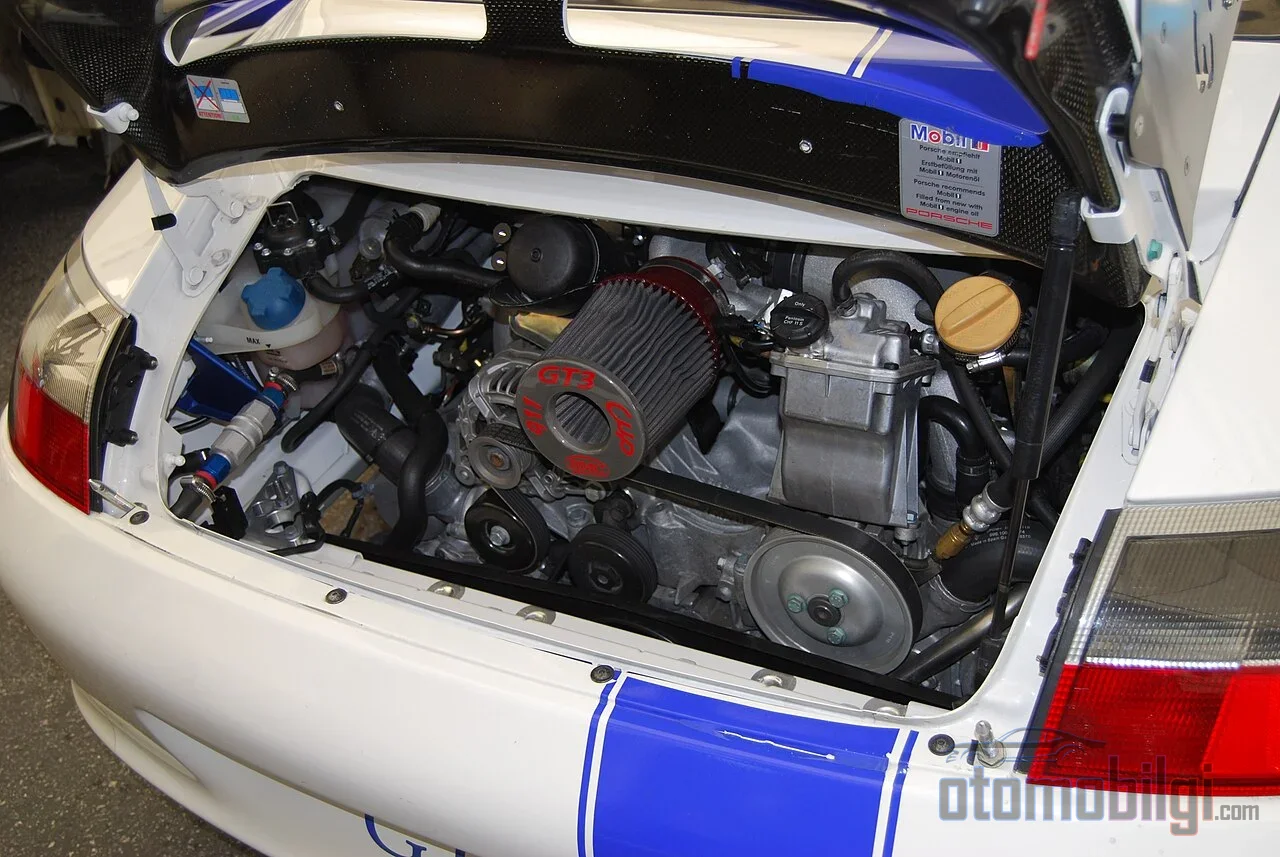
If you've watched a Mercedes-AMG GT3's turbocharged engine surge forward on the wave of suddenly arriving torque as the revs climb coming out of Spa's Eau Rouge, and a few corners later seen the naturally aspirated engine of the Porsche 911 GT3 R - which never fully cuts the throttle and responds to every millimeter of input - cling to the same car, the question that has nagged at you must be this: why do these cars, racing in the same class under the same rules, set out with such different engineering philosophies from each other? Audi and Mercedes-AMG are on the turbo side; Lamborghini, Ferrari and Corvette are on the naturally aspirated side. This is not a coincidence or a showroom display: it is a completely calculated engineering choice. And the beautiful part is, once you understand the logic behind this choice, you start watching the GT3 grid with completely different eyes.
If you're ready, let's begin. Because the answer is hidden in a three-letter abbreviation: BoP.
BoP: The Invisible Hand That Equalizes Power
At the heart of the GT3 class is the Balance of Performance, that is, the performance balancing system. Let's simply call it BoP. This mechanism, by setting different limits for each car through the FIA GT Bureau or the series' own governing body, forces all the cars on the grid toward similar performance: settings such as minimum weight, power restrictions and fuel flow change from race to race. For the Mercedes-AMG GT3, for example, a BoP document published as of November 2026 shows a minimum weight of 1285 kg. So no matter how many horsepower a car produces, it is aligned on paper.
And this is the key to the engine debate. Imagine this: if BoP is already balancing the power, the raw horsepower figure of the engine in the manufacturer's hands instantly becomes secondary. Then the choice comes down to other questions. The heavier the car, the slower it is. There are multiple factors in the decision: weight, durability, driving character and, most importantly, heat management.
The Highlights
- Since BoP already balances the power, engine choice comes down to weight, durability and driving feel
- The Porsche 911 GT3's naturally aspirated 4.0-liter engine produces 502 hp and 331 lb-ft (approximately 465 Nm) of torque
- According to AAA data, naturally aspirated engine owners spend $150-400 a year on maintenance; about half of what turbo owners spend
- Turbo engines lose no power at altitude, while naturally aspirated engines lose power at high elevation; BoP has to balance these separately
- There is talk that the next-generation 911 GT3 could be turbocharged for the first time
What's in the Turbo Camp: Audi, Mercedes-AMG and BMW
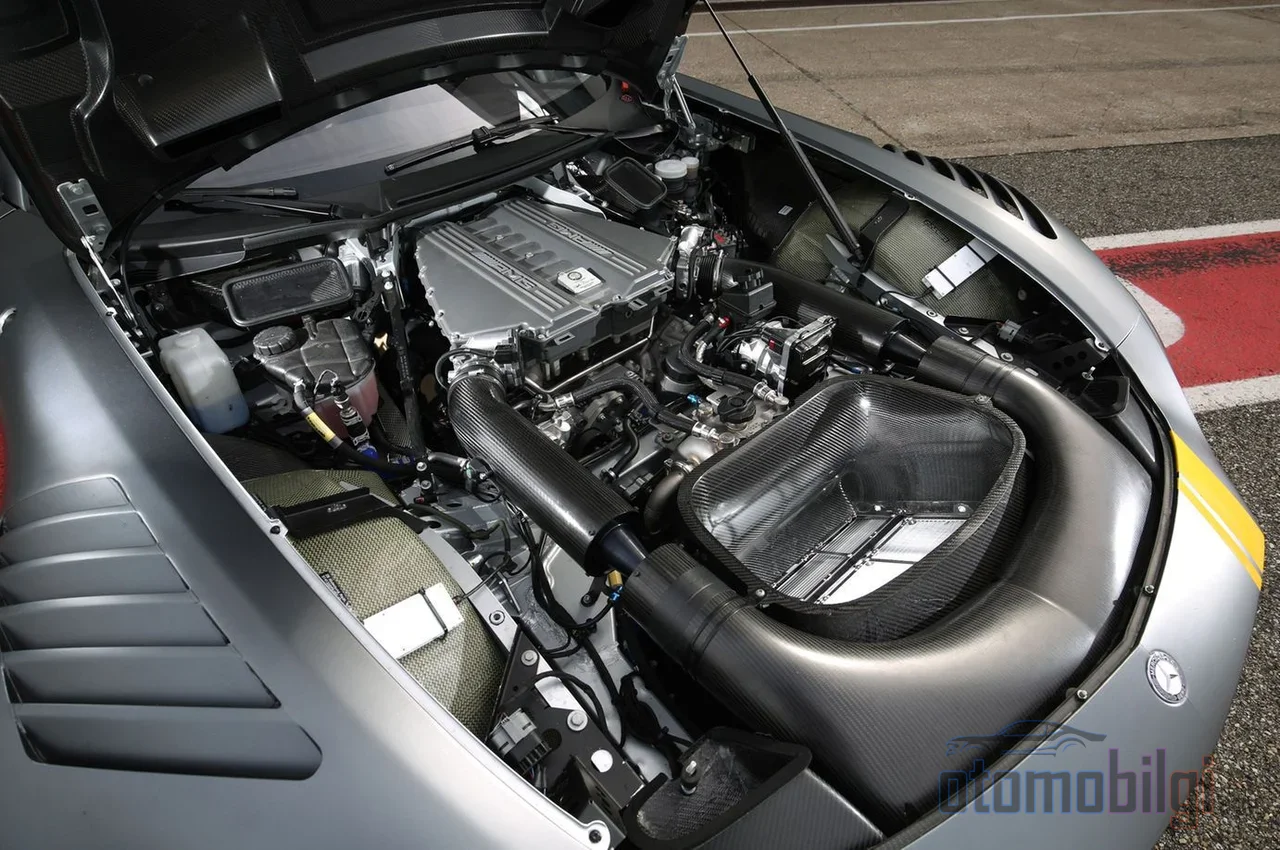
The biggest card on the turbo side is clear: torque. Turbocharged engines deliver torque at lower revs and in greater abundance; a 4.0-liter naturally aspirated engine cannot provide this early torque surge to the same standard. On corner exit, while accelerating out of a corner, this difference shows up on the stopwatch. Just think of the thousands of corners covered in 24-hour endurance races; a few meters of advantage in every corner turns into a gap of laps by the end of the night.
And there is one more advantage of the turbo that few people know: altitude resilience. If the race track is at high altitude, a naturally aspirated engine loses noticeable power due to the thinning of the air; a turbocharged engine, however, barely loses any, because the turbo compresses the thin air and can still send it to the engine at sufficient pressure. When the race calendar includes high-altitude events, this becomes a concrete example of the BoP having to balance the two engine types differently.
There is also the efficiency side of things. Turbocharged engines are usually smaller in displacement, so they carry fuel efficiency potential. In short, choosing turbo means finding the same power with a smaller engine; which can also provide flexibility in weight distribution. But it is not free, of course.
The Price of the Turbo: Heat, Maintenance and Complexity
A turbocharger is an extra part added to the engine, and one of the harshest realities of racing is this: every extra part is an extra chance of failure. A turbocharged engine contains more moving parts and operates under higher thermal stress; therefore the likelihood of failure is also higher. In an engine running at full throttle for 24 hours, the turbo lives at the hottest point of the exhaust gas. Heat management is therefore always at the very top of the engineering agenda in turbo camps.
The maintenance cost is another matter entirely. According to a calculation based on AAA data, naturally aspirated engine owners spend 150-400 dollars a year on maintenance, while turbocharged engine owners pay roughly twice that. An equation that holds true even for road cars becomes even harsher in the world of racing. Moreover, what happened at DTM's 2026 race at the Red Bull Ring showed that when BMW fitted a new turbocharger to the M4 GT3, this change required the BoP to reassess the engine's power delivery from scratch. In other words, every mechanical move made on the turbo side means a new balance calculation at the desk.
What Is in the Naturally Aspirated Camp: Lamborghini, Ferrari and Corvette
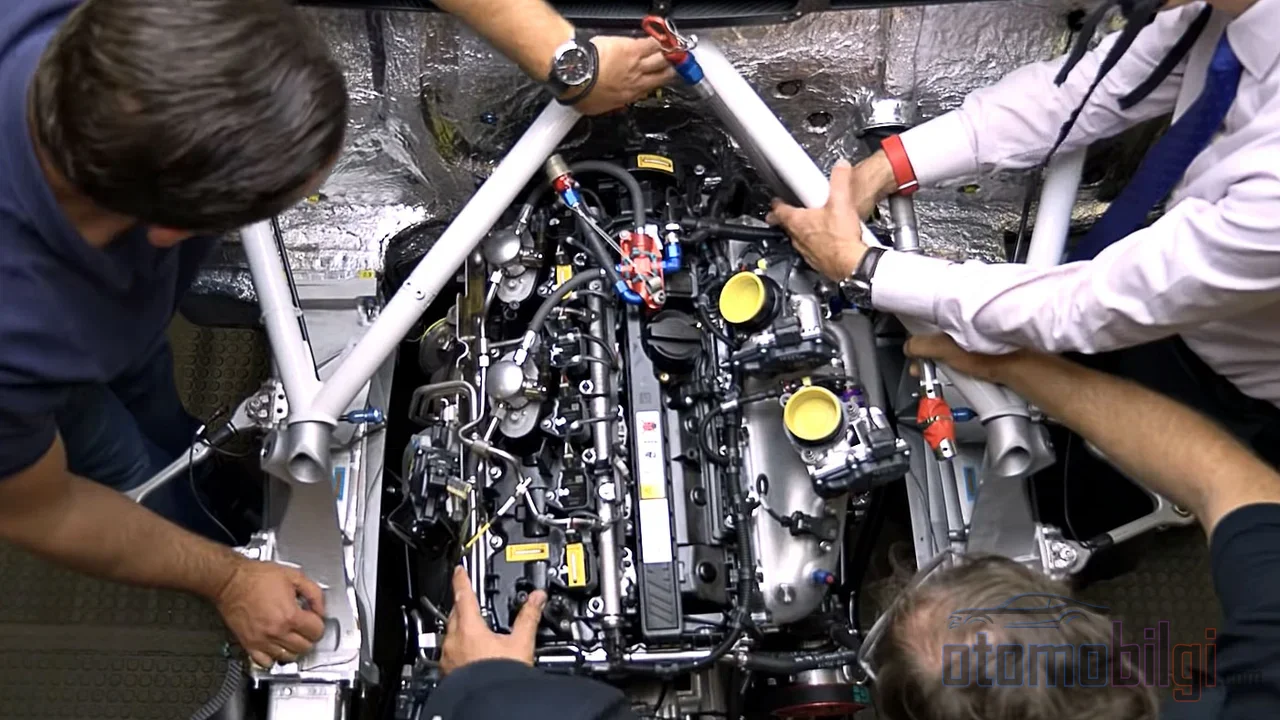
So if turbo is so advantageous, why do Lamborghini, Ferrari and Corvette insist on the naturally aspirated path? The answer is hidden in a single sentence: since the BoP already balances the power difference, the meaning of choosing a naturally aspirated engine must be sought elsewhere. Andreas Walliser, one of the names managing Porsche's GT program, made this clear: the naturally aspirated engine is chosen primarily because of weight, since power and torque are already balanced by the BoP.
Imagine you are packing a suitcase and you have to break 100 grams on the scale. When you take the turbo system out from under the engine cover and throw it away, the turbocharger, the intercooler and the piping that feeds them all go too. On the track, every kilo directly affects cornering speed, braking distance and tire life. Lightness is essential in GT3, and in the BoP era, weight is a more valuable currency than horsepower.
What a naturally aspirated engine makes the driver feel is a completely different story. Throttle response, meaning how quickly the engine reacts from the very moment you press the gas, is far sharper on the naturally aspirated side; because there is no spinning fan of a turbocharger between the gas and the combustion chamber. There is none of that little hesitation known as turbo lag. Again, as DailySportscar also emphasized, it is a game of BoP giving and taking; while the professional driver copes with the change, the amateur driver can largely back off. In the GT3 world, where the pro-am model applies - meaning elite drivers share the same car with wealthy amateurs - an engine that cuts and applies throttle safely and predictably also means great comfort for the team's silver and bronze drivers.
Shall we not even get into the sound issue? Atmospheric engines generally offer a cleaner, sharper and more emotional sound profile. Turbos are impressive too, but their character is different. If you have ever heard an atmospheric six-cylinder revving up to 9,000 rpm on the slopes of Mount Panorama, you know what I mean.
The Porsche Example: The Difference Between a Road Car and a Race Car
A nice example stands here: While Porsche has moved almost entirely to turbo in its road car lineup, it kept the 911 GT3 atmospheric. Why? The answer is on the race track. The racing derivative of the 911 GT3's atmospheric 4.0-liter flat-six is known for its endurance and reliability identity. In fact, now that we have made this comparison, let us put the road car technical figures of the two siblings side by side.
| Feature | 911 GT3 (992) | 911 Turbo S (992.2) |
|---|---|---|
| Engine | 4.0 L atmospheric flat-six | 3.6 L T-Hybrid twin e-turbo flat-six |
| Power | 502 hp | 701 hp (system power) |
| Torque | 465 Nm | The manufacturer explains it with the hybrid system component |
| 0-60 mph | 3.2 seconds | 2.4 seconds (with Sport Chrono) |
| Drivetrain | Rear-wheel drive | All-wheel drive with rear bias |
As can be seen, turbo superiority in the road car world is clear: The Turbo S is far more powerful and much faster than the GT3. But in the GT3 racing world, things turn the other way; there the numbers are equalized on the scales of BoP, and what remains is weight, reliability and feel. Moreover, the fact that the 992.2 Turbo S on the road car side is now hybrid-assisted with two electric turbochargers also shows that Porsche is deliberately diverging between the two series. That said, according to Car and Driver's report, the days of the atmospheric 4.0-liter engine may be numbered and the next-generation 911 GT3 could be turbocharged for the first time. As emissions pressure grows, whether the atmospheric era will close is one of the hottest debate topics in the automotive world.
The Maintenance Cost and Durability Reality
There is also the cost side of the coin. Even off the track, the atmospheric engine means fewer parts and fewer surprises, since it does not house an extra source of wear like a turbocharger. In a turbocharged engine, on the other hand, higher heat and more moving parts increase the likelihood of failure. GT3 is the class of the semi-professional level and customer racing; meaning that for the teams buying these cars, every engine rebuild is a serious budget item. In the GT3 world, what gets discussed is not so much the engine's horsepower, but whether it will last through a season without problems.
Thinking about this purely in terms of power is also misleading. Even if a car had 3,000 horsepower in a race, if it had to pit after two laps due to fuel or overheating issues, that power would mean nothing. In GT3, around ~500 hp is more than enough for most tracks. So this is not a race of advancing technology, but a calculation of durability and sustainability.
How Does Engine Type Affect a Driver's Career?
So what does this split mean for the driver inside the seat? A turbocharged car, with the torque it delivers at low revs, is more forgiving on the throttle pedal; it is easier to recover the car at corner exits. A naturally aspirated car, on the other hand, requires keeping the revs in the right range, choosing the right gear and using the throttle more delicately, but in return it offers you that direct connection between the pedal and the rear wheels. As GT3 owners on Reddit frequently emphasize, it is the feel, more than raw numbers, that is what you pay for in this class.
As a young driver, being able to drive both styles is worth gold for a career: adapting quickly to different engine characters means being fast in different cars of different teams. For a driver racing on the same GT3 grid all around the world, from Spa to Daytona, from Bathurst to Nurburgring, understanding the engine type difference is as fundamental a skill as reading telemetry data.
So Which Is the More Correct Choice?
The short answer is this: In GT3, the choice between turbo and naturally aspirated is not a matter of superiority, but a balancing exercise. Since BoP already equalizes power, the turbo; is chosen for its low-end torque, altitude resilience and efficiency potential, while the naturally aspirated; is chosen for its weight advantage, sharp throttle response, low maintenance cost and durability identity. This is why Audi, Mercedes-AMG and BMW are on the turbo side, while Lamborghini, Ferrari and Corvette are on the naturally aspirated side; everyone is choosing the weapon that best suits their own engineering culture, the most reliable and the most efficient one. Even in the world of simulation, this is why BoP adjusts the cars differently: the goal is to equalize everyone, but each car has a different character, and characters can only be brought to the same speed with different rules.
So the next time you lend an ear at midnight at Spa to the whistle of a turbo emerging from the forest, or to the sound of a naturally aspirated V8 echoing through the tunnel, you will now know: those two sounds are not just different engines, but the sounds of two separate engineering paths heading to the same goal. And to be honest, this is precisely one of the reasons why GT3 is so loved.
Sources
- Why Porsche Won't Turbocharge the Next 911 GT3 and GT3 RS
- Porsche 911 GT3 vs 911 Turbo S: Which Fits You?
- 911 GT3 - Porsche official website
- Group GT3 - Wikipedia
- Balance of performance - Wikipedia
- Understanding Balance Of Performance
- DTM's toughest ever BoP explained: Red Bull Ring 2026
- Next-Gen Porsche 911 GT3 Might Be the First to Be Turbocharged
- FIA BOP GT3 GTWC v1, 2026-11-03
- Turbocharged vs. Naturally Aspirated Engines: Pros & Cons