What Is Success Ballast and How Much? A Guide to GT Rules
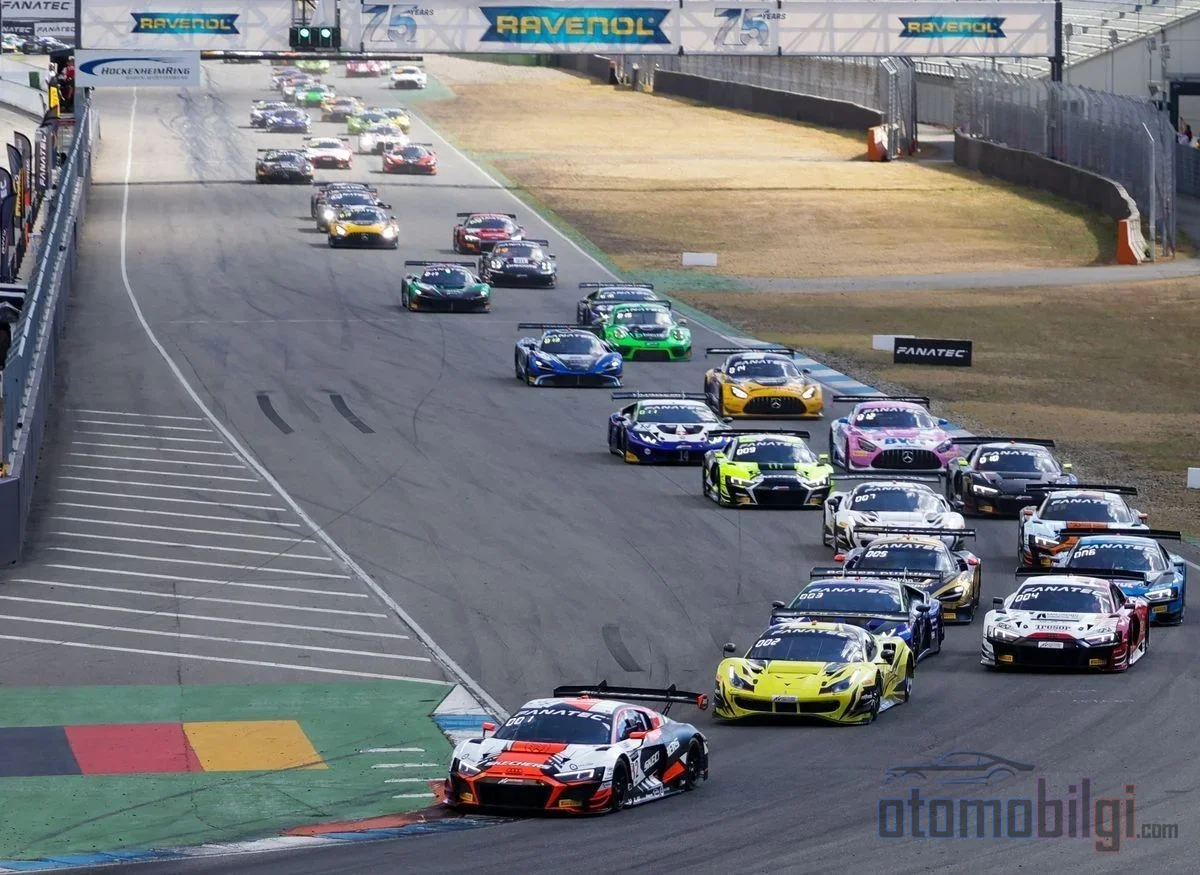
You win a GT3 race, the celebration is over, and the following weekend your car shows up on track several kilograms heavier. A penalty? No, it's the system. In the GT World Challenge world, success brings weight with it, and the beautiful part is that this weight is exactly what keeps competition alive. So how is this ballast applied, how much does it affect things, and why does it have a completely different logic from BoP? Buckle up, we're explaining.
First, these two shouldn't be confused with each other: GT World Challenge has two separate balancing layers. One brings the cars closer together, the other the drivers and teams. The latter, meaning the weight added according to race results, is the subject of this page. And believe me, once you understand why the standings close up so tightly toward the end of the season, the way you watch GT racing will change.
What Is Success Ballast, and How Does It Differ from BoP?
Success ballast is, in short, extra weight added automatically based on competition results. The logic is simple and merciless: if you won the race, your car was probably fast, so carry some load in the next race. For example, in the classic application, graduated weights are added like 50 kg to the winning car, 35 kg to the second, 30 kg to the third. Every car higher up the order races a bit heavier, every car lower down races a bit more comfortably.
Balance of Performance, or BoP, answers a completely different problem. There are ten manufacturers in the GT3 field with entirely different engineering cultures: different chassis, different engines, different aerodynamic profiles. BoP compensates for these natural differences with regulated parameters such as weight limits and engine power; its goal is that no brand should be structurally advantaged. So BoP equalizes the cars, while success ballast brakes the current performance. One preserves equality at the starting line, the other balances dominance within the season.
This distinction isn't unique to GT World Challenge either. Japan's Super GT series also uses an arrangement called success ballast, which only affects the weight of the racing car. On the FIA WEC side, the same logic is applied in the LMGTE Am class to balance performance between drivers and teams. In short, the idea of weight penalties is the common language of motorsport.
Highlights
- Success ballast is weight added automatically based on race results; on the classic scale, the winner can be given up to 50 kg of weight.
- BoP equalizes cars from different manufacturers; success ballast brakes the winner's speed, two separate logics.
- In GT World Challenge Europe, Sprint Cup and Endurance Cup points combine to determine the overall champion.
- Extra weight lengthens lap times and accelerates tire wear; it directly affects strategy.
- In the 2026 season, the platform features 10 manufacturers competing in a total of 46 races across 29 events.
How the System Works: Points, Tiers, Application Logic
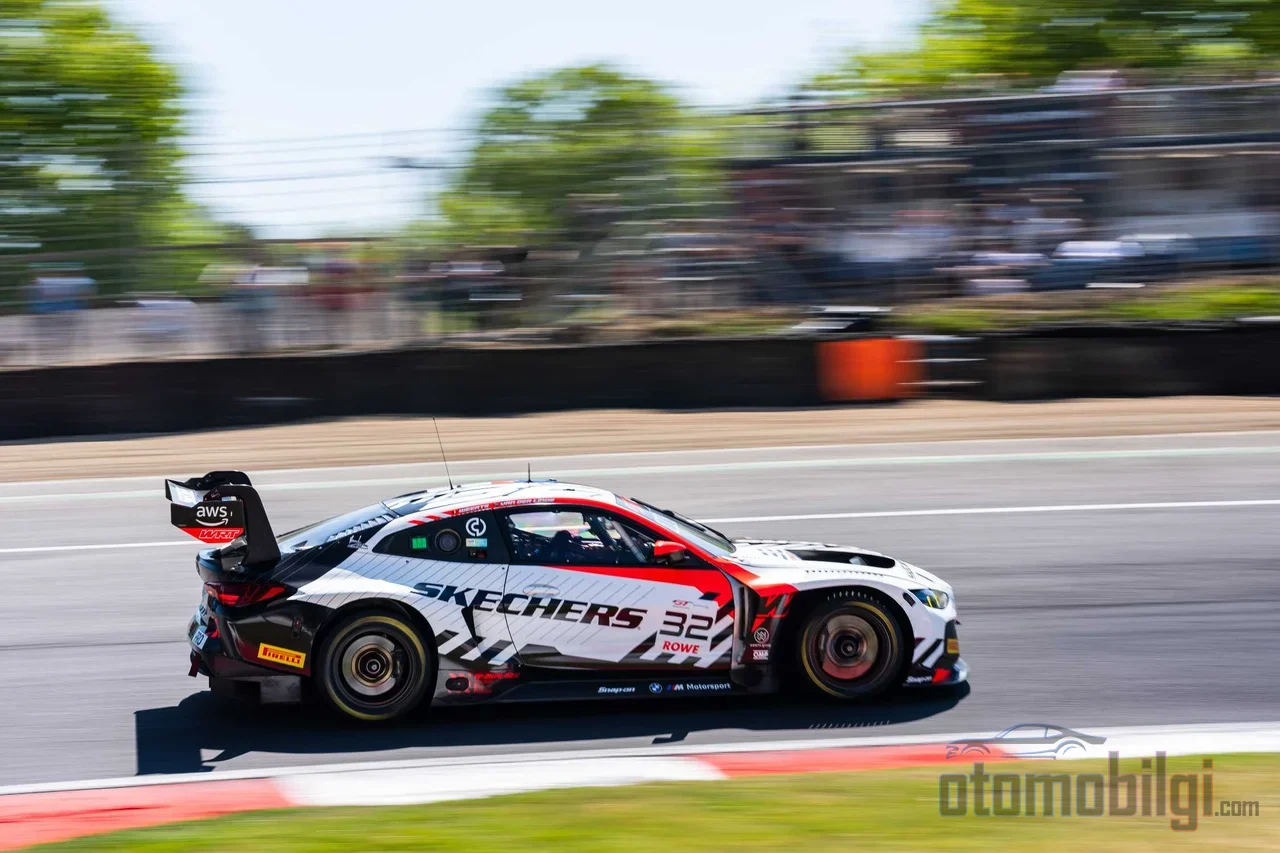
Behind the ballast application lies the points system. Races in GT World Challenge Europe are run in two formats: Sprint Cup and Endurance Cup. Sprint races last 60 or 90 minutes; the winner gets 25 points, second place 18, third 15, and the points scale goes down to tenth place. In three and six hour endurance races the scale grows: the winner is rewarded with 50 points, second with 36, third with 30. The TotalEnergies 24 Hours of Spa, the biggest race of the season, gives the winner a full 100 points; points are even distributed separately in intermediate classifications at the 6 and 12 hour marks. At the end of the season, the points from the two formats are combined to declare the overall driver and team champions.
Success ballast kicks in based on precisely this points table and race results. The more you win, the heavier you go out in the next race. This does not mean you are bad; quite the opposite, it means you have proven to be very good. The system's purpose is to prevent a single team from winning race after race all season long and to bring genuine uncertainty to every race weekend.
There is also an interesting provision in the sporting regulations: For a driver who has been granted an exemption, that is a derogation, the Sporting Board has the authority to apply an additional penalty weight of up to 40 kg or a pit stop time penalty. So the system operates not only through race results but also as a mechanism for maintaining the driver power balance. On the endurance side, time penalties, that is success penalties measured in seconds, can come into play on a points basis; here, instead of weight, there is a braking effect reflected in the pit stop or total time.
An honest note on the scale
Let's also state this clearly: The current season's kg-by-kg ballast table is a detail that can change with the sporting regulations published each year, and revision during the year is normal. That is why we are not providing a concrete table of 2026 stages here; the underlying mechanism is as described above. For those who want to track the exact figures, the most reliable address is the official sporting regulations document updated at the start of each season.
How Does the Ballast Differ Between Sprint and Endurance?
Since the rhythm of the two formats is different, the effect of the penalty system also works differently. In the 2026 season, the Sprint Cup consists of two one-hour races per round, with 15 races run in total across the season; to this are added three three-hour races at Monza, Nurburgring and Portimão. In short races, the weight penalty is felt much more sharply: in a 60-minute duel where every second needed to make a pass is calculated, extra kilograms mean the difference on the podium directly.
On the endurance side, the game changes character. In a race lasting hours, the effect of ballast spreads not over a single lap but over tire life and stint length. In addition, in the endurance format, pit stop time penalties can be used instead of or in addition to weight; success penalties of 15, 10 or 5 seconds are familiar tools in this format. The Sprint Cup 2026 entry list being approved with 45 cars and more than 60 cars taking to the track in the Endurance Cup inevitably makes balance-of-performance cars even more critical. If you want everyone to genuinely have a chance in such a crowded field, the rules simply have to be smart.
What Do Extra Kilograms Do to a Car?
So how many seconds does this weight actually cost? Here is the physics part, with an analogy from everyday life: fill up your backpack and hop on the treadmill - the moment you start tiring at the same speed comes much earlier. It is no different for race cars; only the results are measured in thousandths of a second.
The impact comes from two fronts. The first is direct lap time: according to simulation data, every 10 percent of wear on a GT3 tire leads to a drop of about 0.5 seconds/lap. Extra weight accelerates this curve; the car takes on a character that is both slower and much harder on its tires. The second is vehicle dynamics: if the ballast is not placed in the right spot, the center of gravity is upset, body movements increase, and grip and consistency drop. Correctly placed ballast, on the other hand, can lower tire temperatures and preserve grip; that is why ballast placement is a genuine engineering topic of the weekend for the teams.
This is why teams with ballast also build their race strategy accordingly: tire wear, track temperature and weather are constantly monitored, and pit stop planning takes shape with this data. It is no coincidence that pit stops play a key role in the Sprint and Endurance Cup; in the 2026 season, a car winning the award for the fastest pit stops and climbing from seventh to the top in the second race showed that the pit crew matters just as much as the driving.
Why Does the Picture Close Up So Tightly Toward the End of the Season?
This is where the system's real magic lies. A car that wins two races in a row has a significantly lower chance of winning the third when the penalty weight is in effect. In contrast, teams that collect points but cannot pull off a breakout move quietly close in with a lighter car. The result: the gap between the championship leader and the followers mechanically narrows as the season progresses.
Of course, this cycle has its critics too: some argue whether it is fair to systematically hold back even a dominant team. The opposing view is clear: ballast is one of the most humane ways to prevent a team from dominating; it does not ignore your car, it just makes things a bit harder for you. The 2026 season is living proof of how well this balancing works: In America's Pro Teams class, Turner Motorsport leads with 154 points, but JMF Motorsports with 144 and AF Corse USA with 141 points are breathing down its neck. In Asia, against Absolute Racing's lead of 234 points, Audi Sport Asia Team Phantom has 174 points. A single race's worth of ballast difference could change all of these standings.
In Short: How Is Success Ballast Applied in GT World Challenge?
Here is the summary of the summary: In the GT World Challenge series, success ballast is a graduated weight penalty automatically added based on race wins and points standings; in the classic scale, the winner carries 50 kg, second place 35 kg, third place 30 kg, and so on. In the Sprint format it directly affects lap times, while in the endurance format it impacts tire life and strategy through both weight and time penalties; it is based solely on the team's own success, independent of BoP, and mechanically tightens the championship table as the season progresses. The more you win, the heavier you get; the heavier you get, the closer your rivals come; in other words, the price of being the best is having to prove it all over again every time. A champion couldn't ask for better motivation than this.
In the series announced to open the Sprint Cup at Brands Hatch next year, the system will continue on its way with the same logic. The next time you see a GT3 car unexpectedly moving to the front or mysteriously dropping back mid-race, be ready to ask the first question: how many kilos is it carrying?