How Does Changing Tire Diameter Throw Off Your Mileage?
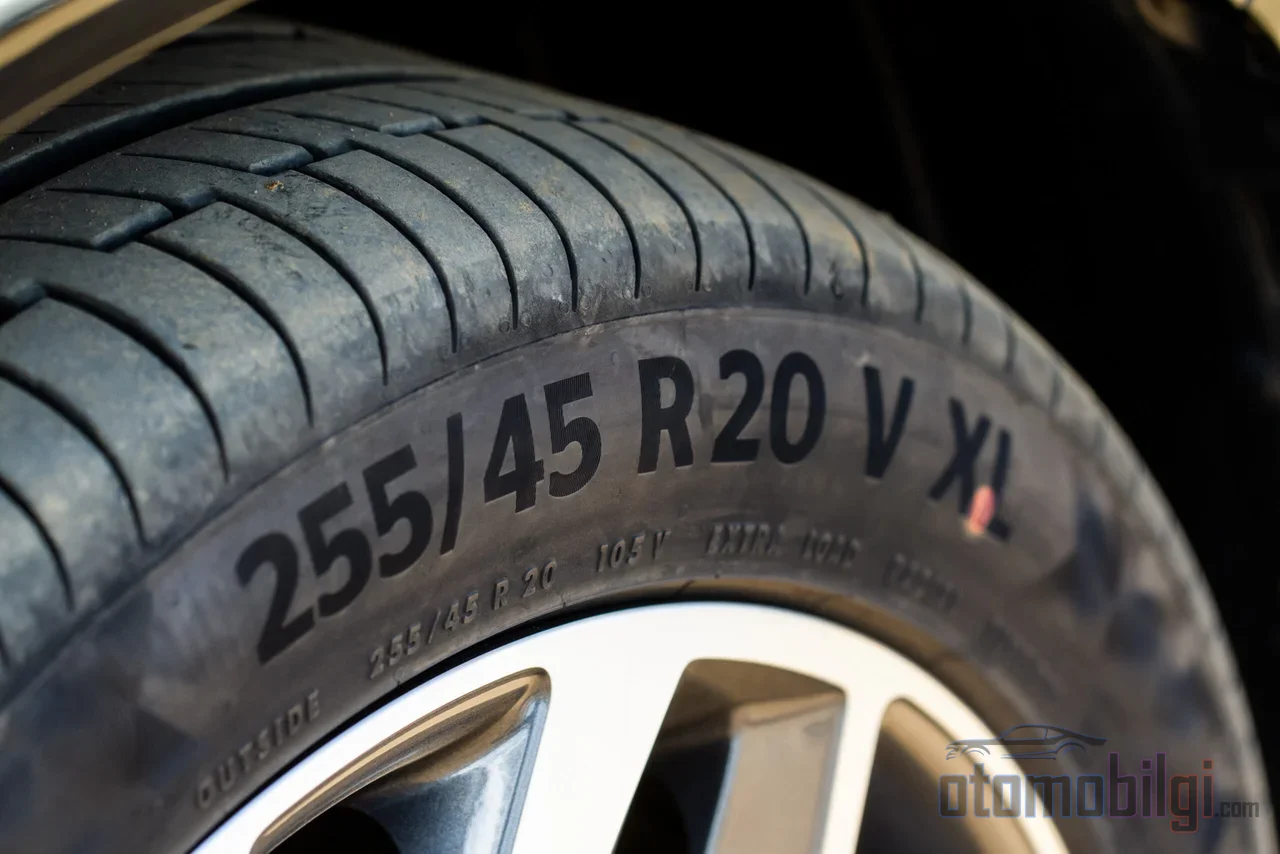
New wheels were fitted, the tires got bigger, the car sat more planted, and everything looked fine. Until the first long trip: Cruise Control kicked in earlier than expected, a speeding ticket arrived with the gauge showing 110, and the odometer started to drift from the distance actually covered. This scenario is usually not bad luck or a malfunction, but the result of a single detail most often overlooked when changing wheel diameter: keeping the total rolling diameter intact. So how exactly does a diameter different from the manufacturer's recommendation skew the gauge and the odometer?
Why Does the Speedometer and Odometer Care About the Tire?

In most vehicles, speed and distance measurement works on very simple logic: each wheel revolution means a certain distance. Wheel speed sensors count the wheel's rotations, the vehicle calculates speed from this data, and the gauge and odometer display the output of the same calculation. That's where the problem begins: this calculation keeps the information on how much distance the wheel covers per revolution calibrated to the factory tire size.
When you fit a larger-diameter tire, more distance is covered per revolution; the tire turns fewer times per mile. The result: the speedometer reads slower than the actual speed and the odometer starts recording less than the distance actually traveled. Now think of the opposite: a smaller tire turns more times, the gauge reads higher than the distance actually traveled, and the odometer logs extra miles. So the answer to the question "does a big tire increase the speedometer reading" is no; the reading drops.
The amount of deviation is directly proportional to the difference in diameter. A 10% increase in diameter means roughly a 10% decrease in the gauge reading; a 3% diameter difference skews the gauge by about 1.8 mph at a given speed. Though it may seem like a small number, as you approach highway speed tolerances this margin can keep you from staying under the ticket limit. There is a simple formula for a healthy check: the real speed is the gauge speed multiplied by the new diameter divided by the old one.
The 3% Rule: Where Does the Safe Window Come From?
In the tire world there is an accepted guideline for diameter deviation: the total diameter of the replacement tire may differ from the original tire by no more than 3%. This is not a legal requirement, but an engineering limit adopted by tire manufacturers and fitment experts. On most passenger cars, 3% corresponds to a diameter difference of roughly 0.6-0.9 inches.
The rationale for this window is not only the gauge. Staying within 3% keeps the inputs of the ABS and the transmission within an acceptable tolerance; it also limits the risk to the wheel well and the clearance between suspension and body. Once you go beyond 3%, things fall apart: a poorly calibrated ABS and traction control may mistake normal wheel rotation for slip, and the transmission struggles to find the right gear and starts constantly hunting up and down; at differences of 5% and above, accelerated transmission wear comes into play.
Highlights
- The spare tire's overall diameter should differ from the original by no more than 3%: the safe upper limit is 1.03 times the diameter, and the lower limit is 0.97 times.
- A 10% increase in diameter leads to roughly a 10% decrease on the speedometer.
- On a Toyota RAV4, the safe range for a 225/65R17 (~28.52 inch) diameter is 27.66-29.37 inches; 235/65R17 is safe, while 255/70R17 (~+9%) is unsafe.
- Plus sizing is the practice of maintaining the overall diameter while increasing the wheel size and lowering the sidewall ratio, and it has been applied since the 1970s.
- In AWD vehicles, even a 1/8 inch diameter difference creates a difference of approximately 4 revolutions per mile and drivetrain strain.
From Size Code to Diameter: How Is the Calculation Done?
A code such as 225/65R17 written on the sidewall actually describes three separate measurements: 225 mm is the outer width, 65 is the sidewall ratio (the sidewall height as a percentage of the width), and 17 is the wheel diameter; R indicates radial construction. The overall diameter comes directly from these three numbers:
To convert the width to inches, we divide 225 by 25.4: approximately 8.9 inches. The sidewall height is 65% of this value: 5.7 inches. The overall diameter is then wheel diameter plus twice the sidewall height: (5.7 x 2) + 17 = 28.4 inches. The metric example follows the same logic: 157.5 mm sidewall x 2 + 381 mm wheel = 696 mm. To find the circumference, simply multiply the diameter by 3.14.
Plus Sizing: How Do You Maintain the Diameter While Increasing Wheel Size?
This is exactly where plus sizing comes in. The goal is to keep the overall diameter constant while gaining the visual and handling advantages of a larger wheel: the wheel is increased, and the sidewall ratio is lowered. A common rule of thumb in practice is to add approximately 10 mm of tire width for every inch of wheel increase and lower the sidewall ratio by roughly 10 points; an alternative variant is to increase the width by 10 mm and reduce the sidewall ratio by 5-10% per inch. If this balance is not maintained, increasing the wheel size alone enlarges the diameter, and the discrepancies from the first section come knocking at your door.
The safe diameter ranges for common sizes look like this:
| Size | Overall Diameter | Safe Range (±3%) |
|---|---|---|
| 205/55R16 | 24.88 inches | 24.13-25.63 inches |
| 225/65R17 | 28.52 inches | 27.66-29.37 inches |
| 265/70R17 | 31.61 inches | 30.66-32.55 inches |
| 275/65R18 | 32.07 inches | 31.11-33.04 inches |
ABS, Traction Control and Cruise Control: The Deep Effects of the Discrepancy
The gauge and odometer are the most visible faces of diameter discrepancy; the truly sensitive systems work deeper down. Vehicle manufacturers have long emphasized that the data coming from wheel speed sensors is the foundation of ABS and traction control working correctly. When the tire diameter changes, the rotational speed reported by these sensors also changes; the system may misinterpret normal wheel rotation as slippage.
Cruise Control is fed from the same data as well. Especially in vehicles fitted with adaptive driving assistants and level kits and switched to larger tires, the system's behavior may malfunction when the calibration of distance and speed calculations drifts. These systems, which are habits we come to control over time, do not favor uncalibrated operation against diameter differences; asking whether a calibration check is needed after the replacement is a sensible habit.
AWD and 4x4: Why Should All Four Tires Match?
On all-wheel-drive vehicles the situation is even stricter. Tires of different sizes turn a different number of times per mile; this difference keeps the differentials and viscous couplings constantly working, which can lead to excessive heat and premature wear. An example illustrates well how small the difference can be: a 225/45R17 tire at 10/32 inch tread depth turns 835 times per mile; when the tread wears down to 8/32, the diameter shrinks and the count rises to 839. So even a 1/8 inch difference in diameter means roughly 4 extra turns per mile and constant drivetrain strain.
Manufacturers' thresholds on this matter differ from one another, and there is no single universal tolerance: Audi requires that the rolling radius of all four tires remain the same, or that the tread depth difference be at most 4/32 inch; for the Porsche Cayenne, a 30% difference in remaining tread depth between tires on the same axle is cited as the limit; on the Nissan GT-R, when fewer than four tires are replaced, every tire in service is expected to have at least 6/32 inch (5 mm) of tread; Subaru limits the circumference difference to at most 6 mm (1/4 inch). Knowing these thresholds when fitting winter tires or being forced to replace a single tire takes them out of the realm of negotiation.
Balancing with Aspect Ratio: Can You Go from 215/45R18 to 215/50R18?
One of the questions frequently received from readers concerns switching between sizes of the same width but different aspect ratios: can 215/50R18 or 215/55R18 be fitted instead of 215/45R18? The answer again goes through the same calculation: since the width stays the same, the only thing that changes is the sidewall height, and each step increases the overall diameter by a certain percentage. The question is: does the resulting diameter stay within the original's 3% window? If it stays within, speedometer deviation remains at an acceptable level; if it goes outside, trying a small size means a large deviation problem.
The effect of sidewall height is not limited to diameter alone. With a shorter tire, ground clearance decreases, the engine revs higher, and the speedometer over-reads; with a taller tire, beyond the appearance and rev changes, the risk of contact between the tire body and suspension components also grows. In addition, the spare tire's load index must be equal to or higher than the original tire's index; for example, fitting a 99-index (775 kg) tire in place of a 102-index (850 kg) tire is an unacceptable drop in terms of safety. It should also be noted that deviations of 3–5% on LT tires in the light truck segment should be considered only with specific vehicle approval.
So How Much Deviation Does a Different Diameter Cause?
Summing up the clear answer to the question: the amount of deviation is directly proportional to the diameter percentage. Every 1% increase in diameter makes the speedometer read roughly 1% slow and the odometer undercount distance by that rate; with downsizing, both values deviate in the opposite direction by the same rate. A change within the 3% window produces a gauge difference of roughly 1.8 mph at a given speed; a level most drivers will not notice. A 10% increase in diameter, however, makes the gauge read 10% low; at an actual speed of 110 km/h the gauge stays around 99, and this gap disrupts both the risk of fines and the calculation of service intervals. The critical thresholds are set not by the gauge but by the systems: deviations above 3% can push ABS and traction control into indecision, deviations above 5% accelerate transmission wear, and on AWD vehicles even much smaller deviations put a strain on the drivetrain.
That is why the correct order for a wheel swap is clear: first calculate the total diameter of the new size, compare it with the original's ±3% range, then balance the diameter by lowering the sidewall ratio. In the past, upsizing wheels was a daring move; now, when the math is done right, taking the visual advantage while keeping the speedometer and odometer where they belong is the least expensive method thirty years of experience has taught.
Sources
- Safe Tire Size Change Guide: +3% Rule, Width, Rim Fitment
- Do All 4 Tires Need To Match On An All-Wheel Drive Or Four-Wheel Drive Vehicle?
- Tire Size and Speedometer Accuracy
- What is the 3% Rule for Tires?
- Plus sizing
- Tire Height Calculator
- Speedometer Inaccuracy: Causes & How to Fix It
- Do Bigger Tires Affect Odometer Readings?
- Rolling Precision
- What Is Plus Sizing? Plus-One and Plus-Tires Explained