Are Thin Needle Valves Safe and How Should They Be Used?
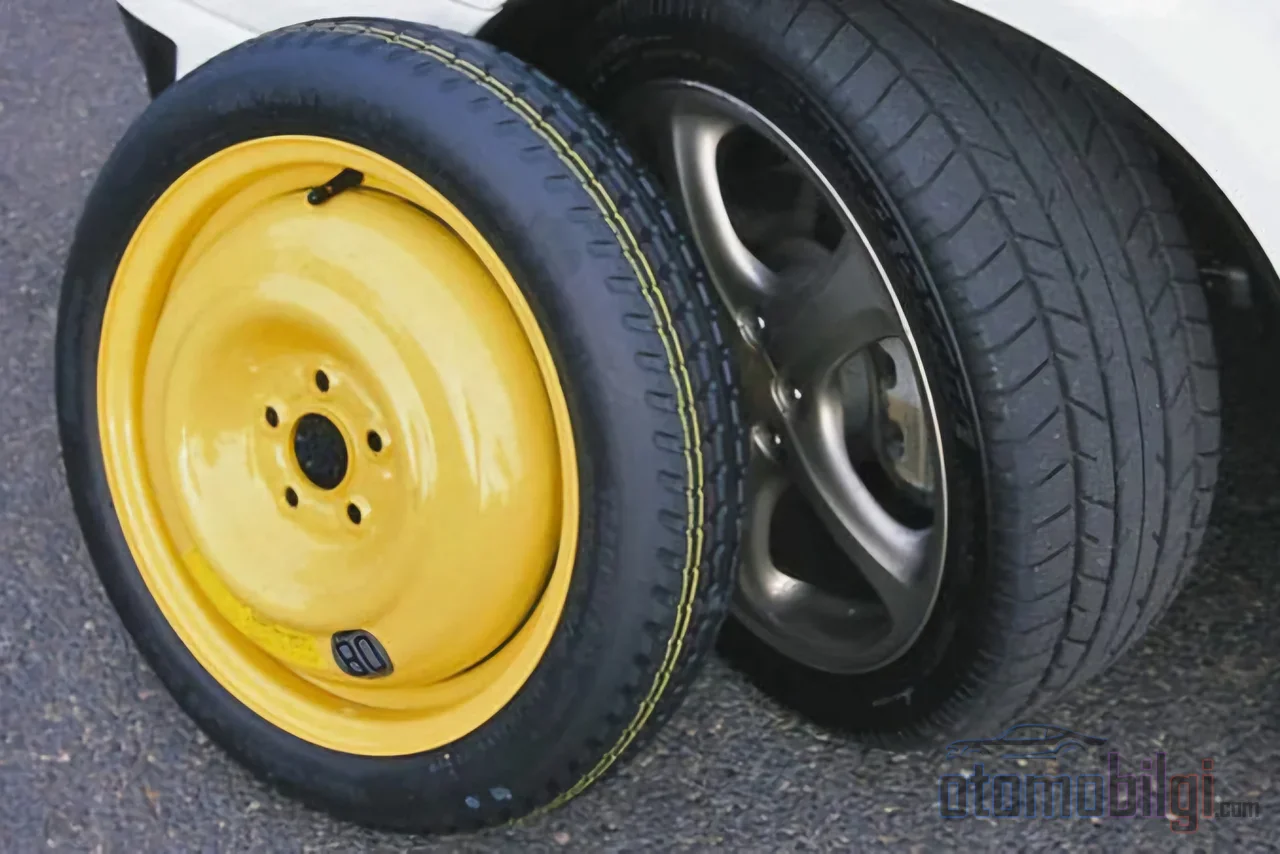
We are all familiar with that narrow, thin tire that comes out of the trunk when changing a flat. Many drivers assume it is a smaller version of a full-size spare; yet the thin spare tire, as its name suggests, is a temporary solution designed only to get you to the nearest repair shop. So how far, how fast, and under what conditions can you really drive on this tire? Let me tell you, as someone who has been in this business for over thirty years: Setting out without knowing the answers to these questions is by no means a harmless oversight.
What Is a Thin Spare Tire, and Why Is It So Thin?
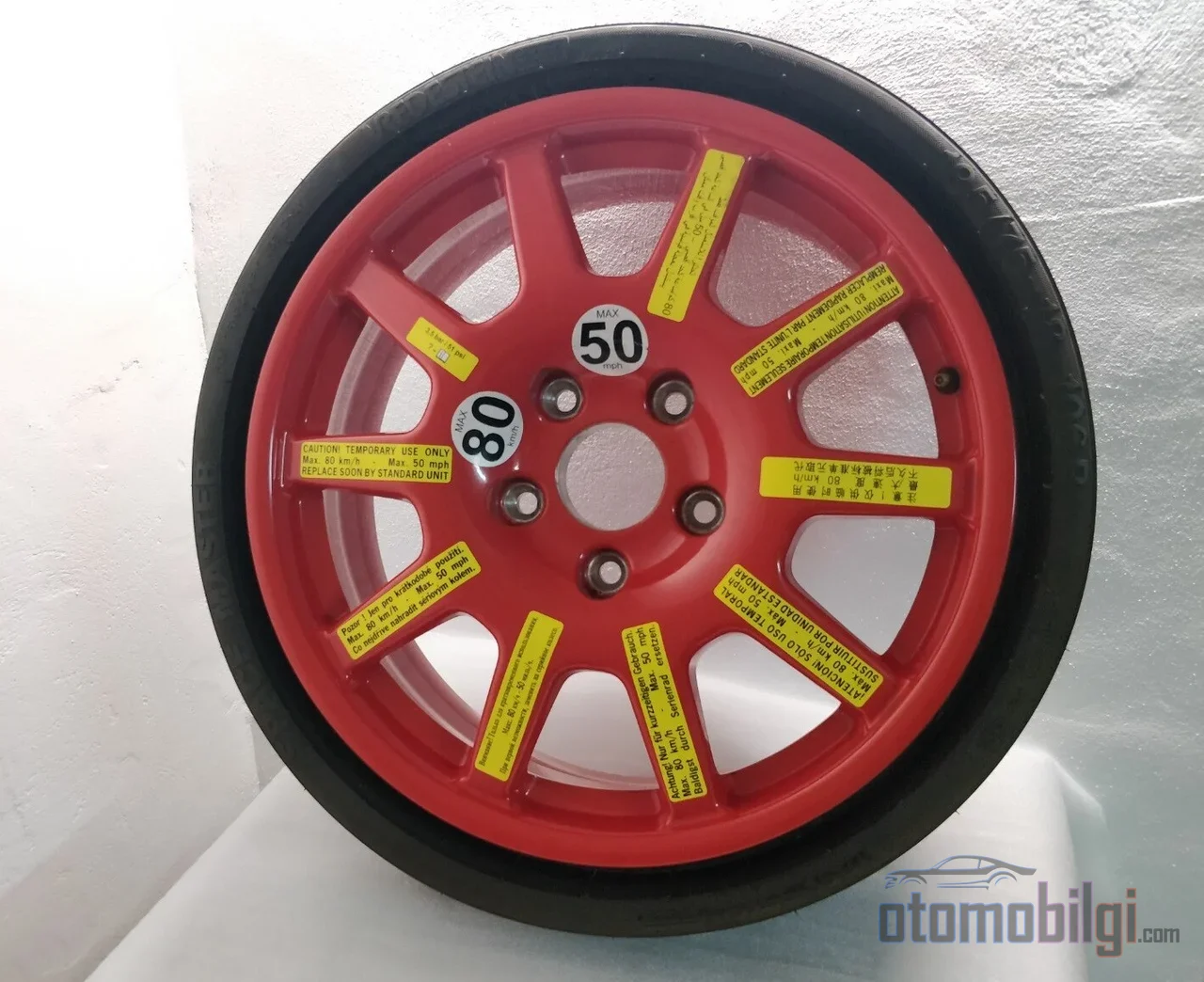
The thin spare tire, known in international literature as the space-saver or limited-use spare tire, is a compact spare. Its purpose is not to take on the role of a regular tire; it is to move the vehicle safely over a short distance in the event of a flat. Manufacturers favor this tire for three main reasons: lowering costs, reducing vehicle weight, and reclaiming the space a full-size spare takes up in the trunk. Indeed, a thin spare tire is approximately 7 kg lighter than a full-size wheel.
These tires were introduced in the late 1970s and quickly became widespread. More than half of the vehicles in the US market for the 2017 model year came with a temporary spare as standard. Today, however, the picture has changed: More than a third of vehicle models sold do not come with a spare tire at all; manufacturers are instead turning to run-flat tires or repair and inflation kits. So you may be one of the lucky drivers who finds a thin spare in the trunk - but only on the condition that you know this tire's limits.
The physical differences are plainly visible. A thin spare tire is noticeably narrower than standard tires and has a smaller diameter. The tread depth is very shallow; the body construction is lightweight. And on its sidewall, the most critical warning is written: TEMPORARY USE ONLY - in other words, it is intended for temporary use only. This phrase is not decoration; it summarizes the tire's entire design philosophy in two words.
What Is the Difference Between It and a Full-Size Spare?
A full-size spare matches the vehicle's original tire dimensions exactly. For this reason, it can be included in a five-wheel rotation if you wish; thus extending the life of all the tires. No such luxury exists with a thin spare tire - it fits only the vehicle it came with and should never be fitted to another vehicle. Its dimensions are selected according to your vehicle; a difference in diameter creates problems both in driving and in the mechanical components.
In addition, the vehicle type is a determining factor here. A full-size spare is a more sensible choice especially for SUVs with a high center of gravity and light commercial vehicles; a limited-use spare may not be safe on a loaded pickup truck or a vehicle towing a caravan. Towing a trailer with a thin spare tire is already prohibited as a rule - temporary spares are not designed to the same level as standard tires in terms of load capacity, speed capability, and traction under various weather conditions.
Highlights
- The slim spare tire is approximately 7 kg lighter than a full-size wheel.
- The general rule: It is not used above 80 km/h speed or approximately 80 km distance.
- Its inflation pressure is typically 60 psi - much higher than a normal tire.
- It should not be mounted on the drive axle; this is the recommended practice for the differential.
- Driving on a snowy road with a slim spare tire is not recommended.
How Many Kilometers and at What Speed Can You Drive on a Slim Spare Tire?
This is perhaps the most frequently asked question on this page. The well-established practical rule in the industry is this: The 50-50 rule. That is, stay below 80 km/h and do not exceed approximately 80 km. Manufacturer manuals follow the same line; driving above the specified speed limit with a compact spare is explicitly prohibited in the manuals. Some manufacturers are a bit more generous on distance and allow up to around 110 km; but read this not as an entitlement, but as a detail you need to check by looking at what your manufacturer's manual states.
Why are these limits so narrow? Because a compact spare is a tire with a short lifespan and a low speed rating. Its shallow tread depth and light construction are not designed to withstand prolonged high-speed rolling. As you extend the duration, the tire overheats; the sidewall weakens, internal pressure rises, and in the worst-case scenario there is a risk of a blowout. Moreover, long distance tires out not only the spare but the vehicle as well: Uneven stress is placed on the suspension, differential, and brakes. The fact that a small-diameter tire is more vulnerable to road hazards like potholes and nails is another reality of the matter - a second failure waits for no one.
Why Is the Pressure 60 PSI? The Fine Details of Spare Tire Maintenance
Here is the value that surprises most people inflating a slim spare tire for the first time: the typical requirement is around 60 psi - nearly twice that of a normal tire. The explanation is simple physics. The small tire has to carry the same load with a much smaller contact surface; therefore, it requires higher internal pressure. Manufacturer manuals usually recommend 60 psi (420 kPa) and ask that the pressure be rechecked after the tire is mounted. Still, you should not automatically accept 60 psi as the general value: Always base it on the value written on the tire. The inflation range for spare tires typically varies between 35 and 60 psi, and the correct value is written on the label.
Then there is the maintenance side, which is exactly where most drivers fall short. The pressure of the spare tire should be checked once a month along with the other tires. A tire that has been waiting in the trunk for years ages over time, even if it has never hit the road; it is considered to have entered service the moment it is mounted and inflated. The practical rule that also applies to spares is this: 10 years from the date of manufacture or 6 years from entering service. Relying on a spare that has passed that date makes an already risky day even riskier.
One final warning: Sealant repair foam kits do not save every situation. Useless for large punctures; if the tire has completely blown out, it serves no purpose. Therefore, remember that no repair kit can replace a slim spare tire.
Does It Affect TPMS, ABS, and Stability Systems?
You know that yellow light that starts glowing on the dashboard when a slim spare tire is fitted to a modern vehicle. A compact spare usually has no TPMS sensor; so the tire pressure warning light may come on. There is nothing to worry about - the sensors of the other tires are not affected, but the system may want to be recalibrated after service. Some vehicles also monitor a full-size spare; in that case, if the light comes on, the spare's TPMS also needs to be checked.
Braking and road holding, however, are a more serious matter. A slim spare tire can negatively affect braking, and especially stopping safety in vehicles without ABS. Electronic stability control and traction control systems may not work as expected due to the difference in tire diameters; in some vehicles, these systems may need to be disabled until the original wheel is fitted. Whatever your owner's manual says about this, following it is the right thing to do - here, trust your vehicle itself, not generalizations.
Should the Spare Be Fitted to the Front or the Rear?
A small-diameter tire can put extra stress on the differential when fitted to the drive axle; this invites both mechanical damage and loss of road holding. For this reason, keeping the compact spare away from the drive axle is a common and sensible recommendation. When a front tire blows out, this means swapping the spare with a rear wheel to move it to the back. In AWD and four-wheel-drive vehicles, it is preferred to keep a full-size spare with a tread depth similar to the other tires in order to reduce stress on the drivetrain - the job of four-wheel-drive owners is already a bit more complicated; it used to be a simple wheel swap, now the sensitivity of the drivetrain is also on the table.
Is a Slim Spare Tire Safe in Snowy Weather and on Long Journeys?
The short answer: no, along with the reasoning. Due to its limited tread depth and narrow construction, a slim spare tire is not recommended on snowy roads. Temporary spares are not designed like standard tires in terms of load capacity, speed capability, and traction performance in all weather conditions; snowy terrain narrows these already narrow limits even further. If a tire blows out in winter, there should be only one goal: to reach a repair shop as soon as possible and fit the original tire.
The long-journey matter works on similar logic. Heading out on a vacation route with a slim spare tire means crawling along in the right lane at 80 km/h on the highway and living with the risk of a second failure at any moment. In the past, thanks to the full-size spare in the trunk, a journey like this could continue from where it left off; today, spares that have shrunk in the name of saving space have eliminated that comfort. In return, the driver's duty has become clear: to see the slim spare tire not as a vehicle, but as a bridge.
Summary of Safe Use with a Slim Spare Tire
As someone who has been through the mill on this, let me say it clearly: A slim spare tire does its job safely when used briefly and carefully. Correct usage is summarized by three values: 60 psi pressure, 80 km/h speed, and roughly 80 km of distance. Add to these the principles of avoiding driven axles and staying clear of bad weather; the rest is the repair shop's business. Checking your spare's pressure once a month, taking a look at its production date, and reading the limits in the manual once - all three together take less than half an hour of your time and could save you from being stranded in the middle of the road one day.
The final word is this: Is a slim spare tire safe? Within its own limits, yes; once you exceed those limits, every additional kilometer increases the risk. This tire gives you the right to return home with confident steps, not the right to continue your journey.
Sources
- Spare tire - Wikipedia
- What Are The Different Types Of Spare Tires? - Tire Rack
- Important - use of compact spare tire - Kia Owners Manual (2024)
- How Long Can You Drive on a Spare Tire? - Kelley Blue Book
- How Far and How Fast Can You Drive on a Spare Tire? - TopDriver
- What Is the Right Spare Tire PSI? - CarParts.com
- A Quick Spare Tire TPMS Check - Tire Review
- Modern Spare
- Why You Should Never Drive Long Distances on a Donut - SpareCover