Tire Pressure: Should It Be Measured When the Tire Is Cold or Hot?
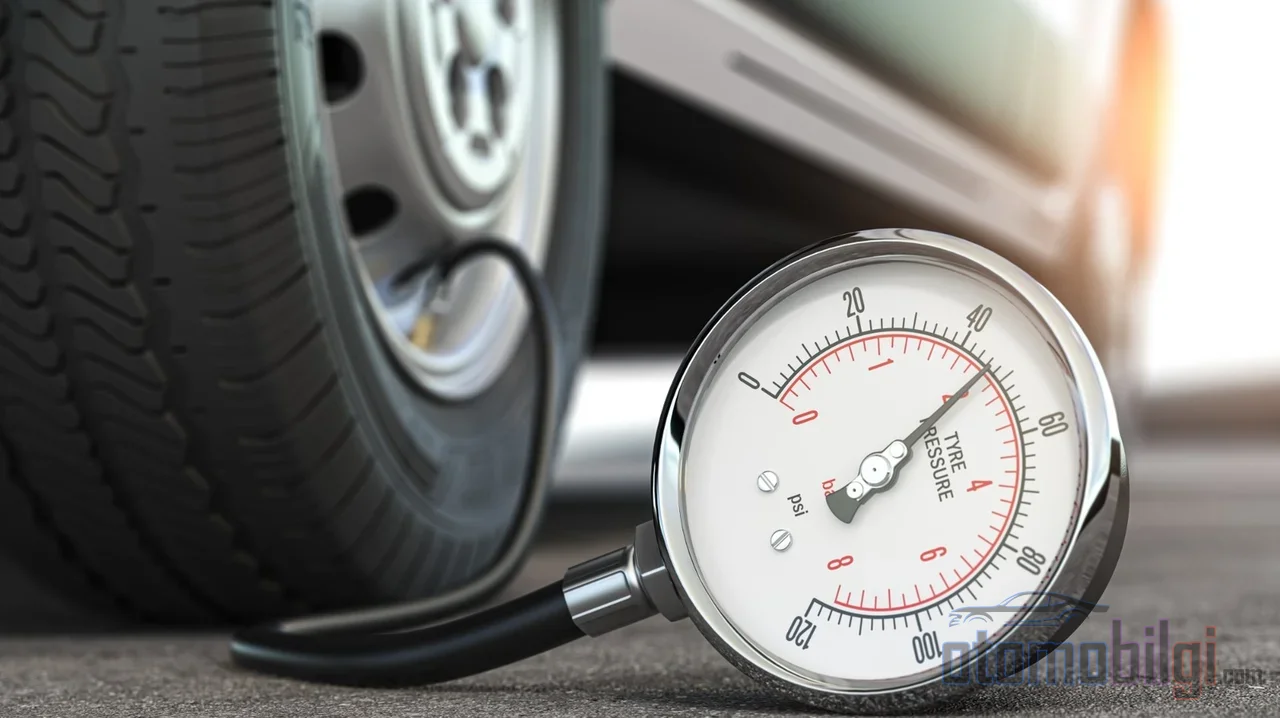
It is possible to understand how a car feels not by looking under the hood, but by checking the air in the tires. There is a truth well known to those who have been in this business for years: most drivers either never check their tire pressure or inflate them based on a value taken from the wrong place. Some trust the big number on the tire sidewall, while others just eyeball it and say "that'll do." Yet a difference of just a few PSI is felt both in your wallet and on wet asphalt.
The real subtlety is this: Pressure is not a fixed number, but a value that breathes with temperature. The same tire can read differently in the morning and in the evening, and even more so after a long highway trip. So which value is correct, and which one is misleading? Why does the door label never match the writing on the sidewall? On this page, we get to the bottom of the question.
Where Is the Correct Value Written: Door Label or Tire Sidewall?
The most common mistake starts right here. When you look at the tire sidewall, the big number that catches your eye - for example 44 PSI - is the maximum pressure that tire can withstand. It is not the value recommended by the manufacturer for your vehicle. A passenger car accidentally inflated to the maximum bounces down the road like a hard bumper; grip decreases, and the center of the tire stops making contact with the ground.
The true reference is the label on the inner edge of the driver's door. Some manufacturers also place this information in the glove compartment or inside the fuel filler cap; but the owner's manual is the place you can be sure of in every case. The label gives the cold inflation pressure calculated according to the vehicle's weight and the fitted tire size. In passenger cars this value is usually in the range of 30-35 PSI, but even for two vehicles parked in the same garage, the front and rear axle values can differ. On some vehicles, the label gives separate recommendations such as 28 PSI at the front and 32 PSI at the rear; in the light commercial and pickup class, the numbers differ considerably both from each other and from passenger vehicles. Whatever the label says is what applies; the tire sidewall value only shows the ceiling.
Key Highlights
- The recommended pressure is written on the door label; the value on the tire sidewall is the maximum pressure, not the target.
- For every 10°C drop in air temperature, tire pressure loses approximately 0.07-0.14 bar.
- A measurement on a hot tire can come out up to 4-6 PSI higher than on a cold one.
- For every 1 PSI drop in the average pressure across all tires, fuel efficiency decreases by about 0.2%.
- The minimum check frequency is once a month; the ideal is once every two weeks.
What Does Cold Tire Pressure Mean?
The phrase "cold tire" does not mean the air is cool; it means the tire has been stationary for at least three hours or has driven only a short distance - no more than a few kilometers. Factory recommendations are also written according to this definition: the 32 PSI on the door label is the value before the tire has hit the road and warmed up.
Why be so meticulous? Because gas expands when heated and contracts when cooled. As the tire rolls, friction and the flexing of the carcass heat the air; the pressure rises. Measuring on a hot tire can read up to 4–6 PSI higher than the cold value; the gap widens further under hard use. A tire you set correctly in the morning according to the door sticker will look quite "inflated" at the end of a two-hour highway trip. This is not a problem - it is by design. The problem is taking the hot reading as a reference and letting air out, thereby ruining the cold value. So take the measurement before driving; the value you read while the tire is hot is neither compared with the sticker nor used as a basis for releasing air.
Why Do Tires Deflate as the Air Cools?
At seasonal transitions, there is that familiar scene everyone witnesses: on an autumn morning the tire pressure warning lights up on the dashboard, and a few days later the light goes off by itself without anyone doing anything. It is not a miracle, it is physics. Air molecules slow down in the cold and pressure drops; they expand again in the heat. An old analogy still works: a basketball that deflates overnight in the cold looks fully inflated again in the afternoon sun.
Numerically, the picture is this: for every 10°C drop in temperature, pressure loses about 0.07–0.14 bar (roughly 1–2 PSI). A 20-degree drop over a weekend can wipe 4 PSI from your tires. When the cold snap passes and temperatures recover, pressure usually comes back on its own - provided there is no leak. But this is not an excuse to dismiss low pressure: grip and braking performance, already reduced in winter conditions, deteriorate further with insufficient air. In the cold season, tires gradually lose air even if the temperature stays constant; therefore, you need to increase the frequency of checks.
What Does Incorrect Pressure Ruin: Fuel, Wear, and Safety
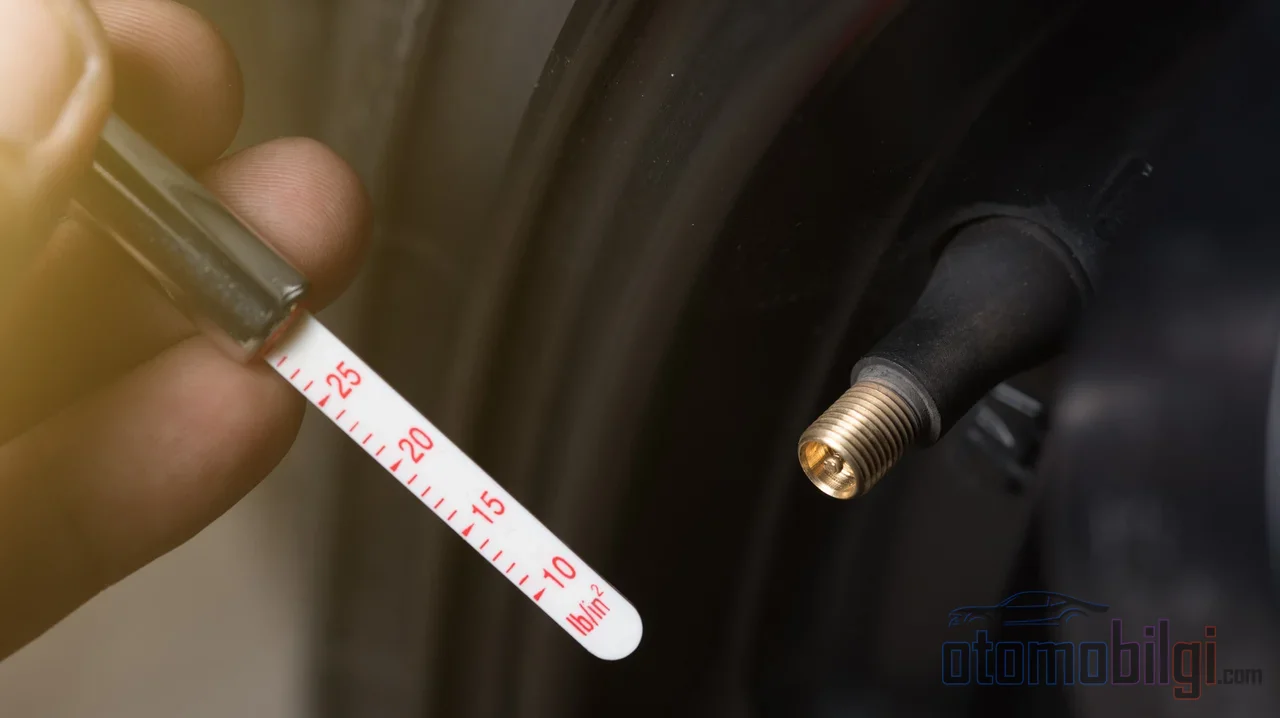
The price of pressure error starts directly at the fuel tank. For every 1 PSI drop in average pressure across all tires, fuel efficiency decreases by about 0.2%. Small as it may seem on its own, this figure means serious waste over the years in a vehicle with commonly underinflated tires; 20% underinflation can shorten tire life by up to 30%.
The wear pattern maps out the mistake
Looking at a tire's tread is like reading a record of past mistakes. With overinflation, the tread spine stiffens, load piles toward the center, and the middle of the tread wears. With underinflation, the sidewalls flex excessively with every revolution, the contact patch shifts to the edges, and both edges wear out. Even a deviation of just 5–10% above or below the recommended value is enough to start premature and uneven wear. It is possible to notice these patterns with the naked eye through regular observation - but it is not possible to assess the pressure itself by eye, and these two should not be confused.
| Condition | Wear pattern | Main effects |
|---|---|---|
| Correct (cold) pressure | Even, uniform across the entire tread | Efficient fuel use, expected grip |
| Underinflation | Excessive wear on both edges | Longer braking distance, slipping on wet roads, shortened tire life |
| Overinflation | Noticeable wear in the middle | Reduced grip, susceptibility to impact, risk of blowout |
The safety front matters even more. With an underinflated tire, stopping distance lengthens, the tendency to skid on wet surfaces increases, and the casing overheats, becoming prone to structural damage. Overinflation, on the other hand, shrinks the contact patch, weakening grip and leaving the tire vulnerable to impacts like potholes. At both extremes, the risk of a tire blowout rises. So pressure is not just a fuel issue; it is the very subject standing between you and the steering wheel, only a few PSI away.
Practical Check Guide: When, How, and With What Tool?
The good news is that this job requires no laboratory. A pressure gauge sold for a few dollars will do the job: pen-type ones are the cheapest, digital ones are a bit pricier but the easiest to use. Classic dial models have been doing the same job for years; what really matters is having a gauge on hand and using it regularly.
- Measure the tires when cold: the car should have been parked for at least three hours or driven only a few kilometers. Take the measurement before driving.
- Unscrew the valve cap and place the gauge straight onto the valve. If you hear a hissing or air-leaking sound, the gauge is not seated properly; press it down again.
- Compare the reading you get with the door label - not the value on the tire sidewall.
- If it is low, add air; if it is high, carefully release air from the valve. Noting the results makes it easier to see the trend as seasons change.
On frequency, the lower limit is clear: once a month and before every long trip. Those with a more meticulous approach find checking every two weeks ideal; and indeed, during periods of fluctuating temperatures, that frequency works well. At three moments, a check schedule is a must: when the air turns noticeably colder, when the TPMS warning on the dashboard lights up, and at every refueling. The last one is a nice habit - two minutes at the pump bring peace of mind for the rest of the year.
In summary: Measure Cold, Inflate to the Label
To compress this whole picture into a single sentence: The correct pressure is the cold inflation value written on your vehicle's door label, and you measure it on a tire that has been parked for at least three hours. The number on the sidewall shows the maximum, readings on a hot tire are unreliable, and pressure changes on its own as the seasons turn. For a driver who adopts these three rules, tire pressure is no longer a guessing game but a two-minute routine. Thirty years of experience have proven time and again that it favors those who value this routine: an evenly worn tire, consistent braking distances, and fuel you never have to pay for at the pump are often the work of that little gauge in your hand.
Sources
- Should I Inflate My Tires in Cold Weather?
- Why Does Your Tire Pressure Drop in the Cold?
- Tire pressure in winter
- The Importance of Proper Tire Pressure
- Checking Tire Pressure when the tire is warm or cold
- Cold vs Hot Tire Pressure: Car Air Pump PSI Guide
- The Effect of Cold Weather on Tire Pressure
- The Importance of Proper Tire Inflation
- How Tire Pressure Causes Center and Both-Edge Wear
- 5 Signs of Overinflated Tires