What Should the Correct Tire Pressure Be and Where Can You Check It?
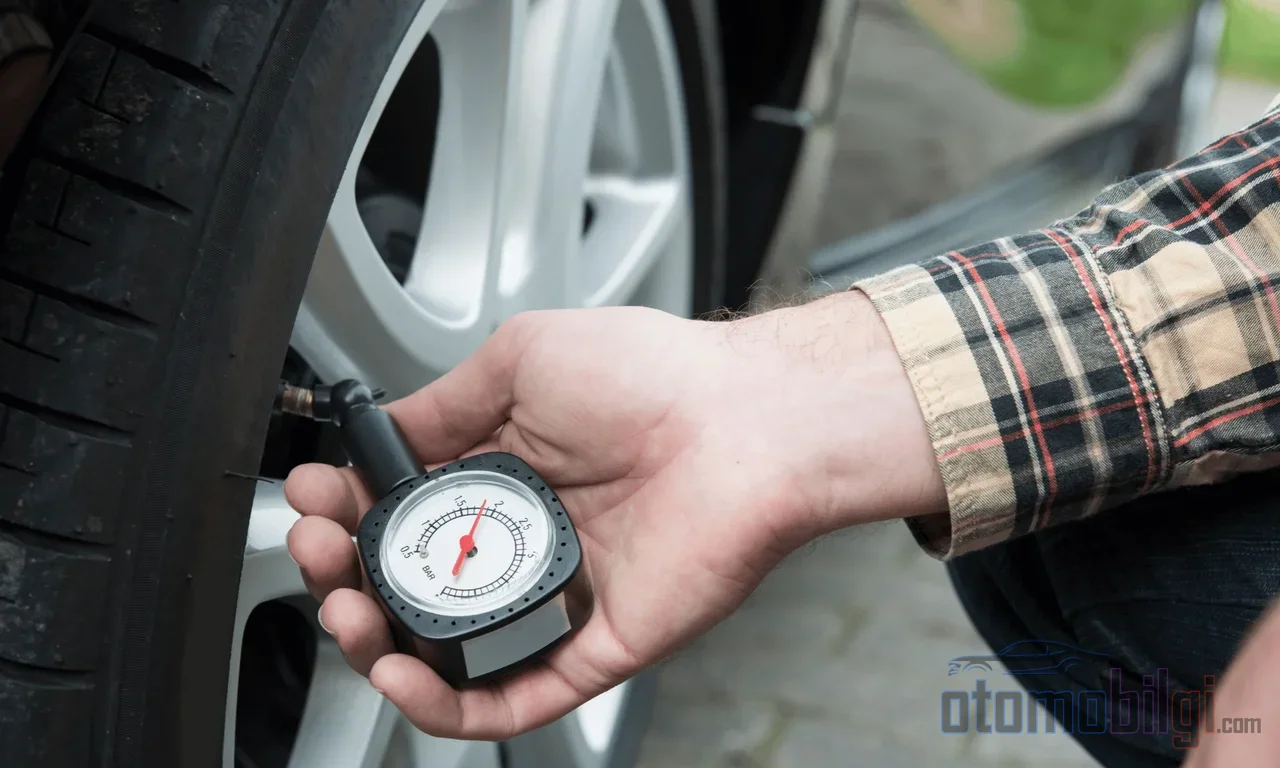
When stopping at the tire shop and looking at the pressure gauge, the question that comes to most drivers' minds is this: how am I supposed to know this number? Some go by the number on the tire sidewall, some check the sticker on the fuel filler door, and some just settle for whatever they find. Yet these three numbers tell three different things, and using them interchangeably wears out both the tire and the wallet over the years. On this page, we will cover where to read the correct tire pressure, the differences between front-rear and loaded-unloaded values, and the reason for the most common confusion - mixing up the maximum sidewall value with the recommended value.
Where Is the Recommended Pressure Value Written?
The recommended tire pressure for your vehicle is written not on the tire, but on the vehicle itself. The primary source is the tire and loading information label, usually white or yellow, placed on the vertical frame of the driver's door - the door jamb. This small label you see on the side panel when you open the door gives the recommended cold pressure values for the front and rear tires separately.
If the label cannot be found or is unreadable, the second place to look is the owner's manual. The manual contains detailed pressure tables that vary according to tire size and the vehicle's load condition; digital copies can be accessed on the manufacturer's website or through brand apps. Some manufacturers also place a pressure label on the inside of the fuel filler door; on some models, a small information card may even be found in the glove box. In short: the door jamb label, the manual, and the fuel filler door - one of these three always carries the answer in every vehicle.
Highlights
- The recommended pressure is written on the driver's door label or in the owner's manual; it is not written on the tire.
- The psi value on the tire sidewall is the maximum pressure, not the recommended value.
- In passenger vehicles, the recommended pressure is typically in the 30-35 psi range.
- Measurements should be made when the tires are cold; checks should be done once a month and before long trips.
- Temperature shifts the pressure by 1 psi for roughly every 6°C change.
Three Different Labels, Three Different Numbers on the Same Vehicle
On some vehicles, the door label, the fuel filler door, and the manual show different values; this is a situation often encountered by owners of luxury brands in particular. The common interpretation is this: the values on the fuel filler door are for normal load, while the values on the door label are for maximum load. When you encounter such a contradiction, the thing to do is simple - rely on the table in the owner's manual arranged by load condition, and choose the value according to how you use your vehicle. The manual is the only official source that explains which condition each of the two labels corresponds to.
Why Is the psi on the Tire Sidewall the Wrong Answer?
The most deep-rooted misconception of the matter is knotted here. The psi value written on the tire's sidewall is not the recommended pressure for your vehicle; it is the maximum cold pressure the tire can safely carry. A tire manufacturer fits the same tire to hundreds of different models; the number molded on the sidewall defines the tire's own limit, not the vehicle's needs. The door label, on the other hand, gives a vehicle-specific recommendation. The two are not interchangeable.
A concrete example clarifies the situation: on a popular compact sedan model, the door label recommends 32 psi, while the sidewall of the tires fitted to the same vehicle may show a maximum value of 44 psi. Inflating to 44 based on the sidewall means deviating the vehicle's suspension balance, grip, and tread wear pattern from what it was designed for. The tire's sidewall is like the fabric of a seat: it tells you the product's limit, not your body's.
In passenger cars, the recommended pressure typically falls within a range of 30-35 psi. But this range only gives you an idea; the actual figure is always on your own vehicle's label or in its manual.
Why Do Front and Rear Pressures Differ?
When you look at the label, it is normal to see two different figures for the front and rear. Front tires usually require more pressure due to engine weight and steering load; rear tires, being exposed to different forces, may receive a separate value. However, no generalization should be made here: some vehicles - such as certain all-wheel-drive models - recommend higher pressure at the rear regardless of weight distribution. The value given by the manufacturer is the result of years of testing and balance adjustments; there is no reason to exceed it based on intuition.
Unloaded Vehicle or Loaded Vehicle?
The second distinction on the labels is the loading condition. There may be a difference between the value recommended for driving alone and the value for fully loaded use; for example, a vehicle may recommend 33 psi for all four tires under light load, and 38 psi when fully loaded. As the load increases, the weight the tire must carry also increases; to accommodate this increase, the pressure needs to be raised. Under heavy load or when towing a trailer, the pressure can temporarily be raised to higher values - up to 44 psi and beyond, depending on the tire type - if the manufacturer recommends it. A driver who does the opposite, meaning who lowers or leaves the pressure as is in a loaded vehicle, invites all the consequences of low pressure.
For pickup owners, the situation is somewhat different: for unloaded or lightly loaded use, the cold pressure value on the door label is taken as the basis; for commercial loads or towing, the loaded-use tables in the manual are consulted. If the manufacturer recommends a higher value before a long highway journey, that recommendation is followed.
The Price of Low Pressure: Fuel, Wear, and Safety
Insufficient pressure does not announce itself immediately; it works silently. An underinflated tire flexes more and heats up more; this means irregular and premature tread wear, a shortened tire life, and a decline in grip performance. Deteriorated grip lengthens the braking distance; excessive heating, in turn, increases the risk of a blowout. The fuel side is no exception either: a tire with increased rolling resistance drains the tank noticeably faster.
In the past, these things were done by guesswork; the tire man would top them up once a month, and that was thought to be enough. Today, tire pressure monitoring systems called TPMS alert most vehicles to low pressure via a warning light, and some brand apps display real-time pressure data from your phone. Still, the sensor only triggers the warning below a certain threshold; checking a tire that loses a psi a month without waiting for the light remains the cheapest insurance, even with electronic assistance.
How and When Should Pressure Be Measured?
The golden rule of measurement is a cold tire. Tires warm up after a few kilometers on the road, and the warmed-up air's pressure rises; that is why the value changing on the TPMS display during driving is normal. For an accurate measurement, ideally park the car overnight and check it in the first hours of the morning - before setting off. The procedure is simple: unscrew the valve cap, press the gauge against the valve, compare the reading with the label or manual value, and top up if it is low.
Temperature directly affects pressure: with roughly every 6°C (10°F) change in air temperature, tire pressure shifts by about 1 psi. This is often why the warning light comes on during seasonal transitions, especially on the first cold days of autumn; the tire may not have leaked air at all - the air inside has simply contracted. In this case, the pressure is topped up to the cold value; there is no need to invent a permanent adjustment for the season.
For checking frequency, the healthy rhythm is a measurement at least once a month and before every long trip. It is also a good idea to check the tire tread during the same inspection; the bump-shaped wear indicators between the tread blocks reveal themselves when the tread has reached the bottom of the legal and safe limit. For those who do not neglect periodic tire rotation - roughly every 8,000-13,000 kilometers - there is a detail to remember: after rotation, the pressure must be set according to the manufacturer's recommended value for the axle in the new position, because if the front and rear values differ, the correct figure also changes when the tires swap places.
Short Answer: Which Figure Should You Trust?
Let's sum up: The correct tire pressure for your vehicle is the cold pressure value written on the sticker on the driver's door jamb or in the owner's manual, given separately for the front and rear; the psi on the tire sidewall, on the other hand, is the maximum value the tire can carry and is never used as the target pressure. If the manual recommends a higher value for a loaded vehicle, towing, or long highway driving, switch to that; in normal use, the label value remains constant. Measurements are made with a cold tire, once a month, and before long trips. That much - without exaggeration - means a difference of hundreds of kilometers and a few tanks of fuel.
Sources
- Tire Safety Ratings and Awareness | TireWise - NHTSA
- What is the right tire pressure for my car? - Michelin
- Recommended Tire Pressure for your tires - Pirelli
- How to Check Tire Pressure with a Tire Pressure Gauge - Bridgestone
- Tire Pressure and Fuel Economy - Kelley Blue Book
- Tire Care Essentials - USTMA
- Finding Your Vehicle's Recommended Tire Pressure - Mercedes-Benz of Roanoke
- What's The Tire Pressure Placard And Where Is It Located? - Autel
- Tire Sidewall Pressure vs Door Sticker - Logan Tire Service
- Best Tire Pressure for Different Driving Conditions - Kan Tire