When Should a Tire Be Rebalanced?
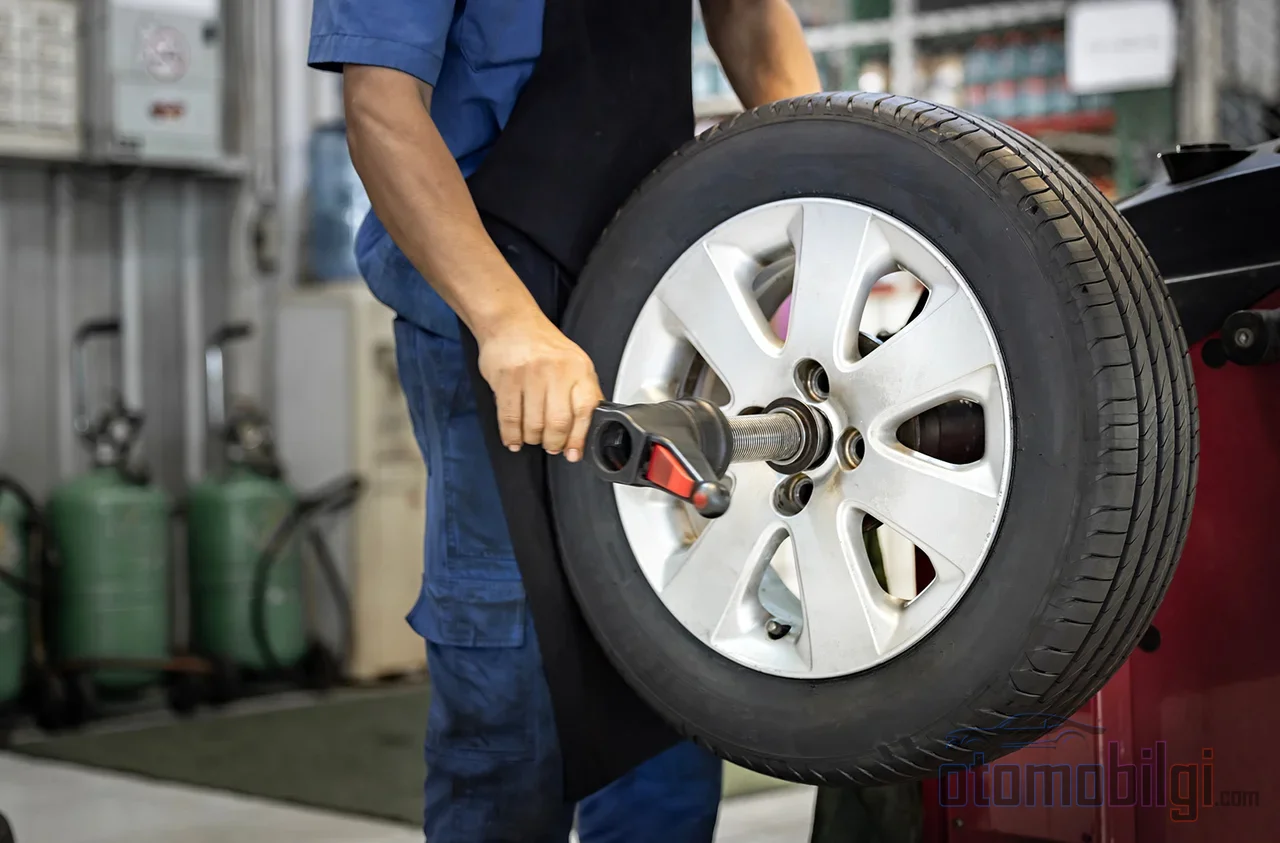
That subtle vibration starting in the steering wheel is noticed by most drivers for the first time when reaching highway speeds. It seems almost nonexistent around 80 km/h, starts to bother at 100, and before reaching 120, guesses start running through the mind about what the problem might be: tires, wheels, alignment pulling, or a thrown balance? Yet the real question should often be simpler and more proactive: when should the balance be renewed, do we really have to wait for the vibration?
Balancing means distributing the weight of the tire and wheel assembly evenly around the entire circumference of the wheel. This balance deteriorates on its own over time; weights fall off, wheels take impacts, tires wear unevenly. This page addresses, with clear criteria, in which situations and at what intervals balancing should be renewed before a vibration complaint arises.
Why Does Balance Deteriorate Over Time?
The balance weights attached to a wheel appear, from the outside, to be a permanent solution; in reality, they are small metal pieces attached with adhesive or clips, constantly exposed to impacts. Hitting a curb, going into a deep pothole, or passing roughly over a speed bump can knock these weights loose. When the wheel itself deforms, even if the weights stay in place, the balance is no longer what it used to be.
Adhesive-type weights can also cause problems on their own. Corrosion, heat, humid climate conditions, and rough terrain weaken the adhesion over time. If brake dust, dirt, or a thin film of oil remained on the adhesion surface during installation, the weight was never firmly attached from the start, and it falls off at the first hard impact or after a pressure wash. Even a flat tire repair is enough to leave the assembly unbalanced: repair plug and patch are a small but real mass added to the placement area.
On the wear side, the situation is more insidious. Hard braking and sharp corners wear the tire unevenly; the mass distribution around the tire gradually changes. A similar shift is seen in improperly stored tires. In short, balancing is not a one-time job that is done and forgotten, but a setting that wears out depending on usage conditions.
Why Are 10 Grams So Important?
The numbers give a good answer to those who underestimate the effect of imbalance: a mere 10 gram weight difference on the wheel produces, when spinning at 100 km/h, a force of approximately 2.5 kg. This force is repeated at every revolution; it is transmitted to suspension parts, steering components, and the tire itself. The result is not only a loss of comfort, but also premature component wear and increased fuel consumption.
Highlights
- Manufacturer recommendation: balancing should be renewed every 5,000-10,000 km or once every 1-2 years.
- A 10 gram weight difference creates a rotating force of approximately 2.5 kg at 100 km/h.
- Four main situations requiring a balance renewal: installation, impact, onset of vibration, periodic maintenance.
- Speed-dependent shaking is a sign of imbalance, while pulling to one side without vibration is a sign of alignment issues.
- The vibration is usually felt in the 80-120 km/h range and increases with speed.
Concrete Situations That Require Rebalancing
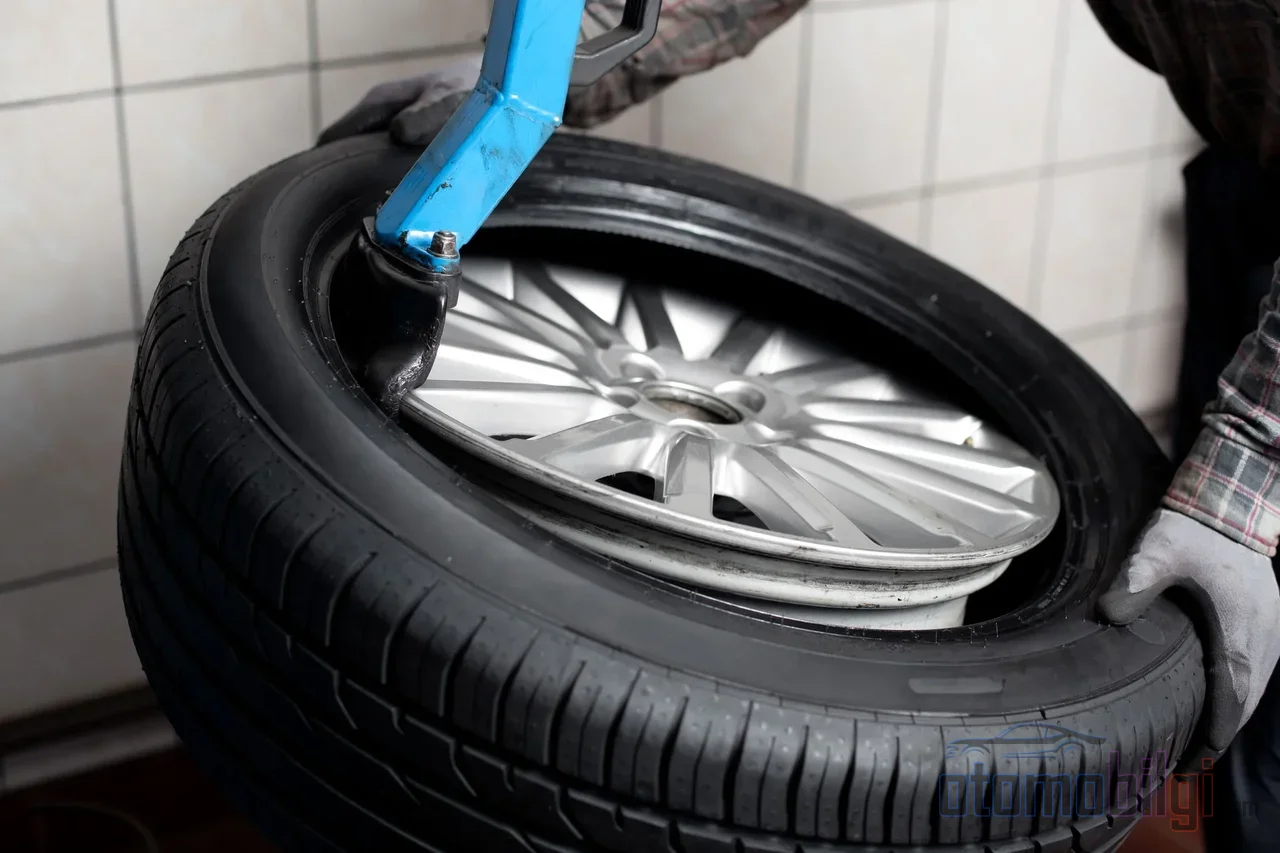
It is easy to say that the balance should be refreshed without waiting for vibration; what is truly valuable is knowing at which thresholds this should be done. The list of criteria distilled over many years is as follows:
- When mounting new tires or wheels: Every time a tire is seated onto a wheel, the composite mass distribution changes. Balancing is mandatory both for a new tire and when transferring the existing tire onto a new wheel.
- During tire rotation: When the wheels change position, the imbalance point changes depending on the vehicle. Rotation is the most practical opportunity for a balance check.
- After tire repair: Patching, plug insertion, and the removal and refitting process all affect balance; balancing must not be skipped after a repair.
- After a pothole or curb strike: The impact may have dislodged weights or bent the wheel. Having a wheel alignment done alone is not enough; if the ride is continuously shaky, wheel integrity should also be checked.
- At the first sign of vibration: Speed-dependent trembling felt in the steering wheel, seat, or floor is the clearest signal to have it checked without delay.
In cases where winter and summer sets are swapped on the wheels, every mounting requires balancing; this is a physical necessity that changes with every entry of the tire onto the wheel, not a matter of preference.
How Many Kilometers Between Balances?
Recommendations on the interval span a wide range, and the reason lies in a simple fact: usage conditions, road quality, and driving style change the lifespan of the balance depending on the vehicle. The tire manufacturer sets the most consistent framework as follows: A balance check every 5,000-10,000 km or once every 1-2 years, but professional balancing without waiting at the first sign of imbalance. It is also clearly stated that a fixed interval cannot be applied equally to all vehicles and all uses.
The service network's recommendations gather around this framework. A significant portion of service and dealer sources tie balancing to every tire rotation, that is, roughly 8,000-10,000 km periods; some recommend a six-month time interval. Less frequent recommendations also exist: some guides mention intervals extending up to 19,000-24,000 km, while some manufacturer services point to periods around 24,000 km. In the past, balancing was one of the side tasks of a trip to the tire shop; now it is seen as part of planned maintenance alongside rotation, and this is a reasonable development.
The practical synthesis is this: the most consistent guide is a check at every rotation or every 5,000-10,000 km, and immediate intervention without waiting in a doubtful situation. The odometer is a reminder, not a decision criterion.
Is Vibration a Sign of Balancing or Alignment?
The two procedures are often confused with each other, and this confusion leads to unnecessary expense. Balancing corrects the weight distribution around the wheel with small balance weights; wheel alignment, on the other hand, brings the angles of the wheels relative to the road and to each other, that is, the camber, caster, and toe values, to the manufacturer's specifications. Balancing aims to prevent vibration, while alignment aims for straight driving and even wear.
Telling the two apart is actually not difficult. Vibration that increases with speed, especially shaking felt in the 80-120 km/h range, is a sign of a balancing issue. Imbalance in the front wheels is felt in the steering wheel, while imbalance in the rear wheels is felt in the seats and floor; the vibration may start in the 55-65 mph band and ease off at higher speeds. A vibration-free constant pull to one side points to an alignment problem. If both symptoms are present, as after hitting a pothole, both adjustments should be checked together along with wheel integrity.
How Is It Done, How Long Does It Take, and What Does It Cost?
Methods
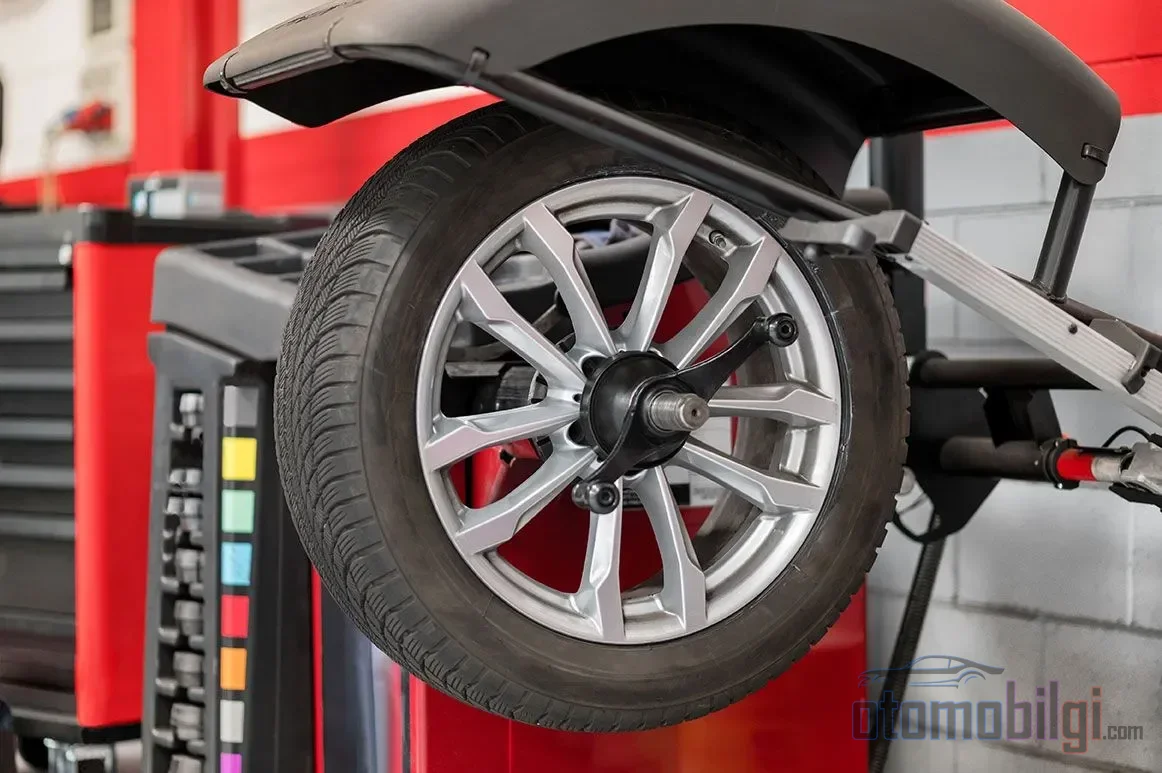
For slight imbalances, static balancing, which measures on a single axis, may be sufficient. The common method is dynamic balancing, done with a computerized spinner machine that measures on three axes across the 16-96 km/h speed range; clip-on or adhesive weights are attached to the inner and outer surfaces. For radial force and roundness issues that standard balancing cannot catch, road-force balancing, which simulates road force with a roller, comes into play; runout irregularities of the tire caused by tire-rim mismatch can also be resolved with the matching method, by seating the tire in its optimal position on the rim.
Duration and Cost
The job typically takes 30 minutes to 1.5 hours, and can extend to 2 hours in difficult cases. As for cost: In Europe, a range of 5-12.50 euros per tire applies. In the US, 15-50 dollars per tire is paid, or 60-200 dollars for four wheels; with 2026 prices, most drivers walk away with a figure of around 60 dollars for four tires. Road-force balancing adds an extra cost of approximately 10-35 dollars per tire. Many service shops offer a free rebalancing guarantee within a certain period or mileage; it is worth asking when having the work done.
Can It Be Done at Home?
Balancing is a job that requires special equipment and experience; it is not possible to do it under home conditions. Also, imbalance does not always come from the tire: a damaged cord (belt) inside the tire or a fault in the CV shaft can also mimic wheel imbalance. Therefore, in suspicious cases, the right approach is to have a professional make the diagnosis.
The Clear Answer: Is There Any Need to Wait for Vibration?
In short: no, there is no need to wait. Balancing should be renewed at every tire or wheel installation, at every repair, after every impact, and every 5,000-10,000 km or every 1-2 years; every rotation opportunity is also a natural checkpoint. Vibration is proof that balance has already been lost, not a warning sign of it. If you have had a hard contact with a curb, you can also visually check whether the weights have fallen off: the absence of a clip-on weight on the rim edge, or a gap in the adhesive weight mark on the inner surface, is reason enough to go straight to the service shop.
This discipline is not exaggerated fussiness, but an economic calculation. A 2.5 kg rotating force repeated every few hundred kilometers takes its toll on the lifespan of suspension and steering components, the tire's wear schedule, and fuel consumption. This is how a small and inexpensive maintenance item quickly bills whoever neglects it.
Sources
- Balancing tires - Continental Tires
- How Often Should Wheel Balancing Be Done? - Phil's Service
- How Often Should You Rotate and Balance Your Tires? - Tasca Ford Yonkers
- How Do I Know If My Tires Need To Be Balanced? - Les Schwab
- Wheel Balancing and Wheel Alignment: What's the Difference - Kwik Fit
- How Much Does Tire Balancing Cost - AutoNation Mobile Service
- Tire Balancing Cost (2026) - RealRepairCost
- How Often Should You Do Wheel Balancing? - AAQ
- How Often (and Why) Should I Balance My Tires? - Drivingline
- How to Know If Curb Damage Caused Misalignment - Salta Automotive